SEED (Sun Engineering Enrichment & Development) is Sun Microsystems Engineering’s world-wide employee mentoring program, started in 2001. Speed mentoring is SEED’s newest offering: a series of short focused conversations about specific questions. This business method can serve as an introduction for mentees and mentors both to mentoring and to each other.
The first SEED Speed Mentoring session was held at Sun Microsystems during lunchtime on 9 December 2009 in Menlo Park, California. Thirteen mentors and twenty mentees signed up. 88% of the mentors and mentees reported being satisfied to very satisfied with their experience. No one reported being dissatisfied. Thanks to Helen Gracon, Rob Snevely, and Rick Aaron for supporting me in running this event!
Topics most discussed were:
Career development (77%)
Improving professional visibility (65%)
Technical skills development (54%)
Improving leadership or management skills (50%)
Discussing best path to success (46%)
Some replies to the follow-up survey question “What would you say to someone who was interested in participating in a future SEED Speed Mentoring session?”:
Excellent service from Sun. Anyone who is interested in career development, should avail this one.
Go for it but don’t expect it to answer all your questions.
Know what you want to get out of the sessions ahead of time. Try to conduct some research on who the mentors are ahead of time.
Sure. Do it. It’s a few hours that has a decent chance of broadening your perspectives.
Go in with a plan of what you want to discuss. Be aware of the limitations of such an exercise.
I would highly recommend it. It doesn’t take much time at all but can quickly provide some feedback and give one’s thinking process a nudge.
Please participate, since it inspires you to do routine things differently. It provides useful pointers to making career changes. It helps to make better choices Towards technical skills gained at work.
There are probably many successful ways to run a speed mentoring event. Here is SEED’s instruction document (approved for public distribution), complete with a flow chart:
I have been concerned to watch the Studio 17 kids at Santa Maria Urban Ministry playing mindless smash-and-blood or doll-dress-up games during their after homework computer time. I have started a list of “Good Free Games” as alternative suggestions. Studio 17 will also be buying some games (like Zoo Tycoon and Crayon Physics) soon.
I asked my 16-year-old son Paul to research and recommend Good Free Games which were fun to play but also educational. Some of these require flash software (will not work on an iPad) and all have advertisements to wait through (that’s why they are free). I added to Paul’s list games recommended by other sources. This afternoon, Studio 17 tried out about half of the games listed here and had a very good time. Additional suggestions are welcome!
On 4 September, I wrote about St. Andrew’s Episcopal Church holding a three part Excellence in Preaching series. Three remarkably gifted, different, and distinguished speakers and authors each had one day to preach twice and then offer a ninety minute seminar. The series is designed to better equip the listener to recognize and respond to different preaching styles – and to appreciate even those styles that may differ from personal preference. Photos follow of the speakers:
14 September 2008: Rev. Donald Schell, All Saints Company Consultant and Creative Director and founder of St. Gregory’s, San Francisco
26 October 2008: Rev. Dr. Rebecca Lyman, Professor Emerita of History, Church Divinity School of the Pacific (CDSP), Berkeley
16 November 2008: Rev. Dr. Bill Countryman, Professor Emeritus of Biblical studies, Church Divinity School of the Pacific (CDSP), Berkeley
This was an inspiring and thoughtful series! I learned from and admired each of the speakers. I hope that St. Andrew’s continues to offer excellent education opportunities like these. In the final series sermon two days ago, the Rev. Dr. Countryman considered three of the more difficult stories told by Jesus – the parables of the Ten Talents, Prodigal Son, and the Workers in the Vineyard. Each parable presents a question of generosity and fairness in human versus divine context. Every time I hear those stories, I secretly sympathize with the third slave who was cast out, with the older brother who felt ignored, and with the grumbling laborers who worked all day.
My home church of St. Andrew’s Episcopal is hosting a free three part series on how to listen and what to look for in sermons. Three remarkably gifted, different, and distinguished speakers and authors will each have one day to preach twice (at 8 am and 10 am) and then offer a ninety minute seminar (11:30 am – 1 pm):
14 September 2008: Rev. Donald Schell, All Saints Company Consultant and Creative Director and founder of St. Gregory’s, San Francisco
26 October 2008: Rev. Dr. Rebecca Lyman, Professor Emerita of History, Church Divinity School of the Pacific (CDSP), Berkeley
16 November 2008: Rev. Dr. Bill Countryman, Professor Emeritus of Biblical studies, Church Divinity School of the Pacific (CDSP), Berkeley
The series is designed to better equip the listener to recognize and respond to different preaching styles – and to appreciate even those styles that may differ from personal preference. All are welcome, whether or not they are members of the Episcopal church. For more information, please call 408-867-3493.
I am particularly looking forward to hearing the Rev. Dr. Rebecca Lyman again as I very much enjoyed reading her 1999 history Early Christian Traditions. My favorite passage from that work:
“Whereas uniformity requires enforcement, consistency demands discernment. Discernment is a more complicated task, requiring
that we recognize the fundamental similarities between apparent differences. Many of the ancient struggles over theology and authority reflect this difficult institutional and personal process.”
We held my son Paul’s IEP today and I thought it might help other parents going through this annual special education ritual to read about it. Paul just finished his Sophomore (grade 10) year in High School here in the San Francisco Bay Area. An IEP or Individualized Education Program is a meeting and set of documents describing the interventions or accomodations which will support the unique educational needs of a particular disabled child. The IEP is essentially the record of what has happened during the prior year and what the school, teachers, parents, and child agree will help that child learn best within the school. (There are much more precise and complex ways to define an IEP, of course.) IEPs can be used in public or private schools. Paul attends public school.
Paul has had an IEP since about 2nd grade. When he was younger, the IEP focussed more on understanding and evaluating his disabilities and what services might help him. Now that Paul is almost 16, the IEP is more focussed on the resources and program needed to support Paul’s more-or-less understood educational, social, and cognitive challenges.
Once, when Paul was worried that his IEP accomodations were not fair and that taking advantage of them was like cheating, one of the school administrators explained to him that he had to work so much harder and longer hours than most students because of his disabilities, the accomodations were to level the playing field so that he could compete in the mainstream school. This made good sense to Paul.
This morning, after weeks of preliminary discussions, nine of us met for the IEP. As he has matured, Paul himself has been increasingly consulted during his IEPs and he spoke at length several times during this meeting. We all left an hour and a half later with a twenty-ish page stack of papers but a short list of accomodations and course work for Paul’s 2008-2009 (Junior) year in High School. Here is what we signed off on:
Accomodations:
Uses own laptop computer at school
Access to school computer, printer access (while working at school)
Extra time on exams and assignments, when pre-arranged with teacher
Alternative setting for test taking, as needed (allowed same access
to test instructions and question answering as other students taking that test)
Possible that test can be read aloud if needed
Classroom aide in English and History, transitional aide support in Geometry
Homework log prepared by classroom aide
Classroom Aide’s Duties:
Note taking assistance
Collect papers distributed in class
Facilitate turning in assignments
Social diffusion (modeling)
Completion of homework log
Tentative 2008-2009 Course Work:
Geometry
Ceramics
English
U.S. History
Physical Education
Study Skills (2 periods)
This year (2007-2008), Paul took one more solid subject (Biology) along with Math, Art, English, History, and P.E. but he had only one Study Skills period. We all decided that since Paul recently passed his High School exit exam and has almost completed his required courses for graduation, the stress of a 4th solid wasn’t worth it. We will find out in August which teachers are assigned to these classes and how Paul’s schedule works out in detail.
Yesterday, my daughter Jessica published a wonderful blog post called Some things that work about a superb teacher, Linda Herreshoff. Linda was my son’s teacher for three years at Jordan Middle School in the Palo Alto Unified School District. Linda’s class is full of kids like Paul, who have social-cognitive challenges often diagnosed with an Autism Spectrum label, like: Asperger’s syndrome, high functioning Autism, Non-Verbal Learning Disorder, or Pervasive Developmental Disorder – Not Otherwise Specified (PDD-NOS). Almost all of Linda’s kids are boys who are smart or very smart and have parents who will not give up. Paul matured and learned and thrived in Linda’s class as never before. Her love, wisdom, teaching skill, and patience are awesome.
Most children live in a dog world: A dog loves to be around people and socially interact with them. They willingly show affection, and follow their master’s commands. They also love to play and hang around other dogs no matter what activity their engaged in.
Asperger’s children live in a cat world: A cat is generally a loner. They prefer doing things their own way and like/need their solitude. Cats come to people on their own terms in their own time and they aren’t very social unless they choose to be. They have a routine and like to stick to it. They have one interest at a time (usually that silly piece of string they love to paw at). And when backed into a corner, a cat will lash out.
Paul is almost six feet tall now and just about done with his Sophomore year in High School. We were thrilled today to hear that he has just passed the California High School Exit Exam (CAHSEE). (Paul will be in High School for two more years. He took the CAHSEE this year just in case he needed several tries to pass it.) During our family dinner tonight celebrating Paul’s passing the CAHSEE, John and Jessica and Paul and I made a list of benefits and disadvantages of Paul’s social-cognitive challenges. As you will see, the two are almost mirror images of each other:
Benefits
Completely unaware of peer pressure
Amazing ability to concentrate
Generous, loving, and much given to small acts of meaningful kindness
Believes in long-term commitment, dedicated and loyal
Fastidious
Doesn’t lie well
Good sense of direction, sequencing, and paths
Loves ritual
Good at card and board games because he remembers all of the rules and the details of play
Disadvantages
Perseverant, stubborn, hard to influence
Gets stuck emotionally – sometimes needs help to move on
Can’t organize things – homework or papers or his room
Finds change difficult
Slow to mature
Extremely literal
Holds grudges with a very long memory
Does not take tests well
Follows all of the rules and expects everyone else to also
Of course, some of these behaviors sound like any teenage boy… (Also, Jessica says she treats all of her Engineering friends like they have Asperger’s and this works very well.)
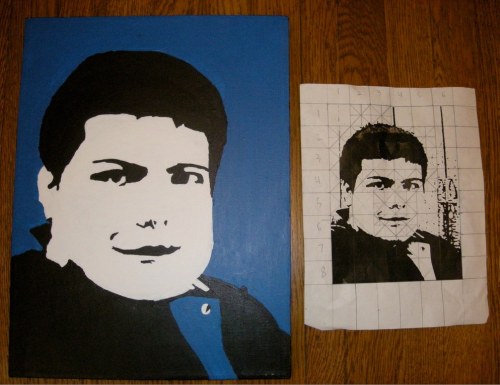
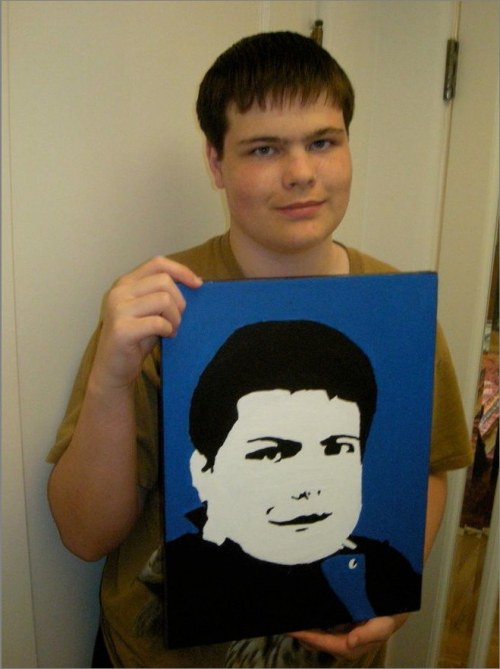
Paul has been enjoying taking Art this year. Here he is with his new self-portrait. 2 July 2020 update: see Paul’s art portfolio on Paulselement
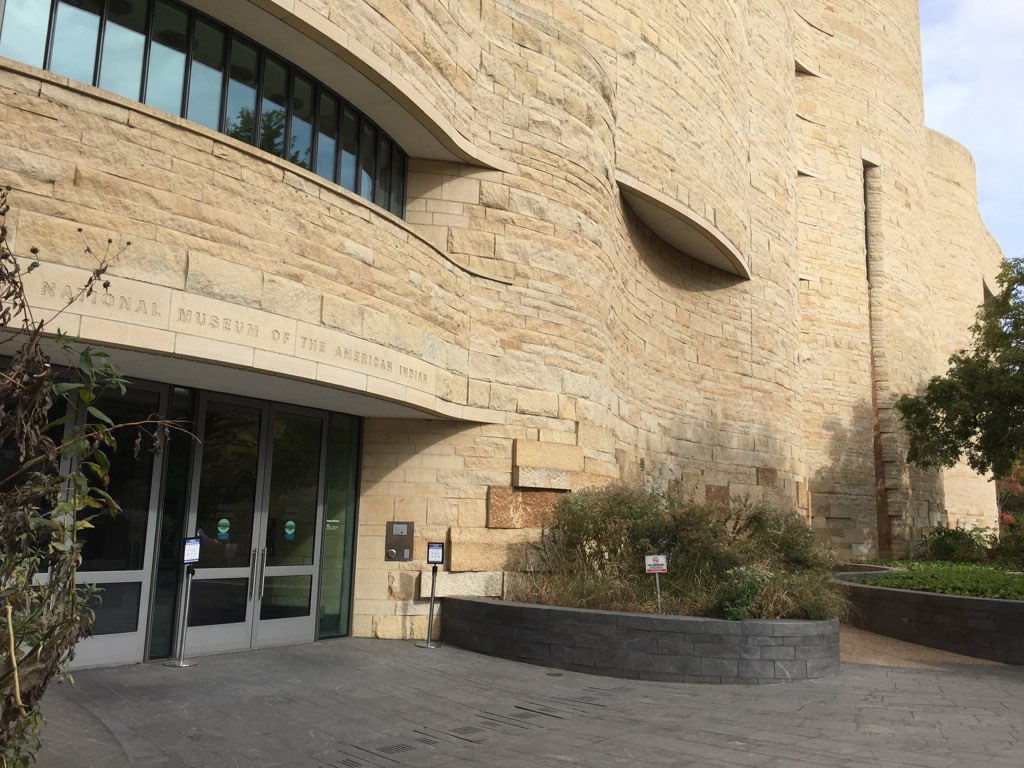
Last month when I visited Washington, D.C. for the first time in many decades, I toured the National Museum of the American Indian, opened as part of the Smithsonian Institution in 2004. It seemed to me that one way of understanding more about the complex relationship between the European/American cultures and the American Indian cultures was to read reports from individuals who had personally experienced both. In the museum store, I bought two books:
Captured by the Indians: 15 Firsthand Accounts, 1750-1870, Editor: Frederick Drimmer, Dover Publications, 1985, ISBN-10: 0486249018, ISBN-13: 978-0486249018
In these books, I was interested to read for the first time about the death by burning in 1782 of General George Washington’s friend, Colonel William Crawford. This disturbing story was told in:
“That is Your Great Captain” by Dr. John Knight, 1783 (in Captured by the Indians)
“To Eat Fire Tomorrow” by John Slover as told to Hugh H. Brackenridge, 1782 (in Captured by the Indians)
“A Narrative of the Life of Mary Jemison” by James E. Seaver, 1824 (in Women’s Indian Captivity Narratives)
Knight and Slover were captured with Crawford after Crawford’s failed expedition against the Ohio Indians (Wyandot, Huron, Delaware, and Shawnee tribes). Knight and Mary Jemison’s husband Hiokatoo (of the Seneca tribe) were witnesses to Crawford’s death; Slover was told of it by his captors.
Trying to sort out what happened by reading these memorable accounts is a good exercise in detection and understanding the difficulties of History even when first-hand accounts are available. For example, a major participant in Crawford’s violent death was Simon Gurty (or Girty). Gurty is described in a footnote in Women’s Indian Captivity Narratives as “…a Pennsylvania adventurer who… alternated allegiance between the Americans and the British, aiding the latter during the War of 1812”.
Here are two accounts of the same exchange between Gurty and the dying Crawford:
“The flames arose and the scorching heat became almost insupportable. Again [Crawford] prayed to Gurty in all the anguish of his torment, to rescue him from the fire, or shoot him dead upon the spot. A demoniac smile suffused the countenance of Gurty, while he calmly replied to the dying suppliant, that he had no pity for his sufferings; but that he was then satisfying the spirit of revenge, which for a long time he had hoped to have an opportunity to wreak upon him.” (Mary Jemison retelling Hiokatoo’s story)
“In the midst of these extreme tortures [Crawford] called to Simon Girty and begged him to shoot him. Girty made no answer. He called to him again. Girty, by way of derision, told the colonel he had no gun. At the same he turned to an Indian who was behind him, laughed heartily, and by all his gestures seemed delighted at the horrid scene.” (John Knight telling what he witnessed)
In seeking more information about these stories, I found yet another version of this exchange:
“Overcome by agony, Crawford cried out, ‘Girty! Girty! For God’s sake, Girty, shoot me through the heart!’ The raucous din grew ominously silent as all eyes came to rest on the man called Girty. After a moment of introspection, he rose from his seated position by the fire and strode to where Crawford lay sobbing. ‘I cannot,’ Girty replied softly. ‘As you can see, I have no gun.’ Turning away from Crawford’s mangled figure, Girty grinned at the onlookers and belched forth a sinister giggle.”
From: “A Monster So Brutal: Simon Girty and the Degenerative Myth of the American Frontier, 1783-1900″. Volume Forty, 1998 Essays in History, Published by the Corcoran Department of History at the University of Virginia. by Daniel P. Barr, Kent State University.
While Gurty is clearly the villain in all three story versions, there are also differences in both specifics and style. The “Monster So Brutal” story version purports to be a retelling of Knight’s and Slover’s accounts – with no reference to Mary Jemison version of Hiokatoo’s story. However, the “Monster So Brutal” story is very exaggerated and includes details I do not find in the first hand accounts. “A Monster So Brutal” also says that Slover was an eyewitness to Crawford’s death. Slover’s account in Captured by the Indians just says “At this time I was told that Colonel Crawford had been burnt…”. Maybe there is more than one version of Slover’s story?
Having read these books, I have a greater appreciation for the complexity of this early period of American history and the interactions of the Indian, British, French, and American cultures. It is certainly more exciting than I remember from my required American History courses in High School and college!
25 Jan 2008: original blog post, 27 Feb 2021: formatting updated, photo added
If you want to receive Katysblog posts by email, please sign up using the Sign Me Up! button (upper right on Katysblog home). Image Copyright 2017 by Katy Dickinson.



 KatysBlog