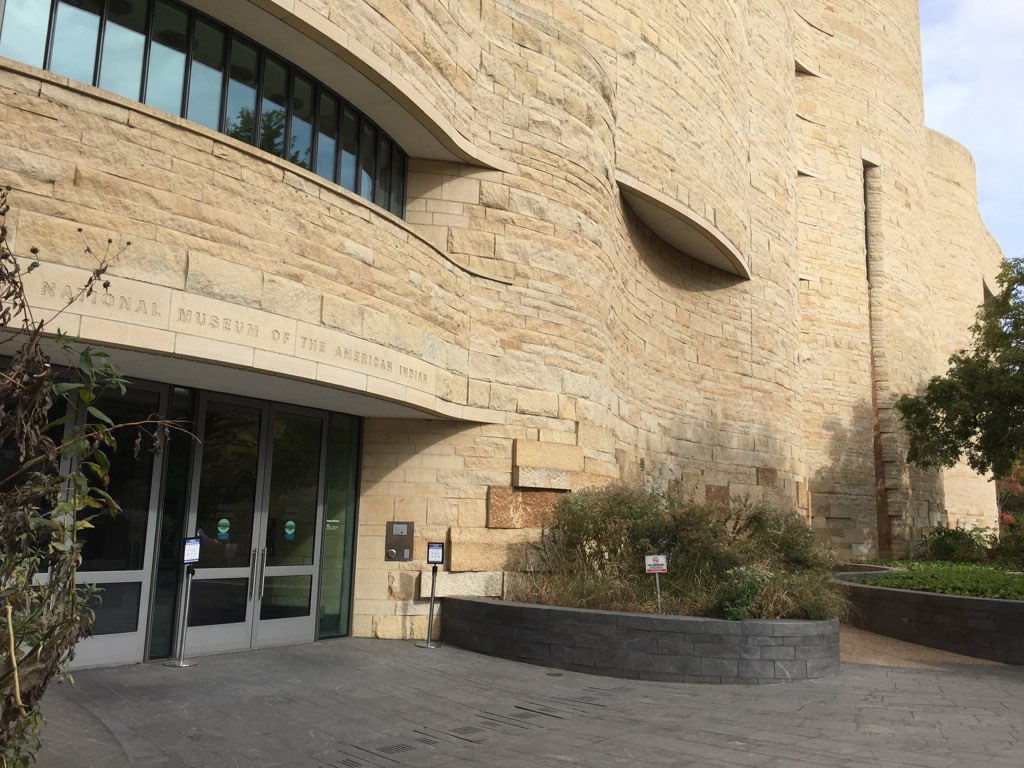
Last month when I visited Washington, D.C. for the first time in many decades, I toured the National Museum of the American Indian, opened as part of the Smithsonian Institution in 2004. It seemed to me that one way of understanding more about the complex relationship between the European/American cultures and the American Indian cultures was to read reports from individuals who had personally experienced both. In the museum store, I bought two books:
Captured by the Indians: 15 Firsthand Accounts, 1750-1870, Editor: Frederick Drimmer, Dover Publications, 1985, ISBN-10: 0486249018, ISBN-13: 978-0486249018
In these books, I was interested to read for the first time about the death by burning in 1782 of General George Washington’s friend, Colonel William Crawford. This disturbing story was told in:
“That is Your Great Captain” by Dr. John Knight, 1783 (in Captured by the Indians)
“To Eat Fire Tomorrow” by John Slover as told to Hugh H. Brackenridge, 1782 (in Captured by the Indians)
“A Narrative of the Life of Mary Jemison” by James E. Seaver, 1824 (in Women’s Indian Captivity Narratives)
Knight and Slover were captured with Crawford after Crawford’s failed expedition against the Ohio Indians (Wyandot, Huron, Delaware, and Shawnee tribes). Knight and Mary Jemison’s husband Hiokatoo (of the Seneca tribe) were witnesses to Crawford’s death; Slover was told of it by his captors.
Trying to sort out what happened by reading these memorable accounts is a good exercise in detection and understanding the difficulties of History even when first-hand accounts are available. For example, a major participant in Crawford’s violent death was Simon Gurty (or Girty). Gurty is described in a footnote in Women’s Indian Captivity Narratives as “…a Pennsylvania adventurer who… alternated allegiance between the Americans and the British, aiding the latter during the War of 1812”.
Here are two accounts of the same exchange between Gurty and the dying Crawford:
“The flames arose and the scorching heat became almost insupportable. Again [Crawford] prayed to Gurty in all the anguish of his torment, to rescue him from the fire, or shoot him dead upon the spot. A demoniac smile suffused the countenance of Gurty, while he calmly replied to the dying suppliant, that he had no pity for his sufferings; but that he was then satisfying the spirit of revenge, which for a long time he had hoped to have an opportunity to wreak upon him.” (Mary Jemison retelling Hiokatoo’s story)
“In the midst of these extreme tortures [Crawford] called to Simon Girty and begged him to shoot him. Girty made no answer. He called to him again. Girty, by way of derision, told the colonel he had no gun. At the same he turned to an Indian who was behind him, laughed heartily, and by all his gestures seemed delighted at the horrid scene.” (John Knight telling what he witnessed)
In seeking more information about these stories, I found yet another version of this exchange:
“Overcome by agony, Crawford cried out, ‘Girty! Girty! For God’s sake, Girty, shoot me through the heart!’ The raucous din grew ominously silent as all eyes came to rest on the man called Girty. After a moment of introspection, he rose from his seated position by the fire and strode to where Crawford lay sobbing. ‘I cannot,’ Girty replied softly. ‘As you can see, I have no gun.’ Turning away from Crawford’s mangled figure, Girty grinned at the onlookers and belched forth a sinister giggle.”
From: “A Monster So Brutal: Simon Girty and the Degenerative Myth of the American Frontier, 1783-1900″. Volume Forty, 1998 Essays in History, Published by the Corcoran Department of History at the University of Virginia. by Daniel P. Barr, Kent State University.
While Gurty is clearly the villain in all three story versions, there are also differences in both specifics and style. The “Monster So Brutal” story version purports to be a retelling of Knight’s and Slover’s accounts – with no reference to Mary Jemison version of Hiokatoo’s story. However, the “Monster So Brutal” story is very exaggerated and includes details I do not find in the first hand accounts. “A Monster So Brutal” also says that Slover was an eyewitness to Crawford’s death. Slover’s account in Captured by the Indians just says “At this time I was told that Colonel Crawford had been burnt…”. Maybe there is more than one version of Slover’s story?
Having read these books, I have a greater appreciation for the complexity of this early period of American history and the interactions of the Indian, British, French, and American cultures. It is certainly more exciting than I remember from my required American History courses in High School and college!
25 Jan 2008: original blog post, 27 Feb 2021: formatting updated, photo added
If you want to receive Katysblog posts by email, please sign up using the Sign Me Up! button (upper right on Katysblog home). Image Copyright 2017 by Katy Dickinson.
I was packing up to check out of the hotel here in Northampton, MA when I remembered that I can no longer take home the extra soaps and little shampoo
bottles. The TSA volume limits of liquids on U.S. flights mean that I need all of the allowance for my own shampoo and lotion. For decades, I have brought home my
unused hotel toiletries to donate to the homeless at church. All Saints’ in Palo Alto, CA works with InnVision to feed the hungry and distribute socks, small toiletries, and other necessities and comforts. While the hotel may reuse what I leave and I can always buy toiletries to donate, leaving these behind still feels a shameful waste.
My church’s Outreach committee has been discussing the United Nations’ Millennium Development Goals (MDGs). The eight goals are:
Eliminate Extreme Poverty
Achieve Universal Primary Education
Promote Gender Equality and Empower Women
Reduce Child Mortality
Improve Maternal Health
Combat HIV/AIDS, Malaria, and Other Diseases
Ensure Environmental Sustainablity
Develop a Global Partnership for Development
Our national Episcopal Church and our local diocese Diocese of El Camino Real affirmed their commitment to the MDGs in 2006. All Saints’ (Palo Alto) parish is now working out what that means in terms of real work and money.
In last month’s Outreach meeting, I took responsibility for researching specific options for donating All Saints’ pledged 0.7% MRD funds. Based on my research, I recommended at last night’s meeting that Episcopal Relief and Development (ERD), specifically their “Food Security/ Hunger Fund”, is the best focus for All Saints’ MDG donations. I contacted ERD directly today and was told that 90 cents of every dollar donated goes to their programs, meaning that they would make good use of the money.
Here is what ERD’s web site has on its Food Security program:
Our food security programs ensure families have the means to access and secure healthy food sources. We make sure families have enough food to eat on a daily basis and food supplies are available, affordable, and accessible. Our programs:
Offer seeds and tools so communities can grow better crops, build healthier nutrition, and increase their yield in areas where poverty limits resources and access to food.
Provide opportunities for people to create and operate small businesses and expand their sources of income.
Give families healthy animals which produce food and income.
There does not seem to be a USA component to ERD’s Food Security program. However, for many years All Saints’ has hosted and supported successful local programs for the hungry and homeless, including the
Opportunity Center plus several InnVision programs, including:
The Food Closet (based at All Saints’)
Hotel de Zink (hosted twice at All Saints’ in 2006)
Breaking Bread, Hot Meals Program (hosted at All Saints’ twice a week)
All Saints’ is and has always been strongly called to follow Jesus’ exhortation to “Feed My Sheep”. Extreme poverty outside of the US is probably the best focus for donations in any case. I recently read the following in the “World Ark” magazine from Heifer Project, (January/February 2007 issue, p.50):
Extreme Poverty on the Decline
According to the U.N. Food and Agriculture Organization, the proportion of people living in extreme poverty dropped from 28 in 1990 to 19 percent in 2002 — a remarkable success. However, progress varied by region. Asia led the way in reducing poverty, but sub-Saharan Africa realized only a marginal decline in poverty rates. Chronic hunger (measured by the proportion of people not consuming their daily food needs) also saw declining rates — but at the current pace, overall progress is not on track to meet the U.N. Millennium Development Goals targets. The number of people going hungry is actually increasing, with Eastern Asia and sub-Saharan Africa in greatest need of scaled-up efforts. Keep up to date at www.un.org/millenniumgoals.
My daughter Jessi and I are visiting Oberlin College in Ohio today and tomorrow because she will be applying for school here. We were walking around campus tonight getting a feel for things when we happened into the Ronald Reagan Political Lectureship Series presentation by conservative Republican William Kristol. I am not familiar with his work but the posters around campus say he is the founder and editor of The Weekly Standard and served in the administrations of two Republican U.S. Presidents.
There were clearly two sets of posters up around campus about tonight’s talk. One was the large official poster in color, complete with a photo of Ronald Reagan in front of an American flag plus a photo of the speaker. The other posters were black and white photocopies attacking Mr. Kristol. One showed a very nasty photo of a naked torture victim. Another was a list of his goals and political sins from a liberal viewpoint.
Mr. Kristol gave a funny and well considered presentation, bravely leaving more than half of the time available for questions from what seemed to be an overwhelmingly liberal audience. The auditorium was full to overflowing with at least three uniformed security guards well in evidence. Some of the questions were thoughtful and well considered but many were lightweight and reflecting badly on the questioners. Mr. Kristol answered all of them politely and intelligently, sometimes deflecting or reinterpreting aggressive or silly aspects. I was impressed with his sincerity and professionalism even if I don’t
agree with all of his conclusions and views.
Jessi even got to ask a question. She was delighted when the (big and potentially scary) security guard kindly encouraged her and then congratulated her on getting her question answered. Jessi asked Mr. Kristol if he thought the Bush administration would have been stronger in Iraq if Congress had declared war following constitutional requirements rather than declaring a military action. Mr. Kristol complimented the question but said he thought Congress knew what they were voting on politically and the formality would not have made a difference.
All in all, it was an interesting evening and enlightening, if in a disappointing way, on the liberal politics of Oberlin. I plan to look for more from William Kristol as I found his comments thoughtful and surprisingly balanced in their judgements.
I highly recommend the 10 April 2006 “New Yorker” article “A Church Asunder” by Peter Boyer. This is a history and analysis of current politics and discussions in the Episcopal church.
My husband John and I read the article together and it helped us better understand what is happening in our world-wide Anglican church. I have two comments:
I remember that the African Episcopal churches were censured for starting missions in another church’s area – this information is not included in the article.
There is a brief description of how the Bible talks about homosexuality but not really enough context to explain.
Keener is an African American Baptist pastor and his analysis of how the church deals with issues of social change, the Bible, and the role of traditionally denigrated groups (women, slaves, children, divorced people, homosexuals…) is well written, well considered, based in a solid Christian faith, and fascinating.
We found that there is a camp of homeless down at the edge of the Guadalupe River on our back property line. Last week, one of them came along the top of the bank carrying a lawn chair when I was pulling weeds nearby. He ignored me and walked down the bank to his waterside tent. This camp is of great concern because the water level can rise quickly and it is very dangerous for them to be so close to the waterline of a deep and fast river.
This weekend, we went down the bank to check out the (uninhabited) camp. We found that they had been digging into the embankment – not good for the structural integrity of an earthwork that keeps hundreds of homes dry – and had built a home with a brick walk, an outhouse over the river, a portable TV with battery, plus lots of bicycles, chairs, and stuff. Our neighbor recognized some of the stuff as having been taken from his property. The homeless have been getting in and out by creating a new trail along the waterline. If they walked on the top of the bank, either we or our dogs would see them.
We and our neighbors have been alternating calling the San Jose Homeless Abatement Metro Unit (which is in charge of illegal homeless camps) and “911” (which is in charge of dangerous homeless behavior and stealing by homeless) every few days for several weeks. We talked with the water company about the damage to the embankment. The police came out twice last month but no one was in the camp so they didn’t do anything. They haven’t come out lately that we know of. The Metro Unit is supposed to “tag” a camp, move them out after 3 days, then clean up the camps once a month. No action yet.
Since we had some tree and dracena trimming to do anyway, we dumped the brush onto the new riverside path in the hope of discouraging foot traffic. After this, I am going to drop all of my prickly pear cactus trimmings down the bank rather than putting them out for the weekly yard waste pickup. I feel badly that these people are homeless but I don’t want them drowning in their sleep or stealing things to furnish their home.
6/9/2016 Update: San Jose has evolved its way of managing the homeless. The current City of San Jose webpage is called Ending Homelessness which offers a Homeless Helpline (at 408.510.7600) to express concerns for homeless persons or encampments. Current photos of my prickly barrier: