Last month, I attended a reception in San Francisco for IVLP (The International Visitor Leadership Program – the U.S. Department of State’s premier professional exchange program). At that event, I sent this tweet:
State Dept Intl Visitors program since 1940s hosted 200,000 to US (7,000 by @IVLPSF) 330 later were heads of state: We are citizen diplomats
07:04 PM – 20 Nov 13 @katy_dickinson
I was surprised when this tweet was redistributed several times. After each retweet, I considered what it means to be a citizen diplomat. I learned about IVLP through the TechWomen program and the Institute of International Education (IIE West Coast). I was pleased to be an ILVP event host myself – having a group from the Middle East and North Africa for dinner and a WP668 caboose tour in April 2013.
The phrase citizen diplomat was used by the State Department speaker to describe those who support the IVLP program. The State Department website defines citizen diplomacy as:
Citizen Diplomacy is the concept that the individual has the right to help shape U.S. foreign relations “one handshake at a time.” Citizen diplomats can be students, teachers, athletes, artists, business people, humanitarians, adventurers or tourists. They are motivated by a desire to engage with the rest of the world in a meaningful, mutually beneficial dialogue.
This week, I have been making travel arrangements for my first visit to Sub-Saharan Africa, as part of the TechWomen delegation to Rwanda in February 2014. This will be my third time as a delegation member, having also traveled to Morocco (2011) and Jordan (2013) with the US State Department’s TechWomen program. While it feels presumptuous to call ourselves so, I think the hundreds of remarkable and generous Silicon Valley women professionals who have served as TechWomen mentors since 2010 are indeed citizen diplomats.
When our 78 mentees from the Middle East and Africa were working with us in October 2013 here in California, the US federal government shut down for 16 days. It was an embarrassing but excellent example of both the good and bad sides of the American democratic system. The bad side was watching some of the world’s elite and most powerful leaders squabbling in public. The good side was watching America continue to function pretty well without them. I imagine the other TechWomen mentors got to discuss all of this as often as I did with our international guests. If that isn’t citizen diplomacy, I don’t know what is.
This weekend, I flew from the San Francisco Bay Area to Los Angeles for training (to renew my mentor certification with Education for Ministry, a program of the University of the South – School of Theology), and to visit my brother and family in La Crescenta. I used two small-ish airports, San Jose (SJC) and Burbank (BUR) for convenience.
This morning, I walked quickly to the head of the extremely short security check point line at Burbank, hoping to have time for a quiet coffee before boarding my flight home. However, I was pulled out of line in the nearly-empty security area not once but twice.
The first time I was pulled from line was so that the security lady could feel my face – after her full-body scanner drew a little yellow box around my apparently-dangerous earring. As you can see from the picture below (and as she herself could clearly see), there wasn’t anything for her to find while she patted down my ear, cheek, and short hair.
The second time I was pulled out a few minutes later was so that the security man could unpack my small roller bag, re-scan my toiletries, and try to take away my rock. I was bringing home a small piece of granite as a souvenir of La Crescenta. He said, after feeling my rock, that I had to get rid of it or check my bag because a rock could be a weapon. It seems that there is a TSA rule saying that rocks over five pounds are dangerous. I chose to keep my rock, so I was escorted out of the security area, then had to walk back to the airline counter (where the counter lady told me that she hears an unusual number of complaints about the Burbank TSA), check my carry-on bag, and go through security all over again.
I made my flight home, but no quiet coffee for me. I object.
I have been reading a fascinating article in the March 2012 Smithsonian Magazine called “Hive Mind” by Carl Zimmer. The article describes the work of Cornell University biologist Thomas Seeley, an expert in honeybees, swarm intelligence, and collective decision making.
The decision-making power of honeybees is a prime example of what scientists call swarm intelligence. Clouds of locusts, schools of fish, flocks of birds and colonies of termites display it as well.
Seeley and his colleagues have discovered a few principles honeybees use to make smart decisions:
Enthusiasm: passion in the bee communications dance
Flexibility: decaying number of dance repetitions is tied to the value of what the dance is communicating
Quorum: silencing lower value dance communications as the number of higher value dancers rises to a decision threshold
Seeley draws comparisons between how a honeybee hive makes decisions and how both the human brain and a democracy work:
Both swarms and brains make their decisions democratically. Despite her royal title, a honeybee queen does not make decisions for the hive. The hive makes decisions for her. In our brain, no single neuron takes in all the information from our senses and makes a decision. Millions make a collective choice. …Groups work well, he argues, if the power of leaders is minimized. A group of people can propose many different ideas – the more the better, in fact. But these ideas will only lead to a good decision if listeners take time to judge their merits for themselves… Groups also do well if they’re flexible, ensuring that good ideas don’t lose out simply because they come late in the discussion.
Just because animals do something does not mean it is also appropriate for people. Nonetheless, comparing human systems to patterns in nature presents both in an interesting context.
This is an update on my blog entry “Gardening Around the Homeless” dated 10 April 2006. We live on the bank of the Guadalupe River in Willow Glen, California. In 2006, I started to create an informal cactus fence to deter homeless transients from passing through or camping on our river bank. I am even more motivated to continue this project by two big river bank fires recently caused by homeless campers just upstream of our property. I have planted both Echinopsis and Opuntia (prickly pear), plus some Yucca for height; they are all growing well.
We were very excited that Jessica, my 20-year-old daughter, attended this week’s Presidential inauguration in Washington, DC. You can see her blog entries and photos at http://feelingelephants.wordpress.com/. Ours is a politically passionate family. One of my earliest memories was glee that my candidate (John F. Kennedy) won the presidential election over my older brother’s candidate (Barry Goldwater), in 1964.
Our family has always been split between liberal and conservative. The divergence of our current family politics is best shown in two objects: a framed picture of the late President Ronald Reagan that my father put up in the front hall of their San Francisco house (intended to be seen by everyone who came over for parties to phone Obama voters, hosted by my mother), and the shoe with BUSH –> in gold paint on the toe that someone gave my father for Christmas:
I was at work at Sun during Tuesday’s inaugural morning so I went over to the Menlo Park campus Crossroads conference room to watch history unfolding
live by CNN TV broadcast on the big screen. Because I usually get my news from National Public Radio (NPR), it was particularly interesting to see how the great and powerful look and interact:
The senior President Bush does not seem to be aging well. He sat next to Hilary Clinton and behind the new First Lady Michelle Obama, so there were many pictures of him with his mouth open looking confused.
Hilary Clinton, on the other hand, looked radiant two days before her confirmation as our new Secretary of State.
It was fascinating to watch outgoing President George W. Bush during his last minutes in office. I saw Bush pat the leg of one of the tall Marines in full dress uniform as he walked past – like you would pat a friendly dog.
Except when greeting people, President Obama seemed grim during much of the event. The only time I caught a big smile was when he messed up his inaugural
oath (he had to take it again later). The biggest smile of the day, however, was that of cellist Yo-Yo Ma who appeared delighted to be performing with violinist Itzhak Perlman. There was much wondering how the instruments and musicians could play “Air and Simple Gifts” so well on that cold day. This was cleared up when it was announced today that those on the inaugural stage heard the musicians live but a prior recording was broadcast for everyone else. However
real the broadcast, Ma’s smile and the superb music were a genuine delight.
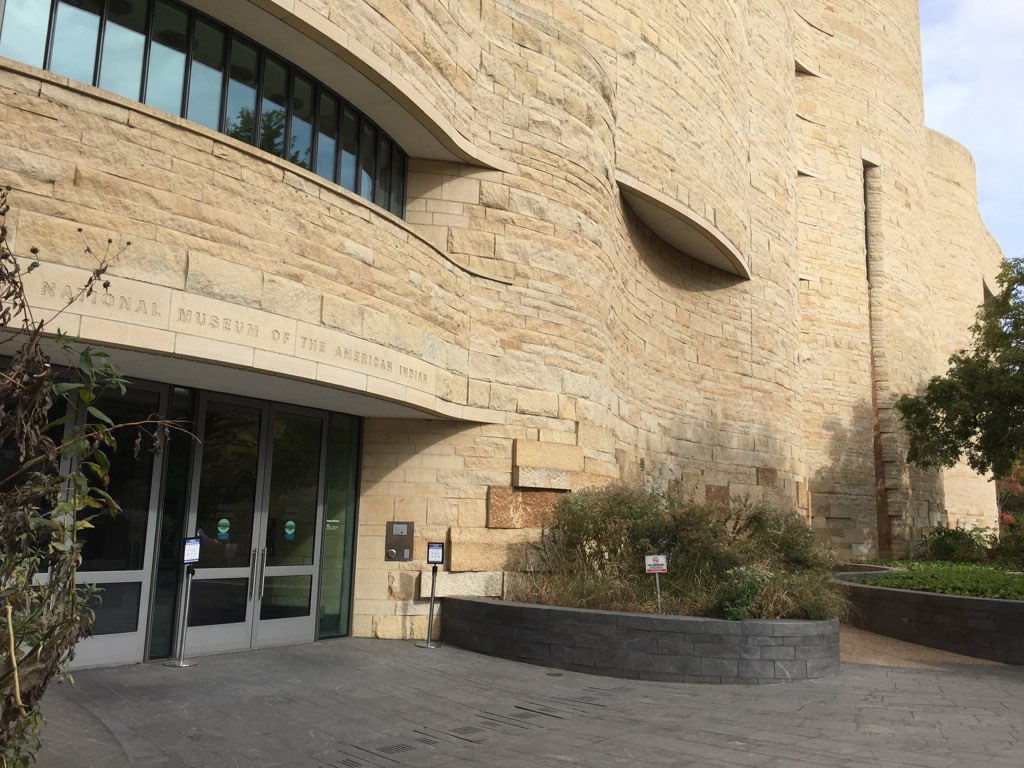
Last month when I visited Washington, D.C. for the first time in many decades, I toured the National Museum of the American Indian, opened as part of the Smithsonian Institution in 2004. It seemed to me that one way of understanding more about the complex relationship between the European/American cultures and the American Indian cultures was to read reports from individuals who had personally experienced both. In the museum store, I bought two books:
Captured by the Indians: 15 Firsthand Accounts, 1750-1870, Editor: Frederick Drimmer, Dover Publications, 1985, ISBN-10: 0486249018, ISBN-13: 978-0486249018
In these books, I was interested to read for the first time about the death by burning in 1782 of General George Washington’s friend, Colonel William Crawford. This disturbing story was told in:
“That is Your Great Captain” by Dr. John Knight, 1783 (in Captured by the Indians)
“To Eat Fire Tomorrow” by John Slover as told to Hugh H. Brackenridge, 1782 (in Captured by the Indians)
“A Narrative of the Life of Mary Jemison” by James E. Seaver, 1824 (in Women’s Indian Captivity Narratives)
Knight and Slover were captured with Crawford after Crawford’s failed expedition against the Ohio Indians (Wyandot, Huron, Delaware, and Shawnee tribes). Knight and Mary Jemison’s husband Hiokatoo (of the Seneca tribe) were witnesses to Crawford’s death; Slover was told of it by his captors.
Trying to sort out what happened by reading these memorable accounts is a good exercise in detection and understanding the difficulties of History even when first-hand accounts are available. For example, a major participant in Crawford’s violent death was Simon Gurty (or Girty). Gurty is described in a footnote in Women’s Indian Captivity Narratives as “…a Pennsylvania adventurer who… alternated allegiance between the Americans and the British, aiding the latter during the War of 1812”.
Here are two accounts of the same exchange between Gurty and the dying Crawford:
“The flames arose and the scorching heat became almost insupportable. Again [Crawford] prayed to Gurty in all the anguish of his torment, to rescue him from the fire, or shoot him dead upon the spot. A demoniac smile suffused the countenance of Gurty, while he calmly replied to the dying suppliant, that he had no pity for his sufferings; but that he was then satisfying the spirit of revenge, which for a long time he had hoped to have an opportunity to wreak upon him.” (Mary Jemison retelling Hiokatoo’s story)
“In the midst of these extreme tortures [Crawford] called to Simon Girty and begged him to shoot him. Girty made no answer. He called to him again. Girty, by way of derision, told the colonel he had no gun. At the same he turned to an Indian who was behind him, laughed heartily, and by all his gestures seemed delighted at the horrid scene.” (John Knight telling what he witnessed)
In seeking more information about these stories, I found yet another version of this exchange:
“Overcome by agony, Crawford cried out, ‘Girty! Girty! For God’s sake, Girty, shoot me through the heart!’ The raucous din grew ominously silent as all eyes came to rest on the man called Girty. After a moment of introspection, he rose from his seated position by the fire and strode to where Crawford lay sobbing. ‘I cannot,’ Girty replied softly. ‘As you can see, I have no gun.’ Turning away from Crawford’s mangled figure, Girty grinned at the onlookers and belched forth a sinister giggle.”
From: “A Monster So Brutal: Simon Girty and the Degenerative Myth of the American Frontier, 1783-1900″. Volume Forty, 1998 Essays in History, Published by the Corcoran Department of History at the University of Virginia. by Daniel P. Barr, Kent State University.
While Gurty is clearly the villain in all three story versions, there are also differences in both specifics and style. The “Monster So Brutal” story version purports to be a retelling of Knight’s and Slover’s accounts – with no reference to Mary Jemison version of Hiokatoo’s story. However, the “Monster So Brutal” story is very exaggerated and includes details I do not find in the first hand accounts. “A Monster So Brutal” also says that Slover was an eyewitness to Crawford’s death. Slover’s account in Captured by the Indians just says “At this time I was told that Colonel Crawford had been burnt…”. Maybe there is more than one version of Slover’s story?
Having read these books, I have a greater appreciation for the complexity of this early period of American history and the interactions of the Indian, British, French, and American cultures. It is certainly more exciting than I remember from my required American History courses in High School and college!
25 Jan 2008: original blog post, 27 Feb 2021: formatting updated, photo added
If you want to receive Katysblog posts by email, please sign up using the Sign Me Up! button (upper right on Katysblog home). Image Copyright 2017 by Katy Dickinson.



 KatysBlog