
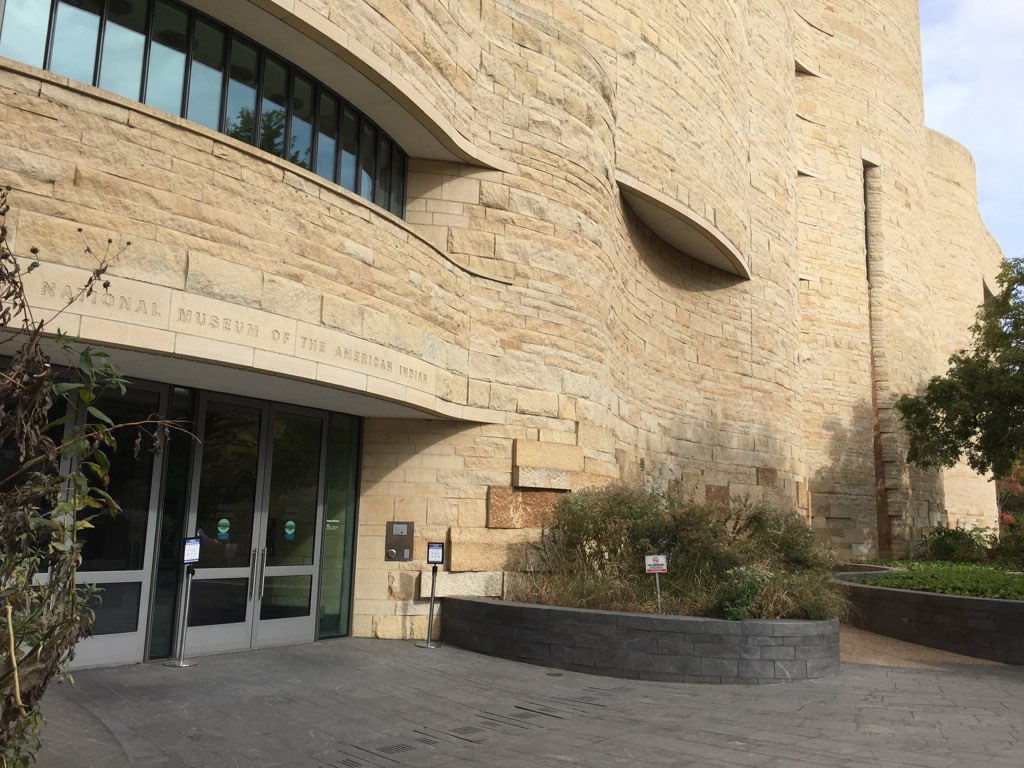
Last month when I visited Washington, D.C. for the first time in many decades, I toured the National Museum of the American Indian, opened as part of the Smithsonian Institution in 2004. It seemed to me that one way of understanding more about the complex relationship between the European/American cultures and the American Indian cultures was to read reports from individuals who had personally experienced both. In the museum store, I bought two books:
-
- Women’s Indian Captivity Narratives, Editor: Kathryn Zabelle Derounian-Stodola, Penguin Classics, 1998, ISBN-10: 0140436715, ISBN-13: 978-0140436716
- Captured by the Indians: 15 Firsthand Accounts, 1750-1870, Editor: Frederick Drimmer, Dover Publications, 1985, ISBN-10: 0486249018, ISBN-13: 978-0486249018
In these books, I was interested to read for the first time about the death by burning in 1782 of General George Washington’s friend, Colonel William Crawford. This disturbing story was told in:
-
- “That is Your Great Captain” by Dr. John Knight, 1783 (in Captured by the Indians)
- “To Eat Fire Tomorrow” by John Slover as told to Hugh H. Brackenridge, 1782 (in Captured by the Indians)
- “A Narrative of the Life of Mary Jemison” by James E. Seaver, 1824 (in Women’s Indian Captivity Narratives)
Knight and Slover were captured with Crawford after Crawford’s failed expedition against the Ohio Indians (Wyandot, Huron, Delaware, and Shawnee tribes). Knight and Mary Jemison’s husband Hiokatoo (of the Seneca tribe) were witnesses to Crawford’s death; Slover was told of it by his captors.
Trying to sort out what happened by reading these memorable accounts is a good exercise in detection and understanding the difficulties of History even when first-hand accounts are available. For example, a major participant in Crawford’s violent death was Simon Gurty (or Girty). Gurty is described in a footnote in Women’s Indian Captivity Narratives as “…a Pennsylvania adventurer who… alternated allegiance between the Americans and the British, aiding the latter during the War of 1812”.
Here are two accounts of the same exchange between Gurty and the dying Crawford:
-
- “The flames arose and the scorching heat became almost insupportable. Again [Crawford] prayed to Gurty in all the anguish of his torment, to rescue him from the fire, or shoot him dead upon the spot. A demoniac smile suffused the countenance of Gurty, while he calmly replied to the dying suppliant, that he had no pity for his sufferings; but that he was then satisfying the spirit of revenge, which for a long time he had hoped to have an opportunity to wreak upon him.” (Mary Jemison retelling Hiokatoo’s story)
- “In the midst of these extreme tortures [Crawford] called to Simon Girty and begged him to shoot him. Girty made no answer. He called to him again. Girty, by way of derision, told the colonel he had no gun. At the same he turned to an Indian who was behind him, laughed heartily, and by all his gestures seemed delighted at the horrid scene.” (John Knight telling what he witnessed)
In seeking more information about these stories, I found yet another version of this exchange:
-
- “Overcome by agony, Crawford cried out, ‘Girty! Girty! For God’s sake, Girty, shoot me through the heart!’ The raucous din grew ominously silent as all eyes came to rest on the man called Girty. After a moment of introspection, he rose from his seated position by the fire and strode to where Crawford lay sobbing. ‘I cannot,’ Girty replied softly. ‘As you can see, I have no gun.’ Turning away from Crawford’s mangled figure, Girty grinned at the onlookers and belched forth a sinister giggle.”
- From: “A Monster So Brutal: Simon Girty and the Degenerative Myth of the American Frontier, 1783-1900″. Volume Forty, 1998 Essays in History, Published by the Corcoran Department of History at the University of Virginia. by Daniel P. Barr, Kent State University.
While Gurty is clearly the villain in all three story versions, there are also differences in both specifics and style. The “Monster So Brutal” story version purports to be a retelling of Knight’s and Slover’s accounts – with no reference to Mary Jemison version of Hiokatoo’s story. However, the “Monster So Brutal” story is very exaggerated and includes details I do not find in the first hand accounts. “A Monster So Brutal” also says that Slover was an eyewitness to Crawford’s death. Slover’s account in Captured by the Indians just says “At this time I was told that Colonel Crawford had been burnt…”. Maybe there is more than one version of Slover’s story?
Having read these books, I have a greater appreciation for the complexity of this early period of American history and the interactions of the Indian, British, French, and American cultures. It is certainly more exciting than I remember from my required American History courses in High School and college!
25 Jan 2008: original blog post,
27 Feb 2021: formatting updated, photo added
If you want to receive Katysblog posts by email, please sign up using the Sign Me Up! button (upper right on Katysblog home). Image Copyright 2017 by Katy Dickinson.

 KatysBlog