Tag Archives: Shakespeare

Honoring Our Own Generosity

IMG_5648 . IMG_5647

LORD POLONIUS
My lord, I will use them according to their desert.

PRINCE HAMLET
God’s bodykins, man, much better: use every man
after his desert, and who should ‘scape whipping?
Use them after your own honour and dignity: the less
they deserve, the more merit is in your bounty.
Take them in.

– William Shakespeare, Hamlet Act II, Scene ii, 1600

I recently returned home from my fifth trip to the Middle East, visiting Jordan and Lebanon. I was in Jordan as a member of the TechWomen delegation – TechWomen is an initiative of the U.S. Department of State’s Bureau of Educational and Cultural Affairs (ECA). I visited Lebanon to see my friends, the TechWomen program alumnae and to talk with Al-Makassed (the Makassed Philanthropic Islamic Association of Beirut).

As the Vice President for MentorCloud, I talked a great deal about mentoring during my trip. I traveled with my daughter Jessica. She and I were welcomed with world-class generosity and open hearts and minds. In discussing the motivations for mentors, I often use the phrase paying it forward. That is, mentors often say that they are giving back the wise and generous advice and support that they themselves were given during their development. I was surprised and concerned when discussing these motivations for mentors not once but twice to be told that in Arabic, the saying is not “Give and Take” but “Take and Give”. This seemed to reflect doubt among some audience members that mentoring would work in their culture. I have been thinking about these discussions for the two weeks that I have been home.

During one of our long bus trips in Jordan, our tour guide played a video for us in which His Majesty King Abdulla of Jordan gives a Royal Tour of his country. “Jordan – The Royal Tour” is a 2002 tourism promotion piece but a good overview nonetheless. During the tour, King Abdulla tells a story from his youth. His uncle (then heir-apparent to King Hussein) and he were traveling in the desert and met an old man on a white horse. The man wanted to give them lunch, so he sold the stallion, his only possession, to buy fifteen sheep for a feast. Of course, when this became known, the white stallion was repurchased with fifteen more sheep as a present in return. King Abdullah calls this tradition of generous welcome the “code of the desert”. My experiences in the Middle East have been consistent with the King’s story – I have been honored by extraordinary generosity.

So, why would my Middle Eastern audiences doubt their community’s welcoming of mentoring – a relationship based on long-term generosity? As a life-long fan of William Shakespeare, I thought of the interchange above between Hamlet and Polonius – about the merit in treating others according to our own honor and dignity. Coming to terms with our own generosity and motivations is part of the journey that leads many of us to become mentors.

Recommended additional reading: “Is Giving the Secret to Getting Ahead?”  by Susan Dominus, 13 March 2014, _New York Times_

IMG_4380

Images Copyright 2013 by Katy Dickinson

2 Comments

Filed under Mentoring & Other Business

Shakespeare Garden Books

IMG_0735

I collect Shakespeare garden books. The photographs in this blog entry are of one of the most beautiful books I own: Henry Ellacombe’s The Plant-Lore and Garden-Craft of Shakespeare, 1896.

What is a Shakespeare Garden? Such a garden can be inspired by Shakespeare’s works, or can include plants he mentioned, or can reproduce a famous play setting. There are many famous Shakespeare gardens, including those at The Huntington (Pasadena CA), Golden Gate Park (San Francisco CA), Brooklyn Botanic Garden (New York), Central Park (New York), Northwestern University (Evanston IL), The Folger Shakespeare Library (Washington DC), and of course the garden of Anne Hathaway (Shakespeare’s wife) in Stratford-Upon-Avon, England.  Check out my Pinterest Board to see pictures of over 50 Shakespeare plants. Most plants mentioned in Shakespeare’s works are still common today, 450 years later.

Publications about Shakespeare plants and gardens have been popular for 150 or more years – since they are in the charming intersection of beauty and literature. Some examples:

  • Beisley, Sidney, Shakespeare’s Gardens, Longmans, Green: 1864
  • Bloom, J. Harvey, Shakespeare’s Garden, Tower Books: 1971 (reprint of the 1903 edition)
  • Carter, Annie B., Shakespeare Gardens / Design, Plants, and Flower Lore, Dorrance & Co.: 1937
  • Chronicle Books, Shakespeare’s Flowers, 1994
  • Crane, Walter, Flowers from Shakespeare’s Garden, Macmillan Publishing: 1980 (reprint of the 1906 edition)
  • Damrosch, Barbara, Theme Gardens, Workman Publishing: 1982
  • De Bray, Lys, Fantastic Garlands: an anthology of flowers and plants from Shakespeare, Blandford Press: 1982
  • Dent, Alan, World of Shakespeare: Plants, Taplinger Publishing: 1973
  • Ellacombe, Henry N., The Plant-Lore and Garden-Craft of Shakespeare, Edward Arnold: 1896
  • Eyler, Ellen C., Early English Gardens and Garden Books, (booklet) Folger Books: 1979
  • Fleissrer, Robert F., A Rose by Any Other Name / A Survey of Literary Flora from Shakespeare to Eco, Locust Hill Press: 1989
  • Fox, Levi, An Illustrated Introduction to Shakespeare’s Flowers, (booklet) Jarrold Publishing: 1990
  • Fox, Levi, The Shakespearean Gardens, (booklet) Jarrold Publishing: 1953
  • Grindon, Leopold Hartley, Shakespere Flora, Palmer & Howe: 1883
  • Hales, Mick, Shakespeare in the Garden, Abrams: 2006
  • Hubbart, Edith, America’s First Shakespeare Garden, (booklet) 1938
  • Hunt, Doris, The Flowers of Shakespeare, Webb & Bower: 1980
  • Huntington Botanical Gardens, Garden Notes, (booklet) 1978
  • Kerr, Jessica, Shakespeare’s Flowers, Thomas Y. Crowell Co.: 1969
  • Law, Ernest, Shakespeare’s Garden / Stratford-Upon-Avon, (booklet) Selwyn & Blount: 1922
  • Pallen, Nancy Shumaker, Shakespeare’s Garden, Cedco Publishing: 1999
  • Pomeroy, Elizabeth, The Huntington Library, Art Collections, Botanical Gardens, Philip Wilson Publishers: 1983
  • Pickles, Sheila, The Complete Language of Flowers / A Treasury in Verse and Prose, Pavilion: 1998
  • Prince, Martha, “Shakespearean Bouquet”, from American Horticulturalist v.64, number 4, April 1985
  • The Printing Corporation, A Trip Through Internationally Famous Golden Gate Park / San Francisco, California, (booklet) 1937
  • Putnam, Clare, Flowers and Trees of Tudor England, New York Graphic Society: 1972
  • Rendall, Vernon, Wild Flowers in Literature, Scholartis Press: 1934
  • Rodway, Avril, A Literary Herbal, Leprechaun Library: 1980
  • Rohde, Eleanour S., Shakespeare’s Wild Flowers, Medici Society: 1963 (reprint of the 1935 edition)
  • Ryden, Mats, Shakespearean Plant Names / Identifications and Interpretations, 1978
  • Savage, F.G., Flora and Folk-Lore of Shakespeare, E.J. Burrow & Co.: 1923
  • Simons, Adelma G., Herb Gardens of Delight, Hawthorn Books: 1974
  • Singleton, Esther, Shakespeare Garden, AMS Press: 1933
  • Thorpe, James, William Shakespeare at the Huntington, (booklet) The Huntington Library: 1977
  • Warner, James A., and Margaret J. White, Shakespeare’s Flowers, Middle Atlantic Press: 1987

IMG_0736

IMG_0737

IMG_0734

Images Copyright 2012 by Katy Dickinson

3 Comments

Filed under Home & Family, News & Reviews

Electronic Shakespeare Garden

“Not poppy, nor mandragora, Nor all the drowsy syrups of the world, Shall ever medicine thee to that sweet sleep Which thou owedst yesterday.” Othello [III, 3]
IMG_7816

I am creating an electronic Shakespeare Garden on a Pinterest board. Shakespeare gardens can be inspired by his works, or can include many of the plants mentioned, or can reproduce a setting for a famous scene.  On Pinterest are my pictures of some of the plants mentioned in Shakespeare, plus pictures of some Shakespeare Gardens.

Plant names change over time – what we call a dandelion was in the 1500s a “golden lad” in flower or a “chimney-sweeper” when in seed. Decades ago, I started a paper card file to keep track of the plants in Shakespeare. I use this personal resource, plus the OpenSource Shakespeare Concordance to search for references. There is a surprising range of both horticultural and ornamental plants included in Shakespeare’s works.

“In thy fats our cares be drown’d, With thy grapes our hairs be crown’d: Cup us, till the world go round, Cup us, till the world go round!” Antony and Cleopatra [II, 7]
IMG_7826

Folger Shakespeare Library’s garden, Washington DC
IMG_6232

IMG_6231

“When daffodils begin to peer, With heigh! the doxy over the dale, Why, then comes in the sweet o’ the year; For the red blood reigns in the winter’s pale.” Winter’s Tale [IV, 3]
IMG_5896

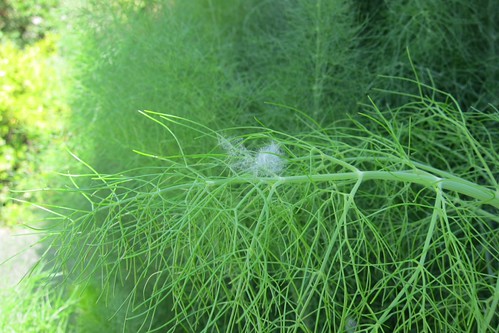
“There’s fennel for you, and columbines.” Hamlet [IV, 5]
IMG_7545

Images Copyright 2010-2012 by Katy Dickinson

Leave a comment

Filed under Home & Family, News & Reviews

TechWomen in Washington DC

IMG_0658

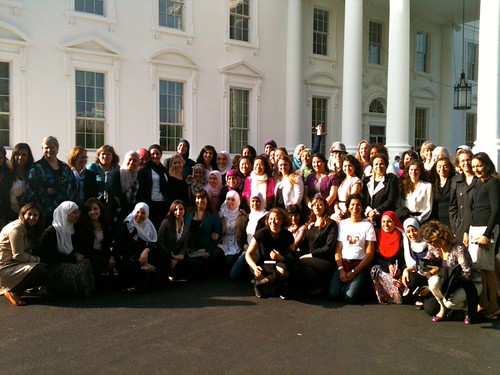
Yesterday very early, the TechWomen mentors and mentees arrived in Washington DC. Starting tomorrow, we will participate in workshops and meetings and events at the US State Department. This weekend, we are exploring the American capital.

We started with a short self-guided walking tour of the White House. I had not been there since I was a little girl – it seems smaller now! The symbolism and discussion of each item and decoration in every room – both by the visitors (and reportedly by the White House Historical Association started by then-First-Lady Jacqueline Kennedy) are intense. There was no object that the guard-guides in each of the few rooms on the tour could not discuss in fascinating detail – except the rugs and curtains which apparently get worn and swapped out too often for much to be said about them. I only have not-very-good cell phone pictures because no cameras (or almost anything else) are allowed in.

Yesterday afternoon, I visited the charming Folger Shakespeare Library and garden (and bought an addition to my Shakespeare garden book collection). Then my mentee and I walked to the historic and lovely Islamic Center. A small TechWomen group enjoyed dinner at Mio Puerto Rican Restaurant.

IMG_6265

IMG_6308

IMG_6330

Images Copyright 2012 by Katy Dickinson

Leave a comment

Filed under Mentoring & Other Business, News & Reviews

Shakespeare Reading Group

IMG_5102

The community at Saint Andrew’s Episcopal Church has just started a Shakespeare Reading group, with me as the official Shakespeare Mentor. Tonight, 13 of us met to read Midsummer Night’s Dream together. Melita Thorpe hosted the event and organized the pot luck supper.  As the Shakespeare Mentor, I recommended MSND movies to watch in advance, sent out an email with background on the play and recommendations for how to read Shakespeare, brought texts to read from, and distributed roles for the evening. My favorite MSND films are those of 1935, 1968, 1996, and 1999 (see details on the Midsummer Night’s Dream wikipedia page section on films).

My advice on reading Shakespeare socially:

  • Shakespeare wrote play scripts – not literature – reading a Shakespeare play is entertainment and you should enjoy yourself!
  • Trust the punctuation – pause not at the end of a line or at a rhyme but only at the period ending the sentence.
  • Read as quickly as you can using a normal tone – no special accent is needed for most roles.
  • Keep going – do not pause between speeches or scenes – the characters should sound like they are responding to each other.
  • If there is a word you do not know, give it your best guess and go on (or you can ask for advice!).
  • The gender of the role and of the reader do not have to match – remember that Shakespeare had an all-male cast.
  • If the lines in your script do not match the lines in someone else’s, don’t worry about it – Shakespearean scholars don’t always agree on the text – just keep reading.

Everyone enjoyed the evening – several of the readers made us all laugh.  I am looking forward to future meetings!

Image Copyright 2012 by Katy Dickinson

4 Comments

Filed under Church, Home & Family, News & Reviews

37 Sisters – TechWomen

TechWomen . TechWomen . TechWomen

Yesterday, we held the final TechWomen presentations by the 37 Mentees from Algeria, Egypt, Jordan, Lebanon, Morocco, and the Palestinian Territories. A year ago, when the Anita Borg Institute staff and I first started working toward this goal with the Institute of International Education, we hoped that this program would further ABI’s Mission to:

* increase the impact of women on all aspects of technology, and
* increase the positive impact of technology on the world’s women.

I still think TechWomen will do that. What I didn’t know was how the program would powerfully effect the lives of these particular women, and how we who have worked with them would ourselves be changed by their passion, dedication, and energy. When I listened closely to yesterday’s 37 five-minute talks, I heard many Mentees call the TechWomen group their new sisters, friends for life.

The King in Shakespeare’s Henry V, famously speaks of “We few, we happy few, we band of brothers”. In TechWomen, we have created a “band of sisters” who I believe will indeed change our world for the better. I have been honored to help teach and support them and I will watch their accomplishments for many years with great pride. They have stolen my heart.

Next week, we enter into the pomp of Washington, D.C. The program participants will be honored at the U.S. State Department by Secretary of State Hillary Rodham Clinton, who has generously supported the program from the start. This interim for public celebration comes between the learning and stretching we have all experienced here in the Silicon Valley and the harder work of making new dreams real when the Mentees go home to the Middle East and North Africa.

Huawei TechWomen

Images Copyright 2011 by Katy Dickinson

1 Comment

Filed under Hopper - Anita Borg Institute, Mentoring & Other Business, News & Reviews

Chinese Name, English Name

Since starting to work for Huawei, I have learned something about Chinese names and English names. I am sure I there is a great deal more to know! I have even acquired a Chinese name of my own:

丁凯笙 ( in simplified Chinese) which sounds like Dickinson
Ding  – 丁 – a real Chinese last name
Kai – 凯 – means glory or victory
Sheng – 笙- a type of Chinese instrument made of vertical pipes

My husband John Plocher’s Chinese name is:

蒋伯乐 (in simplified Chinese)
Jiang or Chiang – 蒋 – which sortof sounds like John
Buo Le – 伯乐 – which is a historical Chinese name and sounds like Plocher (if you don’t speak German)

How Chinese names sound and what they mean matters. My advisers in these matters said it was important to pick a homophone of my name in English. I can not just use my full birth name because it is hard to say and impossibly long by Chinese standards: in addition to my nickname of Katy, I have a three formal names of three syllables each! So, we settled on trying to find a Chinese name that could stand in for my surname only. Despite much discussion, I still ended up in some controversy because while the Chinese name I picked sounds good and has a positive meaning, it does not sound feminine enough. I like it anyway.

Americans often pick names for their children to honor a relative or refer to a famous person, or just because it sounds good. English names often seem to be chosen by Chinese because they (sortof) sound like the person’s original name in Chinese. English names are used by Chinese speakers to make it easier for non-Chinese-speakers to pronounce and remember.  Also, having an English name saves them from hearing us mangle the pronunciation of their Chinese name.

One of my coworkers at Huawei in Santa Clara, California, picked the English name Michael. I do not think he considered that the name had an origin but Michael was interested to know that his is the name of the angel who is the general of the armies of God. My next-door-office-neighbor Olivia was interested to find out that her name was coined by Shakespeare in Twelfth Night (1601). Another co-worker was fascinated to find that three American women he knows whose English names sound very different to him (Katy, Kate, and Kathy) are using nicknames and all three share the same first name: Katherine. The concept of nicknames in English does not seem to translate well into Chinese.  I used to work with a woman whose American birth certificate bears the name Suzie – because that was the only American name her newly-arrived-from-China parents knew.  They did not know it was a nickname for Susan.

My favorite English name story is from my recent trip to Shenzhen, China. The staff I was working with generously took turns driving me to and from my hotel since it was so very hot and I get lost easily. One evening, Cheryl (whose real name is Tautau) said that my driver would be Lucy. I glanced around for a someone whose name might be Lucy, ignoring the energetic young man standing next to Cheryl, who then threw up his hands and proclaimed “I am the Lucy – man!” Since changing English names does not seem to be a big problem in China, I suggested that he might want to call himself Luke to reduce confusion.

English names for people from China, and Chinese names for Americans working with China, seem to be picked using the same criteria as picking a coffee name or a username – pronunciation and memorability are key.

2 Comments

Filed under News & Reviews