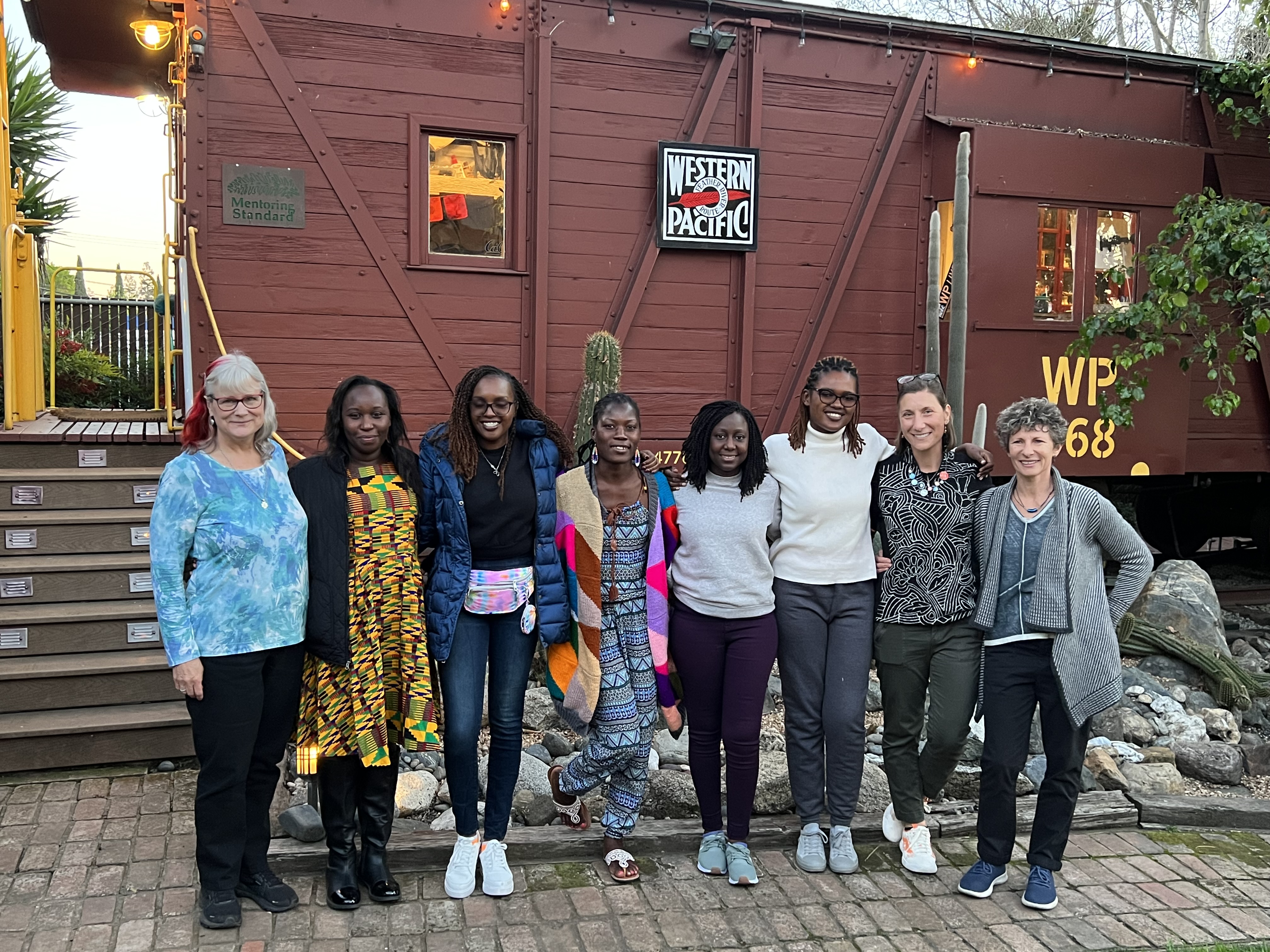
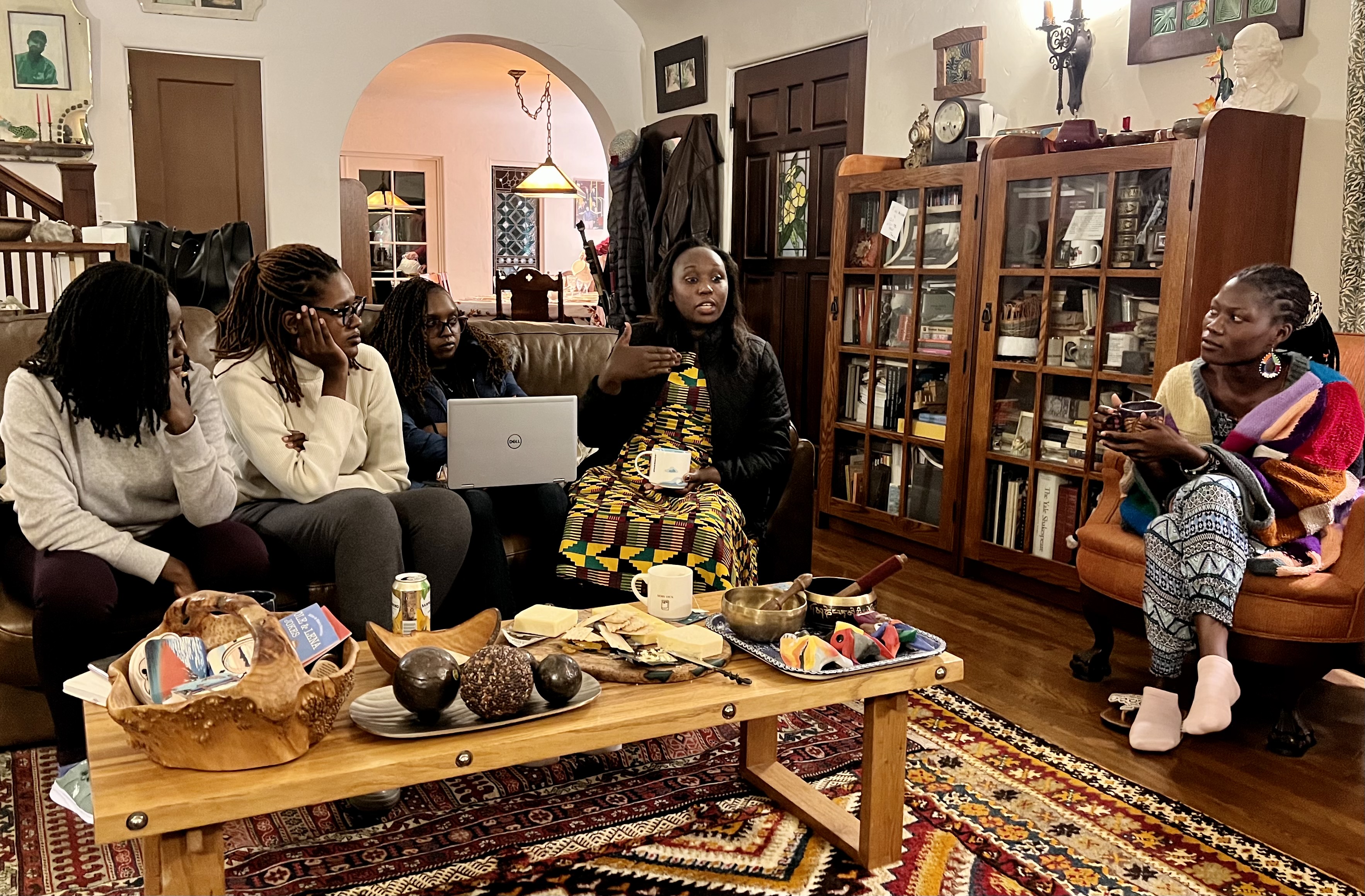
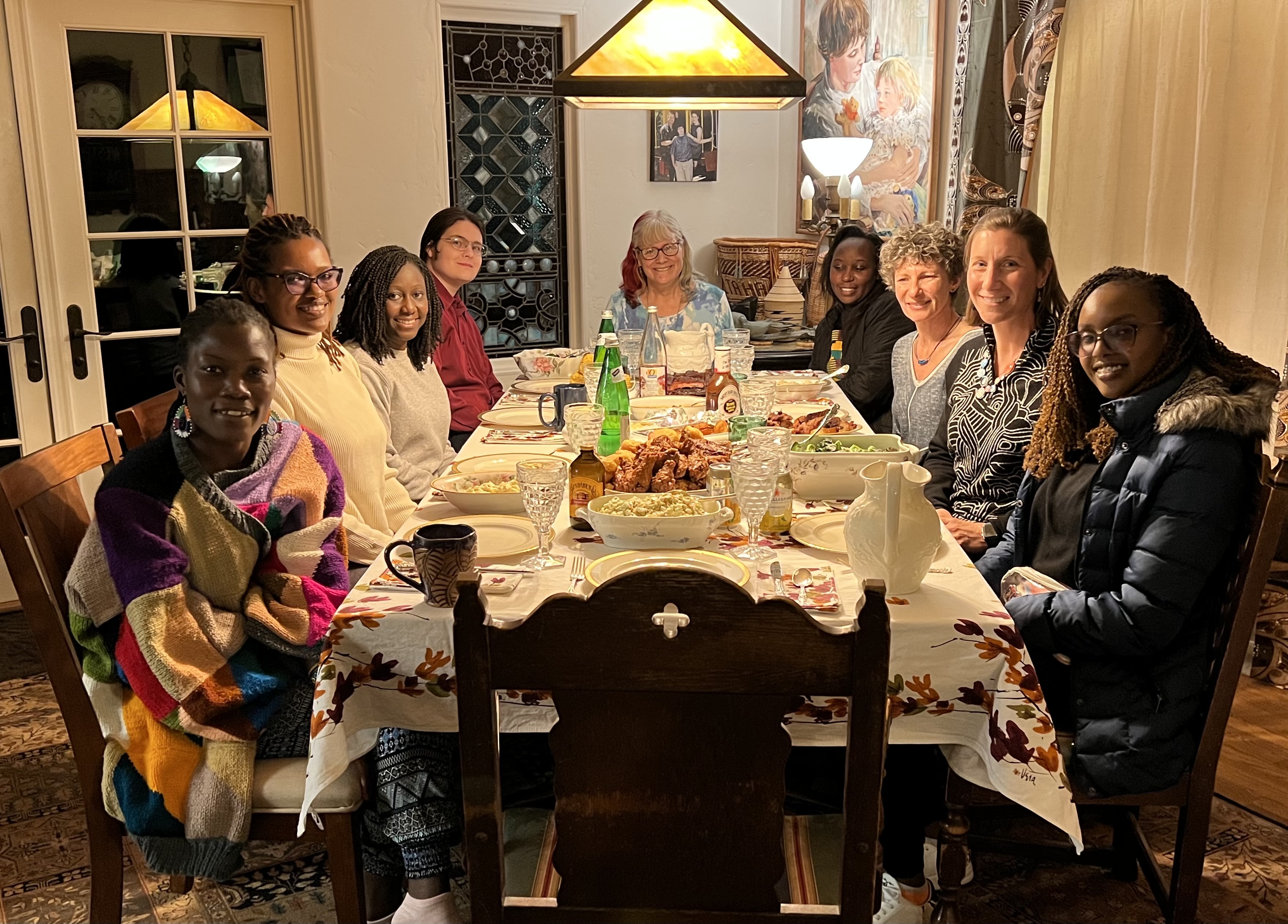
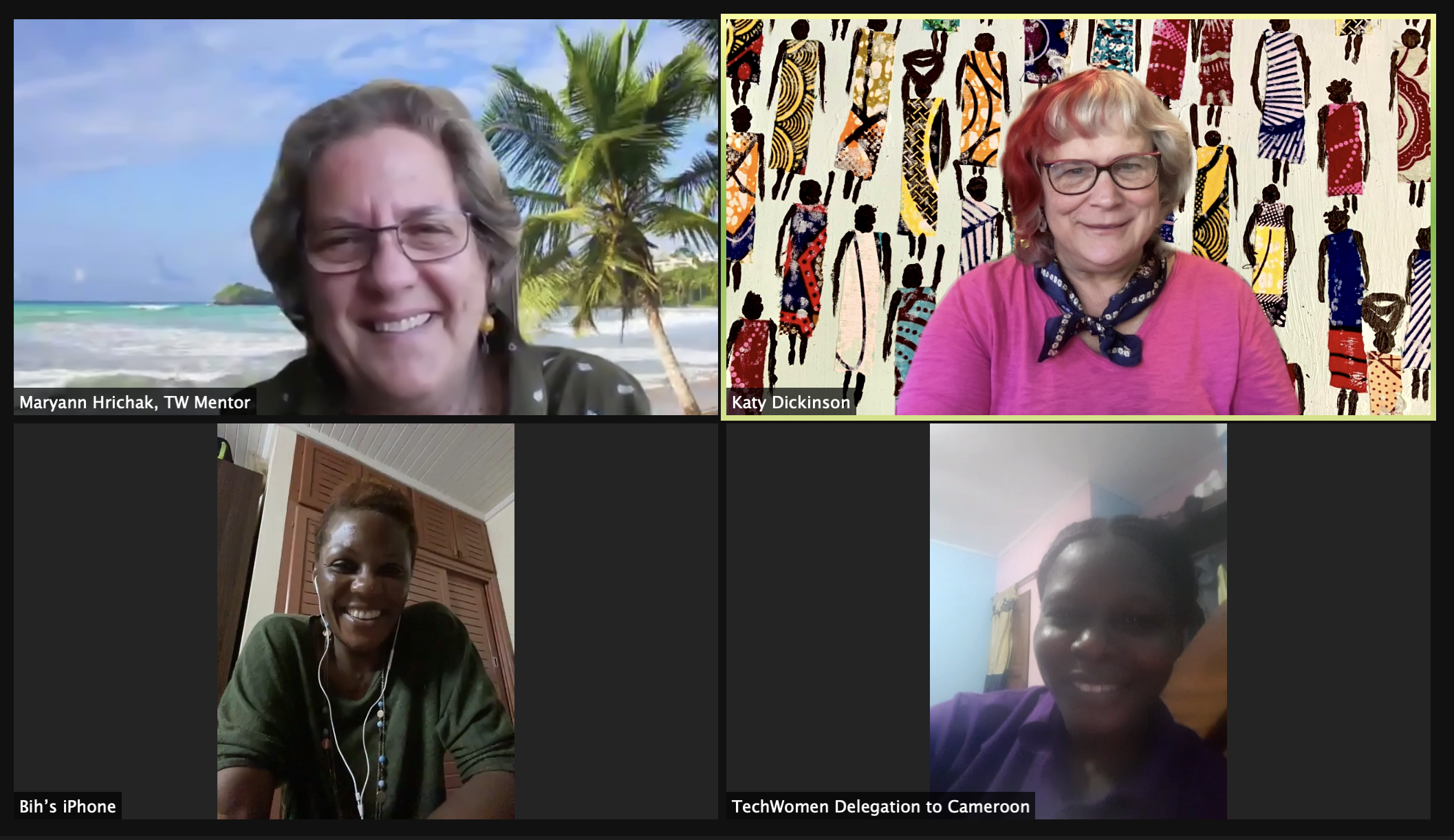
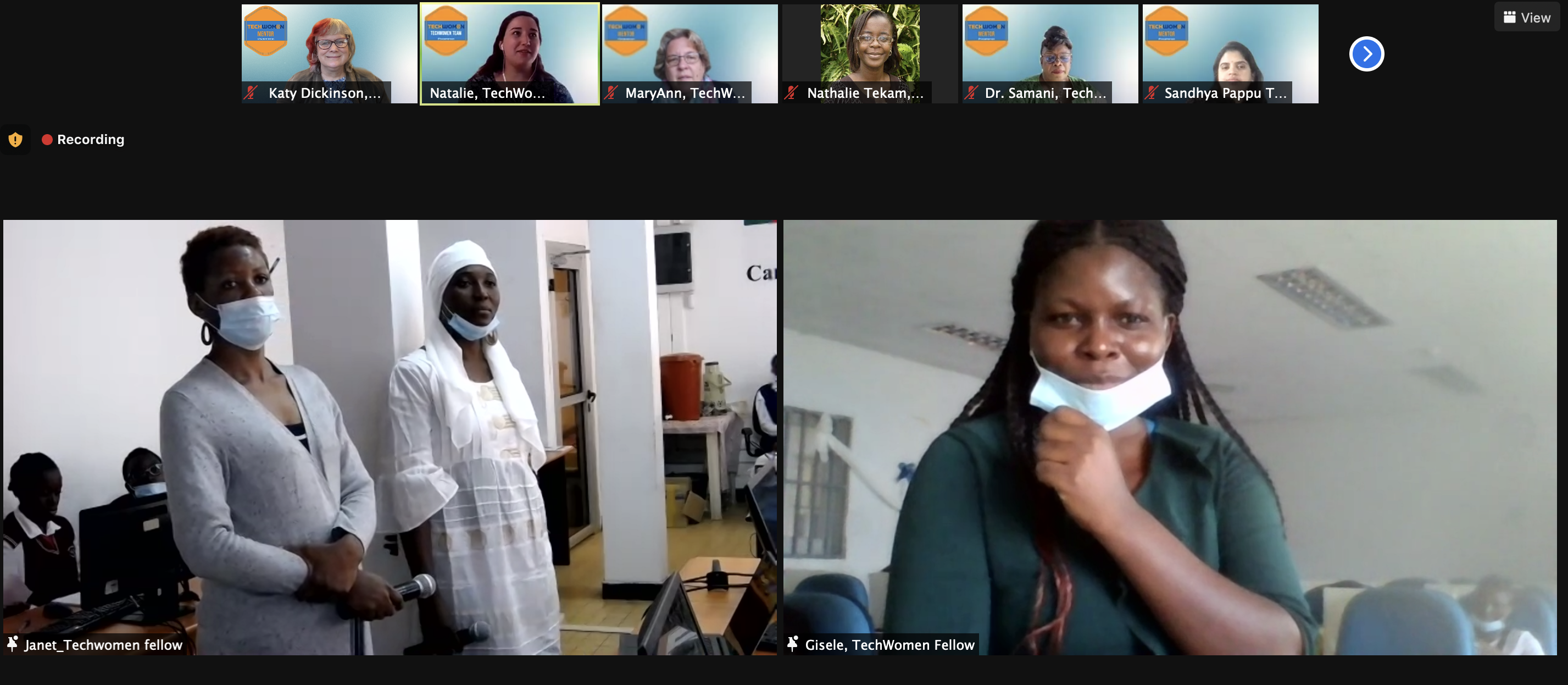
I am honored to work with TechWomen Team Kenya this term. My Co-Mentors are Ella Morgulis and Samantha Raniere. Everyone was at my house in San Jose, California, last night for a team meeting and dinner. We are getting to know each other and enjoying learning together. They had fun touring my caboose office, WP668.
TechWomen brings emerging women leaders in science, technology, engineering and mathematics (STEM) from Africa, Central and South Asia, and the Middle East together with their professional counterparts in the United States for a mentorship and exchange program. I have been working with TechWomen since I helped to design it in 2010. Launched in 2011, TechWomen is an initiative of the U.S. Department of State’s Bureau of Educational and Cultural Affairs (ECA) and is managed by the Institute of International Education (IIE).
TechWomen Team Kenya, 10 March 2022TechWomen Team Kenya, 10 March 2022TechWomen Team Kenya on Zoom, 12 March 2022
If you want to receive Katysblog posts by email, please sign up using the Sign Me Up! button (upper right on Katysblog home). Image and Paper Copyright 2022 by Katy Dickinson.
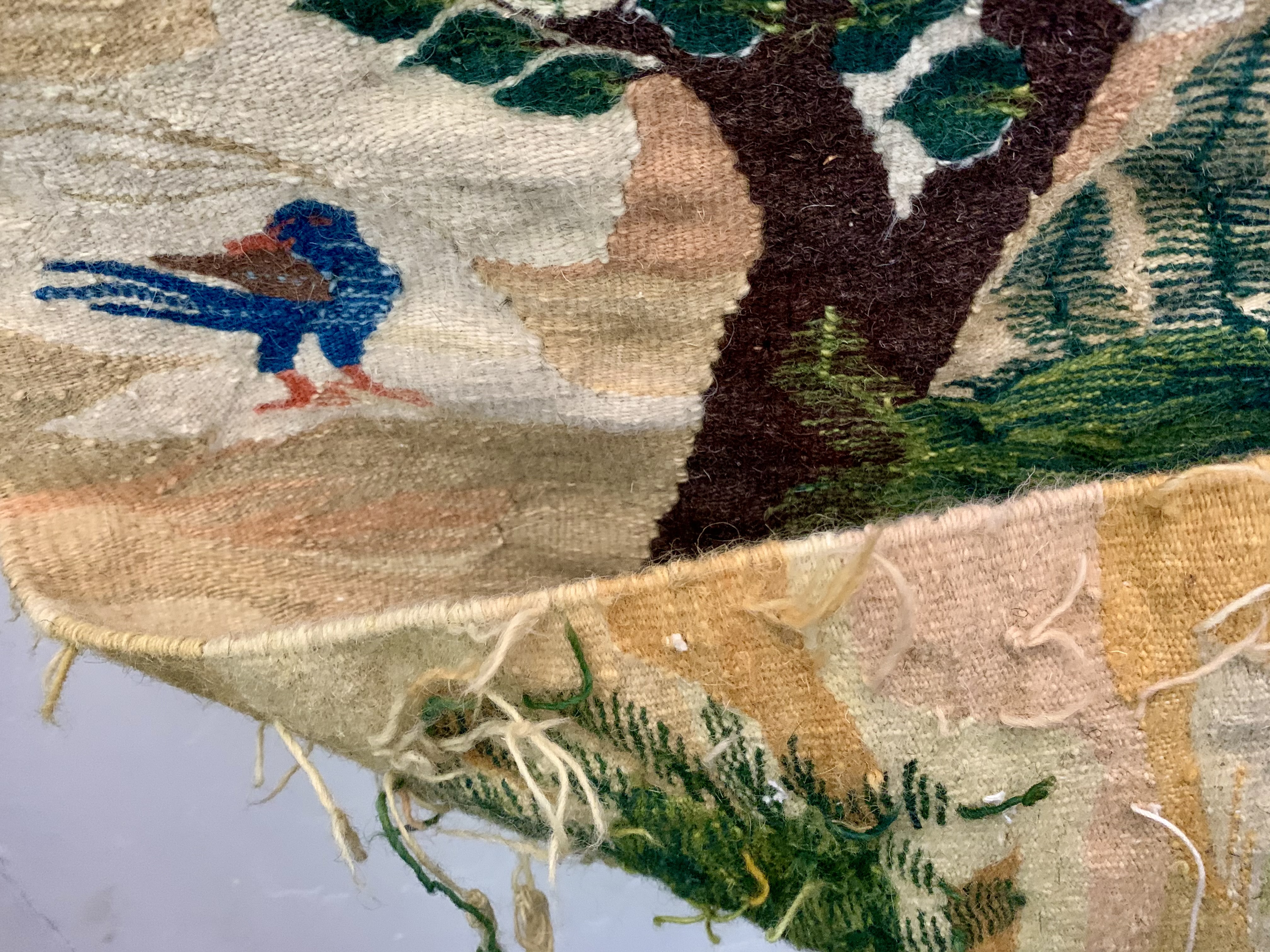
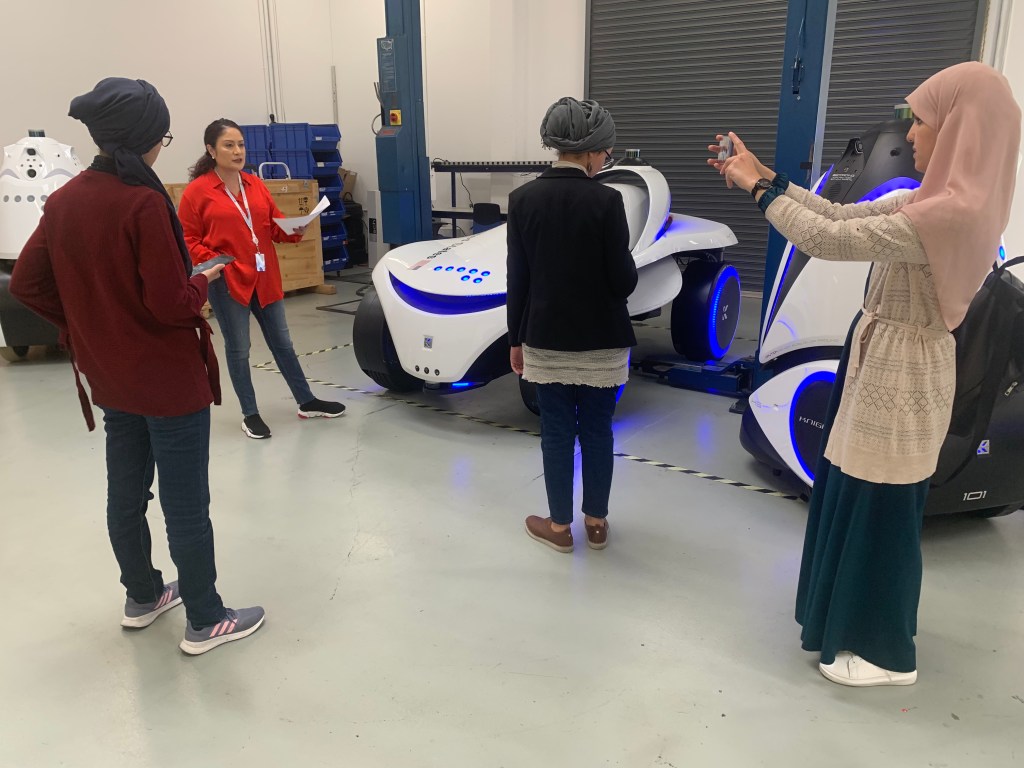
Maryann and I will introduce the online discussion through the history of computing and weaving, specifically Jacquard looms, considered a precursor to modern computing technology. The idea for this approach came from my daughter Jessica Dickinson Goodman who was one of the Mentors on the 2018 TechWomen Delegation to Nigeria during which she gave a workshop on “Teaching Binary and Encryption Through Weaving.” Our Physical Computing session this week will be relatively short but we plan to cover the relationship of physical objects (like looms and yarn) to computing devices. We will show parts of the hands-on video “Personal Jacquard Weaving” and will end with a more futuristic view in the video “Knightscope – Present and Future” from Knightscope, the robotics company where my long-term TechWomen Co-Mentor, Mercedes Soria is Executive Vice President of Software Engineering, and Chief Intelligence Officer.
Some key dates from my introduction: 1804 Jacquard loom, 1837 Babbage Analytical Engine (programming by Ada Lovelace), 1884 Hollerith punched card tabulating machine (used in 1890 U.S. Census). Punch cards and paper tape continued in use until the 1990s.
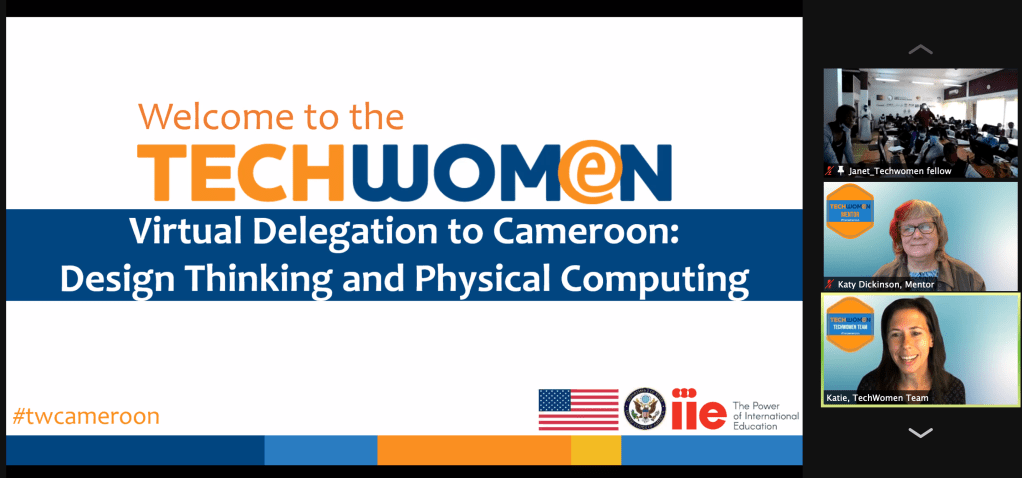
Gisele and Janet will lead the students through an exercise using the MIT Media Lab’s Scratch program. Gisele wrote this about the exercise: “To control a system, or automate its operation, we use the variables which can be random or fixed depending on the type of sensors, we apply the conditions. Loops are uses to do the same thing infinitely. These concepts are the basics of physical computing.” This is their handout.
Here is our 17 June 2021 session plan:
10 minutes – Introduction to Physical Computing (Katy Dickinson & Maryann Hrichak) on Zoom, including Arduino weaving video segment
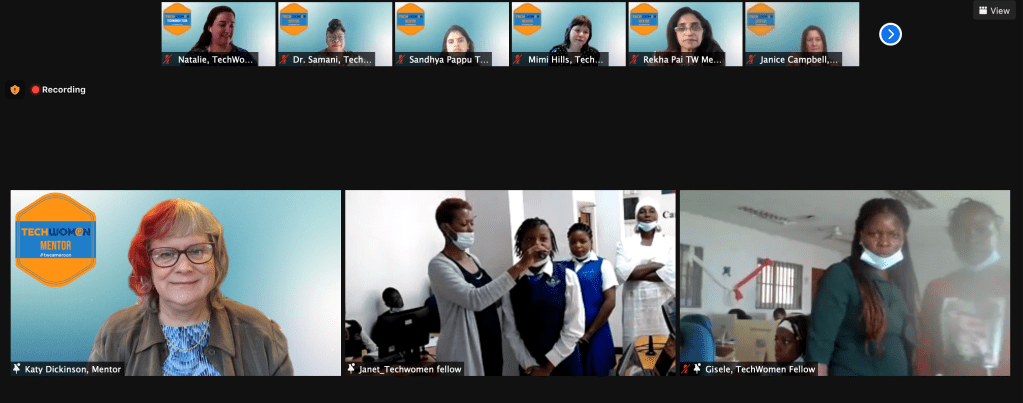
25 minutes – Scratch activity in two Zoom breakout rooms with about 50 students each, one in Douala (lead by Gisele), and the other in Yaoundé (lead by Janet), with ten TechWomen mentors helping
5 minutes – Reflection (Katy Dickinson & Maryann Hrichak) on Zoom, including Knightscope robots video
Xaviera Nguefo Kowo and Janet Bih Shufor, TechWomen Cameroon Delegation 2021-06-17Fellows Janet, Jessica, Gisele of TechWomen Cameroon Delegation 2021-06-17
Thanks to Jeannice Farrer Samani, Janet Bih Shufor, and others for their recommendations on materials below. During our TechWomen-Cameroon Physical Computing session, I knew many of the girls might have network connection problems or would not fully understand the Zoom-based presentations because we spoke in English and many of them are French speakers. I want the “References and Resources” to present inspiring materials they could read later. I selected physical computing examples focused on weaving and robotics and included women and girl role models not only from Cameroon and Africa but also from the U.S. I hope that the girls will find these materials helpful!
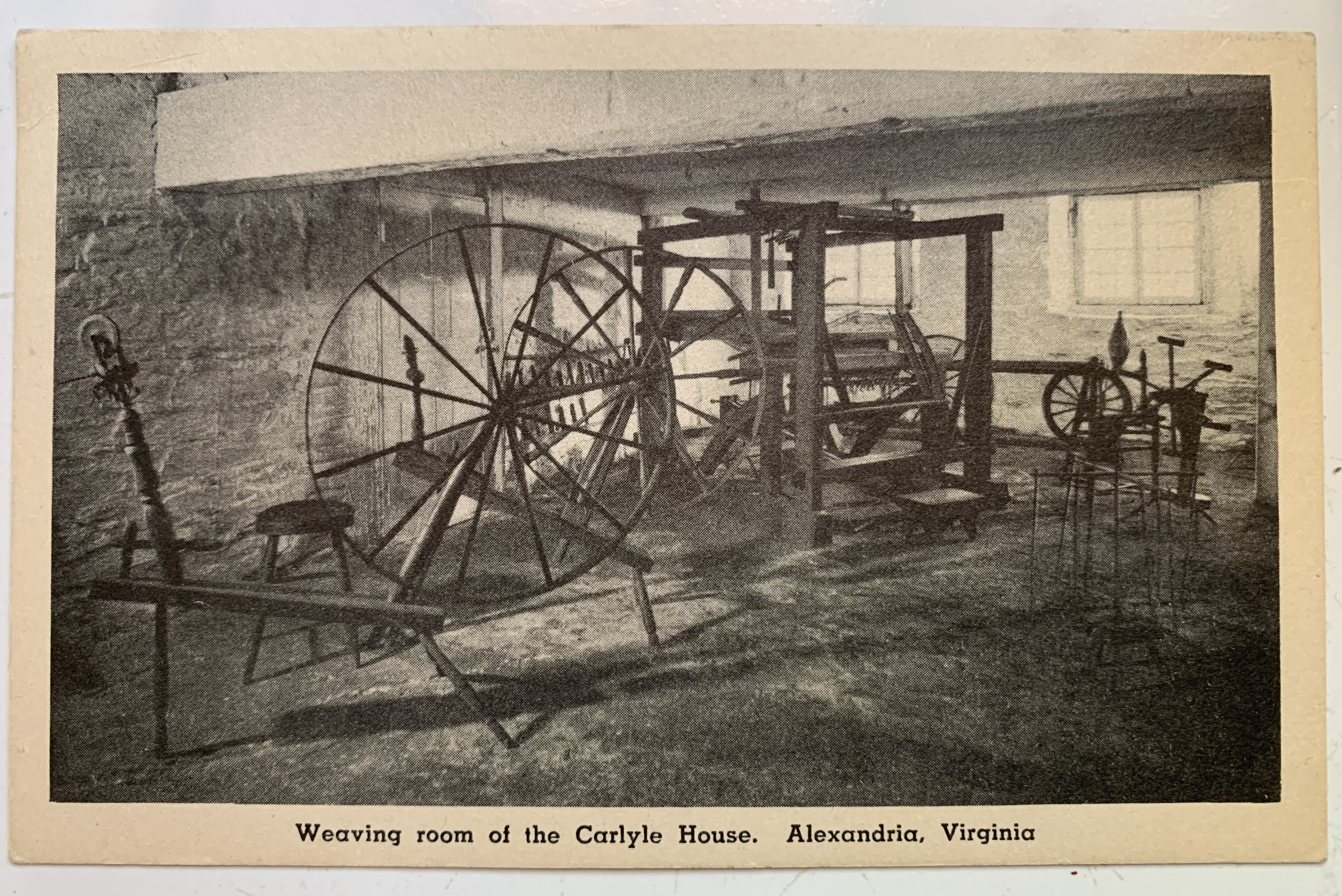
1640 Weaving Room, Carlyle House, Alexandria, Virginia USA (postcard).
Updated 22 June 2021
If you want to receive Katysblog posts by email, please sign up using the Sign Me Up! button (upper right on Katysblog home). Images Copyright 2019-2021 by Katy Dickinson.
If you want to receive Katysblog posts by email, please sign up using the Sign Me Up! button (upper right on Katysblog home). Image Copyright 2019 by Katy Dickinson.
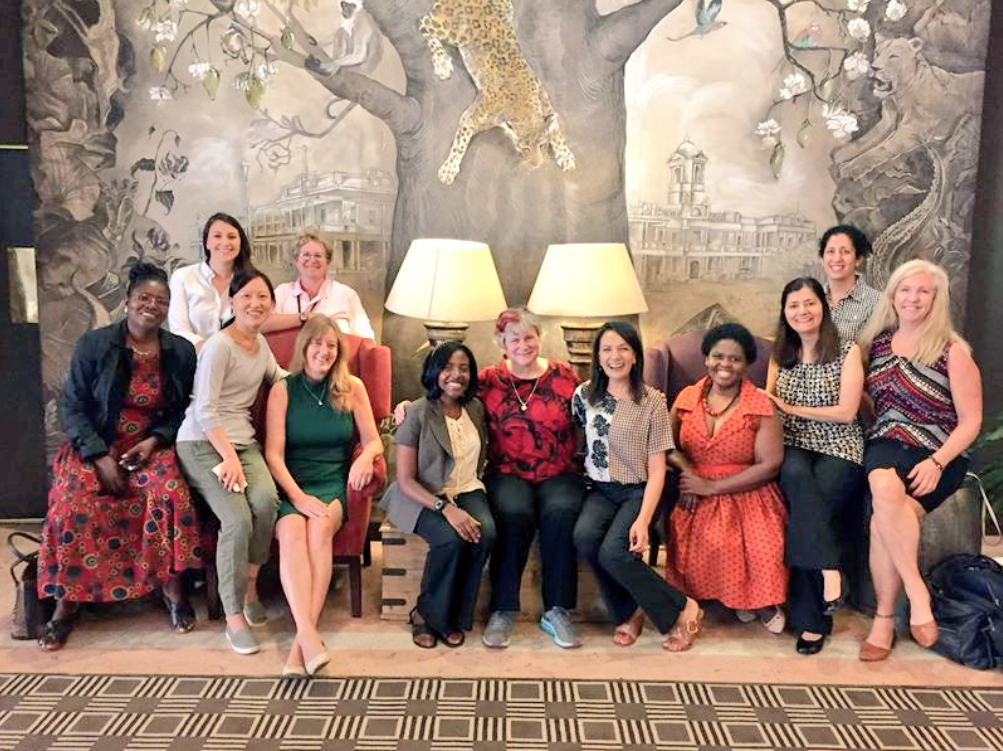
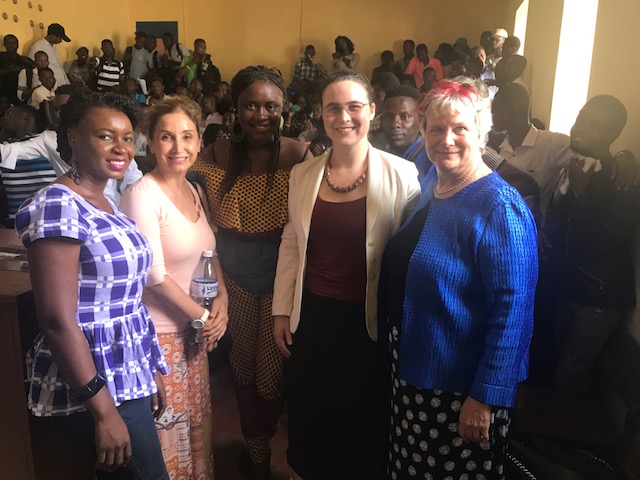
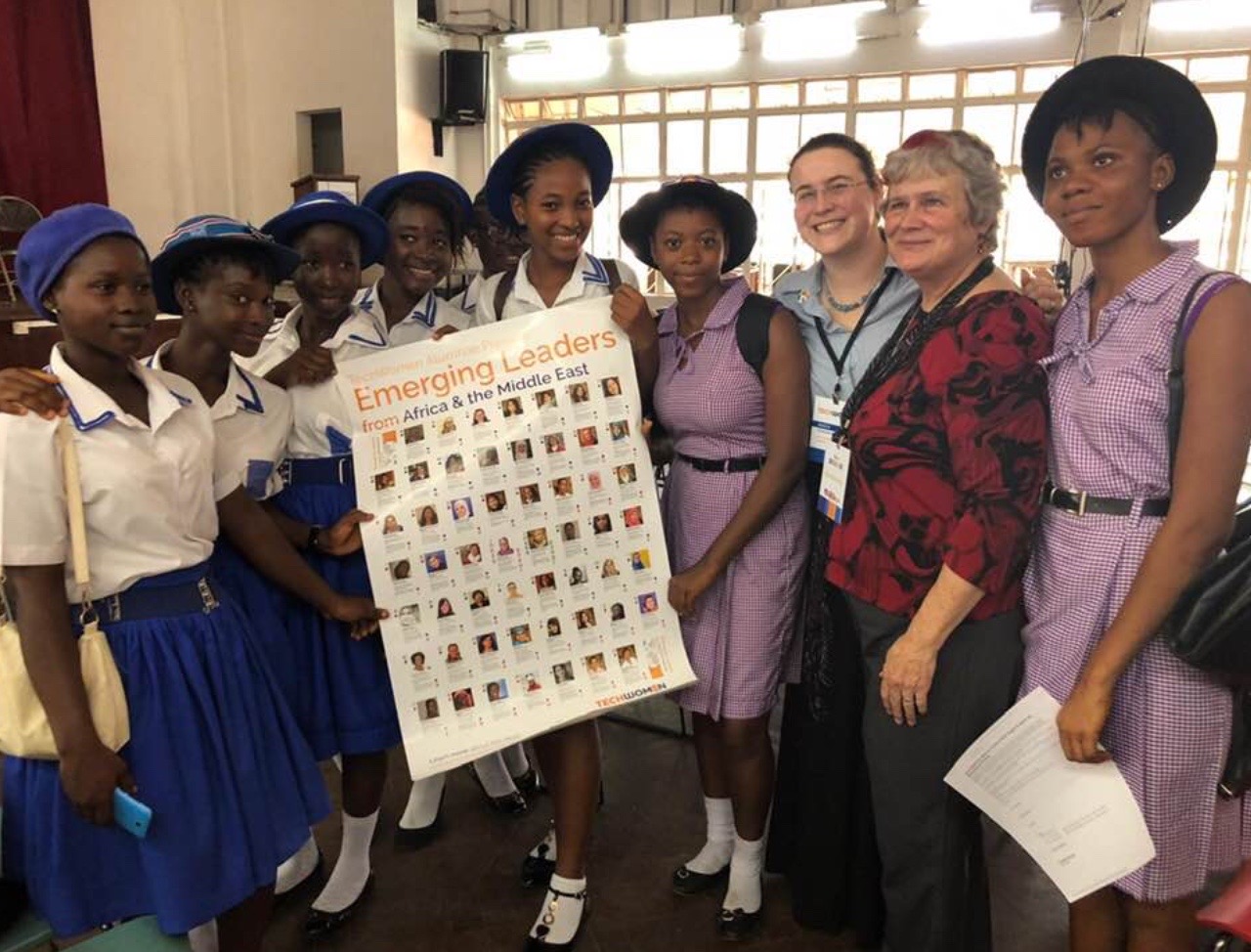
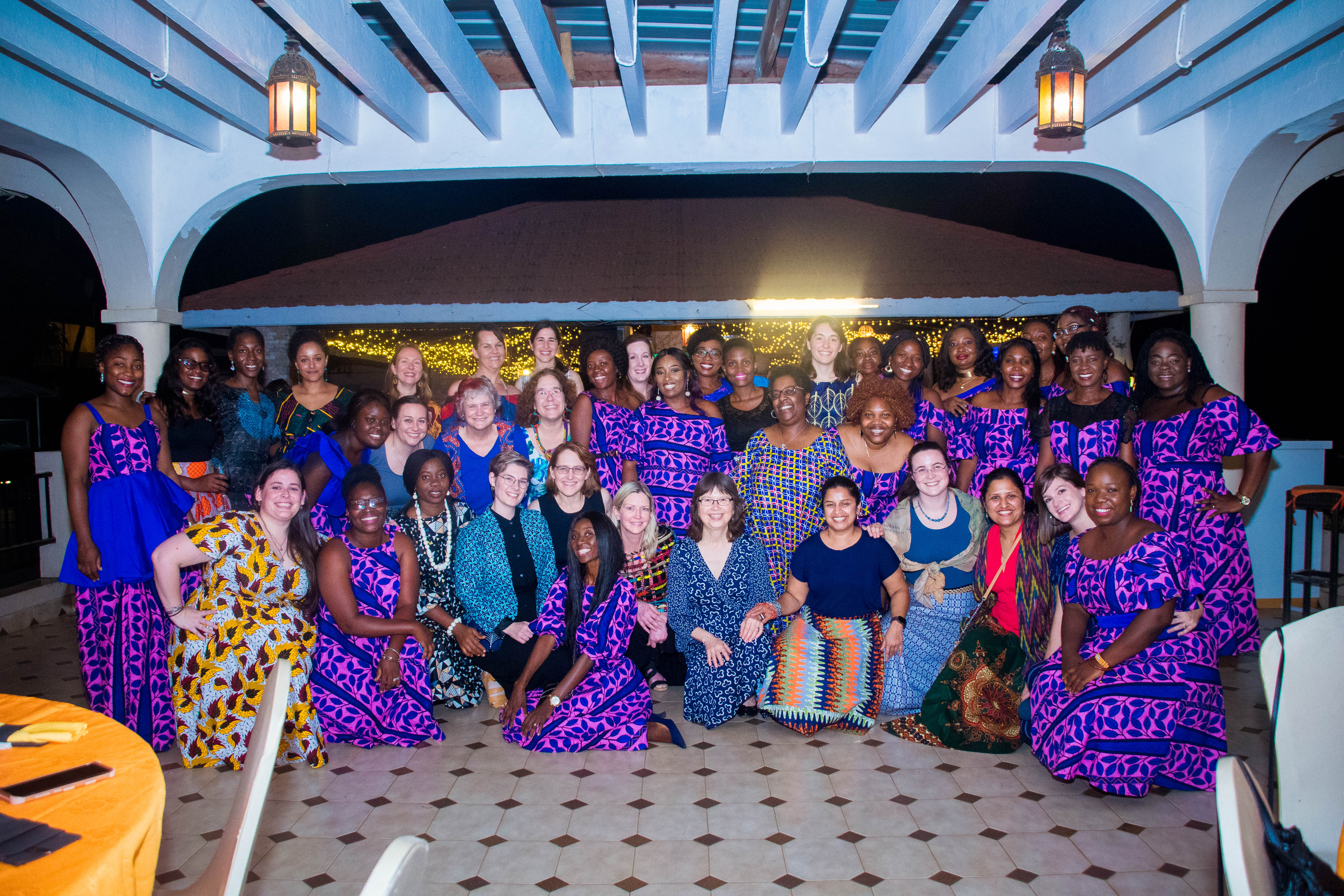
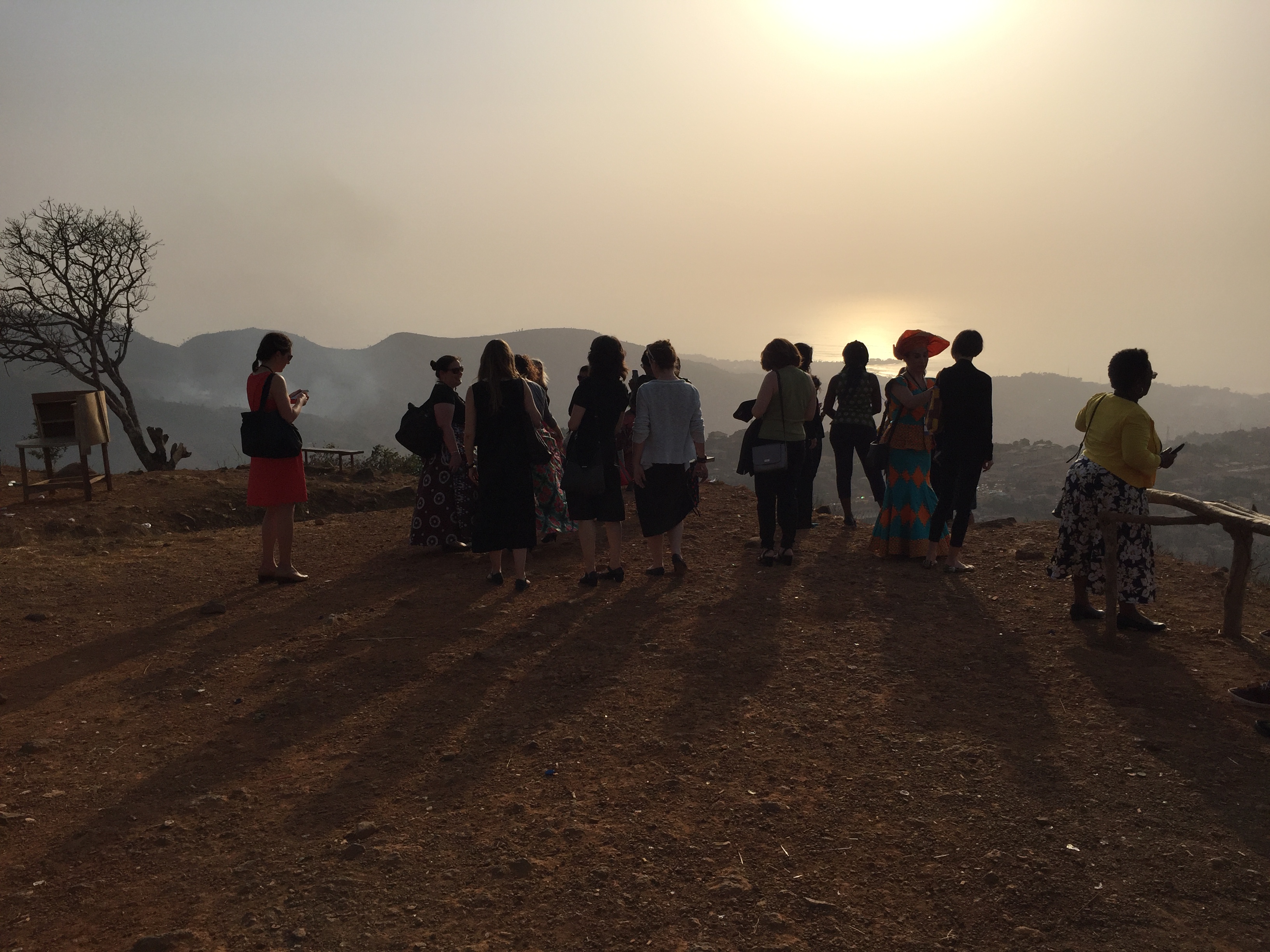
I am honored to be one of the 2020 TechWomen Impact Coaches for Sierra Leone, working again with fellow Mentor, Mercedes Soria. We mentors just finished our second online training meeting with IIE. I have visited Sierra Leone twice, once in 2017 with Families Without Borders and then again in 2019 as part of the TechWomen Delegation, for which I gave the Networking Keynote address. I am happy to be working with Salwa Campbell as our Sierra Leone Peer Advisor for the five Emerging Leaders from Salone.
I was the Process Architect for TechWomen 2010-2011 and have been a TechWomen mentor and part of eleven international delegations since 2011. TechWomen is an exchange program of the US Department of State – Bureau of Educational and Cultural Affairs. This life changing program is very dear to me and I am looking forward to helping the 2020 Team Sierra Leone develop a project that will help their community.
Tools I mentioned on today’s training call, for teams working at a distance: Google Groups – email distribution and archive, WhatsApp – quick messages and meeting reminders, Facebook – personal updates and contacts, LinkedIn – professional updates and contacts, Skype or Zoom – to communicate verbally, Google Drive – to share and communicate in writing. Send a WhatsApp message to the whole team 2 hours in advance of a team meeting so they don’t have to remember US time zones, Daylight Savings, etc. Mentors have to keep up with country events by reading BBC News, Al Jazeera, New York Times.
If you want to receive Katysblog posts by email, please sign up using the Sign Me Up! button (upper right on Katysblog home). Images Copyright 2017-2019 by Katy Dickinson.
EfM at St. Andrew’s Episcopal Church, Saratoga, California
Education for Ministry is holding an online training this week for its mentors, trainers, and other seminar leaders, many of whom are starting their annual terms this month. We have over 165 already signed up!
Cynthia C. Hargis, Diocesan Relations and EfM Online Coordinator, University of the South – School of Theology – Education for Ministry, asked Cheri Winter (EfM Coordinator and Mentor, Diocese of Colorado), and me (EfM Coordinator and Mentor, Diocese of El Camino Real) to give this session on how to use Zoom for EfM seminars. Our training materials are linked here, both for those who will attend the session and for others who may find them helpful:
If you want to receive Katysblog posts by email, please sign up using the Sign Me Up! button (upper right on Katysblog home). Images Copyright 2019-2020 by Katy Dickinson.
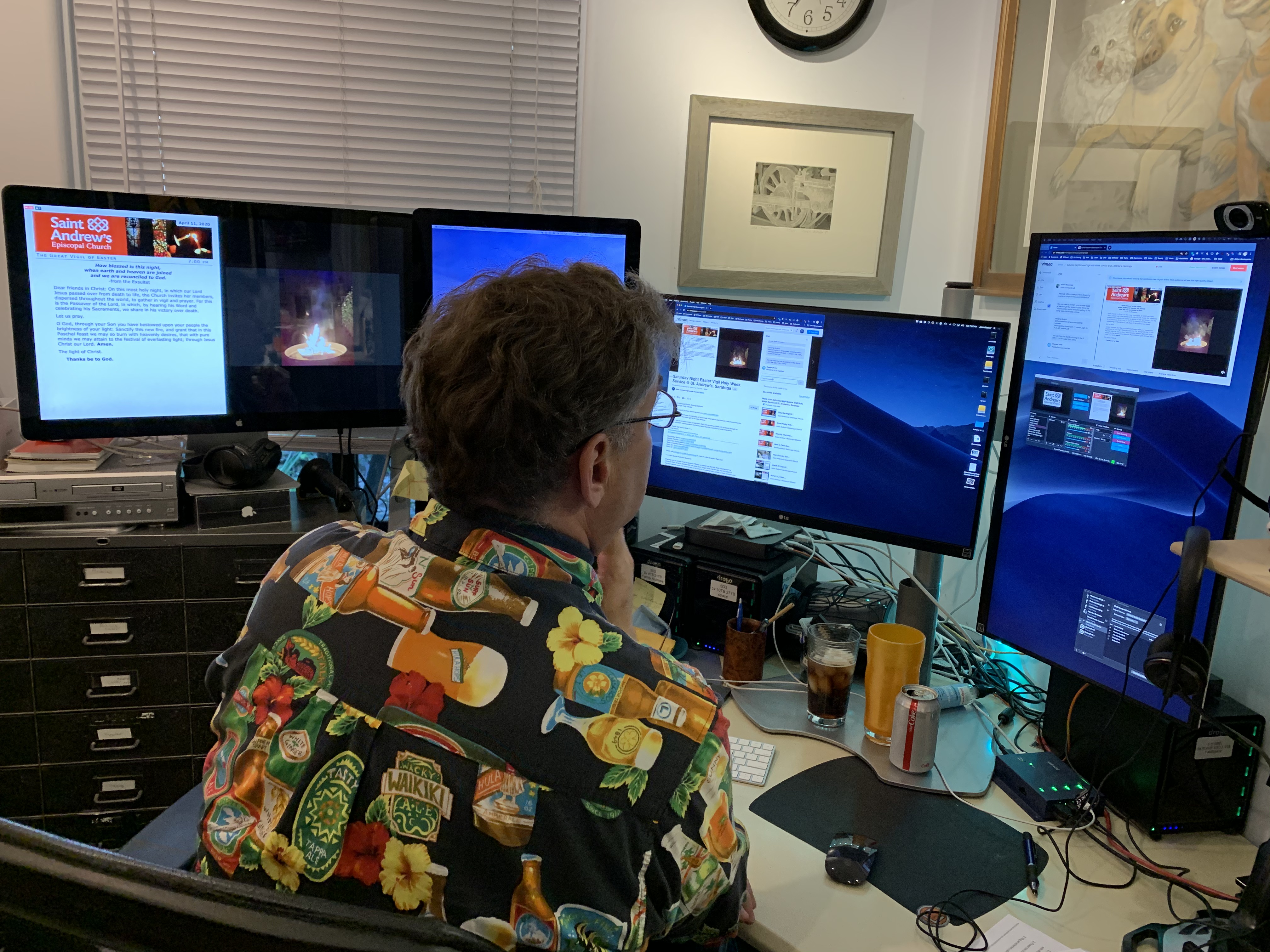
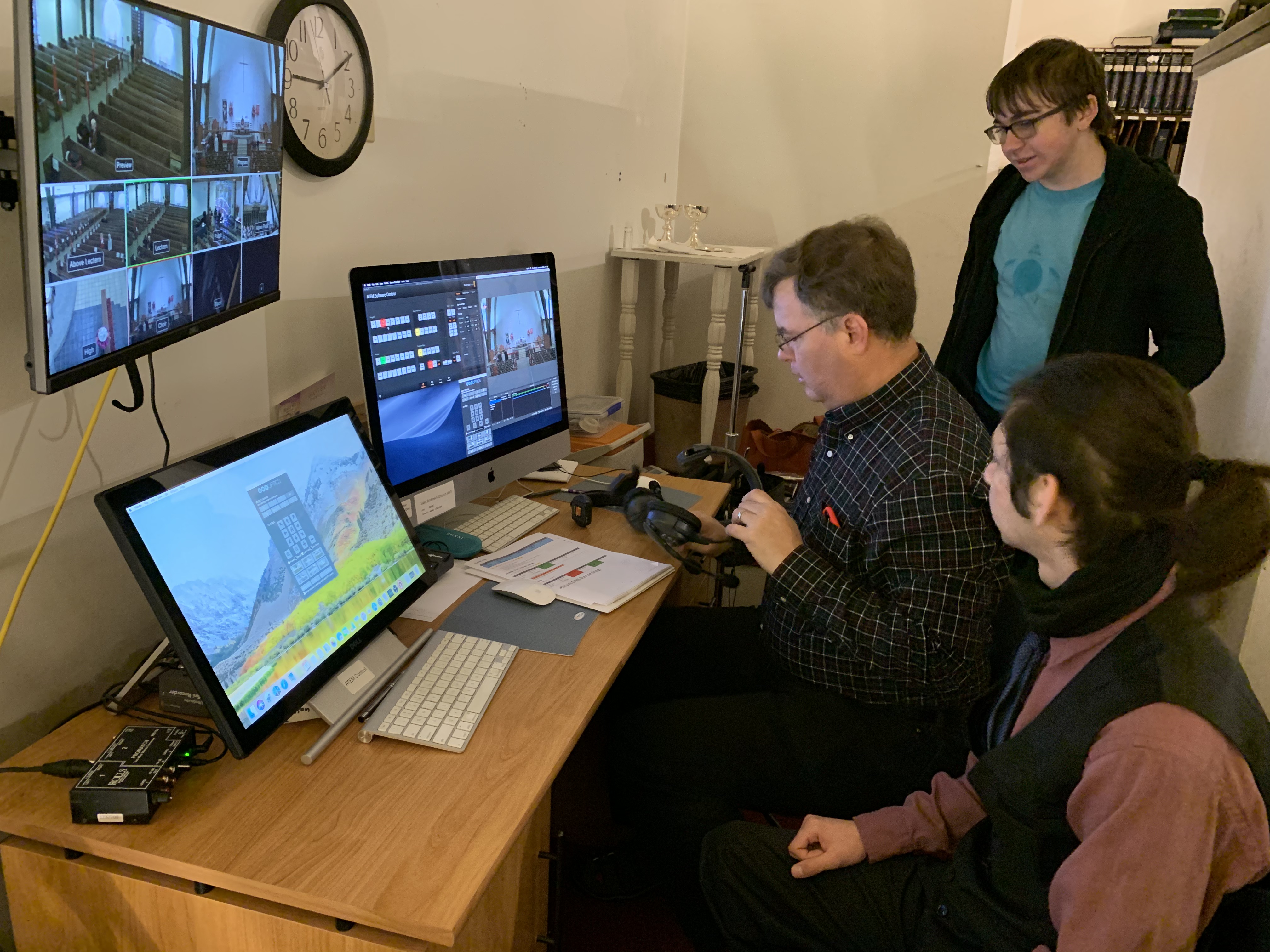
Since 2014, my husband John Plocher has been running the Video Ministry for St. Andrew’s Episcopal Church, Saratoga, CA. What started out needing a few hours a week using spare equipment has grown vastly since the Covid-19 pandemic took over our lives this year. John now routinely spends 12 or more hours a week creating and editing videos of music and worship services using sophisticated software and hardware. (Some of which were paid for by a 2018 St. Andrew’s Opportunity Fund grant.) John has been mentoring Youth Group members for over a year to develop their technical skills and extend the Video Ministry. In the hope that recruiting and training even more helpers will reduce his own load, John has written these process documents.
John has developed a chat and video best practices exchange group – contact me if you want to join. He publishes stand-alone videos of the classical and folk service music on Saint Andrew’s Sings. Go there to hear “All Things Bright and Beautiful,” the “Navy Hymn,” a folk Taizé “Jesus Remember Me,” “Rest in the Lord,” “Hail the Day that Sees Him Rise,” “We’ll Meet Again,” and other favorites. Or, hear the music as part of the weekly worship service videos. (More in my blog post New Music for Quarantine Times.)
I have been helping John by reviewing videos during development, finding memes for the end, and providing photos for preludes and postludes: