Tag Archives: Islam

Yehuda Amichai and Suspicion

Yehuda Amichai poetry books

As part of my Islamic Studies certificate, in the Spring 2025 term I took a Graduate Theological Union (GTU) class called, “Literary Analysis of Islamic and Jewish Texts.” I was fascinated by the ancient Islamic literature we studied, particularly Attar‘s biography of the famous Sufi woman Rabi’a (also called Rabia Basri and Rābiʼa al-ʼAdawiyya al-Qaysiyya, 716-801 CE) in his Memorial of the Friends of God; however, I saw such a strong connection between battlefield soldiers like the modern Israeli poet Yehuda Amichai and incarcerated people that I chose that as my topic. Here is my paper.

Battlefield soldiers and incarcerated people are both groups who may find suspicion and watchfulness of their surroundings help them to survive in a fast-changing and dangerous world. In the paper I included three feedback quotes from men in reentry or who are still incarcerated about my Transforming Literature of the Bible class and its use of poetry. I gave a copy of the paper to the Elmwood Jail class this week and am curious to hear what they think. Here are the quotes,

“Poetry has helped me to express myself in a unique way. When I try to do poetry by sitting down and thinking about it, I think it is not as authentic as a spontaneous one. For example if I’m laying in bed and I’m thinking about something I jump out of bed and just start writing. Those are the best poems I have written.”

“I read lots of poetry in the class. Every poetry that I read had positive stories that taught me to be a better person even when I was in jail. It taught me to be strong in my faith and that everything is possible when you have faith to follow. No matter what we go through, everything is going to be OK.”

“The Brilliant poetry that is introduced to us in relation to the topics of study, are everything from heart felt amazement, shockingly heroic, Educationally sound, & a way to give multiple perspectives & ways of understanding. Artist & Poets…Bring understanding and awe, I’ve called home at times in excitement.”

Image (c) Copyright 2025 by Katy Dickinson. If you want to receive Katysblog posted by email, please sign up using the Sign Me Up! field (upper right on Katysblog home page).
Leave a comment

Filed under Chaplain, Church, News & Reviews

Fannie Lou Hamer as a Martyr

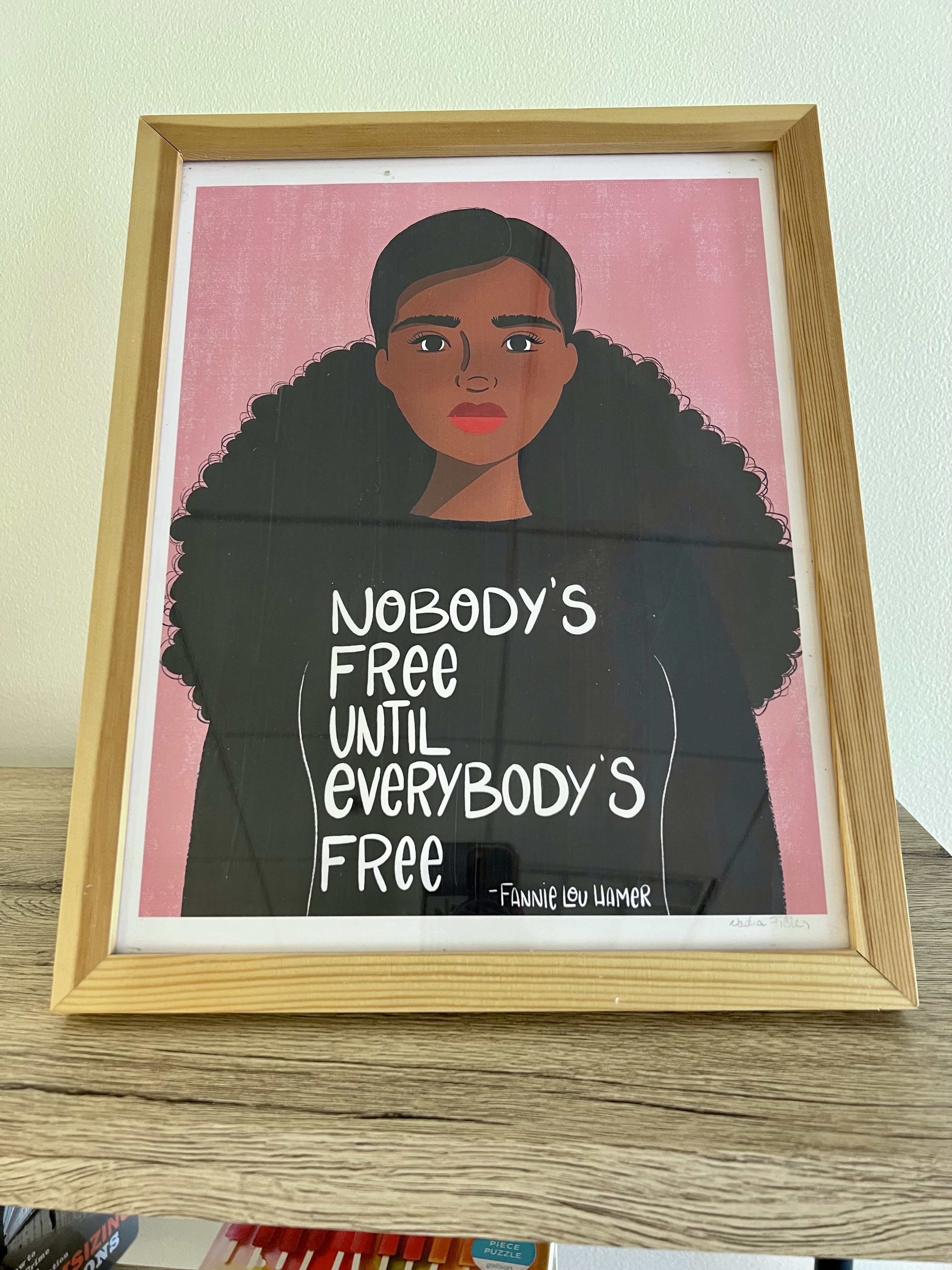
As part of my Islamic Studies certificate, in the Spring 2025 term I took a Graduate Theological Union (GTU) class called, “Martyrdom and Afterlife in the Qur’ān,” for which I gave a Presentation about notable American civil rights leader Fannie Lou Hamer. Our inspiring GTU professor was Dr. Mahjabeen Dhala. Part of my presentation explored what it meant for Hamer to be a martyr since martyrdom was a focus of our class discussions. I was happy to see a print of Fannie Lou Hamer decorating the offices of the Sentencing Project when I went to visit last week in Washington DC. Here is my Presentation.

If you want to receive Katysblog posted by email, please sign up using the Sign Me Up! field (upper right on Katysblog home page).
Leave a comment

Filed under Church, News & Reviews, Politics

Heaven in the Qur’ān and Christian Testament

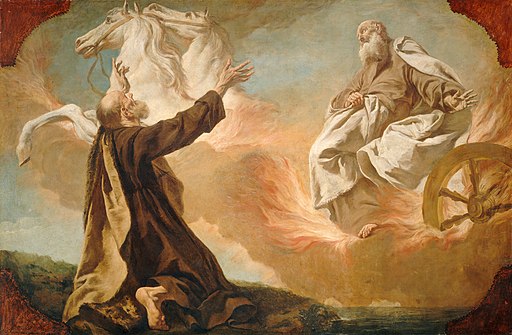
Elijah Taken Up in a Chariot of Fire, by Giuseppe Angeli, c. 1740.*

As part of my Islamic Studies certificate, I took a Graduate Theological Union (GTU) class in the Spring 2025 term called, “Martyrdom and Afterlife in the Qur’ān,” for which my final paper was, “Heaven in the Qur’ān and Christian Testament.” Our inspiring professor was Dr. Mahjabeen Dhala who presented us with a challenging reading list and led our class of Muslims, Christians, and Baháʼís in a series of discussions about death, the afterlife, martyrdom, and the end of days. I have studied with Dr. Dhala before and this class confirmed that she is one of the best teachers at the GTU.

I took the opportunity of the twenty-eight page final paper to explore a subject that I have been thinking about. Here is my introductory paragraph,

“In both Christianity and Islam, heaven exists and has always existed but there are different beliefs on how the living can engage with it. This paper provides an overview of some of these Abrahamic religions’s relationships with heaven, highlighting two key dissimilarities. The scope is intentionally constrained in addressing this vast and complex topic. I am not attempting to be comprehensive or to present all variants of belief. I will not discuss the specifics of physical resurrection, interim or last judgements, the Christian Jesus versus the Muslim Jesus (ʿĪsā ibn Maryam), or a variety of other tempting and fascinating topics. My comparisons will include the physicality of heaven, how some artists have envisioned how heaven looks, engaging with heaven during life, orthodox beliefs about heaven, when heaven opens, and mystical or heavenly cities. Writing this paper has become a journey of discovery as much as a research project. I keep finding new materials and points of view on eschatology and the end times. The Oxford Handbook of Systematic Theology offers this traditional definition, “eschatology comprised the ‘four last things’ that Christian faith expects to be the destiny of humans at the end of time: resurrection, last judgement, heaven, and hell.” Comparative eschatology is a big subject but considering the more limited question of what Islam and Christianity have to say about heaven seems possible in the space of a relatively short paper.”

You can read the whole paper here.

*This work is in the public domain in its country of origin and other countries and areas where the copyright term is the author’s life plus 100 years or fewer.

If you want to receive Katysblog posted by email, please sign up using the Sign Me Up! field (upper right on Katysblog home page).

Leave a comment

Filed under Church, News & Reviews

Polemics to Pluralism

Last semester at the Graduate Theological Union (GTU), I took a class called “Introduction to Islamic Theology” with Dr. Ahmed Khater. My final paper for the class was “Polemics to Pluralism.” Our main reading text was Commentary on the Creed of At-Tahawi by Ibn Abi al-Izz. We also read selections from Sharh Al-Aqeedat-il-Wasitiyah: Text on the Fundamental Beliefs of Islam and Rejection of False Concepts of its Opponents by Ibn Taimiyah, Kitaab at-Tawhid by Muhammad ibn Abd al-Wahhab, The Fundamentals of Tawheed by Abu Ameenah Bilal Philips, publications in the “Proofs of Prophethood Series” by the Yaqueen Institute for Islamic Research, parts of The Final Day by Umar Sulaiman Al-Ashqar, as well as videos and other published works. For my book review, I sought a different point of view, choosing Never Wholly Other: A Muslima Theology of Religious Pluralism by Union Theological Seminary‘s Associate Professor of Islam and Interreligious Engagement, Jerusha Tanner Rhodes. Many of these works were referenced in my final paper, which begins…

Polemics to Pluralism

In this paper, as an extension of our weekly class discussions this semester on similarities and differences in theology between Islam and other faiths, I engage with selected historical and contemporary Muslim scholars with regard to how they communicate, by means of theological polemics at one end of the range, through pluralism and interfaith dialogue at the other. I focus on communication by Islamic scholars in their interactions with two other Abrahamic faiths, Christianity and Judaism. I find that some contemporary Muslim scholars value and promote concepts of religious pluralism in the Quran, which may be a sign that Islam is moving away from the polemical rhetoric of its most famous historical scholars.

Please read the remainder of the paper at “Polemics to Pluralism.”

If you want to receive Katysblog posts by email, please sign up using the Sign Me Up! button (upper right on Katysblog home). Image Copyright 2020 by Katy Dickinson.

2 Comments

Filed under News & Reviews, Politics

Inspiring Muslims in America

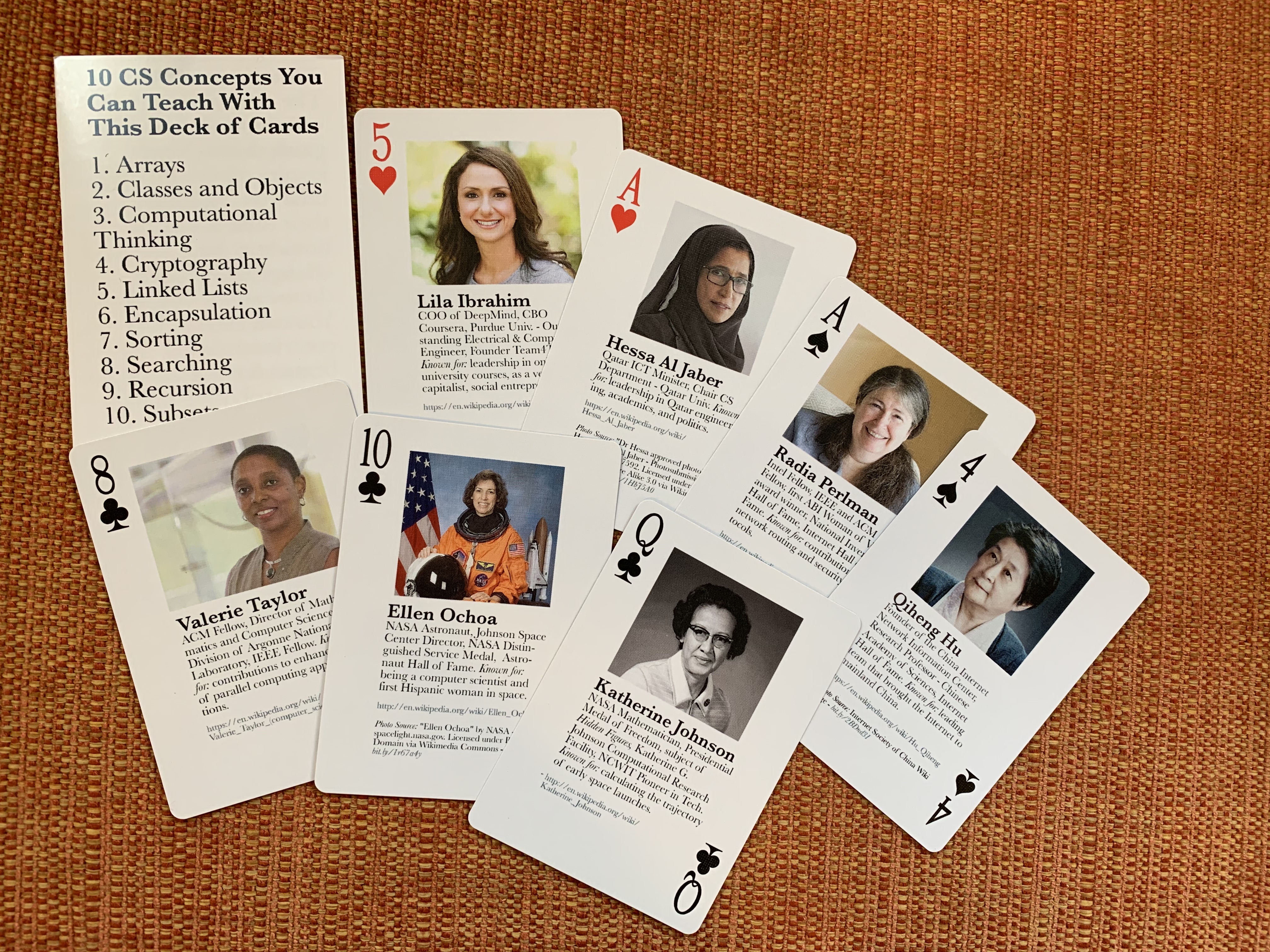
Notable Technical Women cards 2019
Notable Tech Women Card Deck 2019

This semester at the Graduate Theological Union (GTU), I took the class “Islam and its Interreligious Context” taught by Dr. Mahjabeen Dhala. One of our final reflection papers was to answer this question, “Present a key historical or contemporary Muslim personality in America. Explain the reasons for your selection. How does this personality inspire you?”

The American Muslim personality I chose is Lila Ibrahim. She came to my attention after she was made President of Coursera in 2013, after she was Chief of Staff at Kleiner Perkins in 2010. Coursera is an American MOOC (massive open online course) provider, founded by Stanford University in 2012. She is currently the Chief Operating Officer for DeepMind. In 2019, Ibrahim was featured on several UK Business Insider’s lists of influential and impactful leaders. Purdue University is her alma mater and she is on their Board of Advisors. Ibrahim is the Co-founder and Chair of Team4Tech, a technical mentoring non-profit for developing countries. She has created computer labs in the orphanage in Lebanon where her father was raised. Ibrahim has a remarkable depth of experience in education, especially online, and as a mentor. I admit that I do not know about Lila Ibrahim’s personal faith but I am writing about her as an inspiring American of Lebanese descent.

In 2014, my daughter Jessica and I started working on a project with Dr. Susan Roger, Duke University Professor of Computer Science. Susan and I had known each other for many years and each of us had developed lists of remarkable technical women. Jessica had the idea to make playing cards and posters from our research to inspire girls and young women. We wanted to include a very broad range of women, socially, demographically, geographically, and by professional area. Susan and I each sorted through decades of our professional contacts to find the 54 honorees, and then we contacted each woman for a picture and to fill in biographical details, or used what we found on Wikipedia. Because she had won an Anita Borg Institute Women of Vision Award, Lila Ibrahim was one of the women we selected. Since 2014, Notable Women in Tech has distributed thousands of our card decks and posters around the world. Lila Ibrahim is the five of hearts. You can see the 4th Edition list of honorees on my blog.

Lila Ibrahim inspires me not just because she is a remarkably successful professional woman in the highly-patriarchal technical industry but because she has routinely sought out and succeeded in creating educational projects while acting as a mentor for young entrepreneurs. For many senior executives, it is enough to succeed, but Lila Ibrahim has intentionally and consistently carried others along in the wake of her accomplishments. She always pays it forward.

Inspiring American Muslims about whom other students wrote were:
Mahershala Ali (Academy Award winning actor)
Muhammad Ali (Boxer, activist and philanthropist)
Reza Aslan (Author and scholar of Religious Studies)
Soumaya Khalifa (Executive Director, Islamic Speakers Bureau of Atlanta)
Hind Makki (founder and curator of Side Entrance, an award-winning website)
Ilhan Omar (U.S. Representative for Minnesota)
Malcolm X (Muslim minister and human rights activist)

If you want to receive Katysblog posts by email, please sign up using the Sign Me Up! button (upper right on Katysblog home). Image Copyright 2020 by Katy Dickinson.

Leave a comment

Filed under News & Reviews, Politics

Interfaith Work

Jewish and Muslim interfaith studies books, Dec 2020

This semester at the Graduate Theological Union (GTU), I took a pair of half-semester classes, “Judaism and its Interreligious Context” (taught by Dr. Yehezkel Landau) and “Islam and its Interreligious Context” (taught by Dr. Mahjabeen Dhala). Both were excellent classes with inspiring professors. Together, these two classes met the GTU Master’s requirement for Interreligious Studies. I combined the term papers to create a final paper called “Getting Closer to God Through Interfaith Work.”

I have finished the major writing for my Master’s thesis, titled “Range of Chaplain Engagement with Prisoners,” and am waiting for my thesis committee’s feedback on the last few chapters. I have to defend my thesis in early February 2021, which means spending two or more hours answering questions by my review committee about the 100+ page document and my research. I officially graduate in May 2021 with my Master of Arts – Christian Theology, with a Certificate in Spirituality and Social Change. I will continue my studies in the GTU Interreligious Chaplaincy Certificate program but I am happy to be done with my Master’s classes.

Getting Closer to God Through Interfaith Work

Introduction

This paper presents reflections on interreligious dialogue from the lived experience of two notable leaders. Based on conversations with Maha Elgenaidi and Rabbi Melanie Aron, and considering related scholarly material, I examine my next steps with regard to interfaith engagement in my work and ministry. The title of this paper comes from Maha Elgenaidi but I find it rings true for me as well. Interfaith work makes me feel closer to God. I am using this paper not only to document the accomplishments and views of two remarkable women but also to emphasize the benefits of interfaith work to the community. 

Please read the remainder of the paper at “Getting Closer to God Through Interfaith Work.”

If you want to receive Katysblog posts by email, please sign up using the Sign Me Up! button (upper right on Katysblog home). Image Copyright 2020 by Katy Dickinson.

Leave a comment

Filed under Chaplain, Church, News & Reviews

Theodicy Meme

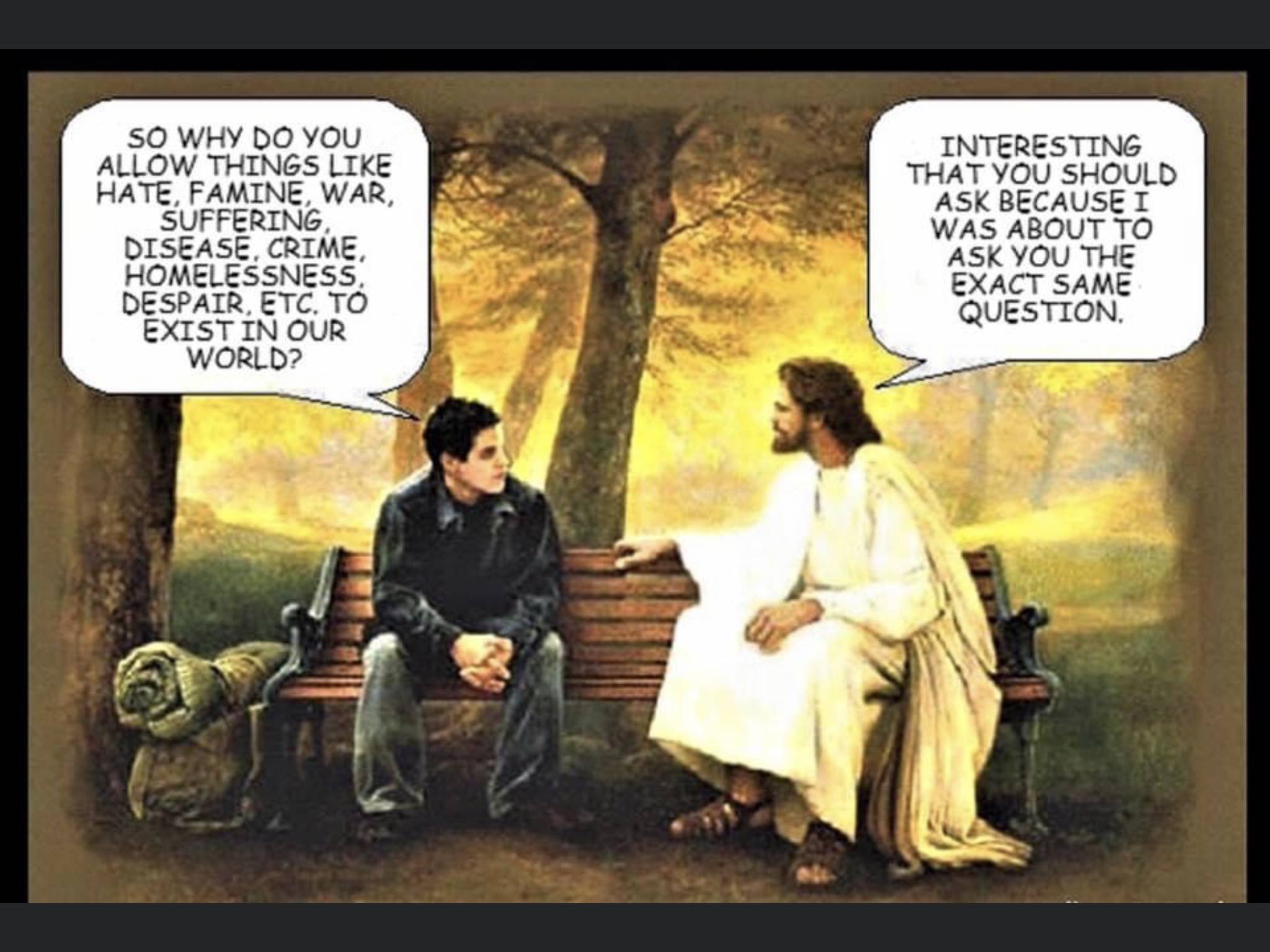
camper Jesus meme 5 June 2020
I love a good meme, so finding one on theodicy is a special treat. (“Theodicy means vindication of God. It is to answer the question of why a good God permits the manifestation of evil.” – Theodicy in Wikipedia) The image base of Jesus sitting on a park bench, talking with a young man has been used for two memes I particularly like:

  • 24 March 2020: Man: “Facebook?” Jesus: “No, I literally want you to follow me.” Man: “So… Twitter?” Jesus: “I’m going to start over again and you can let me know where I lose you.”
  • 5 June 2020: Man: “So why do you allow things like hate, famine, war, suffering, disease, crime, homelessness, despair, etc. to exist in our world?” Jesus: “Interesting that you should ask because I was about to ask you the exact same question.”

The blank image can be found on imgflip if you want to make a meme yourself.

I have studied Christian Theology for two years at the Graduate Theological Union in Berkeley and hope to finish my Master’s thesis by the end of this year. I also start work on my Certificate in Interreligious Chaplaincy in September, with a focus on Islamic Studies. My thesis topic is jail chaplaincy, so theodicy is of particular interest. Although theology has not been considered the “Queen of the Sciences” since the High Middle Ages, having the opportunity to gain understanding and inspiration from classes such as “God and Suffering” and “Christian Theology and Natural Science” has been an honor and privilege. Still, I appreciate a little levity on these weighty subjects.

camper Jesus meme 24 March 2020

If you want to receive Katysblog posts by email, please sign up using the Sign Me Up! button (upper right on Katysblog home).

1 Comment

Filed under Chaplain, Church, Politics