Tag Archives: Huawei

Blog Housekeeping, Autumn, Haircuts

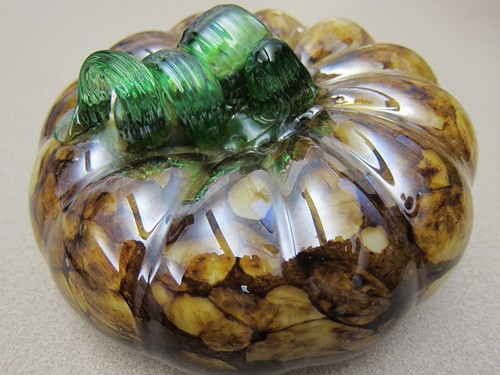
IMG_5282 IMG_5297 IMG_5483

It is a lovely autumn here in the Silicon Valley. Like any good geek (even one who is a technology minimalist, like myself), I spend most of my time indoors with my computer, only rarely enjoying the intoxicating colors of the season. I have been blogging more-or-less regularly for over five years – this is my 1,065th entry. In that time, things have changed. I am now working for Huawei instead of Sun, both of my kids are in college, pets have died and we have adopted new pets.

When I moved my blog entries from http://blogs.sun.com/katysblog/ here to https://katysblog.wordpress.com/, formatting and image references were lost or corrupted. As the topics I write about naturally evolve, the tags I use for my blog entries also change. From time-to-time, I go back and update old blog entries – fixing broken links and formatting that has rotted and adding or updating tags. Unless there is a spelling or punctuation error, I do not change old blog content, although I might put a forward reference if I have written significantly more on that topic since the original post. This is like getting a getting a haircut – tidying up the mess but not making any essential changes.

IMG_5480 IMG_6093
IMG_6091 IMG_5466

IMG_6097
Images Copyright 2010 by Katy Dickinson

2 Comments

Filed under News & Reviews

Soybeans from China

My brother Peter has been studying the Mandarin language for several years and, when he heard that I am now working for Huawei, he strongly recommended The Search for Modern China by Jonathan D. Spence (1999, 2nd edition). I love history books and this is one of the best I have ever read. I am still working my way through and enjoying every page.

I was particularly interested in the story of James Flint, a trader who in 1759 tried to do business with Imperial China. The Spence passage which intrigued me was:

The East India Company tried to enlarge the scope for China trade and negotiation in 1759 by sending James Flint, a company trader who had learned Chinese, to present complaints to the Qing court concerning the restrictions on trade in Canton and the rampant corruption there. By dint of tenacity and a certain amount of bribery, Flint, sailing first to Ningbo and then to Tianjin in a small 70-ton vessel, the Success, was able to have his complaints carried to Peking. The emperor initially seemed to show flexibility, and agreed to send a commission of investigation to the south. But after the Success, sailing back to Canton, was lost at sea with all hands except for Flint (he had traveled south independently), the emperor changed his mind. Flint was arrested and imprisioned for three years for breaking Qing regulations against sailing to northern ports, for improperly presenting petitions, and for having learned Chinese.

This is the first I have heard that learning Chinese was historically illegal.  I searched the net to learn more about James Flint and found
“History of Soy – Introduction of Soybeans to North America by Samuel Bowen in 1765”
by Theodore Hymowitz and J.R. Harlan.

According to the “History of Soy”, Samuel Bowen was a seaman aboard the Success who was also imprisoned in China and, like Flint, returned to London by 1763 to claim compensation from the Court of Directors of the East India Company. In 1764 Samuel Bowen turned up in Savannah, in The Colony of Georgia, where he planted seeds which he had brought to America from China. The seeds were from soybeans – which Samuel Bowen is credited with introducing as an American crop.

Samuel Bowen and James Flint seemed to have continued to have business dealings with each other.  Samuel Bowen’s two sons were named James Flint and Samuel Flint.  The older James Flint was also connected with the ever-curious Benjamin Franklin who wrote a letter in 1770 about the food we now call tofu. In the letter, he refers to Mr. Flint.

I was thinking about all of this when I saw the billboard pictured below near where I live in Willow Glen (San Jose, California). We Americans are taught from a very young age about foods from the Americas which now feed the world: potatoes, tomatoes, and corn. I was interested to learn that one of our own staple food crops originated in China.

IMG_4889

Image Copyright 2010 by Katy Dickinson

Leave a comment

Filed under News & Reviews

Flying Quadricopter at Huawei

Jim Hughes, Fellow and Chief Architect, Cloud Computing, at the Huawei Santa Clara Research Center, brought his Parrot quadricopter to work earlier this week. There are large sections of metal-and-fabric cube walls on our floor so the little flying device had lots of free space to buzz around. While the charge lasted, Jim and his technical development team took turns controlling it using an iPad and the Parrot’s built-in cameras. The staff had bemused or delighted expressions as they watched the expensive toy zooming down the walkways, over their heads, and blowing papers off of desks.

IMG_4757 IMG_4751 IMG_4755
IMG_4762 IMG_4764 IMG_4781
IMG_4775 IMG_4774 IMG_4779

Images Copyright 2010 by Katy Dickinson

2 Comments

Filed under News & Reviews

Chinese Name, English Name

Since starting to work for Huawei, I have learned something about Chinese names and English names. I am sure I there is a great deal more to know! I have even acquired a Chinese name of my own:

丁凯笙 ( in simplified Chinese) which sounds like Dickinson
Ding  – 丁 – a real Chinese last name
Kai – 凯 – means glory or victory
Sheng – 笙- a type of Chinese instrument made of vertical pipes

My husband John Plocher’s Chinese name is:

蒋伯乐 (in simplified Chinese)
Jiang or Chiang – 蒋 – which sortof sounds like John
Buo Le – 伯乐 – which is a historical Chinese name and sounds like Plocher (if you don’t speak German)

How Chinese names sound and what they mean matters. My advisers in these matters said it was important to pick a homophone of my name in English. I can not just use my full birth name because it is hard to say and impossibly long by Chinese standards: in addition to my nickname of Katy, I have a three formal names of three syllables each! So, we settled on trying to find a Chinese name that could stand in for my surname only. Despite much discussion, I still ended up in some controversy because while the Chinese name I picked sounds good and has a positive meaning, it does not sound feminine enough. I like it anyway.

Americans often pick names for their children to honor a relative or refer to a famous person, or just because it sounds good. English names often seem to be chosen by Chinese because they (sortof) sound like the person’s original name in Chinese. English names are used by Chinese speakers to make it easier for non-Chinese-speakers to pronounce and remember.  Also, having an English name saves them from hearing us mangle the pronunciation of their Chinese name.

One of my coworkers at Huawei in Santa Clara, California, picked the English name Michael. I do not think he considered that the name had an origin but Michael was interested to know that his is the name of the angel who is the general of the armies of God. My next-door-office-neighbor Olivia was interested to find out that her name was coined by Shakespeare in Twelfth Night (1601). Another co-worker was fascinated to find that three American women he knows whose English names sound very different to him (Katy, Kate, and Kathy) are using nicknames and all three share the same first name: Katherine. The concept of nicknames in English does not seem to translate well into Chinese.  I used to work with a woman whose American birth certificate bears the name Suzie – because that was the only American name her newly-arrived-from-China parents knew.  They did not know it was a nickname for Susan.

My favorite English name story is from my recent trip to Shenzhen, China. The staff I was working with generously took turns driving me to and from my hotel since it was so very hot and I get lost easily. One evening, Cheryl (whose real name is Tautau) said that my driver would be Lucy. I glanced around for a someone whose name might be Lucy, ignoring the energetic young man standing next to Cheryl, who then threw up his hands and proclaimed “I am the Lucy – man!” Since changing English names does not seem to be a big problem in China, I suggested that he might want to call himself Luke to reduce confusion.

English names for people from China, and Chinese names for Americans working with China, seem to be picked using the same criteria as picking a coffee name or a username – pronunciation and memorability are key.

2 Comments

Filed under News & Reviews

Home from China

I flew into San Francisco late last night from Hong Kong, after ten days working in China.  Our takeoff was delayed two hours because of a typhoon – as the cycling winds changed direction, we had to change runways four times.  Finally, the jet had to return to the hub to top off fuel before take off.  I did not sleep much, so I watched movies: Prince of Persia, The Last Airbender, The A-Team, Letters to Juliet, Nanny McPhee and others, courtesy of Singapore Air.  In Singapore Air Economy Class, movies are unlimited, the seats are big, there is a foot rest and a place to put my glasses, and the food is good but fourteen hours on a plane is still not much fun.

This year is the 30th anniversary of the Shenzhen Special Economic Zone, with much honoring of Deng Xiaoping. There were balloons, flags, and illuminated red lanterns on the main streets in celebration. I think my Huawei business trip went well but I am glad to have this long weekend to rejoin my home time zone before starting work again.

I was happy to eat western breakfast food today – the food in Shenzhen is excellent and interesting but I would rather have food I am used to when I wake up.  We went to Bill’s Cafe in Willow Glen – our favorite brunch spot. I am even happier to be with my family (John and Paul met me at the airport) and able to drink water from the tap.  “Boiled-bottled-or-alcoholic” is the requirement for drinking in China.

I gave John and Paul some of their presents last night.  Paul got some carved jade charms and I gave John a small bottle delightfully painted inside with two scenes of birds.  The Chinese art of painting a tiny image on the inside of a bottle is delightful.  I bought John’s bottle at  a store called “Chinese Arts and Craft” in Hong Kong, which offered better quality artists than other locations.  I also brought home tea (of course), sesame candy, and moon cakes.  I was assured by my Chinese friends that the simple red bean moon cakes I prefer are not as good as those with an egg inside; however, when I came through SFO customs last night and saw the FDA agents confiscating all moon cakes with egg, I was even happier with my choice.

Here are some photos from my trip to Shenzhen and Hong Kong:

IMG_3182 IMG_3191 IMG_3183
IMG_2917 IMG_2957 IMG_2716 IMG_3136
IMG_2725 IMG_2866 IMG_2894

Images Copyright 2010 by Katy Dickinson

1 Comment

Filed under News & Reviews

Working in Shenzhen, China

I have been here in Shenzhen, China, visiting Huawei headquarters for the past week. It is beastly hot and muggy but until yesterday the air was clean. Yesterday and today, it has been like living in an increasingly thick cotton ball. Working in mainland China is very interesting. Some of my observations:

  • There is a wide variety of dress but more formal dresses worn to work than I am used to in the USA. By “formal” I mean sequins and black chiffon knee-length gowns with high heels – not “business formal”. Clothes are western-style, modest, and fashionable. Ladies’ cloth parasols are popular – these can be plain plaid but others feature lace and sequins.  I have seen none of the hand-painted paper parasols like those they sell in San Francisco’s Chinatown.
  • Very few people here are overweight.  Most are young – less than ten years out of college – with one much-loved child in each family (called a little Emperor or Princess). I have seen almost no old people. Almost everyone is relatively short, with a few notable exceptions.
  • We went to visit Hong Kong by train last Sunday. Hong Kong is cosmopolitan and very stylish, with malls full of designer shops – different from Shenzhen, which is a high-tech working town. We went up to The Peak to watch the lights come on in the skyscrapers on Hong Kong Island – an amazing and impressive sight.
  • Restaurants offer packets of tissues instead of napkins. Many offer shrink-wrapped sets of plate-with-2-bowls-and-spoon at each seat. The food is excellent, fresh, and interesting. Watch out for the red peppers! The best restaurant so far was been Laurel, right near our hotel – really good.
  • Traffic is relatively light and slow (compared to the Silicon Valley or Cairo anyway), which is good because drivers go all over the place regardless of lanes. Cars do not stop for pedestrians.
  • The internet is fast and free in my room at the Paradise Hasee Hotel but no Facebook or Youtube is available. There seems to be just one hair dryer and one clothes iron in the hotel; they swap them between rooms. Also, each room is limited to just 4 wooden hangers – if you ask for more, you get plastic coated wire hangers. The electric kettle for tea in the room is very convenient. The beds are large and comfortable and the lighting is good. The shower heads spray across the room if you are not careful to point them toward the wall before turning on the water. Breakfast is free and plentiful but only Chinese food is available – I usually have fried rice with egg and vegetables.
  • People are very friendly and helpful but most only speak Mandarin.
  • Having “KTdict+ C-E” Chinese-English dictionary on my iPhone has been very helpful – I can show people the characters for the words I can’t pronounce. I also bought the “English-Chinese Pro” application but it is usually too noisy for someone to hear it speaking. I keep my Data Roaming OFF to keep costs down, so many of my iPhone applications are crippled. Skype has worked well for communicating with my family in California and Pennsylvania.

I am taking many pictures but I will have to wait until I get home to upload them.

1 Comment

Filed under News & Reviews

Not Very Yes

My husband John just accepted an offer of work from Huaweihooray! I am very happy for him to get a good job as a Software Engineer after so long.  John and I are in different groups but are at the same company together for the third time. Huawei is a leading telecom solutions provider based in Shenzhen, China (near Hong Kong). John and I are working in their Santa Clara, California, center.

I have been working as Huawei’s Chief Analyst, Software Development Trends, for the past month. It is an interesting place. In the thirty years I have worked in research and development, I am used to being in the minority because I am a woman. At Huawei, I am also one of a small group whose primary language is English, and I am even more unusual in being a born American.

Despite our cultural and language differences, my new co-workers have been helpful and welcoming. The lady in the office next door has shared her honeysuckle tea and her cookies. I brought in some of the roses and nandina from my garden for her and others who have helped me. I am learning how to work with both the Chinese nationals and my fellow “foreign experts”.

As in many cultures, saying a direct “no” seems to be impolite in China. I have started listening for the ways in which my co-workers give an indirect negative response, such as:

“Not very Yes”
“Not exactly”
“Not so much…”
“I have a suggestion…”
“Not very good”
“Maybe, but…”

IMG_0444

Image 2010 Copyright by Katy Dickinson

Leave a comment

Filed under Home & Family, News & Reviews