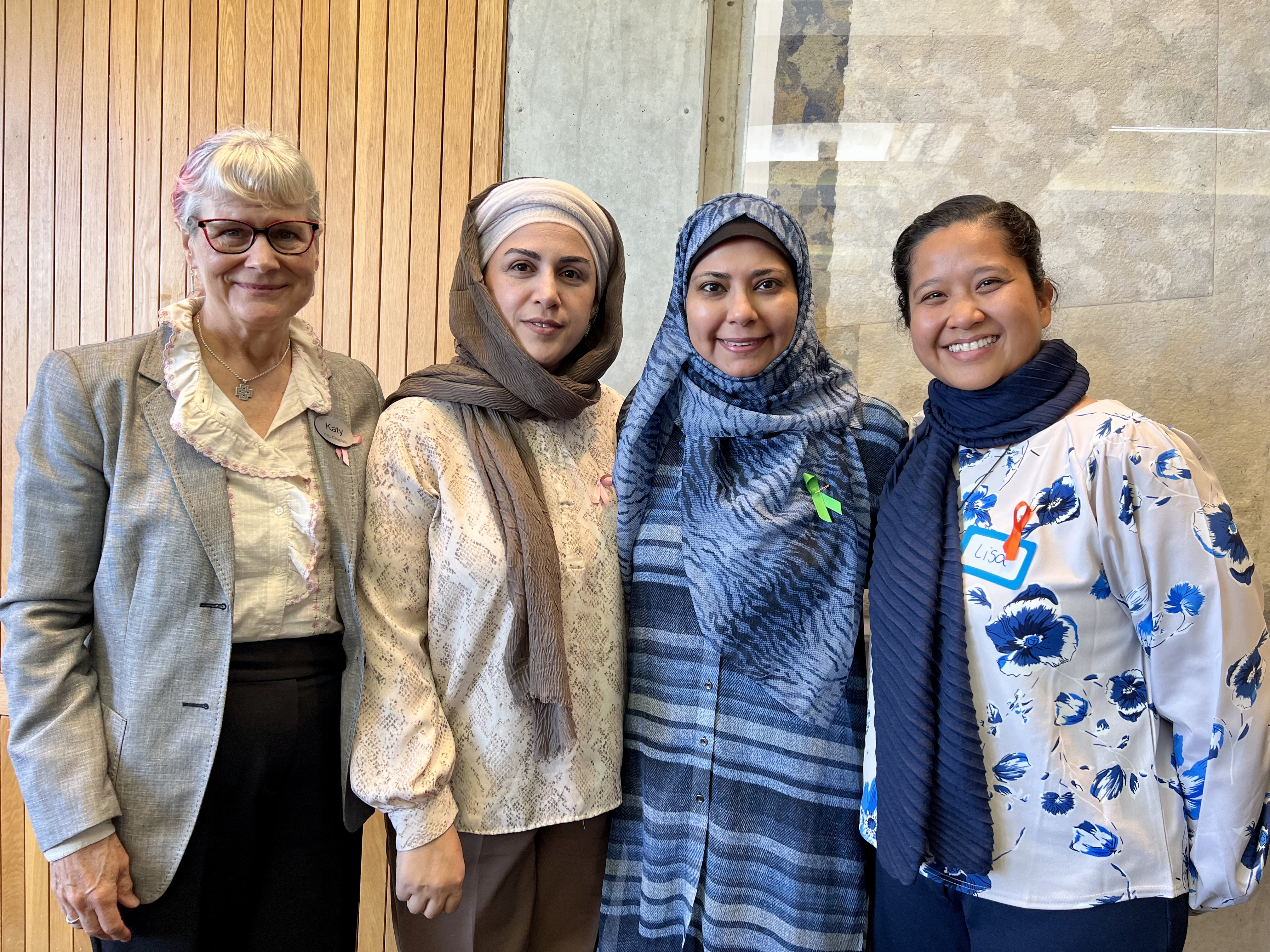
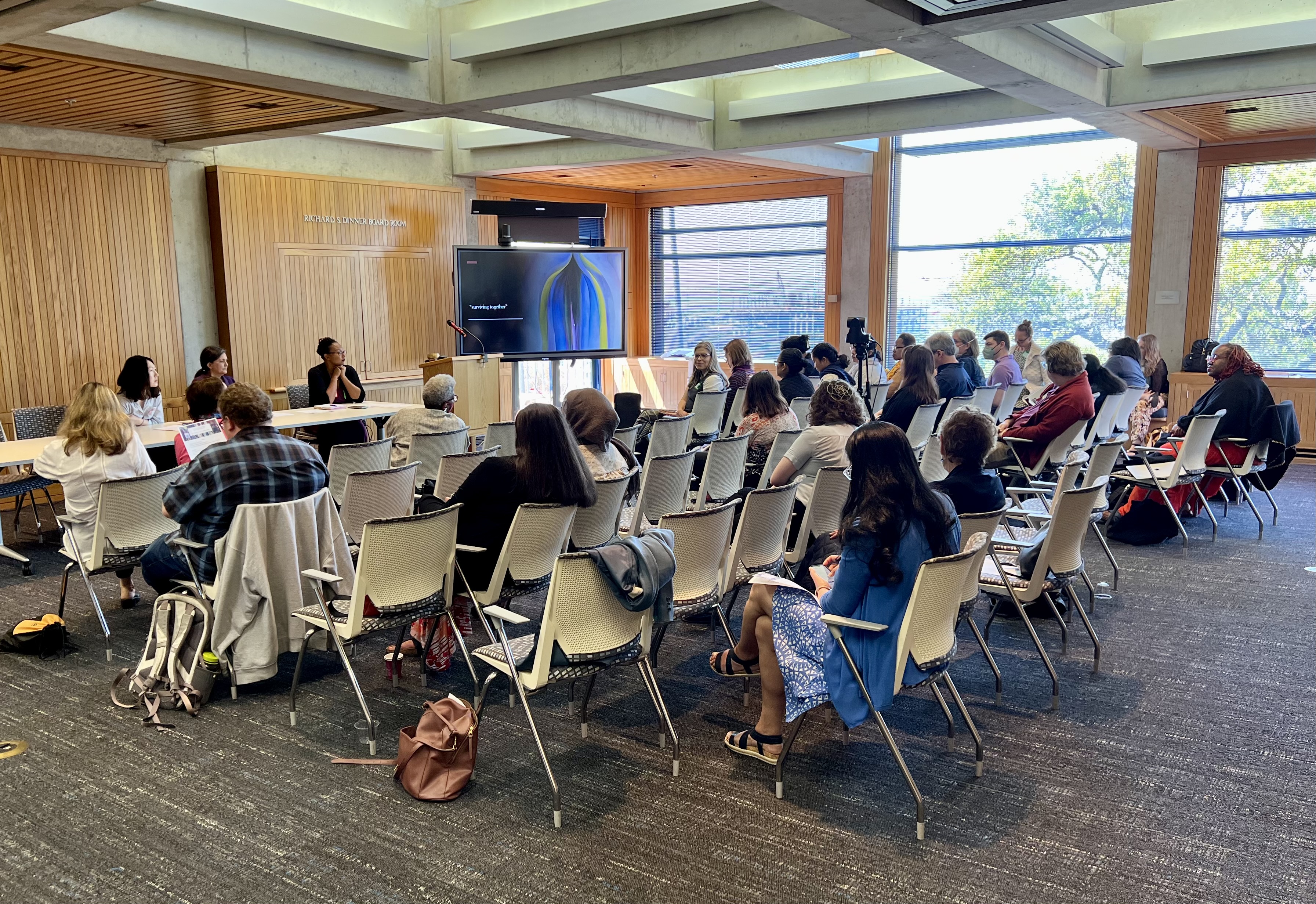
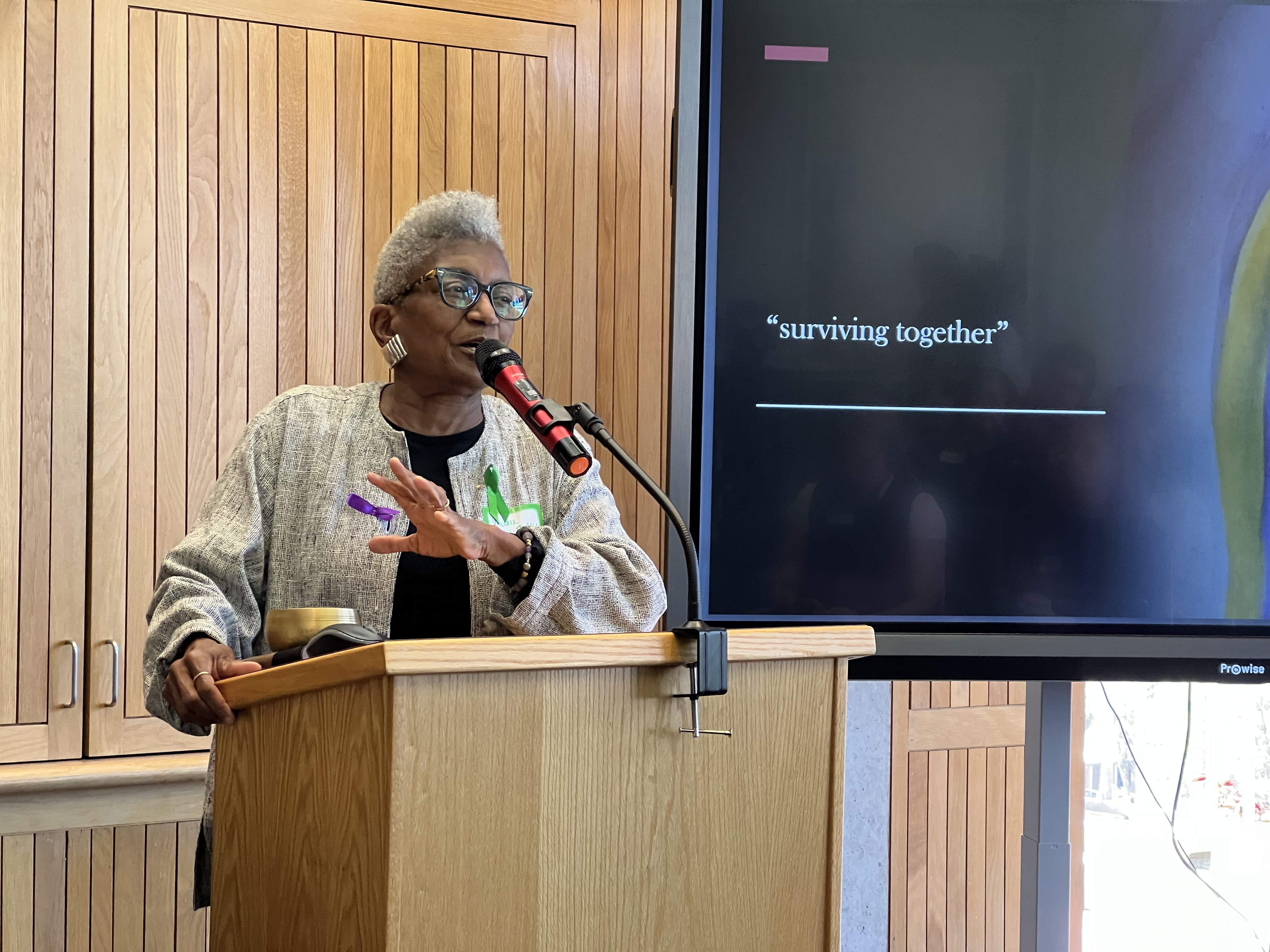
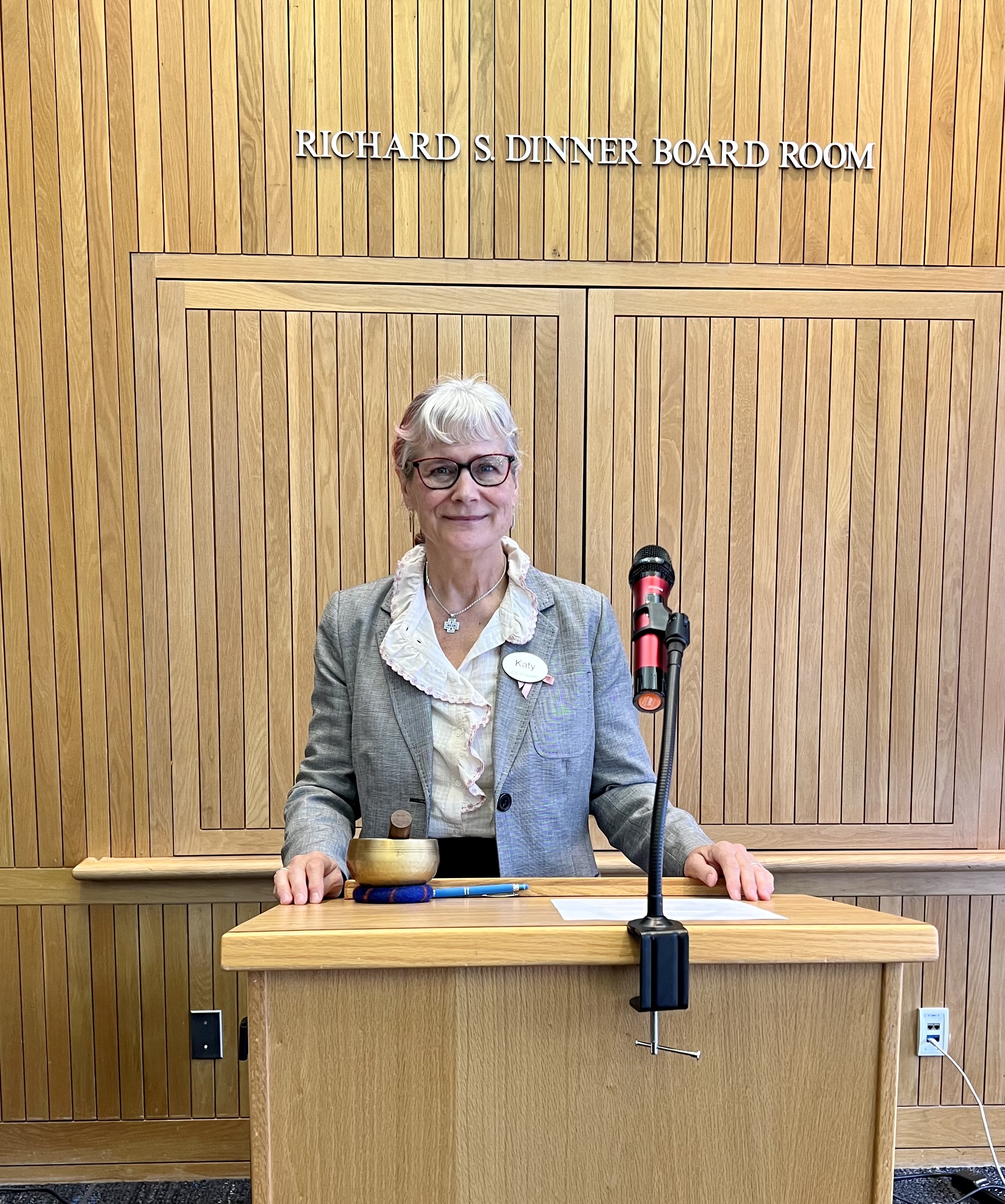
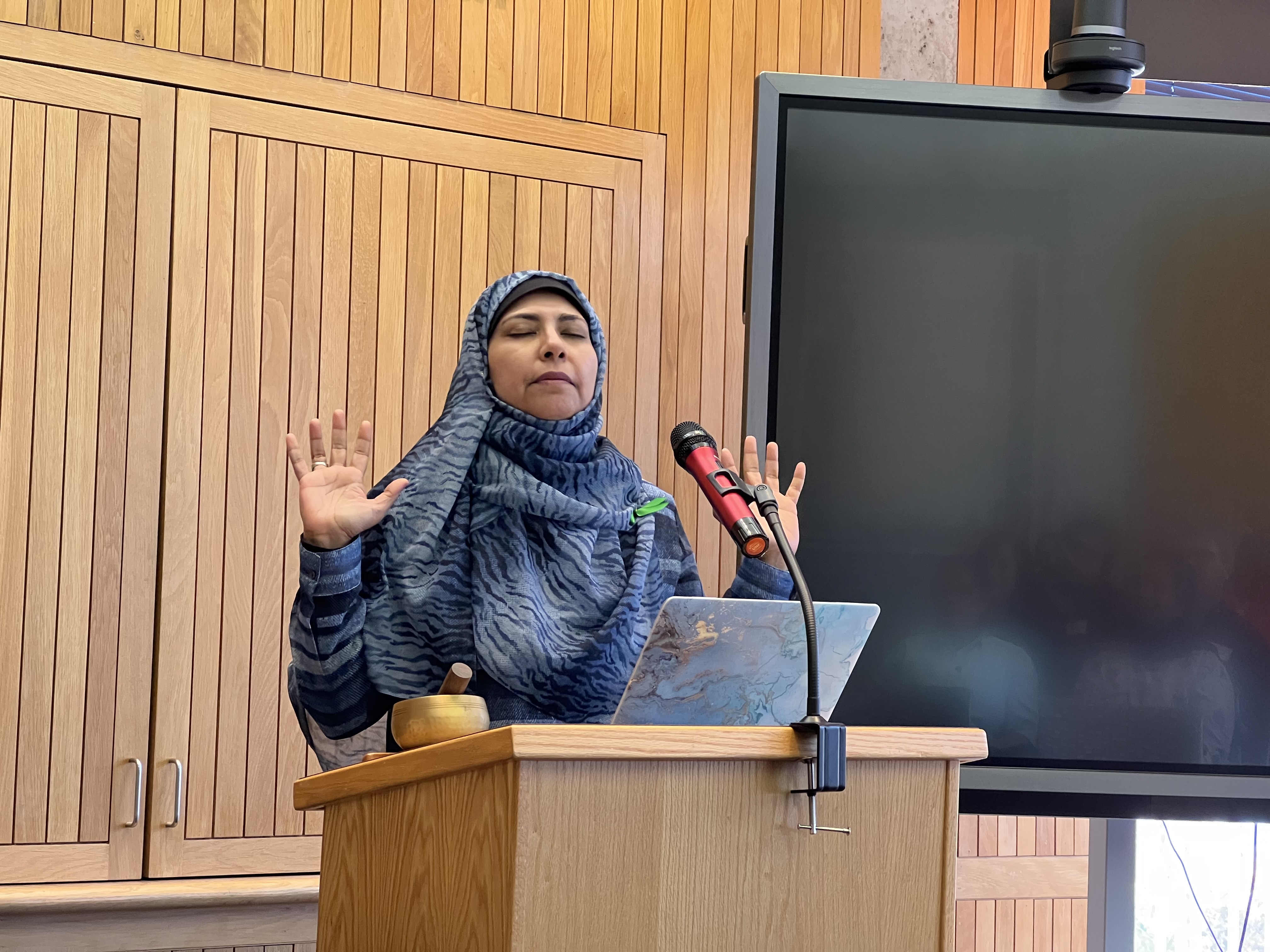
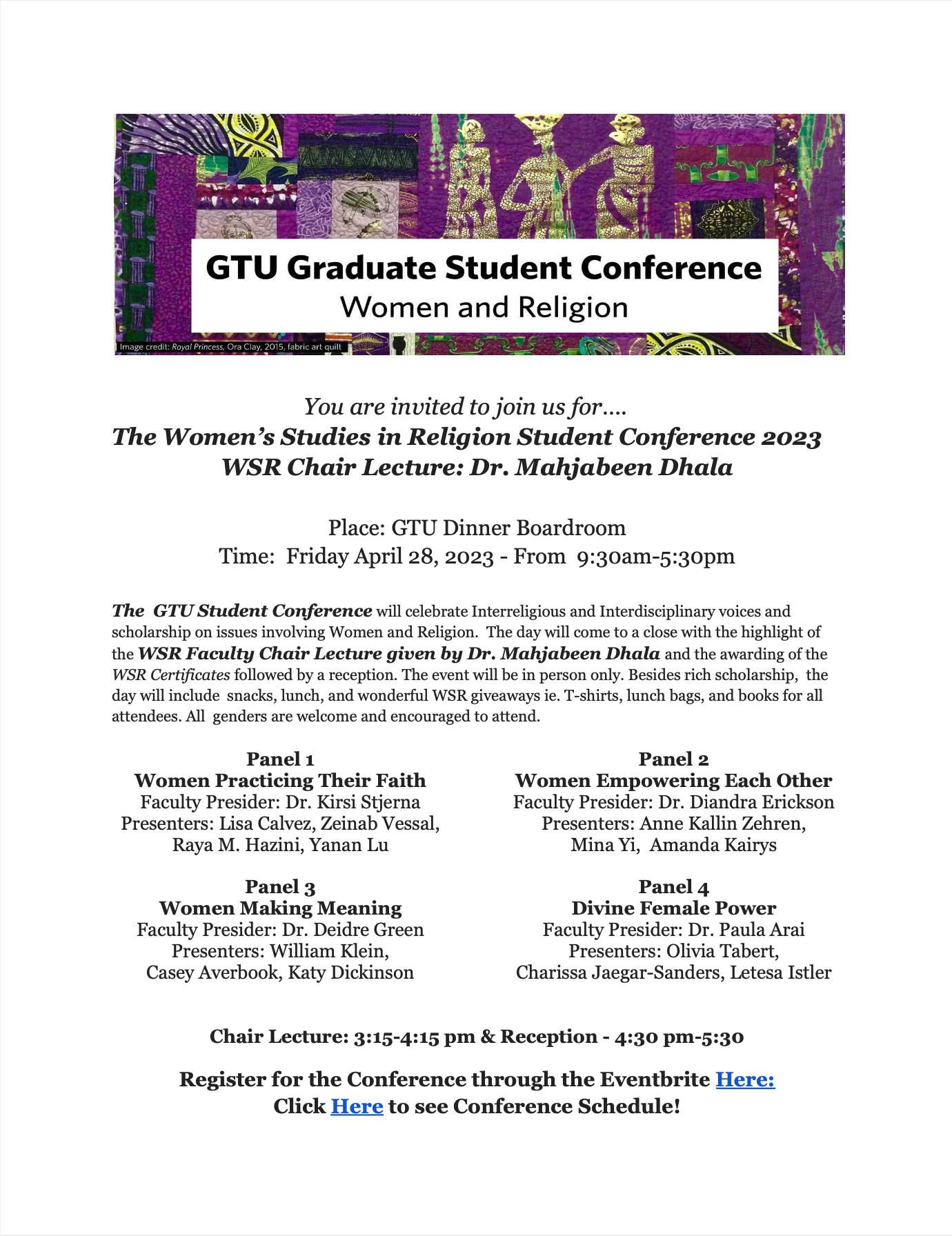
GTU Women and Religion Conference, 28 April 2023Dr. Valerie Miles-Tribble, GTU Women and Religion Conference, 28 April 2023Katy Dickinson, GTU Women and Religion Conference, 28 April 2023Dr. Mahjabeen Dhala, GTU Women and Religion Conference, 28 April 2023
Images Copyright (c) 2023 Katy Dickinson. If you want to receive Katysblog posts by email, please sign up using the Sign Me Up! button (upper right on Katysblog home).
Katy Dickinson Women of Faith in Jail This presents a jail chaplain’s view on how women prisoners’s experience, especially their faith experience, is different from that of men in the American justice system. In many ways, the lives of American women and men prisoners are similarly marginalized; however, the systemic social and economic disadvantages of women in our society are reflected in the lives of female inmates. For example, women are usually the primary caretakers for children from whom incarceration separates them, women often enter the carceral system having had more traumatic experiences, and all-too-often women undergo more trauma in jail and prison. As a result, working with women inmates as a chaplain or officer can be more complex and emotionally intense compared to working with male prisoners. While some avoid working with women, others find special satisfaction in supporting female prisoners. A groundbreaking report has just been published about women prisoners and their unique challenges and patterns.
Here is a link to the whole submission, if you want more text (and references). The event will be recorded but not available online in real time.
Images Copyright (c) 2023 Katy Dickinson. If you want to receive Katysblog posts by email, please sign up using the Sign Me Up! button (upper right on Katysblog home).
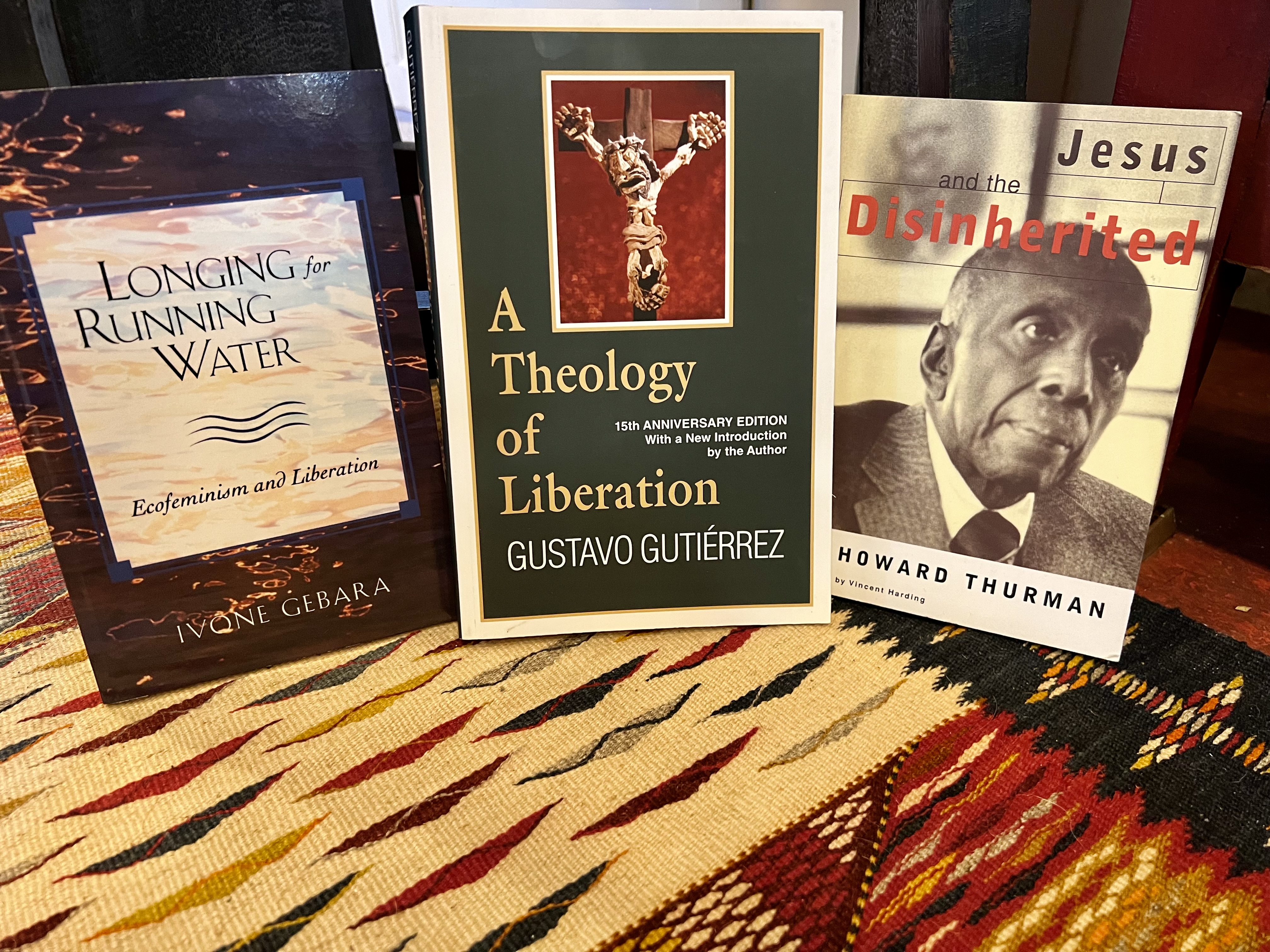
This semester at the Graduate Theological Union‘s Berkeley School of Theology, I am taking three classes as part of my Doctor of Ministry studies. They are: “The Qur’an: Origin, Application, Interpretations” (Dr. Majabeen Dhala, Center for Islamic Studies), “Introduction to Prison Ministry” (Father George Williams, Jesuit School of Theology), and “Examining the Case for Reparations for African Americans” (Dr. Ronald Burris & Dr. Aidsand Wright-Riggins, BST).
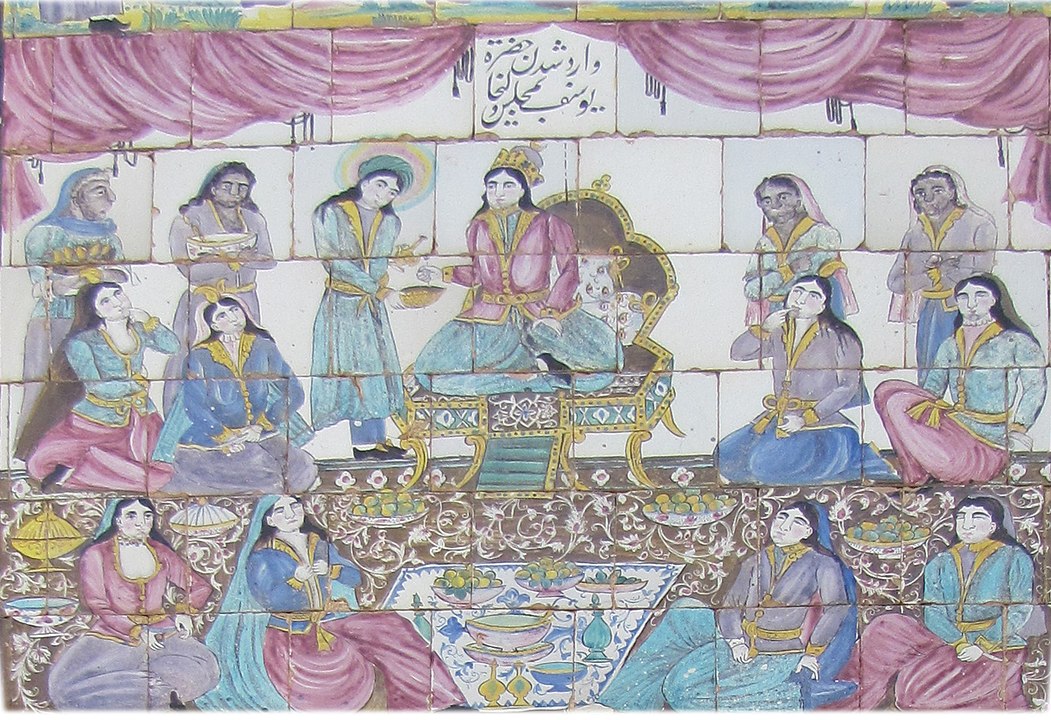
I just gave my first presentation in Dr. Dhala’s class, called “Joseph – Yusuf.” In this presentation, I considered the story of the patriarch / prophet Joseph – Yusuf as presented in the Torah / Hebrew Bible and in the Qur’an, in the context of my ministry as a jail chaplain. The class and I had a good discussion!
You can see the whole presentation here. See the last pages of my presentation for where I found the images and other sources.
If you want to receive Katysblog posts by email, please sign up using the Sign Me Up! button (upper right on Katysblog home).
“The Problem: As part of changing a life path that repeatedly ends in Santa Clara County jail, many inmates want to learn about and develop their faith and theology but lack resource access and the reading capability or education to move forward. Inmates who are Spanish language speakers, have reading difficulties, and those with mental health challenges are at a particular disadvantage and are often isolated and disempowered. America’s punishment-based, racist and classist carceral system, and the constant population churn inside jails, militate against empowering inmates’s spiritual well-being, success, and change of life. Tailoring educational and faith programs to particularly disadvantaged inmates may help to reduce long-term recidivism.
The Purpose: To support the most invisible of the largely-unseen and severely marginalized population of jail prisoners in Santa Clara County, this project revises existing Bible study and theological reflection program materials to support inmates in three particularly-underserved and vulnerable groups: those whose primary language is Spanish, and/or have mental health challenges, and/or have reading comprehension difficulties. Making materials more accessible may help to encourage their faith walk, sustain their difficult journey, and discourage recidivism after release.”
If you want to receive Katysblog posts by email, please sign up using the Sign Me Up! button (upper right on Katysblog home). Image Copyright 2023 by Katy Dickinson.
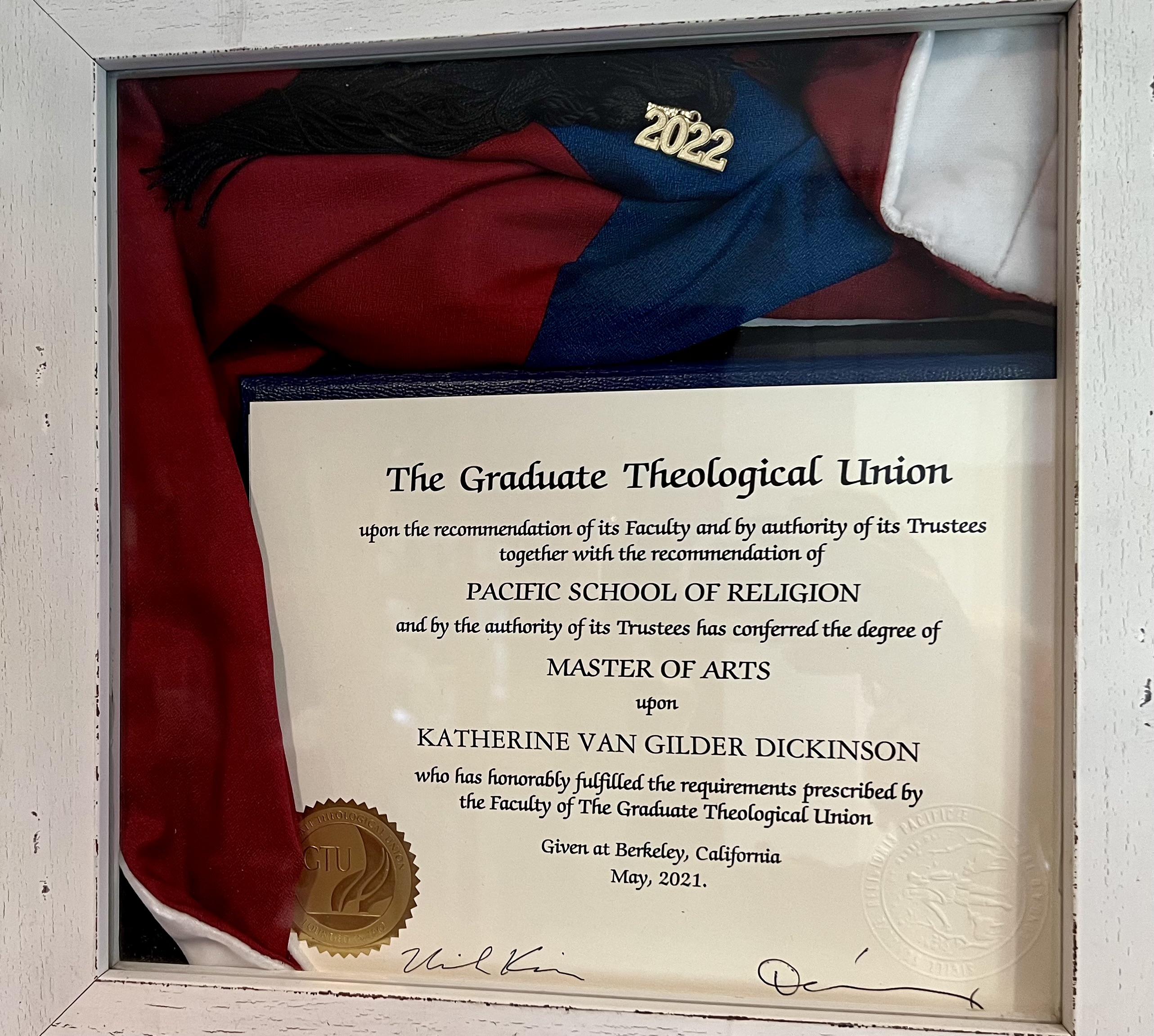
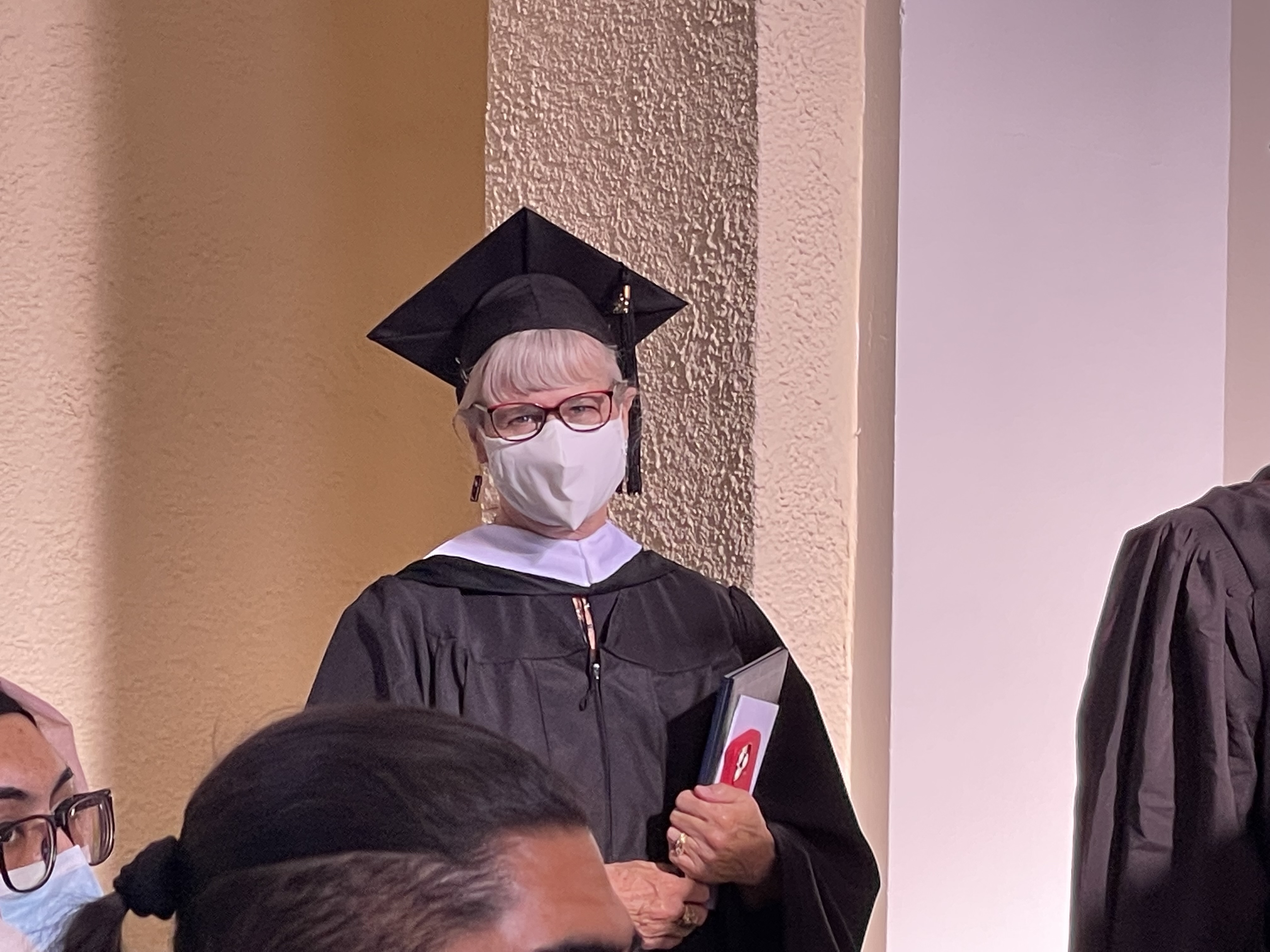
Spring is graduation season and this year, I joyfully walked the stage in-person for my Graduate Theological Union – Master’s – Theology degree, as well as graduating three of my own student-mentees from the University of the South – School of Theology – Education for Ministry (EfM) extension program.
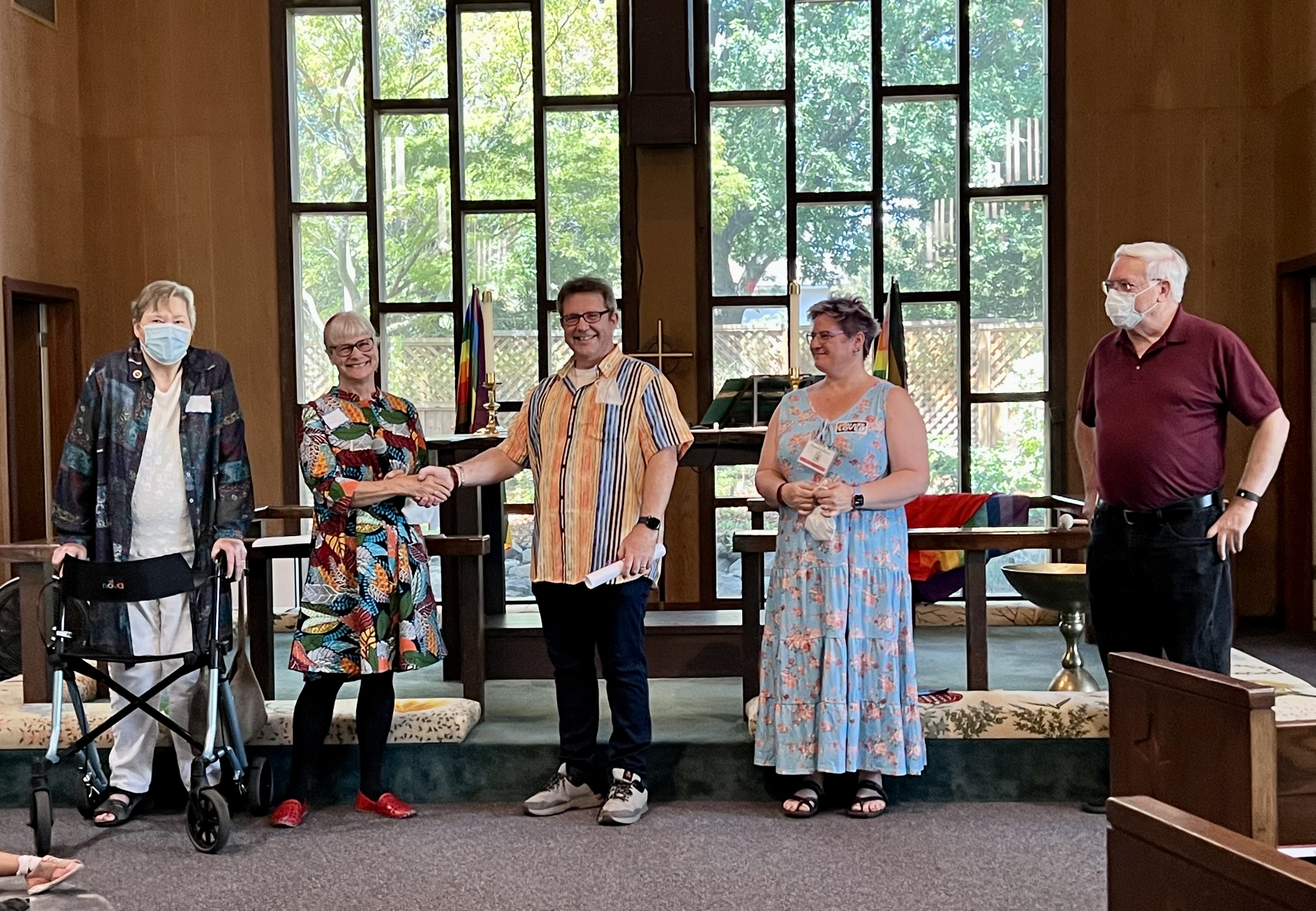
Co-Mentor Karen LeBlanc, with whom I have led EfM seminars together for over twelve years, celebrated with me the graduations of Joel Martinez (graduated 2020, diploma presented 2022) and Beth Hopf at St. Andrew’s Episcopal Church (Saratoga, CA), and Mark LeBlanc (Karen’s husband) at St. Jude’s Episcopal Church (Cupertino, CA). Joel, Beth, and Mark faithfully completed four years of EfM study and theological reflection on the Bible, church history, theology, and ethics.
Katy Dickinson GTU – Master’s diploma 2021, tassel 2022GTU Commencement 7 May 2022GTU Commencement 7 May 2022GTU Commencement 7 May 2022GTU Commencement 7 May 2022GTU Commencement 7 May 2022Education for Ministry graduation, 12 June 2022Education for Ministry graduation, 12 June 2022Education for Ministry graduation, 26 June 2022Education for Ministry graduation, 26 June 2022
If you want to receive Katysblog posts by email, please sign up using the Sign Me Up! button (upper right on Katysblog home). Images Copyright 2022 by Katy Dickinson, Jessica Dickinson Goodman, and Paul D. Goodman.
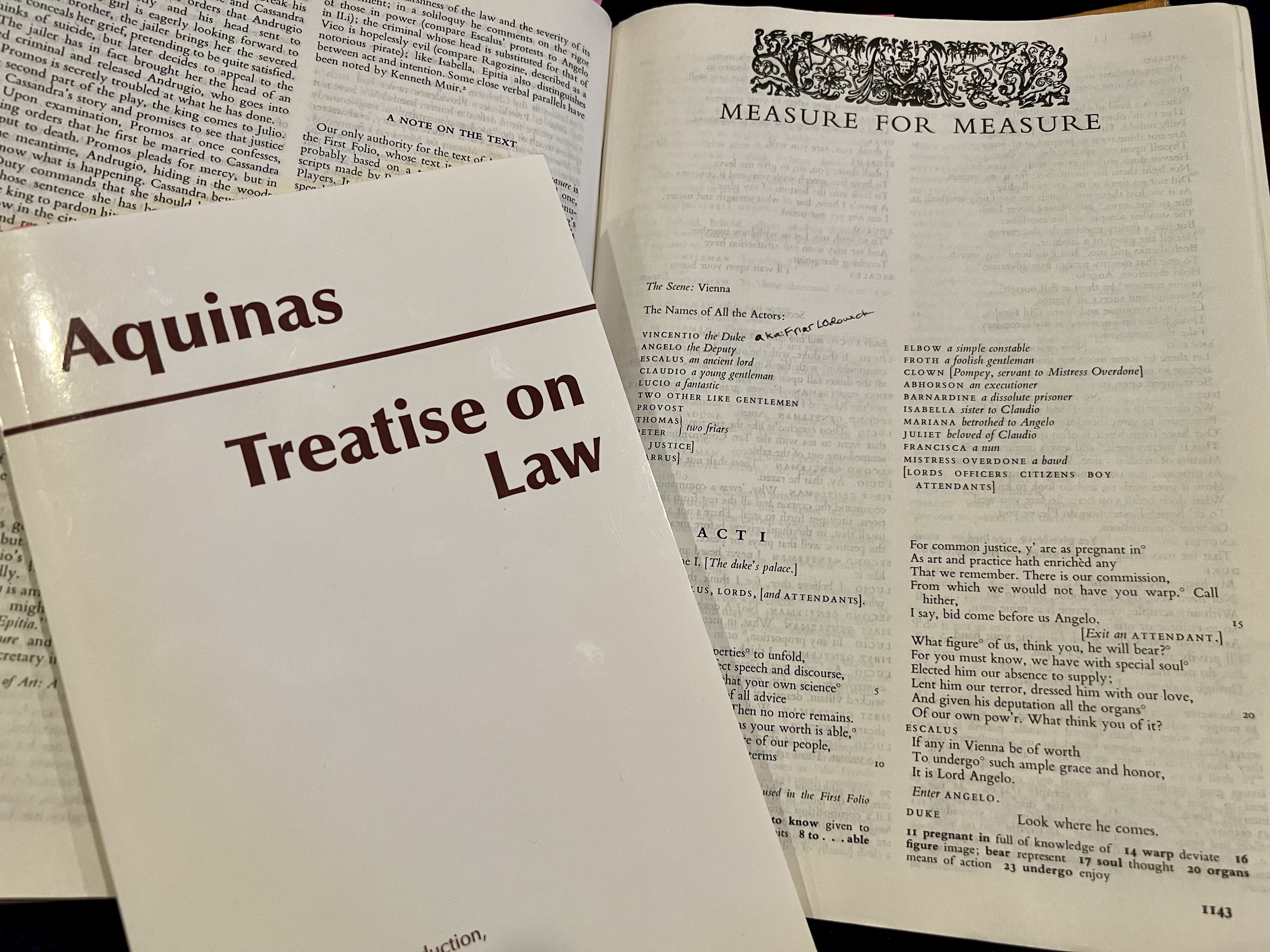
Shakespeare’s Measure for Measure and Aquinas’ Treatise on Law
Associate Professor of Philosophy Justin Gable, OP, Dominican School of Philosophy & Theology, taught our Spring class called “Biomedical Ethics.” My final paper was “Measure for Measure, Double-Effect, and Cooperation with Evil.” The paper starts:
This ethics paper is structured around William Shakespeare’s Measure for Measurein the context of cooperation with evil and the principle of double-effect as a way of understanding both the principles and the play’s ethical circumstances. The first example of the principal of double-effect was given by St. Thomas Aquinas in his 1485 Summa Theologica. He writes about the lawfulness of killing in self-defense, “Nothing hinders one act from having two effects, only one of which is intended, while the other is beside the intention.” Wellesley College Professor of Philosophy, Alison McIntyre summarizes current understanding of double-effect as, “the distinction between causing a morally grave harm as a side effect of pursuing a good end and causing a morally grave harm as a means of pursuing a good end.” I will analyze five instances of double-effect, considering whether harm is a side effect or a means to the end.
Recently, while reading the part of Angelo in Measure for Measure with my Shakespeare group, I noticed instances of the double-effect morality. I was intrigued that Shakespeare’s last comedy, Measure for Measure, was written in 1603, just 115 years after St. Thomas describes double-effect (although I found no indication that Shakespeare read St. Thomas). The moral principles of cooperation with evil and double-effect do not seem to have been extensively examined in analyses of Measure for Measure. In addition to considering morality, this paper asserts that great storytelling can more effectively support ethical understanding and teaching.
If you want to receive Katysblog posts by email, please sign up using the Sign Me Up! button (upper right on Katysblog home). Image Copyright 2022 by Katy Dickinson.
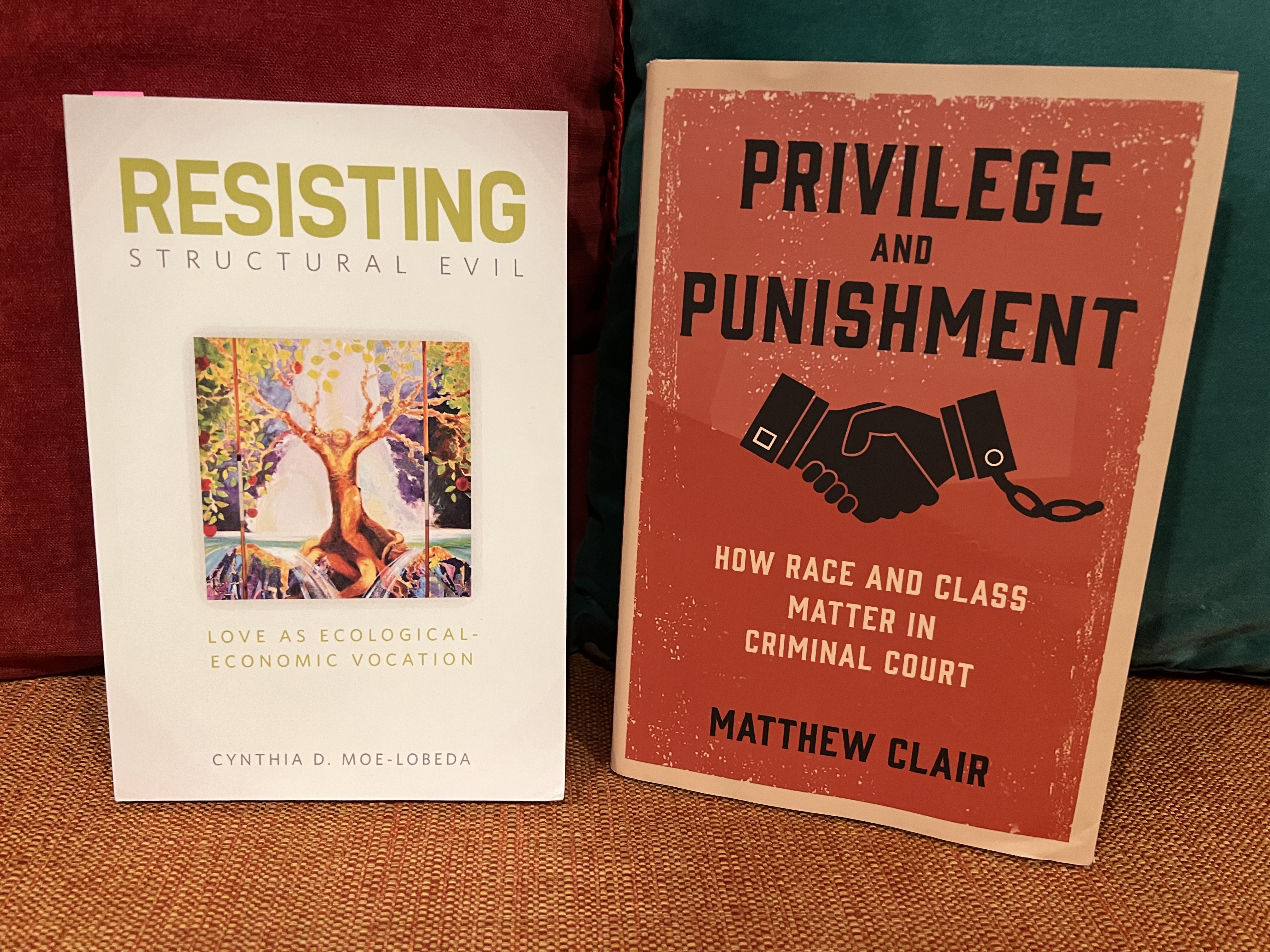
This semester, I am taking a class at the Graduate Theological Union called “Christian Ethics: Radical Love Embodied” from Dr. Cynthia Moe-Lobeda, Professor of Theological and Social Ethics. One of the texts for this class is Dr. Moe-Lobeda’s own 2013 book, Resisting Structural Evil: Love as Ecological-Economic Vocation. Chapter 4, “Unmasking Evil that Parades as Good,” has caused me to think deeply on how background social and cultural understandings perpetuate and affirm the way things are, even if those understandings are destructive or evil. The author characterizes this as “‘hegemonic vision’… the constellation of socially constructed perceptions and assumptions about ‘what is,’ ‘what could be,’ and ‘what ought to be’ that maintain the power or privilege of some people over others, and ‘blind’ the former to that privilege” (Moe-Lobeda, 88).
Dr. Matthew Clair, Assistant Professor of Sociology at Stanford University, uses the word hegemony with regard to U.S. law, but does not use the phrase hegemonic vision in his 2020 book Privilege and Punishment: How Race and Class Matter in Criminal Court. He presents similar concepts, writing of how racism and classism intersect, “I found that the working class and poor, especially racial minorities, often sought to learn their legal rights, contest their defense lawyer’s expertise, and advocate for themselves in court. Meanwhile, the middle-class people I got to know found themselves in trusting relationships with lawyers and thus were more likely to defer to their lawyers and the court. Privileged people were rewarded for their deference, whereas the disadvantaged were punished for their resistance and demands for justice” (Clair, xv). That is, Dr. Clair reports that the U.S. justice system has a vision of how people should behave that is based in middle-class assumptions and communication patterns. He finds that those who are poor or working class who do not communicate as expected are disproportionately penalized.
The Prison Policy Initiative affirmed what Dr. Clair has written in their “Mass Incarceration: the Whole Pie 2020” in which Wendy Sawyer and Peter Wagner write, “People in prison and jail are disproportionately poor compared to the overall U.S. population. The criminal justice system punishes poverty… Poverty is not only a predictor of incarceration; it is also frequently the outcome.”
If you want to receive Katysblog posts by email, please sign up using the Sign Me Up! button (upper right on Katysblog home). Image and Paper Copyright 2022 by Katy Dickinson.











 KatysBlog