Tag Archives: Episcopal church

Lover’s Cove with ten kids

Yesterday, my husband John and I went to Lover’s Cove in Pacific Grove (on Monterey Bay) with ten kids from the SMUM (Santa Maria Urban Ministry) Studio after school program. We have been weekly tutors for these kids (and their brothers and sisters and cousins and friends) for three school years. During the summers, we and the other teachers take them on field trips. Last year, we went with the Studio kids to The Tech Museum of Innovation, Monterey Bay Aquarium, and the San Francisco Zoo. This year, they voted for the beach, Gilroy Gardens, and Raging Waters water park.

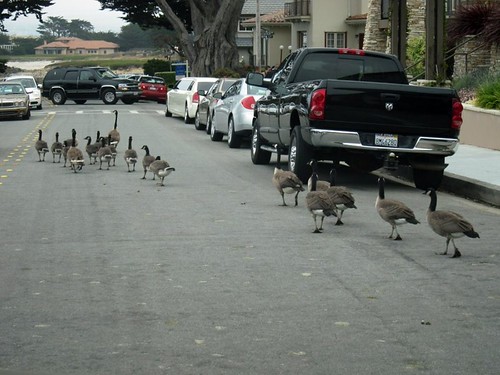
We had a great time at the beach. John and I brought our wet suits and showed the kids the tidal animals: anemones, crabs, barnacles, chitons, and snails. Then, we rented a kayak and I took them on individual tours of the cove so they could see seaweed, starfish and seagulls on the rocks. Lewis and Lawrence and the kids and we had a wonderful time. On the way home, we were held up by a family of Canada Geese which decided to walk down the middle of the road in front of us.

IMG_0481 IMG_0484 IMG_0504
IMG_0523 IMG_0488 IMG_0511
IMG_0532 IMG_0555 IMG_0563

IMG_0551

Images Copyright 2010 by Katy Dickinson and John Plocher

2 Comments

Filed under Church, News & Reviews

Two Deacons Ordained by Bishop, All Women

Yesterday, the Right Reverend Mary Gray-Reeves, Bishop of the Episcopal Diocese of El Camino Real, ordained two women to the Sacred Order of Deacons.  If this is not the first time that a woman Bishop has ordained two women Deacons at the same time, it is certainly a very rare event.  Stephenie Cooper and Judith Sato were ordained at Trinity Episcopal Cathedral in San Jose, California. That Bishop Mary was herself in 2007 the first woman Bishop ordained by Presiding Bishop The Most Rev. Katharine Jefferts Schori, who is the first woman primate elected by the worldwide Anglican Communion, makes yesterday’s ordination even more notable.

Note from 29 June 2010: Bishop Mary kindly sent in a correction to this blog entry that Bishop Laura Ahrens was the first woman for whom Bishop Jefferts Schori was the chief consecrator. Bishop Mary Gray-Reeves was the first woman diocesan bishop, but Bishop Laura Ahrens the actual first in 2007.

I have known and worked with Stephenie Cooper for many years both on the diocesan web site and on Santa Maria Urban Ministry. We are both teachers for the after-school Studio program and on the SMUM Board. I have also worked with Judy Sato. I have great respect for both of these women and am delighted to see them ordained. Stephenie is a vocational deacon (meaning that she will continue in that service). Judy is a transitional deacon (meaning that she will be ordained as a priest after six months to a year). After yesterday’s service, the women deacons who joined the service from the Episcopal dioceses of Northern California, California, and El Camino Real stood with Bishop Mary in front of the altar for pictures.

What is a Deacon?
From Phoebe (a woman deacon mentioned in Paul’s letter to the Romans in the first century) to Francis of Assisi (1181-1226), deacons have been called to be servant ministers. From yesterday’s service booklet notes:

“Deacons are called to be representative of the Church to the world and the world to the Church, a prophetic voice and servant to those in need. The ministry of deacon is pastoral, charitable, and liturgical.”

During The Examination part of the service, Bishop Mary addressed Stephenie and Judy:

My sisters, every Christian is called to follow Jesus Christ, serving God the Father, through the power of the Holy Spirit. God now calls you to a special ministry of servanthood directly under your bishop. In the name of Jesus Christ, you are to serve all people, particularly the poor, the weak, the sick, and the lonely.

As deacons in the Church, you are to study the Holy Scriptures, to seek nourishment from them, and to model your life upon them. You are to make Christ and his redemptive love known, by your word and example, to those among whom you live, and work, and worship. You are to interpret to the Church the needs, concerns, and hopes of the world. You are to assist the bishop and priests in public worship and in the ministration of God’s Word and Sacraments, and you are to carry out other duties assigned to you from time to time. At all times, your life and teaching are to show Christ’s people that in serving the helpless they are serving Christ himself.

As comedian Robin Williams said in his Top 10 Reasons to be an Episcopalian: “Male and female God created them; male and female we ordain them.”

I look forward to great work from both Stephenie and Judy.

IMG_0046 IMG_0077 IMG_0087
IMG_0105 IMG_0108 IMG_0102

Images Copyright 2010 by Katy Dickinson and John Plocher

Leave a comment

Filed under Church

After Being Stranded in Egypt

John and Paul and I flew home safely yesterday after being stranded in Egypt by Iceland’s volcano eruption. We were in Doha, Qatar to visit Jessica during Paul’s Spring Break. All went well until flights through Europe were canceled due to volcanic ash. Here are some of John’s and my notes home to our wonderful neighbors, friends, and family who took care of our home and pets while we were gone:

  • 18 April:
    John and Paul and I are stuck in Cairo. All of the airports in Europe are closed by the volcano in Iceland and all USA flights from Egypt go through Europe. Paul loves the pyramids and seems determined to take photos of every hieroglyph he sees on every tomb wall. We have two people watching our house and pets in San Jose so all should be well at home. … There are now 6.8 million stranded passengers and as budget travelers, we are at the end of a long queue. It will probably take several days to get home. I appreciate your help! Cairo is wonderful. We are going back to see the Sakkara tombs and also to see Dahshur today.
  • 19 April:
    We have climbed inside of 3 pyramids – which are stinky and hot but very interesting. They don’t tell you in the guide books that people pee inside the pyramids – nasty! …Lufthansa’s regular flights start today but no word yet on how they will get those of us in the canceled flight backlog home. We are on the 17th floor of the Ramses Hilton with a Nile river view, 3 blocks from the Egyptian Museum.
  • 20 April:
    We just got back from the Lufthansa – United office here in Cairo Egypt. The first flight possibility goes out of Cairo on Saturday 4/25 (standby – not confirmed). John and Paul and I have confirmed seats on Tuesday 4/28. There does not seem to be any other way out of Cairo except through Germany, according to Lufthansa. We will keep checking back with them. Kat Carpenter and Felix Quintero are taking care of our house and pets in San Jose….It rained briefly this afternoon in Cairo – with lots of wind. We are set to take the Nile river trip and will be back in time for the first possible standby flight on Saturday. Everything is cash only – we had to call to extend our daily cash limit to pay for the cruise. We have been out collecting additional medicines – since we only brought enough for our original stay. Egyptian drugs have different names and dosages but we found a friendly English-speaking pharmacist who is helping us. There is an amazing 180 degree Nile view from our 17th floor room – lots of pollution haze but still exhilarating to stand on either of the two balconies.John and I just had a snack of Golash (like baklava) and Konafa (like a firm custard with filo on the bottom and shaved onto the top). Very tasty! Paul is happily watching Arabic TV.  All Saints Cathedral (Episcopal/Anglican) here in Cairo also sponsors a group of Sudanese refugees and they have their own shop – feels like home.
  • 24 April:
    We are now confirmed to fly Lufthansa early tomorrow morning – arriving on Sunday 4/25 around noon at SFO. Hooray – we are finally coming home!We went on a Nile river cruise – visited temples and tombs in Aswan and Luxor and just returned to Cairo. Paul has happily climbed inside of 3 pyramids (Giza, Sakkara, Dhashur) and visited 3 royal burial sites in the Valley of the Kings (Queen Tawosert in KV14, Thutmosis III in KV34, and Ramses III in KV11) . We have been to the Ben Ezra Synagogue, the Coptic Church of Sts. Sergius and Bacchus, and the Mohammad Ali (Alabaster Mosque) in the Citadel of Salah al-Din. We visited the Coptic Museum and saw the Nag Hammadi Library. We have visited the Egyptian Museum, Imhotep Museum, Memphis Rahina Museum, Nubian Museum, and Luxor Museum.Paul has missed a week of school but is working on a paper for Geology and a paper for English about his trip to Egypt – illustrated with photos. He has rocks to show his Geology teacher.
  • 25 April:
    We’re home! After 48 hours on the go, from Luxor to Cairo to Frankfurt to California, we landed at SFO just after noon, and got back to the house an hour ago!Everything and everyone looks fine – Tino the cat says that nobody loves him, but he is willing to shed on us anyways; Redda and Juliet (the dogs) are glad to see us – and the birds were singing their hearts out when we walked in the door! Not to mention the happy flowers and roses! Thanks again for watching over everyone!More later after we get unpacked and unjetlagged :-)Egypt was a blast, but it is good to be back home!

Things I missed about California while in Egypt:

  • Drinkable tap water
  • Crosswalks and gaps between cars on the street, street signs and lights that are not just decorative
  • Being able to enter a building or historic site without a bag scan and questions by heavily armed guards
  • A telephone system I understand
  • Fresh fish
  • A wide variety of national and ethnic foods
  • Not having to pay tips (baksheesh) for everything
  • Peet’s coffee

Things I learned to love in Egypt:

  • Fresh dates
  • Tomb wall carvings and paintings of animals and daily life in ancient times
  • Donkeys and Camels and Horses on city streets
  • Om Ali and other Egyptian deserts
  • Bargaining in markets and shops
  • Hearing the Islamic call to prayer singing out across the city and knowing what time it is

John and Paul and Jessica and I took about 6,000 photos – check back to see them soon…

2 Comments

Filed under Church, News & Reviews

Children’s Voices from the Studio

These are stories about Santa Maria Urban Ministry from the children of the SMUM Studio after school program.  SMUM is sponsored by the Episcopal Diocese of El Camino Real. I interviewed the kids for SMUM’s Canticles monthly newsletter.

First is Belen who is 8 years old. Belen was born in San Jose, California and still lives here with her family. She has two sisters and two brothers. Her oldest sister is 22; Belen is the youngest. She started coming to Studio when she was 6. Belen comes back every Tuesday and Thursday for homework help because she wants to learn more. When she does not come to Studio, she stays home where it is boring and there is nothing to do. When asked what she would tell another kid about why to go to Studio, Belen said: “This is a cool place where you can do exciting things like math, computers, drawing, and much more.” Belen likes to play outside in the sand box and castle. She wants to be a teacher when she grows up.

Next is Abigail who is 10 years old and in 4th grade.  Abigail was born in San Jose, California and still lives here with her family.  She has two younger brothers.  Abigail started coming to SMUM when she was in 3rd grade.  She comes on Thursdays for homework help to help her understand her assignments.  Other days, she stays at home and does homework or watches movies or TV.  When asked what she would tell another kid about why to go to Studio, Abigail said: “It is fun because you can have help with homework, use the computers, do math and go on trips at the end of the year. You can play with people and play different games on the computer.  The people are friendly.”  Abigail most likes to do homework, play boardgames, and play outside.  When she grows up, she wants to teach math, science, and literacy.

One of the mentor-teachers is George who is 18 years old.  He is a Senior in High School.  George lives with his parents in San Jose where he was born.  He has a little brother who is 3 and an older brother who is 22.  George needs 40 community service hours for school.  He comes to SMUM because it is close to his house and his friends told him about it.  If George was asked why someone should do community service hours at SMUM, he would say: “It’s a good place to come help because you get to mentor young children.  You can set a good example for them that hard work can help you do good in school.”  George likes to help the kids out – being like a little teacher.  He wants to be an Architect when he grows up.

Jose is Abigail’s younger brother.  He is 7 and a half years old, in the 2nd grade.  Jose was born in San Jose but his family is from Zacatecas, Mexico.  He is the middle child, his younger brother is 2 and a half and Abigail is his 9-year-old sister.  Jose started coming to SMUM last year because his friend told him about the homework program and his Mom said they could go.  “It is a good place to do homework and it is pretty fun.  There are computers and you can play on them and the Internet.”  He likes best to do his homework and use the computers.  Jose wants to be a doctor or policeman when he grows up.

The next is by Samantha who is 8 years old and in the 3rd grade.  She was born in San Jose and still lives there with her little sister and little brother and her big brother and sister.  Samantha started coming to SMUM when she was in Preschool when she was 3 years old.  She comes Tuesdays and Thursdays to do her homework, play with computers, draw, play outside and eat snacks.  She likes best to play with the computer.  “Someone can come here to do a lot of things, to have some fun.  It is not boring.”  Samantha wants to be a teacher when she grows up.

The last story is from Robert who is a mentor-teacher on Tuesdays and Thursdays.  Robert is 15 and in 8th grade.  He was born in San Jose; he has one younger  sister.  He started coming to SMUM last year.  He helps with the warehouse and after school programs.  Robert knows Rev. Lawrence Robles and goes to Trinity church where Father Lawrence works.  SMUM is close to Robert’s house.  Robert likes to work in the warehouse filling boxes with  cans and fresh food for the hungry.  He likes to play handball with the other mentor-teachers, play Uno, and use the computers.  “Come to SMUM Studio to catch up with your homework if your parents don’t know how to speak English.  It’s hard to do homework without parents or brothers to help, to support you. ”  Robert wants to be a cop or secret agent when he grows up.

DSCN9285 DSCN9287

Images Copyright 2010 Katy Dickinson

Leave a comment

Filed under Church, News & Reviews

Episcopal Churches of California’s Central Coast

I visit a good many churches as part of attending events and services in our Episcopal Diocese of El Camino Real here on the Central Coast of California. Each church is different and has its own quiet beauty. I get lost in the colors of the stained glass. This is the first in a series of sanctuary photos.


All Saints’ and Cristo Rey, Watsonville

DSCN5738 DSCN6973 DSCN5725

St. Andrew’s, Saratoga

St. Andrew's Saratoga Jesus stained glass window DSCN6531 DSCN8249

St. Francis, San Jose

DSCN8623 DSCN8628 DSCN8636

St. Paul’s and San Pablo, Salinas

DSCN9017 DSCN9020 DSCN9043

Trinity Cathedral, San Jose

DSCN7796 DSCN7788 DSCN7807

Images Copyright 2009-2010, Katy Dickinson

Leave a comment

Filed under Church

Process Success Measures

In 2002, I gave a lunchtime presentation on process design to Sun’s Six Sigma Black Belt community. In that talk I proposed two measures for process success. While any individual process will have its own particular success measures, two simple metrics for overall success for any process are:

  1. The process is used long-term by a variety of people.
  2. It is updated and improved by people other than the ones who created it.

I was reminded of those key measures this week when I used two very different but successful systems for which I have had the honor to be one of the architects:

  1. Sun Labs’ Archivist, an archival and clearance system for intellectual property
  2. El Camino Real Department of Missions (DOM), a management system for small congregations, many of them working and worshiping across cultural lines

Both the Archivist and DOM systems have now been in use for many years and are successfully managed by people who were not involved in their original development. I am proud of these projects and their phase transition from development to long-term sustained use. I am also pleased to see how well their pattern matches the two success metrics I proposed in 2002. Below is more about Archivist and DOM.


Sun Labs’ Archivist

In 2000, James Gosling, Jos Marlowe, and I started a two-year project to create a new archiving and clearance system for Sun Laboratories. You can read some of the history of this system in “Sun Labs: The Second Fifty Technical Reports A Commemorative Issue” by Jeanie Treichel, Katie Chiu, Christopher Wu and Jeanne Wang (Sun Labs Report TR-2009-101, published in March 2009).

We based the process for Archivist on a system created while I was the Process Architect for the Sun Standards group. That group needed a fast way to submit contributions to an SSO (Standards Setting Organization) such as the IETF (Internet Engineering Task Force), while protecting Sun’s intellectual property. Part of the SSO submission system was the Technical Information Clearance Process (TICP) which was a core piece of what became Archivist. The SSO submission process project team included Carl Cargill, Catherine Mccarthy, Lisa Goldman and Philip Rosenzweig. Sadly, Phil Rosenzweig died on one of the planes in New York City on 11 September 2001, before the SSO submission project was complete.

Here is the original Executive Overview for Archivist from 2000:

    Sun Labs is faced with a dilemma: we wish to derive the benefits of quality control and process while at the same time shortening our time-to-release. In particular, we wish to protect our intellectual property and increase our patent portfolio while simultaneously speeding up the time it takes to review technical information prior to publication. This process architecture is our attempt to resolve the dilemma. The Archivist is both an archival mechanism and a clearance process.

Think of The Archivist clearance process as a state dinner: the menu is fixed and protocol is closely observed. Think of The Archivist Fasttrack as a scramble-bar cafeteria where one can select individual dishes. The advantage of a state dinner is that it is safe, repeatable, and the participants know exactly what to expect (with regard to structure). The advantage of a cafeteria is that it is flexible and very fast. We expect that as the Fasttrack cafeteria grows in its selection and quality of service, the volume of users will shift from The Archivist clearance to Fasttrack clearance: thus, cycle time will be greatly reduced.

Here is the 2000 description for use of Archivist for clearance and archiving:

Clearance is distinct from archival. Archived material may or may not go through clearance.

Examples of archived material are:

  • An email or a note describing an idea
  • Audio and video tapes
  • Objects (such as boards)
  • Letters
  • Notebooks

Examples of documents that have been cleared are:

  • White papers (either on paper or the web)
  • SML Tech reports (paper or web)
  • Third-party publications (e.g. conferences, encyclopedias)
  • External presentations

Rule of thumb: if you think your document will be leaked or by any means published outside, use the process.

Sun Labs started in 1991, so Archivist was not the first archiving system for Sun Labs but it has been by many times the longest lived. In creating Archivist, we identified two key customers: Ivan Sutherland (Sun Fellow and Vice President), and Jeanie Treichel (Sun Labs founding Program Manager and Technical Reports Editor). Ivan Sutherland is famous in Sun Labs for his saying “It’s not an idea until you write it down.” There were many other reviewers and contributors but we knew that if Ivan and Jeanie were happy with Archivist, it would be good enough for everyone else.

Archivist has gone through several major revisions since it was created in 2000. It has been used by hundreds of Sun Labs staff in the US, UK, and France to enter over ten thousand items. Archivist continues in active use today under the management of Sun Labs’ technical staff.

As of now, I have 113 of my own documents entered into Archivist. Recently, Helen Gracon and I entered into Archivist most of the key documents from the Mentoring@Sun program. More about Mentoring@Sun is available in the recent Sun Labs Technical Report “Sun Mentoring: 1996-2009” (by Katy Dickinson, Tanya Jankot, and Helen Gracon).


El Camino Real Department of Missions

From 2003-2007, I was the volunteer Convener for DIEM (the Department of Intercultural Evangelism and Mission), providing oversight, finance, and management support to thirteen mission congregations (Latino, Anglo, and Asian) of the El Camino Real Episcopal Diocese. I served as Convener under two Bishops: the (late) Right Reverend Richard Shimpfky, and the Rt. Rev. Sylvestre D. Romero.

2003-2007 was a difficult time of transition for our diocese but nonetheless the elected and appointed DIEM members developed a solid process for Mission Liaisons, as well as the “Mission and Vision” structure for the missions as a group. The “Mission Congregation Liaison Job Description” was only one page long but it represents an amiable solution to years of discussion on how best to provide mission oversight.

In 2008, I was elected to DOM (the successor to DIEM) for a three year term. At last night’s monthly DOM meeting, I was pleased to get slightly updated versions of the process documents DIEM created in 2005 while I was Convener. DOM and its nine remaining missions is now managed by our new Bishop, the Rt. Rev. Mary Gray-Reeves, with the Rev. Canon Jesus Reyes acting as Convener.

28 March 2014 and 6 January 2018- links and formatting of this blog post were updated

1 Comment

Filed under Church, Mentoring & Other Business, News & Reviews

How to Run a Church Convention

The Episcopal Diocese of El Camino Real held its Diocesan Convention 2009 last weekend. I was a Delegate from  St. Andrew’s Episcopal Church (Saratoga, California) and my husband, John Plocher, was an Alternate Delegate and also backed up Web Sacristan Stephenie Cooper in managing the information flow to the big screen. Our son Paul was a convention Youth Representative for the first time. This blog entry is to document how Stephenie and John set things up so that there is a record for our own future use (and because it might be of use to others). This blog does not provide much information about the sound system, which had a separate crew managing it.

Ours is not a big diocese, there are 47 parishes (church areas) between Nipomo and Palo Alto on California’s central coast, with 189 possible lay Delegates and 134 possible clergy Delegates. Our leader is Bishop Mary Gray-Reeves. There were 200 to 250 people in Sherwood Hall (Salinas) during the two days of convention. Sherwood Hall has a raised proscenium-style stage which is forty feet deep and sixty feet wide.  Here are some diagrams John drew of the stage layout and hardware, plus photos of what it looked like in the hall and behind the big screen:

StageLayout

AVLayout

DSCN6222 DSCN6324 DSCN6153

Overview

Stephenie has been running the computers for convention for many years; this is John’s first time. The computer resources required to run convention have been doubling or tripling each year. The big screen presents everything at convention, including the agenda, instructions, song lyrics, the text of resolutions and ballot lists, plus videos and slide shows. The convention has a somewhat flexible schedule since resolutions may be amended, discussions may go longer or shorter than planned, and people may arrive with a video or slide show to add that is unexpected or does not match what they said they would bring. The convention follows Robert’s Rules of Order for meeting procedure.

Stephenie lives near us, so she and John mocked up the convention audio/visual layout at our house in the weeks before the event. They used almost every laptop we had plus monitors borrowed from the computer lab at SMUM (Santa Maria Urban Ministry). John bought about $125 in bits and pieces to put everything together.

Stephenie and John relied on PC and Mac laptops using simple and standard tools. That is, the displays used the same hardware and software tools with which the information was originally put together. There was no special software package. Reusing standard pieces allowed quick responses plus maximum flexibility, additions, and changes during the event. There was much dynamic interaction and modification of both music and meeting content.  In general, Stephenie ran the screen while John queued material and coordinated with people who came backstage to add or change or discuss what was coming next.

The convention had very few computer problems this year. Every once in a while, during a transition we in the hall would hear a voice coming from behind the screen saying “almost ready…” Of course, several people replied with  “Pay no attention to that man behind the curtain.”  Here are John’s notes:

Requirements

  • Working from a detailed master agenda that is subject to real-time revision:
    • Project desired content on main auditorium screen where it can be seen by delegates and head table.
    • Show slideshows, movies and presentations authored and produced by others.
    • Show song lyrics – and follow along verse by verse as sung.
    • Show announcements (break, lunch, count down timer).
    • Show resolutions:
      • Modify to show motions to amend in progress.
      • Show total and individual debate limit timers.
      • Update as voting results dictate.
  • Show “default background image” whenever other content is not being displayed.
  • Allow real-time editing and addition of content – agenda changes/reordering, new songs, movies, resolutions, etc.
  • Synchronize activities to meeting in progress as dictated by the Secretary of Convention.
  • Do this all from a back stage position without direct views of auditorium or head table.

Hardware setup (see diagram above)

  • A 4-way Video Amplifier cabled to a local video monitor, the projector and a head table monitor.
  • The 4-way amp was connected to a 4-way VGA KVM switch that only used the “V” connections. This allowed us to easily choose the video source to be displayed from any of the 
  • 4 laptops, which were connected to external video monitors and configured to use both the laptop screen and the external monitor as an “extended desktop”.
  • 2-way VGA amps connected to each laptop so they could drive both the monitor and the KVM switch/video distribution amp setup. The use of a dual-monitor setup allowed us to edit and direct content from one screen while using the other as a potential video source (more on this below).
  • * The laptops were networked together via a local wireless hub/router that was also connected to
    • A 320GB networked hard disk for shared file storage
    • A networked video camera (Axis 2100) aimed at the head table
    • A color copier/scanner/printer

Operation

  • All systems were set up to use the convention “image” as the default desktop screen background, so that when no windows were open, their “second” display could be used as a placeholder video source.
  • One system was set up to be the presentation and movie display host.
  • Quicktime, powerpoint and other software was loaded onto it, and its “headphone out” audio jack was connected to the house sound system.
  • Another system was set up to show the Axis video camera’s display on its primary screen so to get visual feedback cues from the presenters.   (This could have been done with a TV monitor and inexpensive surveillance cameras instead.)
  • A monitor speaker was run from the house sound system so that John and Stephenie could hear what was happening in front of the screen and in the hall. There was also an audio feed into the sound system so that music and movies could play from the computers.
  • A third system was configured as a web page editing station in addition to being the primary content display driver. The content was accessed by special links from an annotated detailed agenda that sported additional presentation cues, such as “SONG”, “RESOLUTION 1”, “LUNCH ANNOUNCEMENT”, “MISSION MOVIE”, etc. All content on this system was in HTML, and the special <href> links on the detailed agenda (and on the song lyrics index page) were of the form <A …. target=”projector”>…</a>. This allowed us to display the detailed agenda and song lyrics pages iin a browser window on the laptop screen, and have the “projector” window that popped up when a link was clicked positioned “fullscreen” on the second monitor.
  • Displaying any piece of content was as easy as clicking on its cue.
  • The last system displayed a copy of the detailed agenda. Its second display was cued with a copy of the 1-page simplified agenda used by the delegates.
  • This proved to be useful in coordinating a presentation and lyrics from two systems or to pull up a default display during breaks.

Thoughts for next time

  • Bring and use at least 4 video monitoring cameras so that backstage can see the head table, the presenter’s lectern, the musicians and the delegates/audience.
  • Being limited to only one of these shots made coordination and timing difficult.
  • If there had been more debate on the resolutions, we would not have been able to closely coordinate timers, motions and the like.
  • Move the main display screen up from the stage by at least 8 feet to get it out of the direct and reflected stage lighting (improves sight lines, heightens contrast).
  • Choose a sans- style font and a better background/foreground color contrast for greater visibility in the large hall. Play to the eyesight of the most senior members of the group.
  • Develop a stage lighting diagram at least 2 months before convention so that the Sherwood Hall AV and IT staff in Salinas can work with us to optimize things. Use an 8-1/2″ x 11″ sheet of paper – same proportions as the actual 40′ x 60′ stage.
  • Get a projector that has at least 2,000 Lumens.
DSCN6179 DSCN6160 DSCN6247

Images Copyright 2009 by Katy Dickinson and John Plocher

3 Comments

Filed under Church, News & Reviews