Help Needed for Displaced in Congo

Bunia, Congo 18 Feb 2018 by Rev. Bisoke Balikenga

Violence has recently gotten worse in the Democratic Republic of the Congo. I was on a call a few days ago during which we learned of tens of thousands of displaced people, about two thousand of whom are now seeking help near a hospital in Bunia. The Reverend Bisoke Balikenga sent us the photos you see here of families in Bunia in need of food, water, firewood, bedding, and schools for the children. We are coordinating our aid efforts through Episcopal Relief and Development.

Since 2015, I have been a part of the Congo Network group of the Episcopal Church. The group is chaired by the Rev. Canon Dr. Isaac Kawuki Mukasa (Africa Relations, Episcopal Church). I was nominated to join the Congo Network group by my Bishop, the Right Rev. Mary Gray-Reeves (of the Episcopal Diocese of El Camino Real, California).  We meet by phone and online about quarterly to share information and coordinate support work. I have been taking the Congo Network minutes.

Bunia, Congo 18 Feb 2018 by Rev. Bisoke Balikenga

There is small awareness in the United States about the size and severity of the Congo’s humanitarian crisis. Little news is published, mostly by non-US media and organizations:

However, if I did not know about it directly from the Congo Network, I may not have heard about this crisis at all. I have to go searching for news of the Congo – it does not appear in my regular news sources.  I have never been so aware of the limitations of the US media and how news is distributed.

Congo is about 70% Christian and many of the displaced people are seeking help from their churches. Pope Francis has raised awareness by holding a day of prayer and fasting on 23 February for those in the Democratic Republic of the Congo and South Sudan.

If you would like to help displaced people in the Congo, please donate to Episcopal Relief and Development (designate your donation to DRC).

Bunia, Congo 18 Feb 2018 by Rev. Bisoke Balikenga

Photos copyright 2018 by the Rev. Bisoke Balikenga – used with permission.
If you want to receive Katysblog posts by email, please sign up using the Sign Me Up! button (upper right).
1 Comment

Filed under Church, News & Reviews, Politics

Prayers from Jail

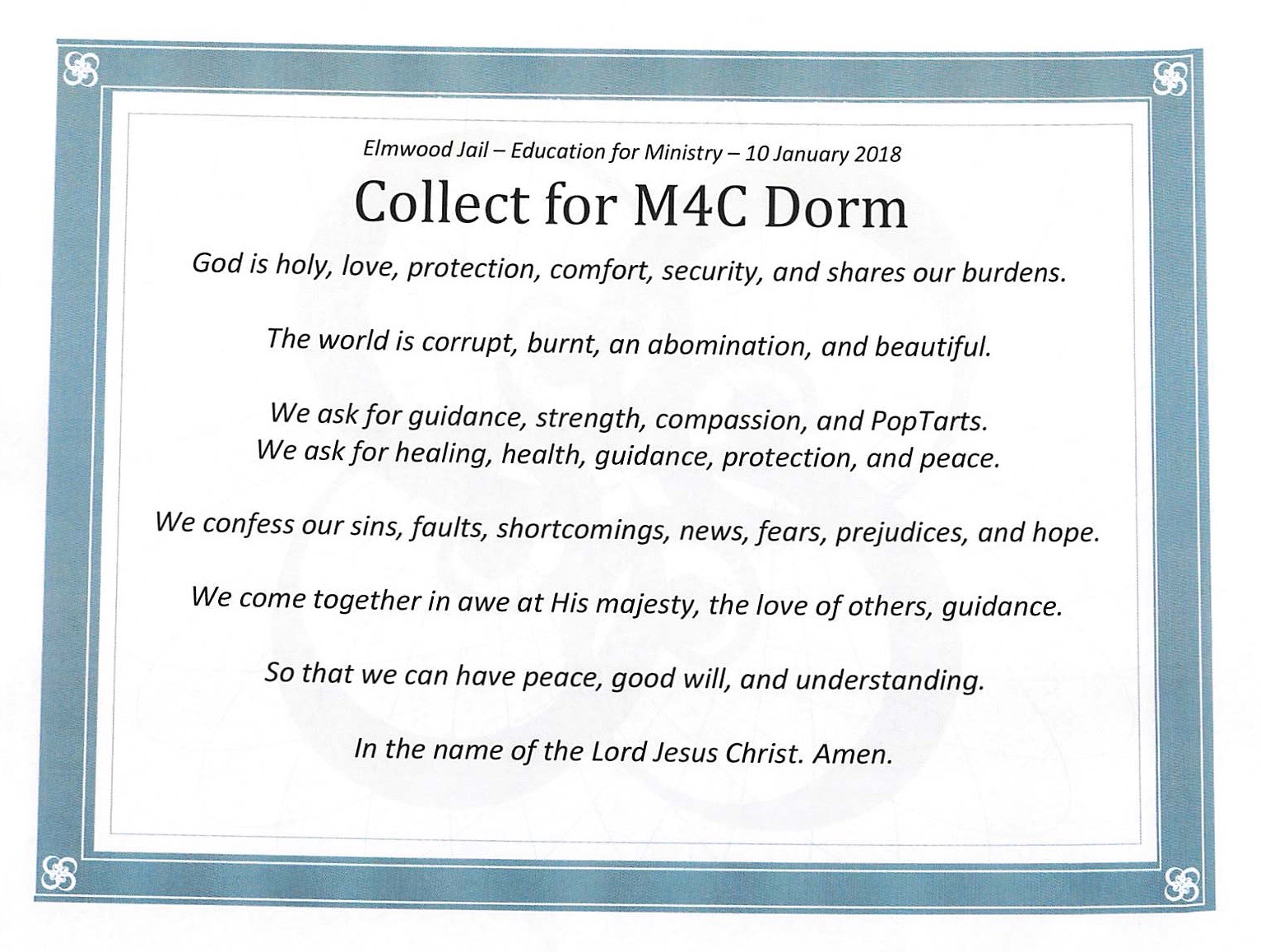
Collect for Elmwood Jail M4C Dorm 10 Jan 2018

In Week 16 of our Education for Ministry (EfM) 36 week seminar, the students write a Collect together. A collect is a prayer meant to gather the intentions of the people and the focus of worship into a succinct prayer. In the Week 16 exercise, EfM prompts us with the first few words of each line and the students fill in the rest. By writing their own Collect, students learn the difference between kinds of prayer: Petition, Intercession, Penitence, Thanksgiving, and Adoration.

I lead three EfM seminars a week, two at at Elmwood Jail in Milpitas and the third at St. Andrew’s Episcopal Church (all in the Silicon Valley). My Co-Mentors Joel and Diane and Karen and I are all Accredited Mentors.  After each group wrote their own Collect, I read them the prayers written by the others.

Here are the three Collects:

Collect from Elmwood M4C Dorm EfM Class

God is holy, love, protection, comfort, security, and shares our burdens.

The world is corrupt, burnt, an abomination, and beautiful.

We ask for guidance, strength, compassion, and PopTarts.

We ask for healing, health, guidance, protection, and peace.

We confess our sins, faults, shortcomings, news, fears, prejudices, and hope.

We come together in awe and wonder at His majesty, the love of others, guidance.

So that we can have peace, good will, and understanding.

In the name of the Lord Jesus Christ.
Amen.

Collect from Elmwood M2B Dorm EfM Class

God is wonderful, loving, father, strong, life.

The world is a mess, suffering, needing peace, capable.

We ask for peace, mercy, love, hope, freedom, safety, protection.

We ask for food for the hungry, a house for the homeless, peace for those in war-torn countries, and health for the unhealthy.

We confess sin, misgivings, our love, ignorance – lack of knowledge.

We give thanks for life, families, safety, health, our EfM Mentors, friendships, and Honey Bun pastry.

We come together in awe and wonder at new learning, every day, God’s presence at Elmwood Jail.

So that we can have love, understanding, faithfulness.

In the name of Jesus.
Amen.

Collect from St. Andrew’s EfM Class

God is love, healer, generous, compassionate.

The world is sick, poor, in need, progressive.

We ask for health, healing, open hearts and minds.

We ask for abundance for the poor, courage for leaders, wholeness for the sick.

We confess our prejudice, limitations, slowness.

We give thanks for those who came before us, healers, saints, new babies and parents, courageous leaders.

We come together in awe and wonder at a new year, God’s presence in our lives, grace.

So that we can be fearless, and the sick will be comforted.

In the name of our healing Father.
Amen.

This jail-based EfM program is supported by the Correctional Institutions Chaplaincy, the Episcopal Diocese of El Camino RealSt. Andrew’s Episcopal Church (Saratoga, California), and the University of the South – School of Theology.

If you want to receive Katysblog posts by email, please sign up using the Sign Me Up! button (upper right).

1 Comment

Filed under Church, Mentoring & Other Business

Reading for Mentoring Month

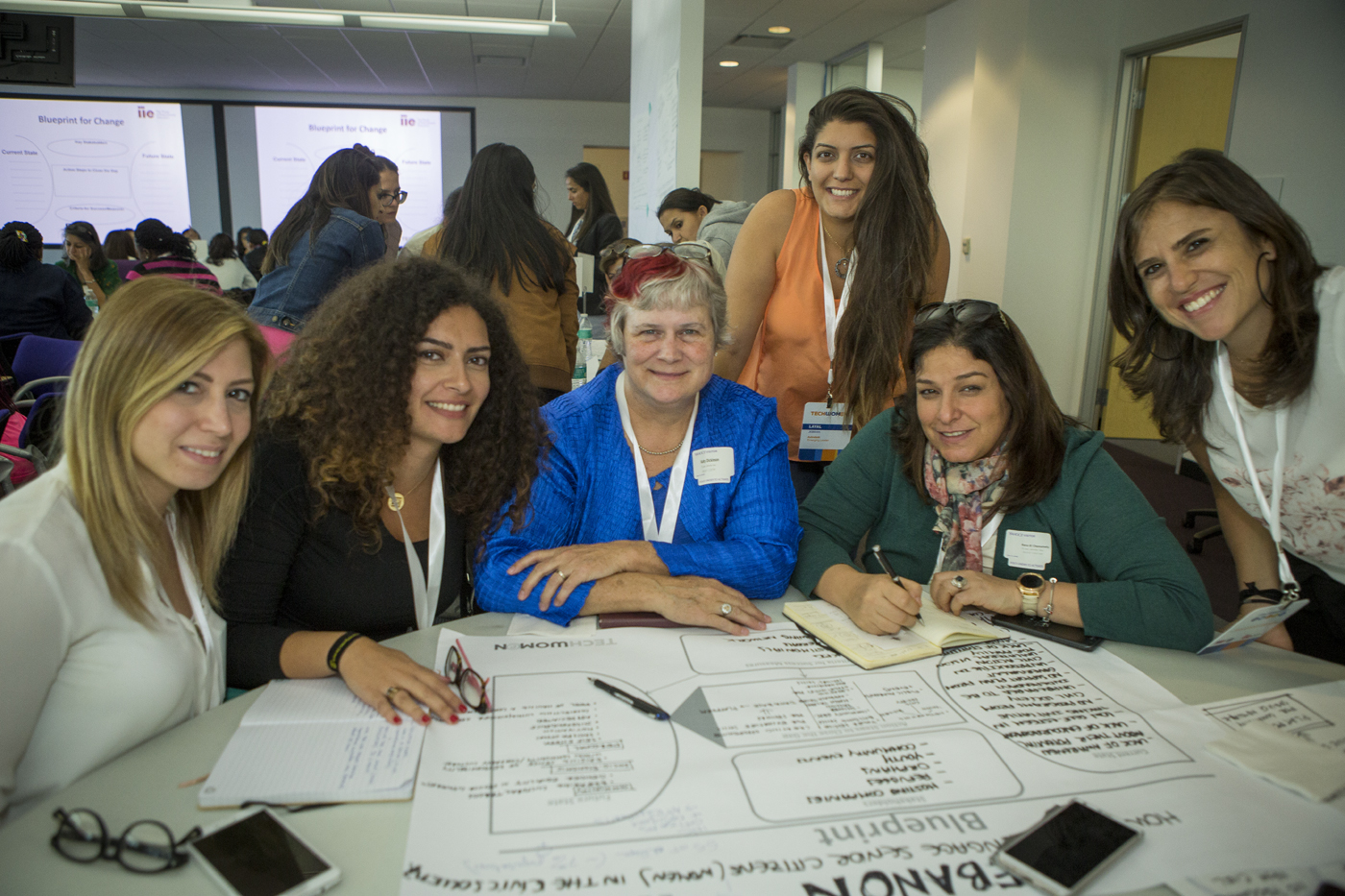
TechWomen Team Lebanon Action Plan Workshop 30 Sep 2017, photo by Saul Bromberger for TechWomen

Every day I am online looking for interesting news and articles from around the world, especially about mentoring. Most days, I post what I find on my Twitter account, with summaries of the most interesting posted in batches to Mentoring Standard on LinkedIn. In honor of January being America’s National Mentoring Month, here is a selection recent notable articles on mentoring to inspire you. Please nominate mentoring gems I have missed!

If you want to receive Katysblog posts by email, please sign up using the Sign Me Up! button (upper right).
Leave a comment

Filed under Mentoring & Other Business, Mentoring Standard, News & Reviews

Postcast Interview

Katy Dickinson Sun Microsystems badge 398 in 2010

I very much enjoyed being interviewed by Akshay Birla for his “Life of the Mind” podcast last month. He just published the interview as “Episode 19 | Katy Dickinson on Technology, Mentoring, and Religion”.

Katy Dickinson has been around the tech-block. Hired by Eric Schmidt at Sun Microsystems, she literally wrote the book on the software development lifecycle that Sun used for release of almost 10,000 releases. She is a technologist, entrepreneur, mentor, and writer.

In our conversation Katy talks about her work as a technologist on creating processes:
A process has to not assume that you have world-class people working on it. A process assumes that that not everybody — while they are good-intentioned and competent — [is] perfect. You have to have a system that allows for lack of perfection but can work if you have the best that there is.

and the futility of only having excellent coders:
A good coder is a wonderful thing to have but you have to create something that the customer wants and feels comfortable with. Good coding and user experience are sometimes at odds.

But we spend the most of our conversation talking about mentoring programs that deliver high return-on-investment, and the intersection of religion and technology.

On the importance of example and networking provided by the Grace Hopper Celebration:
While they may be the only women in the room – which has certainly been my experience in 30+ years in the Silicon Valley – there are a lot of rooms.

Listening to your own recorded voice is always surprising – it sounds so different from the inside!

Happy New Year!

Sun Microsystems gate Menlo Park California in 2010

If you want to receive Katysblog posts by email, please sign up using the Sign Me Up! button (upper right).
Leave a comment

Filed under Church, Hopper - Anita Borg Institute, Mentoring & Other Business, Mentoring Standard, News & Reviews

What is Bad About Jail, What is Good About Jail

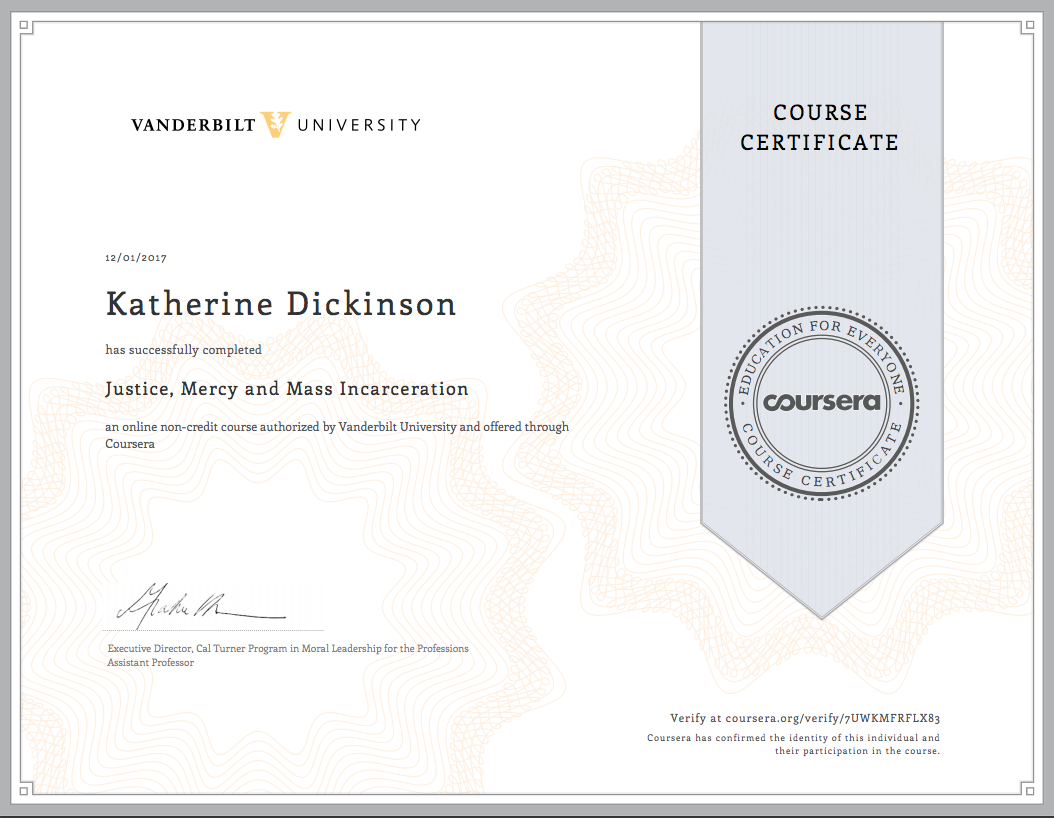
2017 Vanderbilt University Coursera Justice Mercy Mass Incarceration 1 Dec 2017

I recently finished a fascinating six week Vanderbilt University class called “Justice, Mercy and Mass Incarceration” presented through Coursera online.  The course goals were “to discover alternatives to the current systems of crime and punishment in order to imagine a more inclusive, just and moral society”.  It was taught by Graham Reside, Assistant Professor, Vanderbilt University Divinity School.  This is my second online class in the area of justice and criminology, the first being “Crime, Justice and Society” by The University of Sheffield, presented online by FutureLearn.  I am both interested in the topic and in the MOOC (massive open online course) method in which these classes are presented.

Since 2015, I have developed and led a seminar at Elmwood Jail in Milpitas, California, in the Silicon Valley. Our seminar curriculum and books are from the Education for Ministry (EfM) program of the University of the South – School of Theology. EfM is a four year college-level certification program, started in 1975. So far as we know, ours is the only jail-based EfM program, although there are two dozen prison-based programs in the USA. In addition to covering the official EfM material, in the seminar we also work on listening, respectful group interactions, study skills, and basic leadership skills – like how to open and close a class with prayer.

This jail-based EfM program is supported by the Correctional Institutions Chaplaincy, Episcopal Diocese of El Camino Real, St. Andrew’s Episcopal Church (Saratoga, California), and the University of the South – School of Theology. I worked with a group of volunteers from St. Andrew’s to start our first weekly seminar in a medium security dorm, and we have recently added a second weekly seminar in a minimum security dorm. Two of the EfM students at Elmwood are in Year 3 (Church History), two are in Year 2 (New Testament), with the remaining students in Year 1 (Hebrew Bible). The EfM year is only nine months long but my Co-Mentors and I run the jail-based seminars back-to-back (since inmates do not get summer vacations).  About two thirds of the inmate students in our EfM seminar are men of color – mostly Latino – and the rest are white.  We conduct discussions in English (and Spanglish) but provide Bibles, Books of Common Prayer, and Dictionaries in both English and Spanish.

In leading this EfM seminar, I have observed many consequences of incarceration. One of my reasons for taking “Justice Mercy and Mass Incarceration” was to understand more of the context of what I am observing when I am teaching in jail. Last month, I told the seminar students about the “Justice, Mercy, and Mass Incarceration” class and asked them to tell me one good thing and one bad thing about being in jail. Here is what six of them said:

What is Bad About Jail

  • I don’t see my family.
  • Some innocent people are punished (but not many).
  • I am not there for my kids.
  • I can’t be there to help my wife when she needs me.
  • Not being there for loved ones: I am frozen, unable to do anything.
  • Being a number – losing who you are.
  • I never get the time back.
  • I have no say. I am less of a citizen.
  • I am treated as low in the hierarchy.
  • There is no mercy, no leniency.
  • I can’t be there for my babies, my wife. I am hurting.
  • I am missing my family.
  • I lose my job, my apartment, my wife and kids, my paycheck, everything.

What is Good About Jail

  • Takes evil off the street.
  • Families are safe from bad people.
  • I have a clear mind. I am closer to God.
  • I have more belief, more faith, more spirituality. I am more close to God.
  • I have free time to spend on prayer, sobriety, like the worst-ever vacation. We can be with ourselves without a phone or Facebook.
  • If I stay clean, I have a clear mind, can reflect and prepare for becoming a better person out there.
  • I can clear my mind, rethink decisions on things I have done (and things I did not get caught for).
  • I can stay off drugs, not putting poison into my system.
  • It has made me think, be a better person. Reflection, closer to God. I am learning a lot.
  • There is free medication (health care).

There are connections and discrepancies between what “Justice, Mercy, and Mass Incarceration” teaches and what the EfM student inmates say. They agree on the benefit of taking violent, evil, bad people off the street. They also agree that imprisonment has the potential for supporting personal reform – inmates rethinking who they have been and who they want to become. “Justice, Mercy, and Mass Incarceration” does not spend a great deal of time on effective reform but in the recommended 1998 documentary film “The Farm: Angola Prison”, several of the long-term inmates had clearly over time become very different people, positive forces in the prison community.  My hope for my EfM students is whether they are inside or outside, they can make a positive difference in the world.

2017 FutureLearn University of Sheffield Crime Justice and Society certificate July 2017

If you want to receive Katysblog posts by email, please sign up using the Sign Me Up! button (upper right).

Leave a comment

Filed under News & Reviews, Politics

Honoring STEM Mentoring

ECR Simple Servant Award to Katy Dickinson 3 Nov 2017

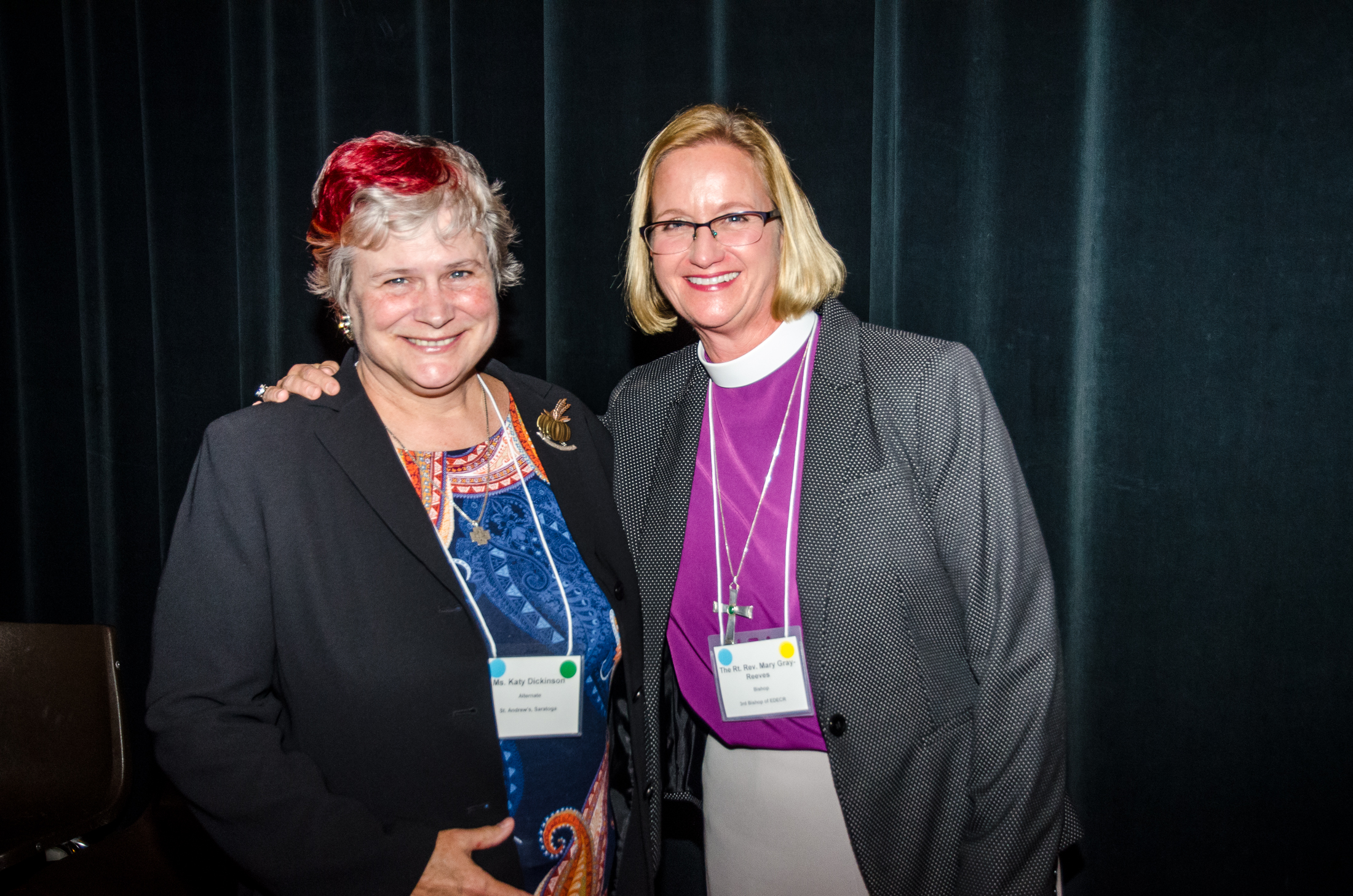
At the 37th Episcopal Diocese of El Camino Real annual convention last weekend, I was honored by Bishop Mary Grey-Reeves with a second Simple Servant Award for my work since 2010 with the TechWomen mentoring program of the US Department of State, Bureau of Educational and Cultural Affairs. The award certificate reads:

Simple Servant Award
Presented on November 3, 2017 to
Katy Dickinson
The Diocese of El Camino Real honors you. May God bless you for your
faithful ministry mentoring women in Africa and the Middle East in STEM
professions, and for your contribution to the creation of a “virtuous cycle” of
knowledge and wisdom sharing in the world of technology.

It has been an honor and pleasure to work with TechWomen and my mentees from Africa, the Middle East, and Central Asia. Watching this program thrive and touch so many lives is a great delight. Since I worked in 2010-2011 as the TechWomen Process Architect, I have been a volunteer with this life-changing program as a mentor, working with groups of STEM leaders who travel to the San Francisco Bay Area and Silicon Valley to be hosted by 122 science and technology companies and organizations for a month (and then continue a mentoring relationship once they have returned to their home country).

Beginning with the first cohort of 37 from 6 countries in 2011, there have been 518 TechWomen Fellows from 22 countries and 698 mentors. I have formally been assigned to mentor 14 women in Lebanon, Algeria, Gaza-Palestine, Jordan, and Tunisia – and have worked with many more who have asked me to be their mentor. I have also participated in nine formal TechWomen Delegations with the State Department, to: Jordan (twice), Kyrgyzstan, Morocco (twice), Rwanda, South Africa, Tunisia, and Zimbabwe, as well as making informal trips with TechWomen mentors to visit our mentees in Lebanon, Gaza-Palestine, and Sierra Leone.  Learning from my sister mentors as well as from my mentees is part of the joy and value of this excellent program for Citizen Diplomats.

Want to make a different in STEM? Please consider joining TechWomen as a mentor yourself!

ECR Convention Simple Servant award Bishop Mary Gray-Reeves, Katy Dickinson 3 Nov 2017 by Elrond Lawrence

If you want to receive Katysblog posts by email, please sign up using the Sign Me Up! button (upper right).
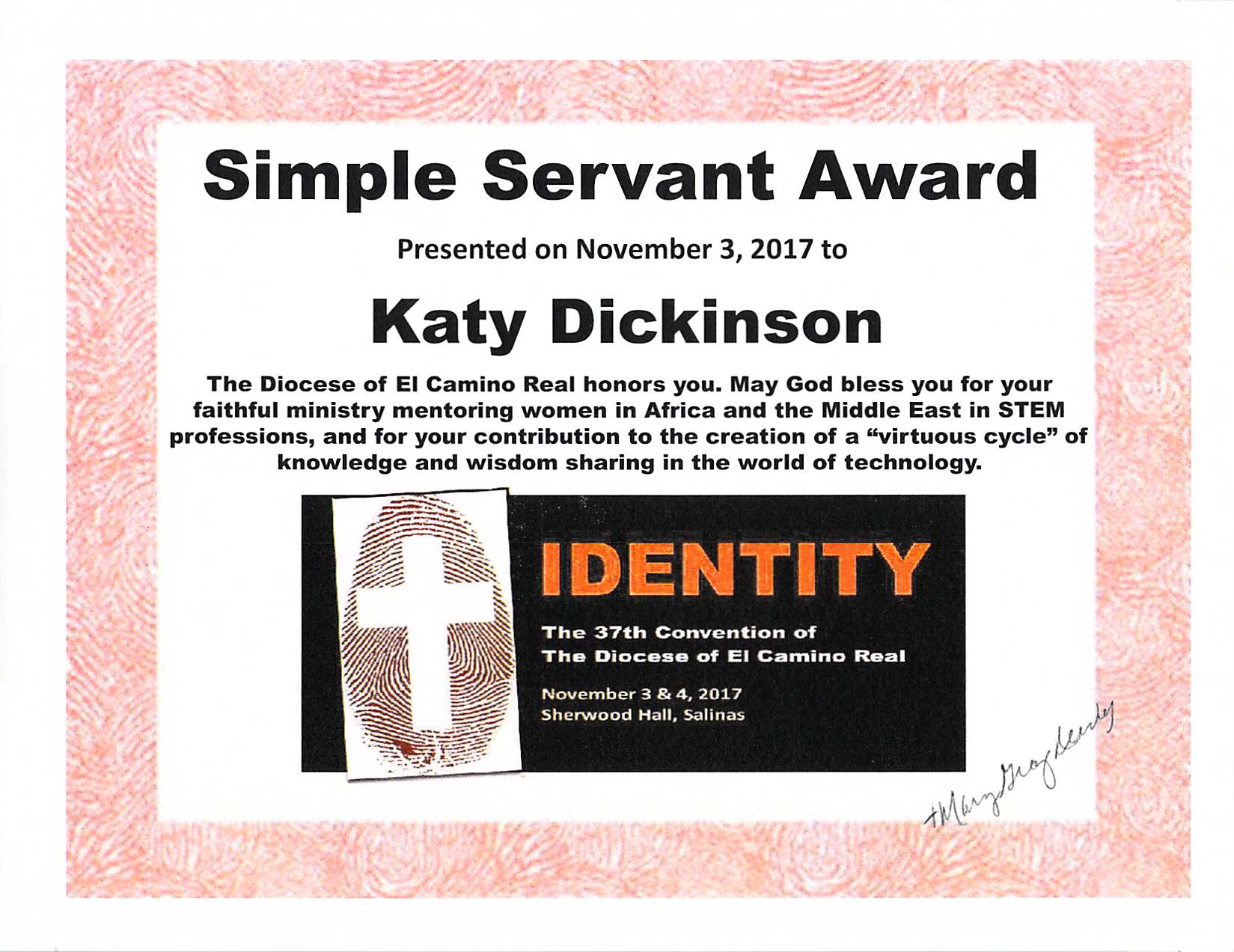
Photo Copyright 2017 by the Diocese of El Camino Real, Elrond Lawrence.

Leave a comment

Filed under Church, Mentoring & Other Business, Mentoring Standard, News & Reviews, Politics

Creating a Pitch for Lebanon

TechWomen Team Lebanon October 2017 San Francisco

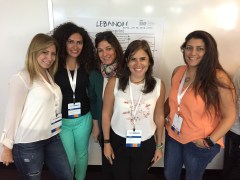
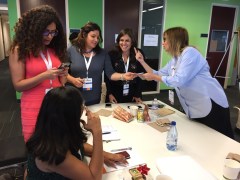
As a TechWomen Impact Coach for 2017 Team Lebanon, I am honored to serve for my seventh year in this remarkable mentoring program of the U.S. Department of State’s Bureau of Educational and Cultural Affairs (ECA).  Our team includes five Emerging Leaders from Lebanon (Lara Chikhani, Layal Jebran, Maya Itani, Rana El Chemaitelly, and Rasha Sukkarieh), plus three experienced mentors from the Silicon Valley: Mercedes Soria (Knightscope), Fatema Kothari (Verizon, and the Internet Society) and me.  We have been working hard for weeks at three TechWomen workshops plus twice a week remote meetings to develop our pitch for presentation this Friday.  Team Lebanon’s project is called “Ask an Expert” – a social enterprise to benefit senior citizens and refugees.  Wish us luck!

TechWomen Team Lebanon October 2017 San Francisco

TechWomen Team Lebanon October 2017 San Francisco

If you want to receive Katysblog posts by email, please sign up using the Sign Me Up! button (upper right).
Images Copyright 2017 by Katy Dickinson

1 Comment

Filed under Mentoring & Other Business, Mentoring Standard, News & Reviews