Islamic Networks Group – Earth Day Interfaith Panel, 22 April 2021
Today, I was honored to be part of an interfaith panel for ING – the Islamic Networks Group. We were discussing topics around caring for the Earth as part of celebrating Earth Day. The panelists included:
Dr. Rohany Nayan, CEO, Chicago Muslims Green Team (CMGT)
Ven. Tenzin Chogkyi, ING Board Member & Teacher at Land of Medicine Buddha
Harry Cornbleet, Retired Physician
Katy Dickinson, ING Board Member & Founder of Mentoring Standard
Lakshmi Subramanian, Hindu, Vocalist-Scholar, Aks & Lakshmi
AmarAtma Khalsa, Sikh Dharma Minister, a Board Certified Chaplain, and an Acupuncturist
Moderator, Ishaq Pathan, ING Bay Area Director
If you want to receive Katysblog posts by email, please sign up using the Sign Me Up! button (upper right on Katysblog home).
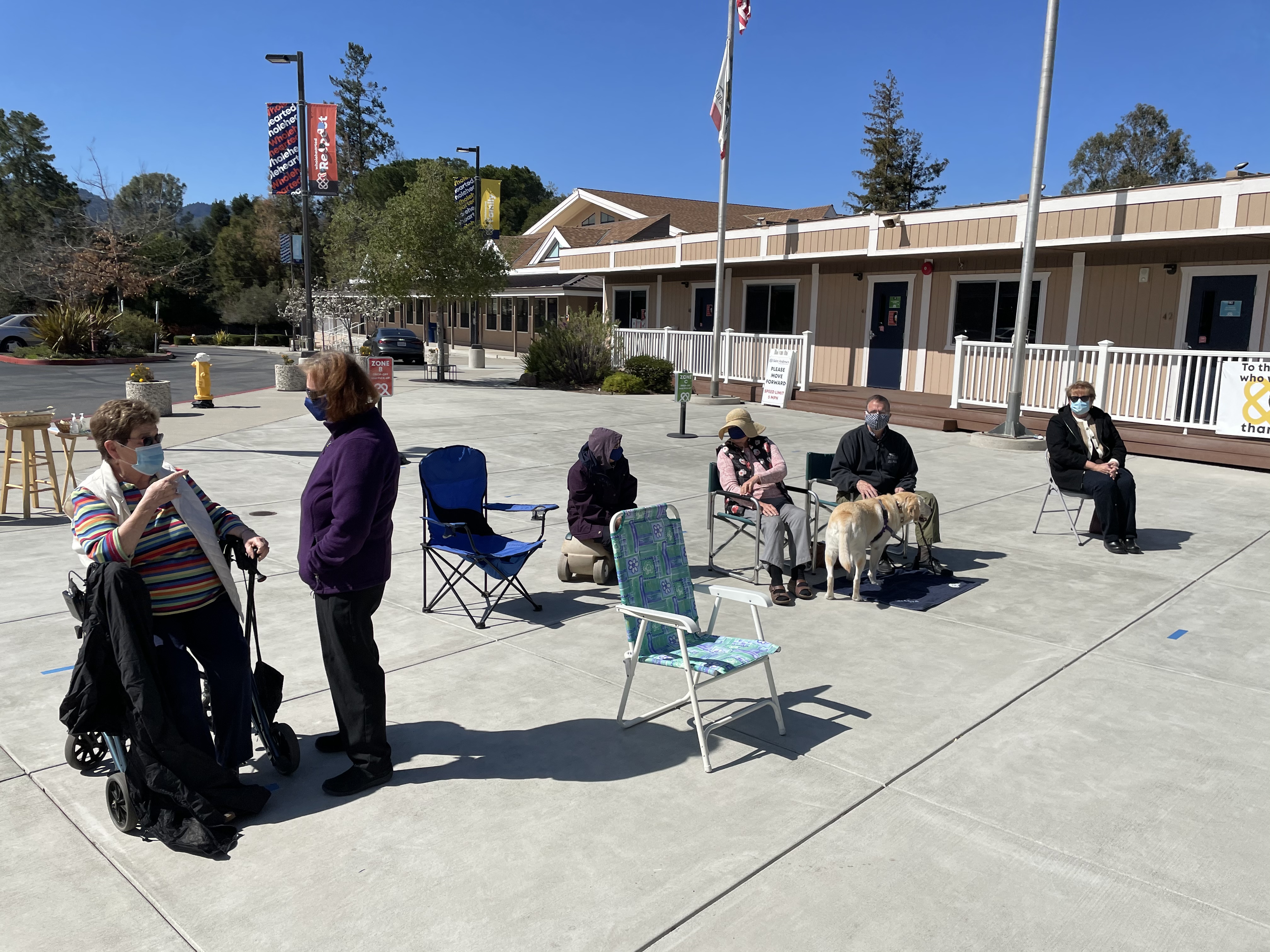
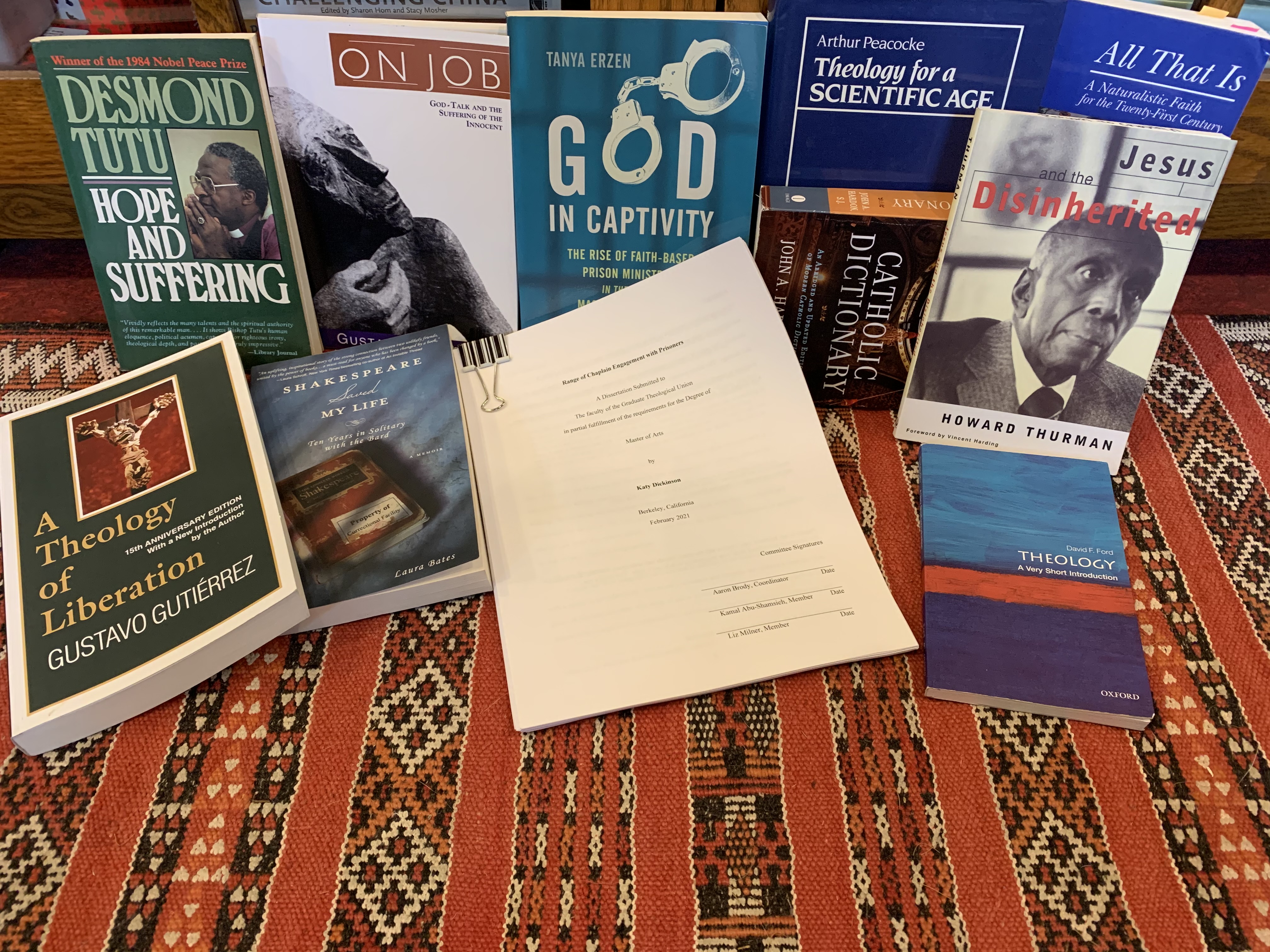
On 7 March 2021, I presented about my GTU Master’s Thesis “Range of Chaplain Engagement with Prisoners” to about forty people in my home parish, St. Andrew’s Episcopal Church (Saratoga, California) via Zoom (and broadcast to the church courtyard). I linked my slides here to make it easier to follow along. Here is the link to the video recording.
I have not yet posted the whole thesis – I think the GTU Library will be doing that eventually. I am still in the process of getting the final thesis signatures and the library is one of the last that needs to approve it.
22 April 2021 – This presentation has been given several times, most recently to the GTU Religion and Practice Department, and a Kairos volunteer group. Please contact me if you would me to speak.
8 March 2021 – updated text, added video link, and photo
If you want to receive Katysblog posts by email, please sign up using the Sign Me Up! button (upper right on Katysblog home). Images Copyright 2021 by Katy Dickinson.
Katy Dickinson Master’s Thesis, Range of Chaplain Engagement with Prisoners, 23 Jan 2021
My Graduate Theological Union Master’s – Theology thesis is called “Range of Chaplain Engagement with Prisoners.” I finished writing it at the end of January, successfully defended it at the start of February and am now working through minor edits with my GTU committee. (Hooray!) In parallel, I am continuing to take classes for GTU’s Interreligious Chaplaincy Certificate program. I am honored to have been accepted into a CPE (clinical pastoral education) program at Stanford Health Care later this year.
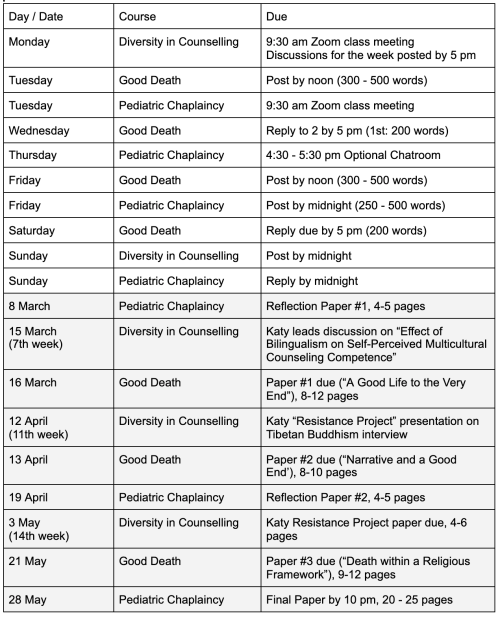
I finished a two-part January Intersession class in “Introduction to Pastoral Care and Theology,” and am now taking three GTU classes, “Diversity in Counseling,” “Pediatric Chaplaincy,” and “A Good Death.” Because of the COVID-19 pandemic, all classes are online. Professors have to make up for the lack of in-person class time and meet the nine-hours-per-week / per class requirement. In addition to assigned reading and papers, my graduate classes meet by Zoom once or twice a week, plus posting 250 to 500 word reflections to Moodle (learning management system). Each class has a different schedule, so I created a table to remember when I need to post and when replies are due to other students’ posts. Every time I log into Moodle, it tells me how many more reflection posts I need to read. I end up posting to Moodle twelve to fourteen times a week. I will be happy when we can get back inside a real classroom.
If you want to receive Katysblog posts by email, please sign up using the Sign Me Up! button (upper right on Katysblog home). Images Copyright 2021 by Katy Dickinson.
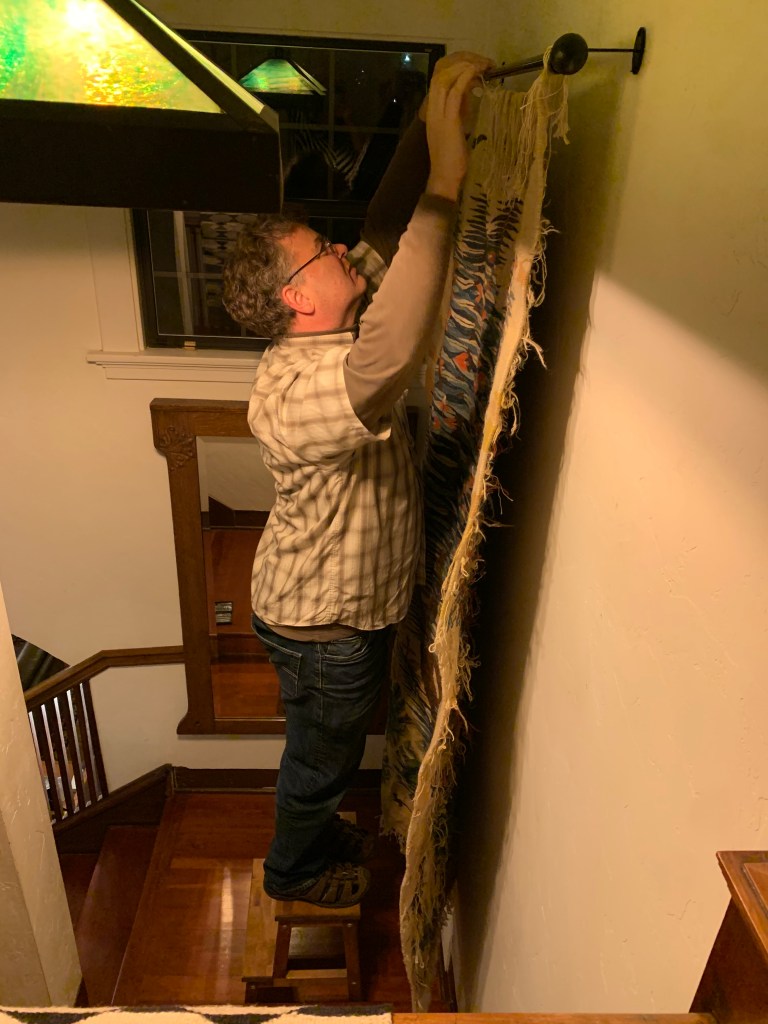
To celebrate my finishing writing my Master’s thesis, John surprised me with a large tapestry from the Wissa Wassef Art Center, Giza, Egypt. Normally for a big family celebration, we would go out to dinner or maybe on a trip, but during the COVID-19 pandemic lockdown, that is not possible.
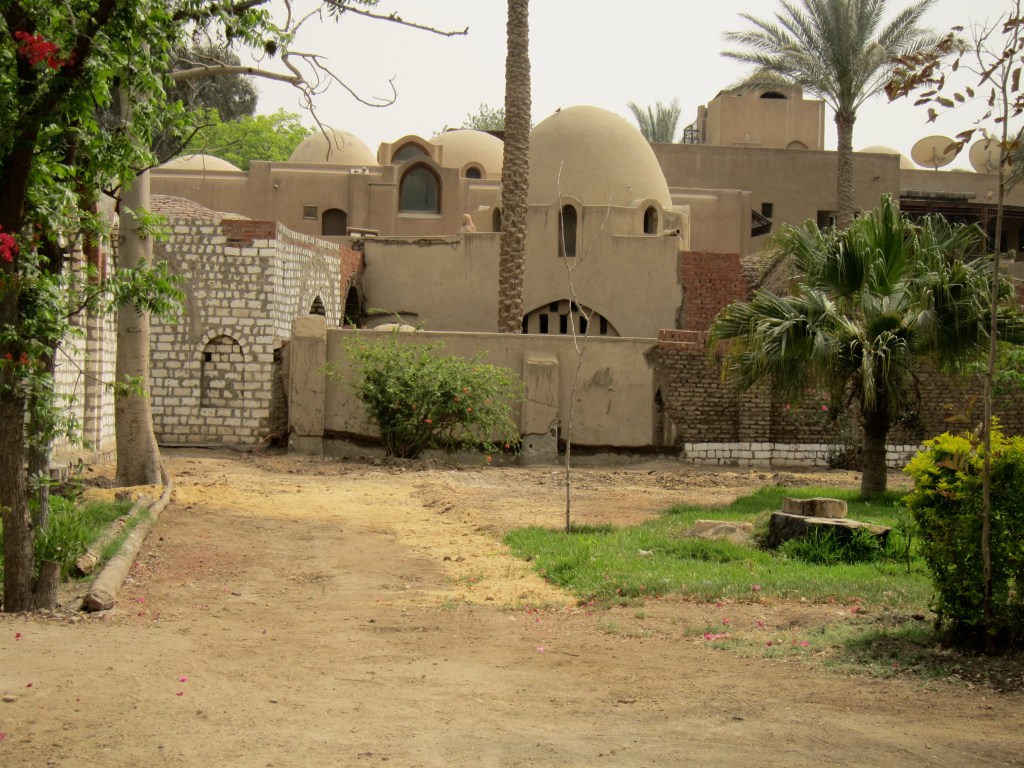
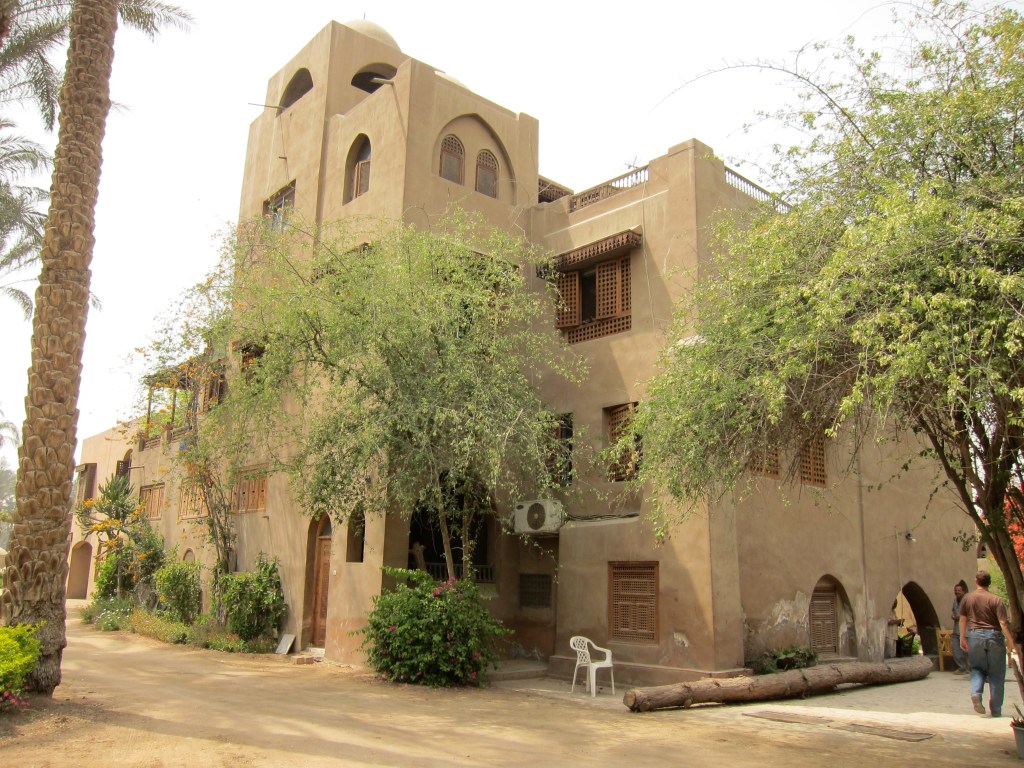
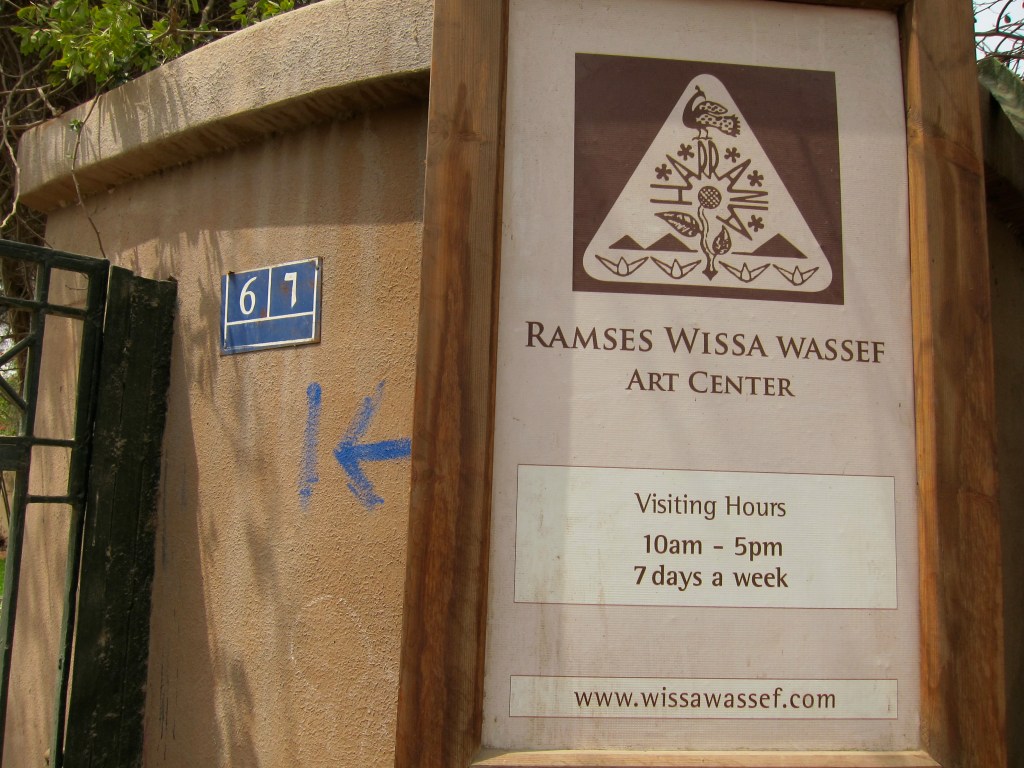
In 2010, our family visited the Wissa Wassef Art Center outside of Cairo (in Harrania Village, near Giza) where we bought a small tapestry and two books. I am glad to have a second of these lovely works of fabric art!
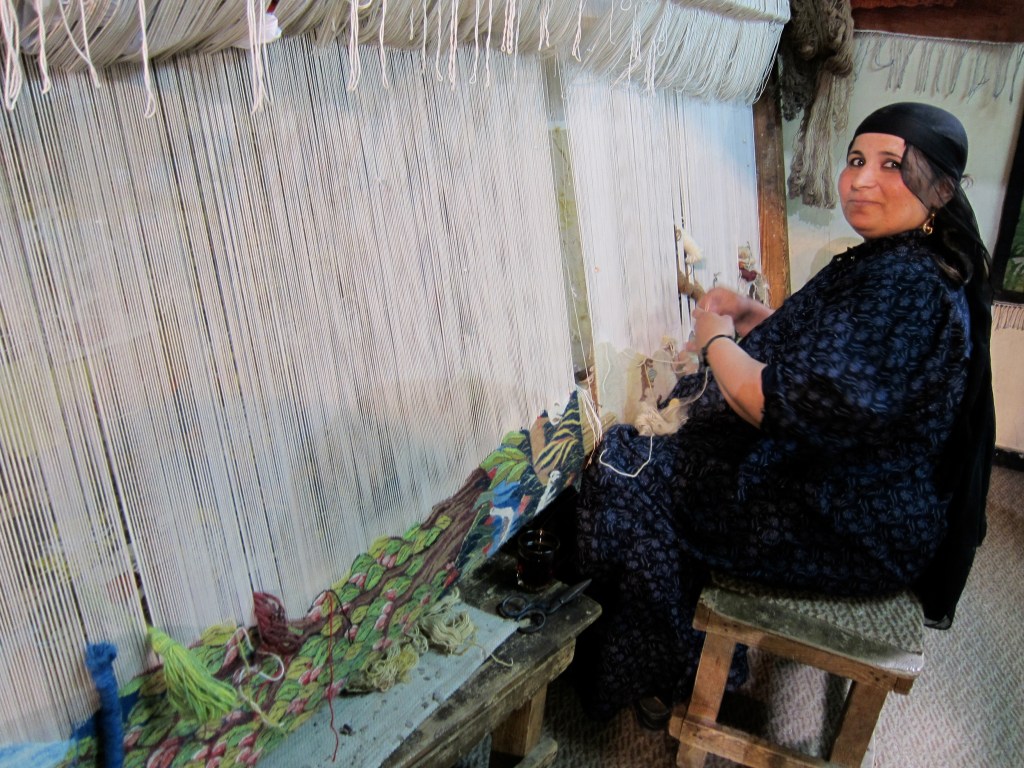
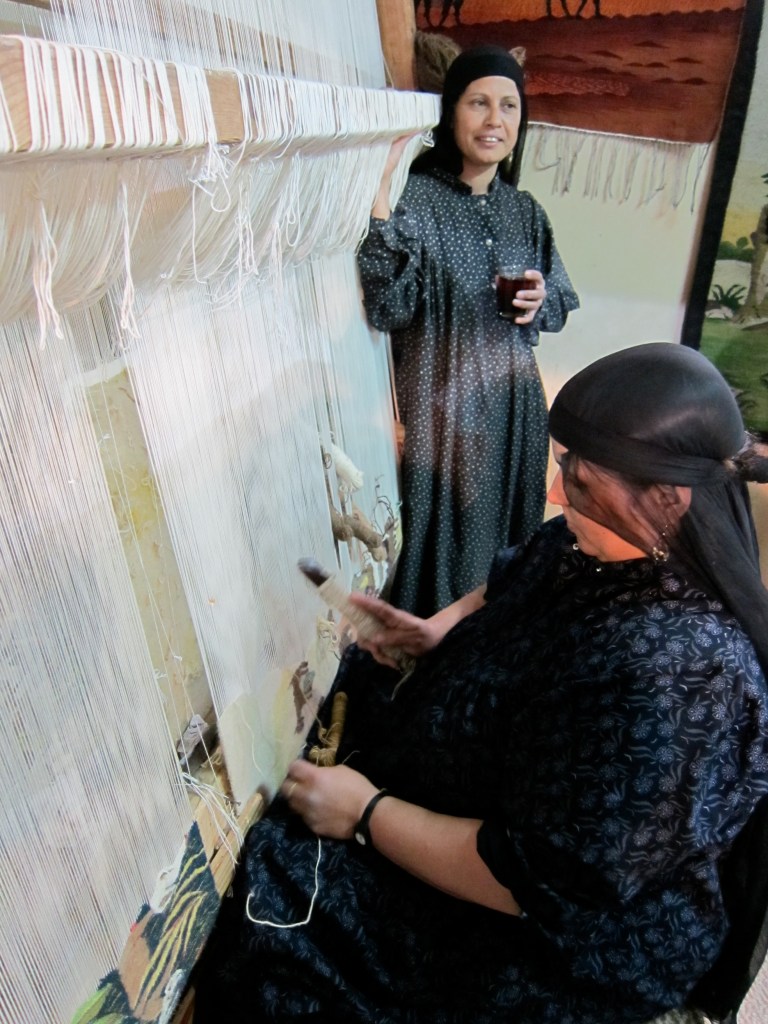
2010 Reda Ahmed weaving at the Wissa Wassef Art Center
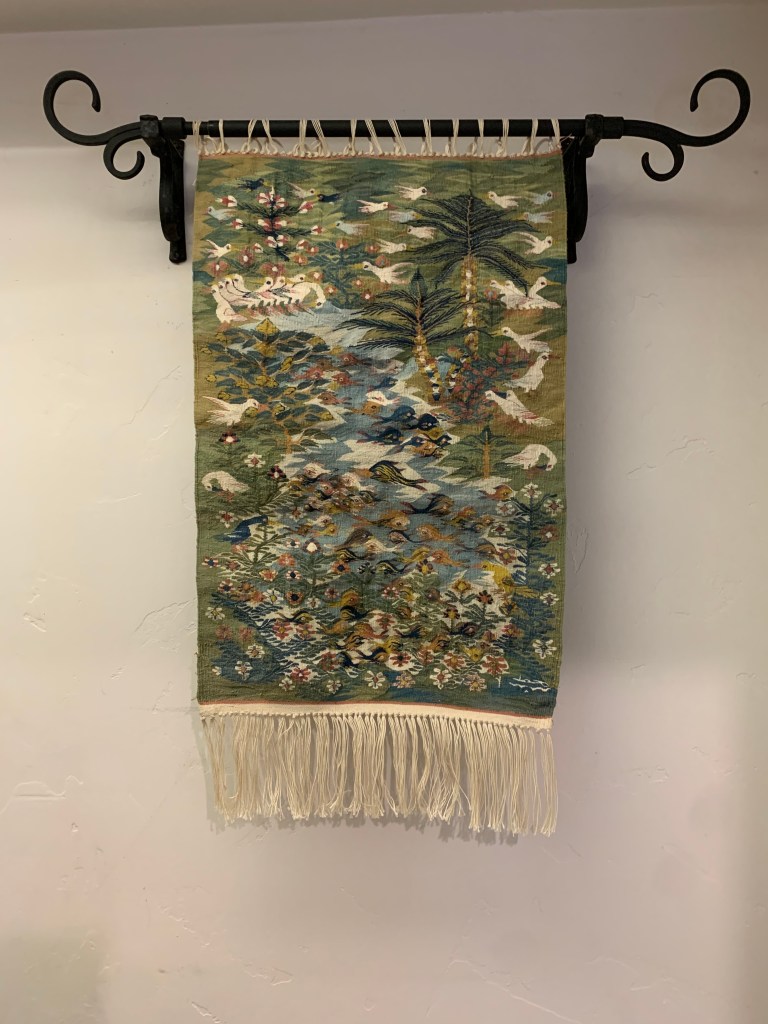
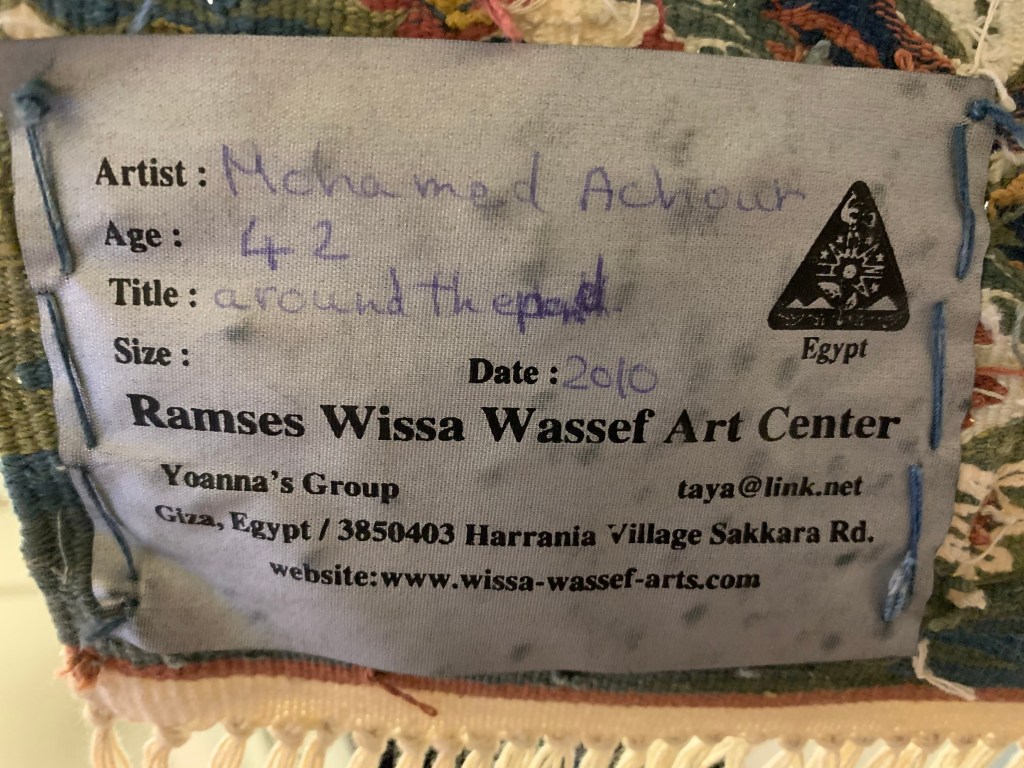
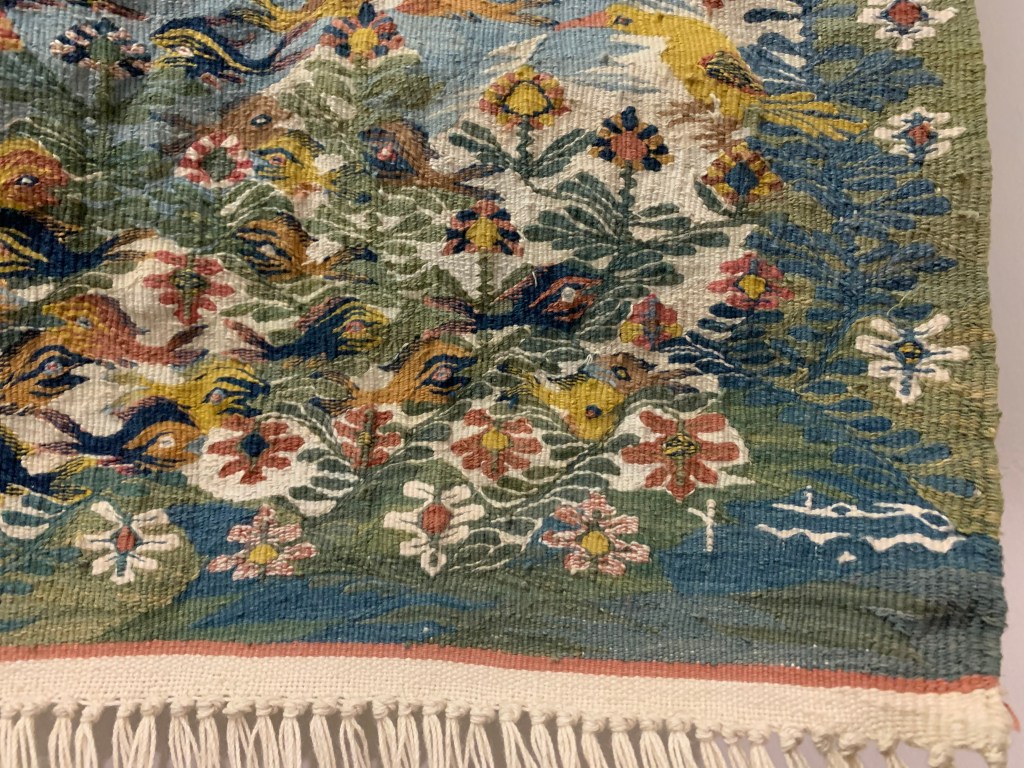
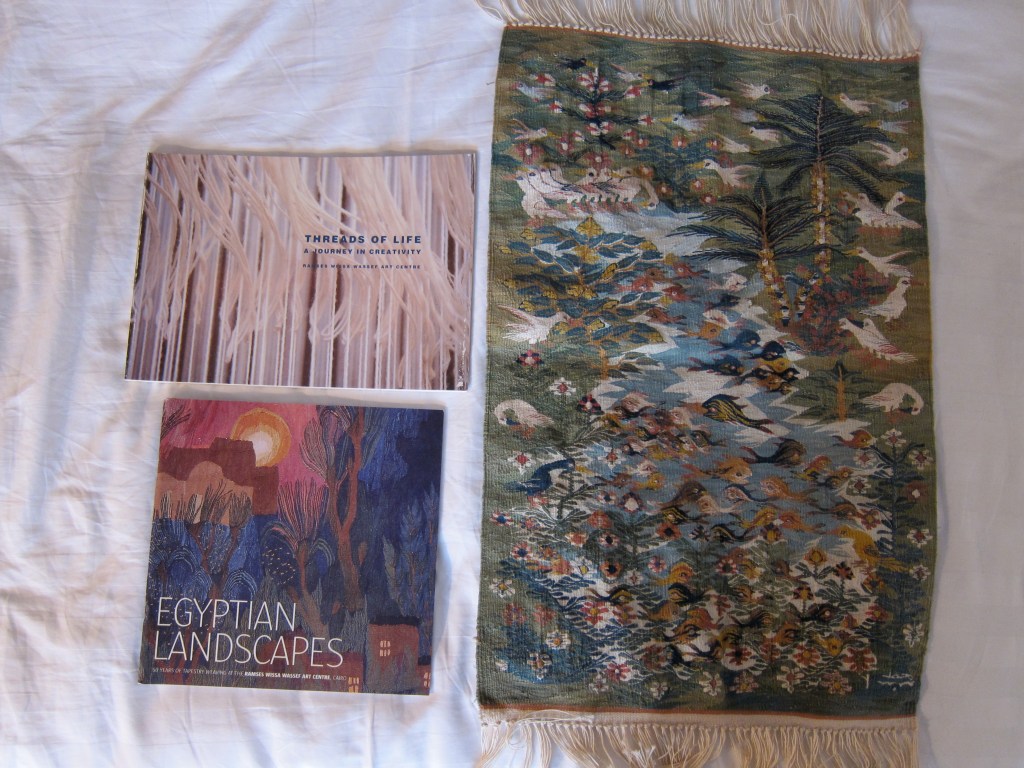
Our first Wissa Wassef tapestry is a small master work called “Around the Pond,” woven in cotton by Mohamed Achour in 2010. It presents fish and birds with palms and flowering plants around a small body of water.
2010 tapestry and books
Mohamed Achour, 2010 Wissa Wassef tapestry
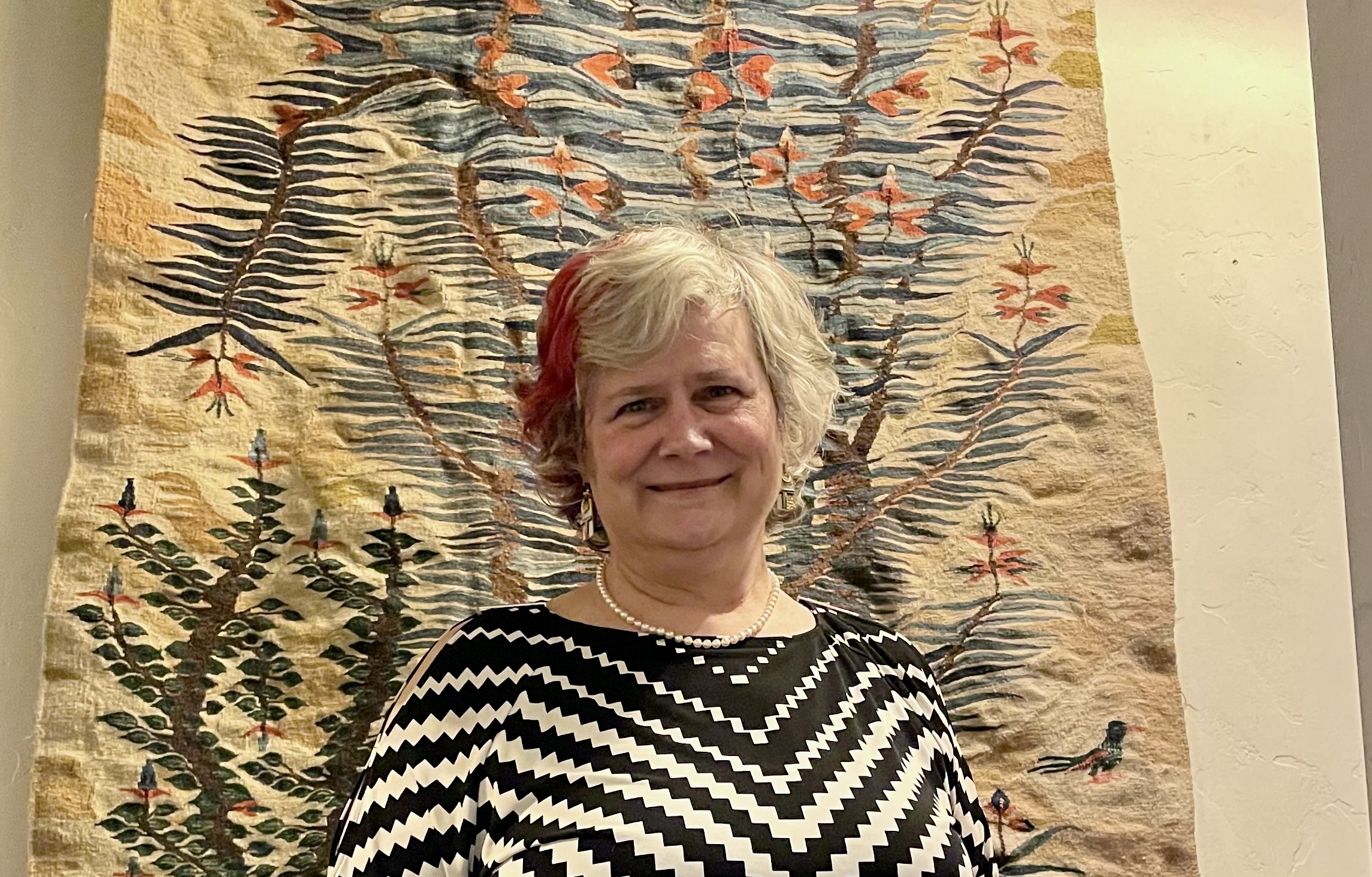
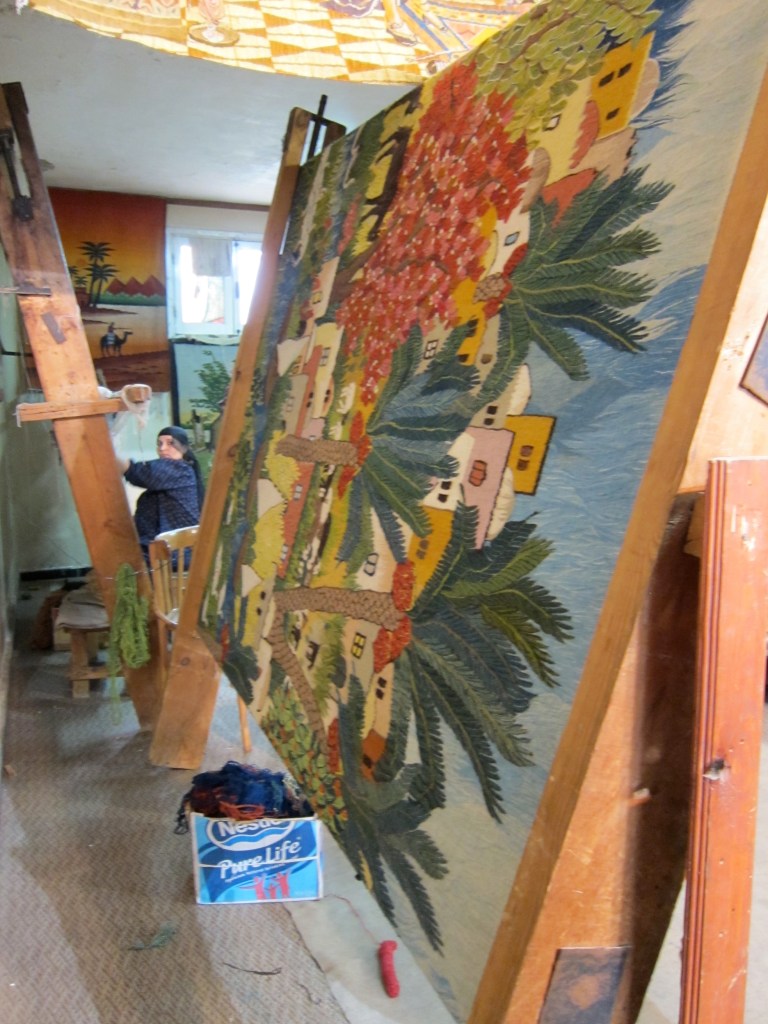
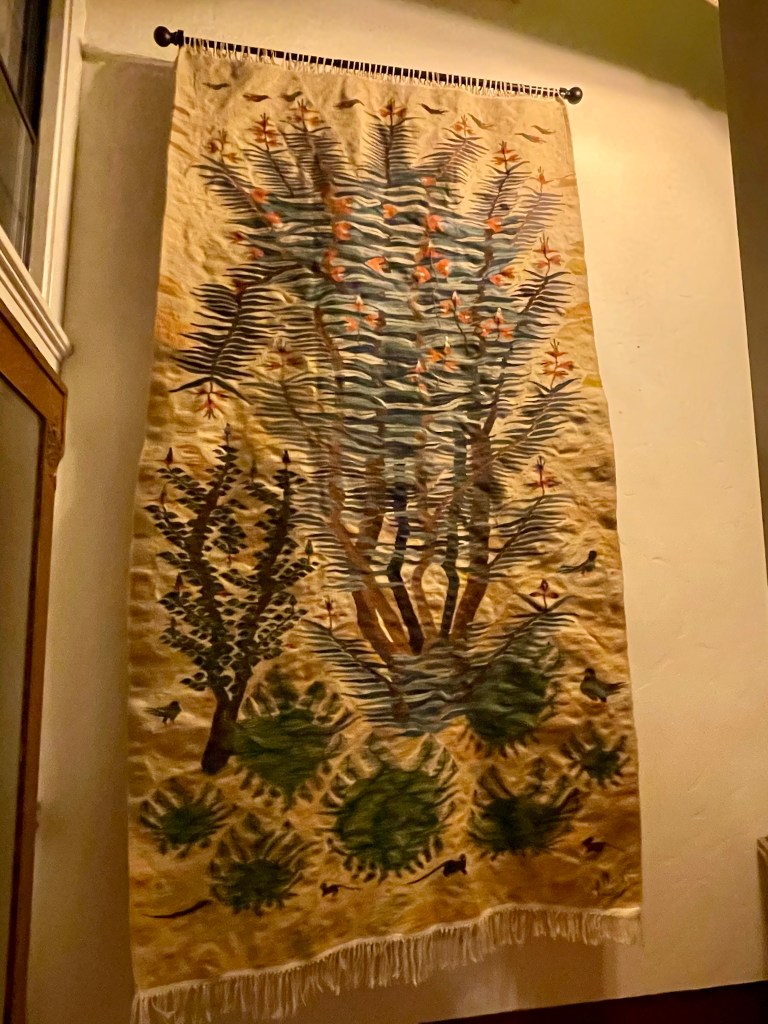
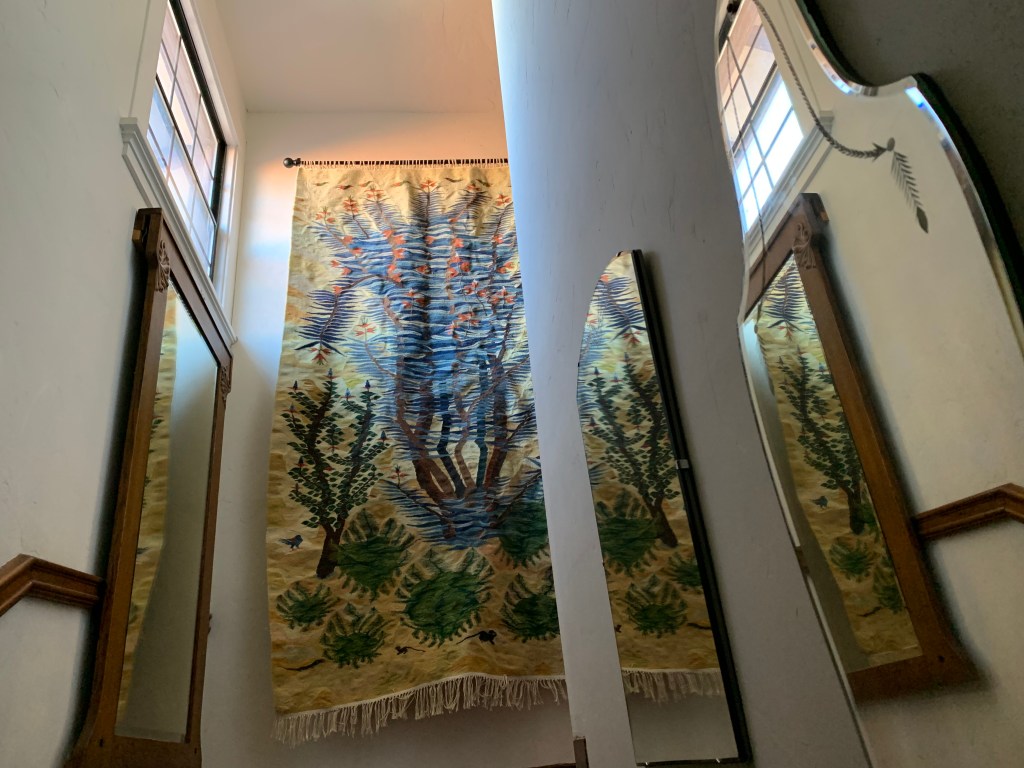
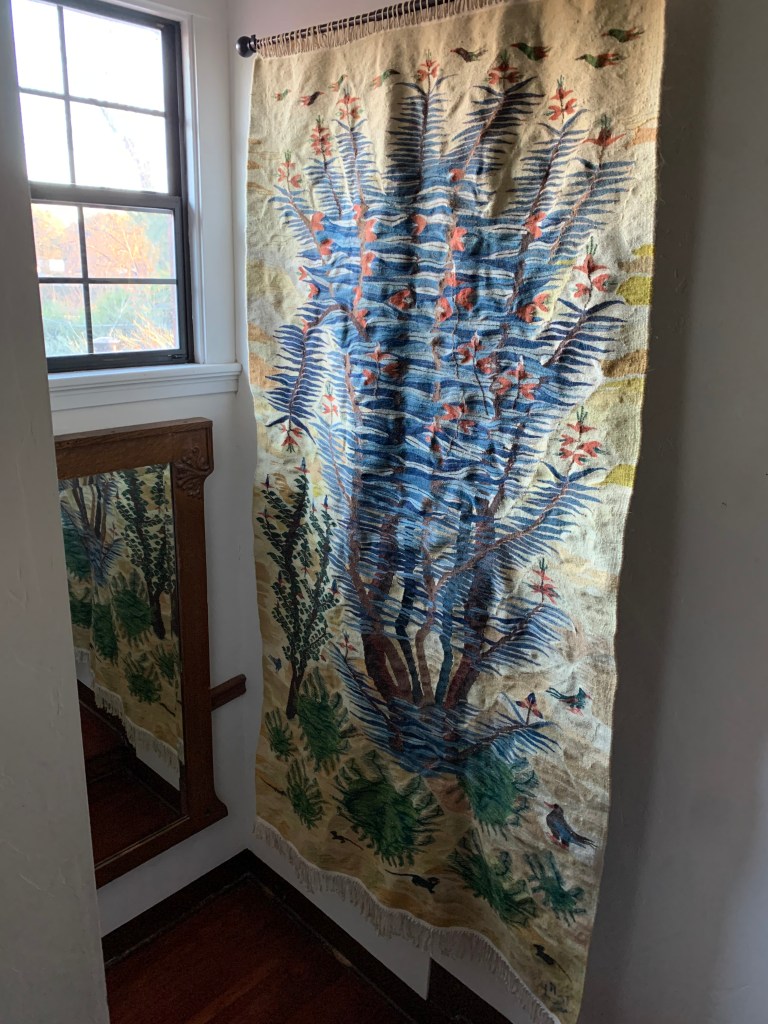
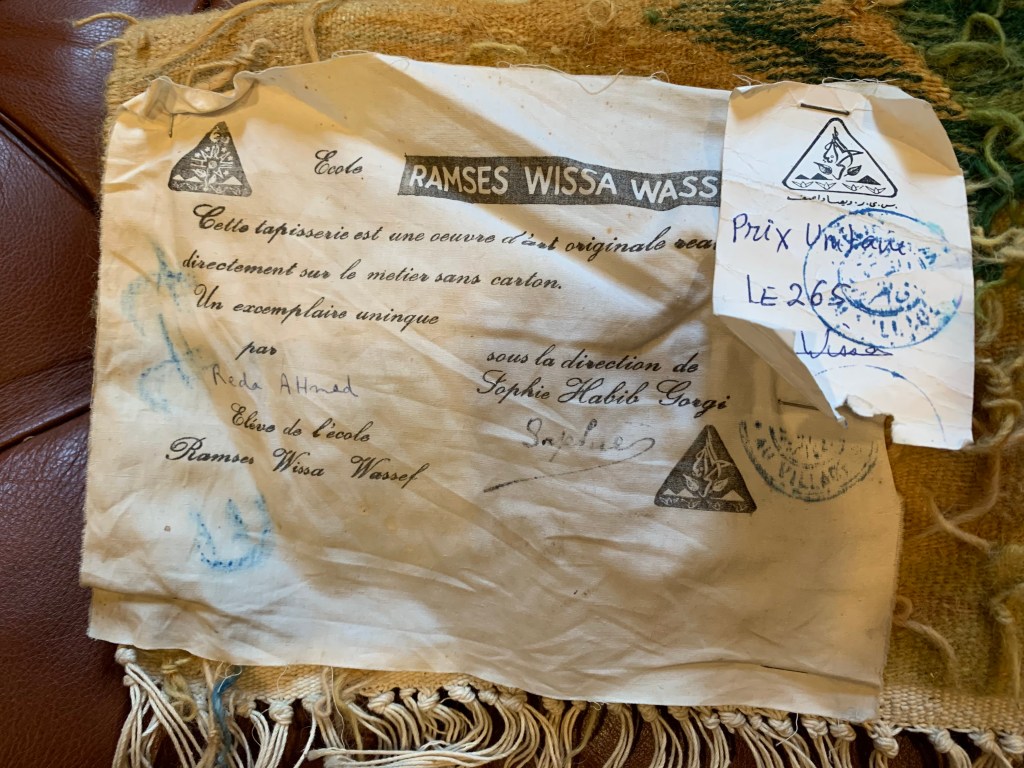
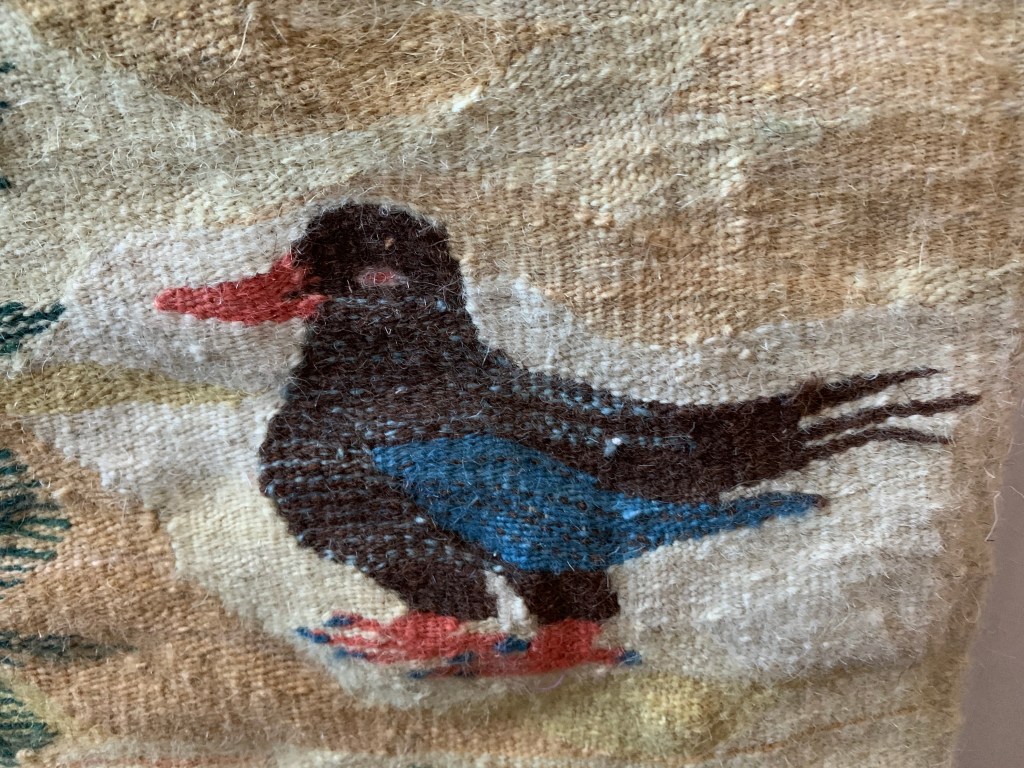
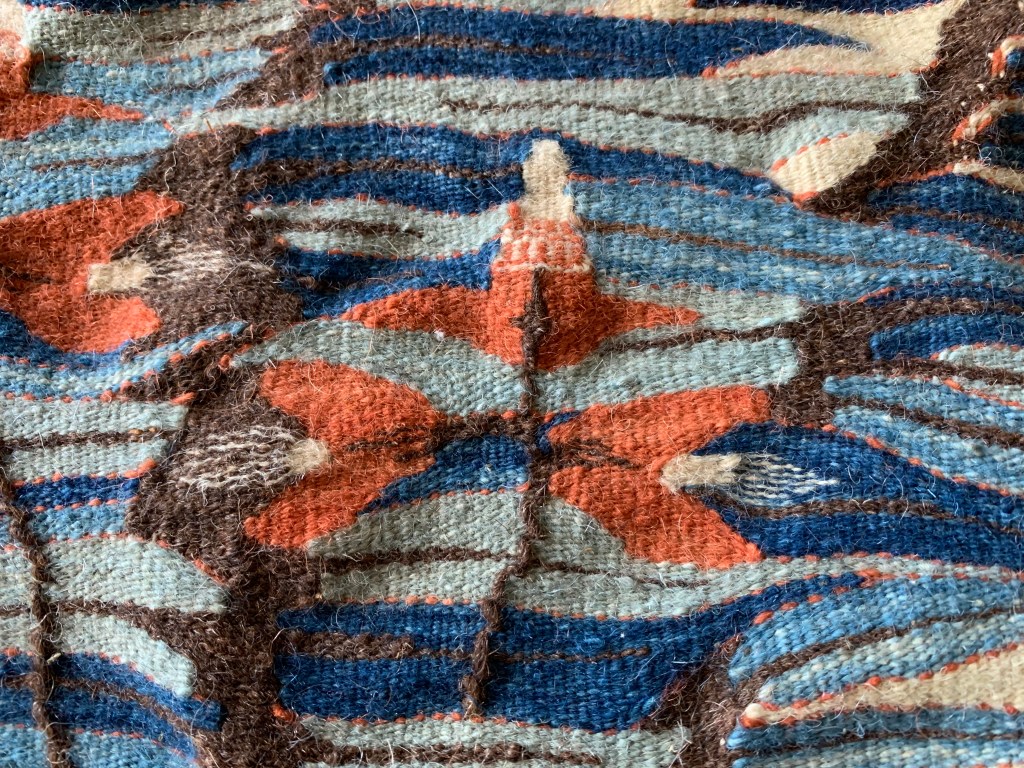
Our new Wissa Wassef tapestry is undated but is probably much older than the first, even though John just bought it from a store in France. It was woven by Reda Ahmed in wool and cotton. Looking at our 2010 pictures, I realized we saw Reda Ahmed weaving during our Wissa Wassef visit. We hung the tapestry last night and it may take months for the textile to settle into its new home above the stairs. The weaving presents a large blue tree with red flowers, with a smaller tree and bushes as well as birds, weasels, and a lizard. I am thankful for this lovely and generous gift. The lively images and cheerful colors make me happy!
John Plocher hanging tapestry
Reda Ahmed, Wissa Wassef tapestry
Reda Ahmed, Wissa Wassef tapestry detail
Note: Nothing pictured is for sale. Please do not ask.
If you want to receive Katysblog posts by email, please sign up using the Sign Me Up! button (upper right on Katysblog home). Images Copyright 2010-2021 by Katy Dickinson.
It’s that time of year: flood season on San Jose’s Guadalupe River. Late yesterday afternoon, yellow rain slicker clad city workers went house to house to tell us of immediate danger of flooding. In addition to the houses, city workers went to each of the homeless camps near us to be sure that our unhoused neighbors were also prepared. Because of the COVID-19 pandemic, there are many homeless living under bridges and in culverts near the river where they are in danger as the water rises. We are watching the water levels on the NOAA map.
City of San Jose, CA, flood notice
U.S NOAA flood map
San Jose’s Guadalupe River, Alma bridge, with homeless camps.
If you want to receive Katysblog posts by email, please sign up using the Sign Me Up! button (upper right on Katysblog home). Images Copyright 2021 by Katy Dickinson.
In this paper, as an extension of our weekly class discussions this semester on similarities and differences in theology between Islam and other faiths, I engage with selected historical and contemporary Muslim scholars with regard to how they communicate, by means of theological polemics at one end of the range, through pluralism and interfaith dialogue at the other. I focus on communication by Islamic scholars in their interactions with two other Abrahamic faiths, Christianity and Judaism. I find that some contemporary Muslim scholars value and promote concepts of religious pluralism in the Quran, which may be a sign that Islam is moving away from the polemical rhetoric of its most famous historical scholars.
If you want to receive Katysblog posts by email, please sign up using the Sign Me Up! button (upper right on Katysblog home). Image Copyright 2020 by Katy Dickinson.
Following up on my 8 October 2020 post: Despite the challenges of working at home during a pandemic, the inspiring TechWomen team from Sierra Leone is making good progress developing a project to benefit their country. We have worked for months to identify and refine our focus on the challenge of malnutrition in children, and on a statement on the social impact of this difficult problem. The current version of our action plan statement is below. Next week, we begin to make our pitch video.
TechWomen is a competitive and prestigious exchange program of the U.S. State Department – Bureau of Educational and Cultural Affairs. Executive Vice President of Knightscope Software Engineering Mercedes Soria, Country Coach Salwa Campbell, and I are mentoring the five Emerging Leaders from Sierra Leone, Dr. Fatmata Munu, Glenna Wilson, Isha Kamara, Joan Koroma, and Josephine Turay (all from Freetown).
Team Sierra Leone Impact Statement
We don’t want to watch our children die. Team Sierra Leone will start with 50 mothers as our pilot. Our campaign will reach the target audience in Freetown and western area by radio, and advertising vans distributing brochures with pictures. We will provide educational materials on best food and good nutritional practices. In addition to mothers, we will contact community leaders, chiefs and community health workers.
Our mission is to reduce the level of malnutrition in Sierra Leone. We will achieve this by educating mothers on how to use local foods to make balanced diets. According to the government of Sierra Leone, 31.3% of children have the chronic form of malnutrition. This is because according to UNICEF, 70% of infants and young children are underfed, surviving on diets consisting mainly of starchy staples. We believe we are the best people to work on the malnutrition project because our skills and background are a perfect match, comprising but not limited to a medical doctor, pharmacist, public health graduate and a data scientist.
This text and photo was published with permission of Team Sierra Leone.
If you want to receive Katysblog posts by email, please sign up using the Sign Me Up! button (upper right on Katysblog home). Image Copyright 2020 by Katy Dickinson.