Episcopal General Convention 80 in Baltimore, 8 July 2022
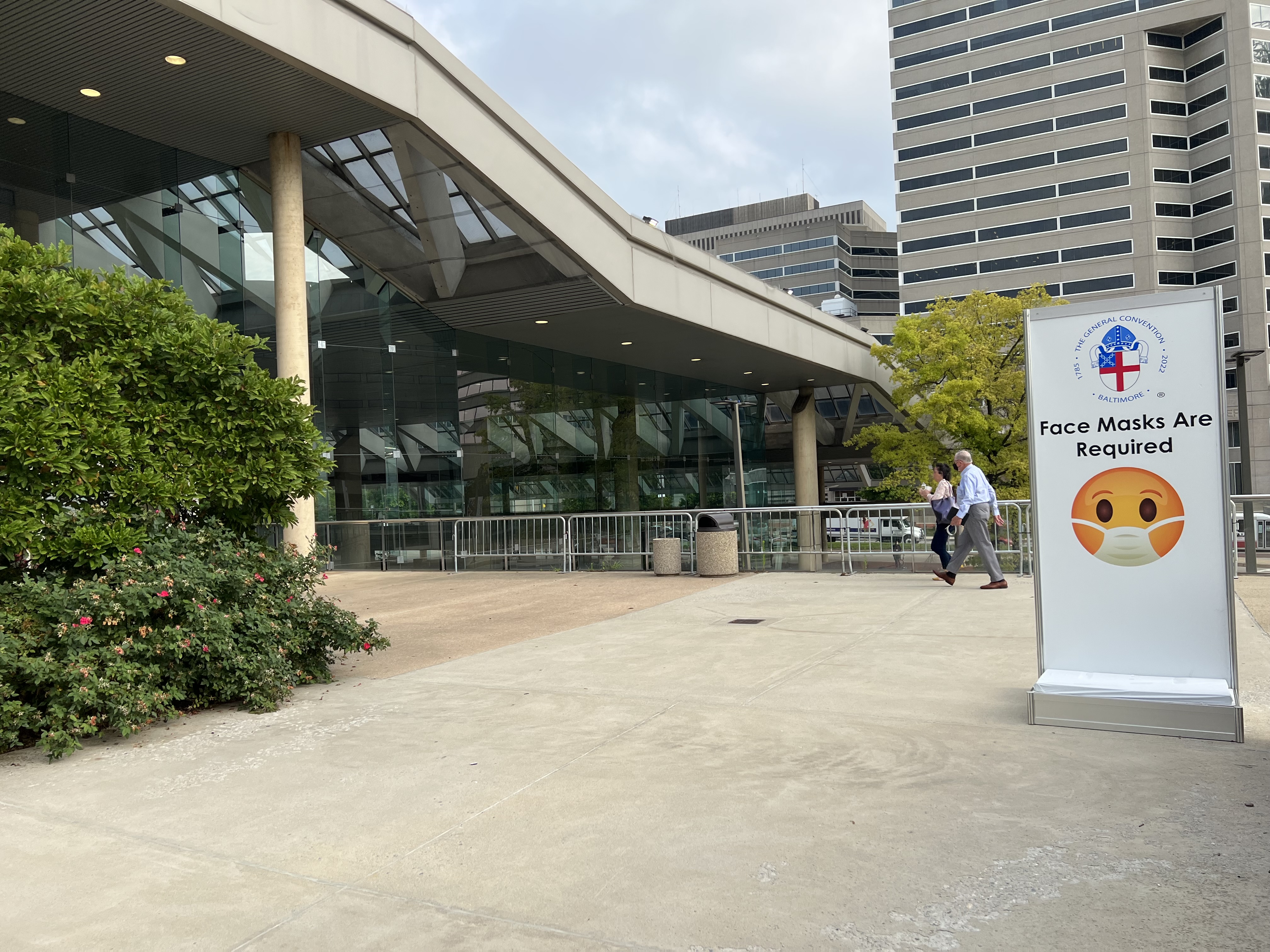
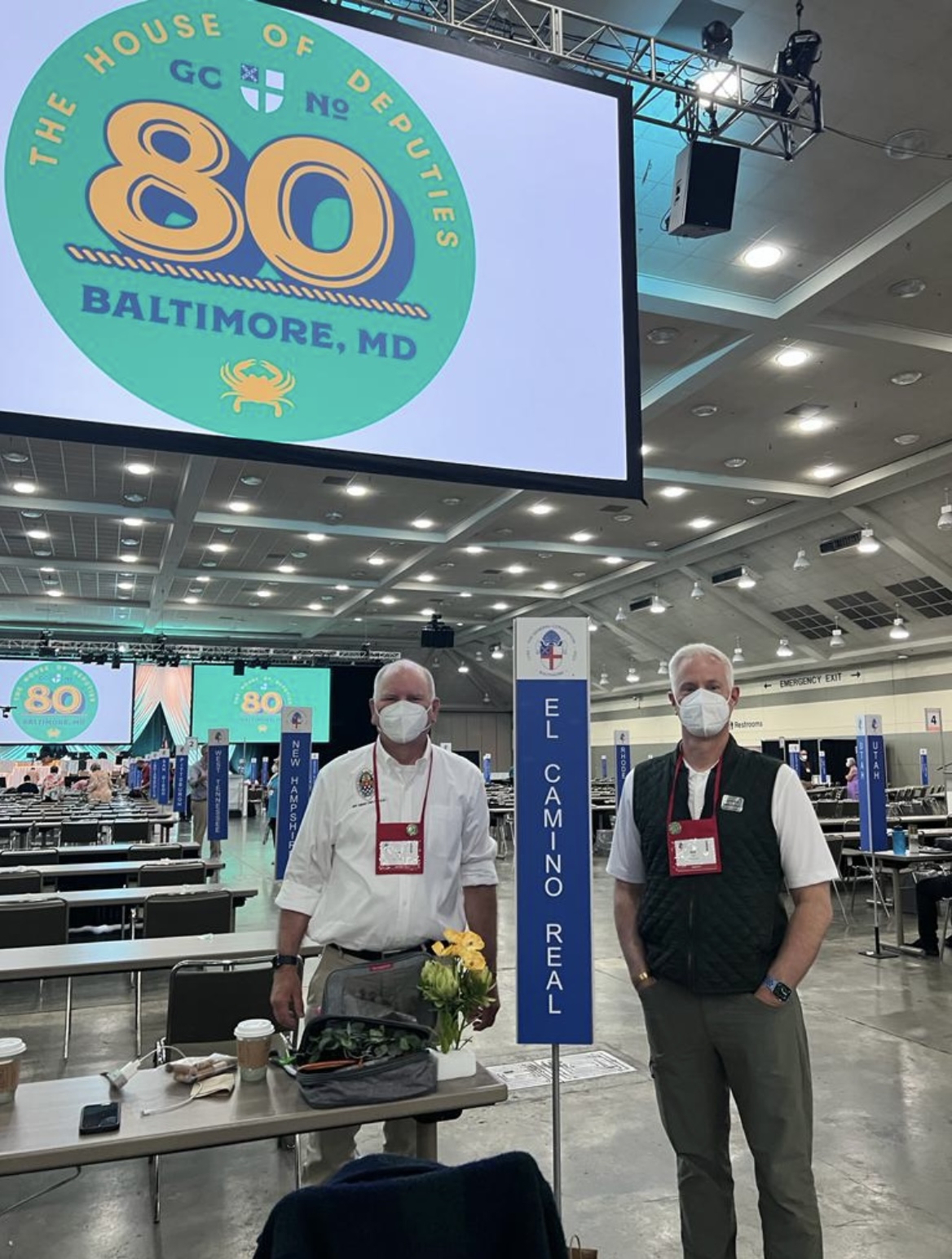
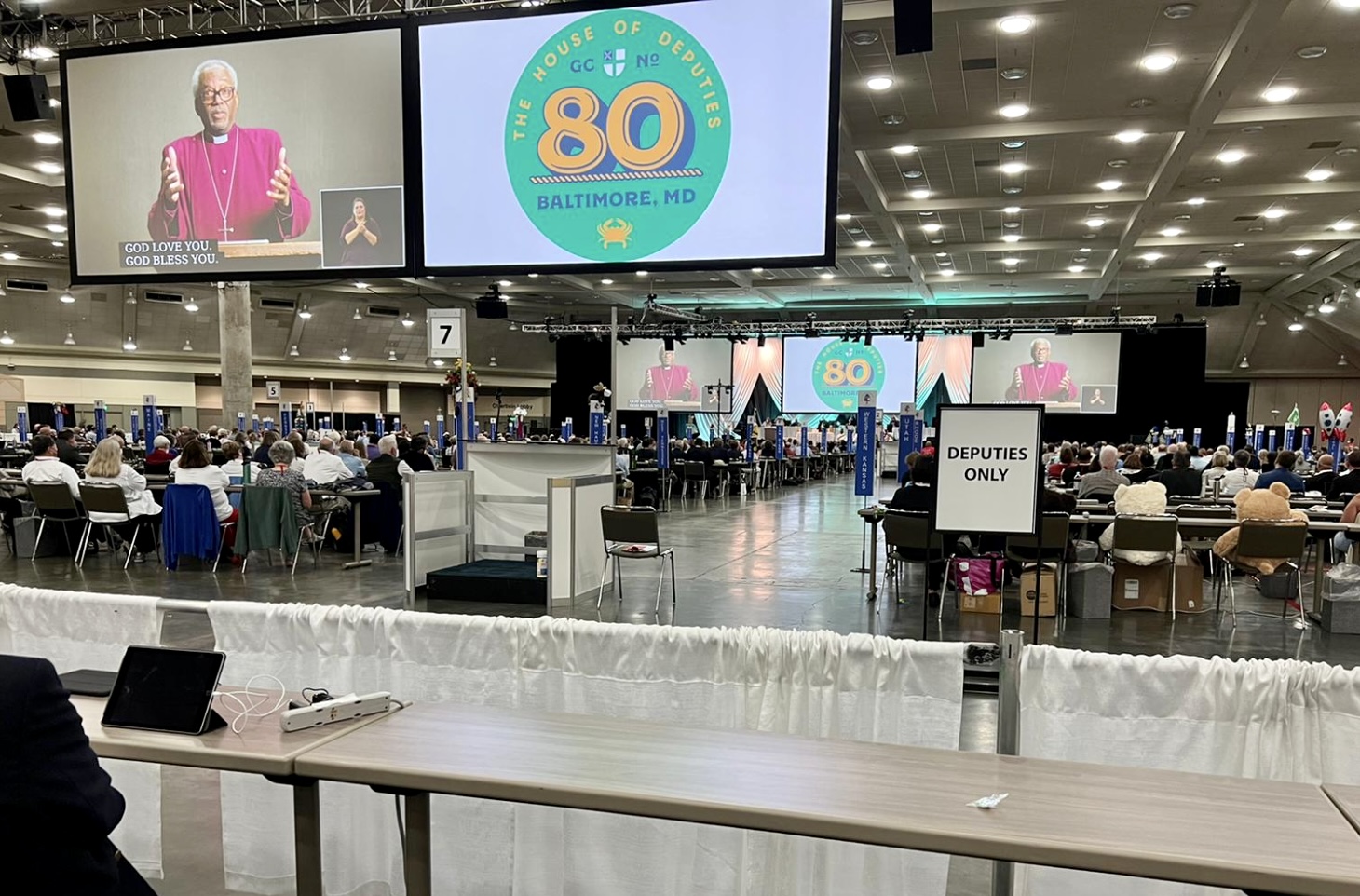
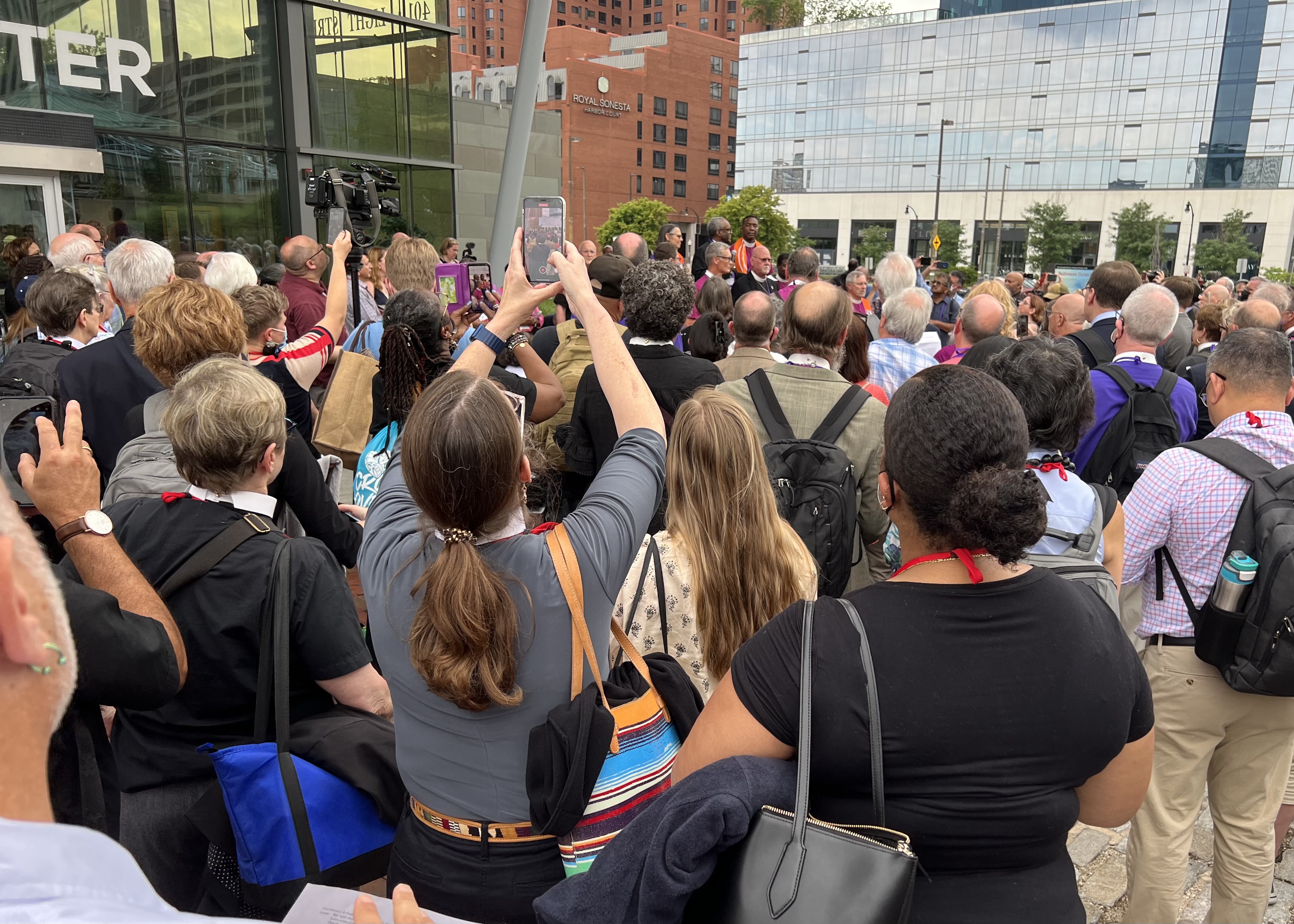
I am part of the deputation of the Episcopal Diocese of El Camino Real (ECR) to the General Convention (“GC-80”) in Baltimore, Maryland, this week. This is the eightieth General Convention since the House of Deputies was formed in 1785. (The House of Bishops was formed in 1789.) This is the third time I have been part of an ECR deputation: you can read about my adventures at GC-79-Austin and GC-78-Salt-Lake-City on this blog. Many of us arrived in Baltimore from California and registered yesterday. Today is the first day of business. The Episcopal Church has taken many measures to try to minimize the potential danger of the pandemic to GC participants. For example, GC-80 was postponed for a year, the event was shortened from two weeks to four days, all participants must prove that they are vaccinated or exempted, and we all must mask and test every day. This morning’s sessions opened with worship, including an inspiring sermon by our Presiding Bishop Michael Curry.
Baltimore is different than where I live in the San Francisco Bay Area, especially in terms of water. It is hot and humid here and rain is frequent, unlike our drought-plagued west. Attending a convention in a big city presents dangers beyond the pandemic. As we were arriving at our hotel, a man was killed on the street nearby. Tonight, Bishops Against Gun Violence is holding a prayer service for him.
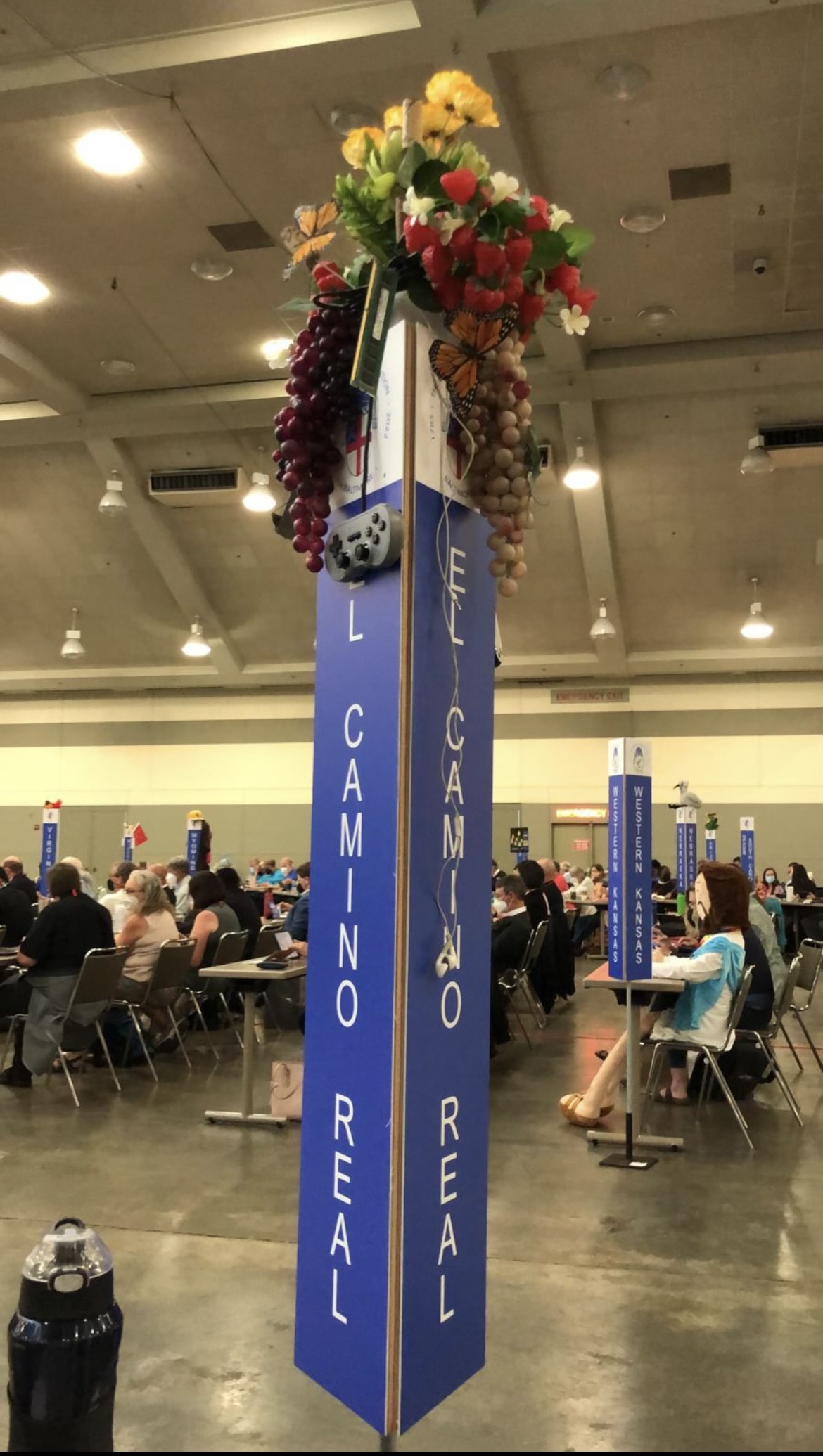
Flying to Episcopal General Convention 80, 7 July 2022Episcopal General Convention 80 registration, 7 July 2022COVID-19 tests, Episcopal General Convention 80, 8 July 2022Devices, wires, personal protective equipment, Episcopal General Convention 80, 8 July 2022Episcopal General Convention 80, 8 July 2022Episcopal General Convention 80, 8 July 2022Episcopal General Convention 80, 8 July 2022Presiding Bishop Curry, Episcopal General Convention 80, 8 July 2022
Additional photos after the legislative session:
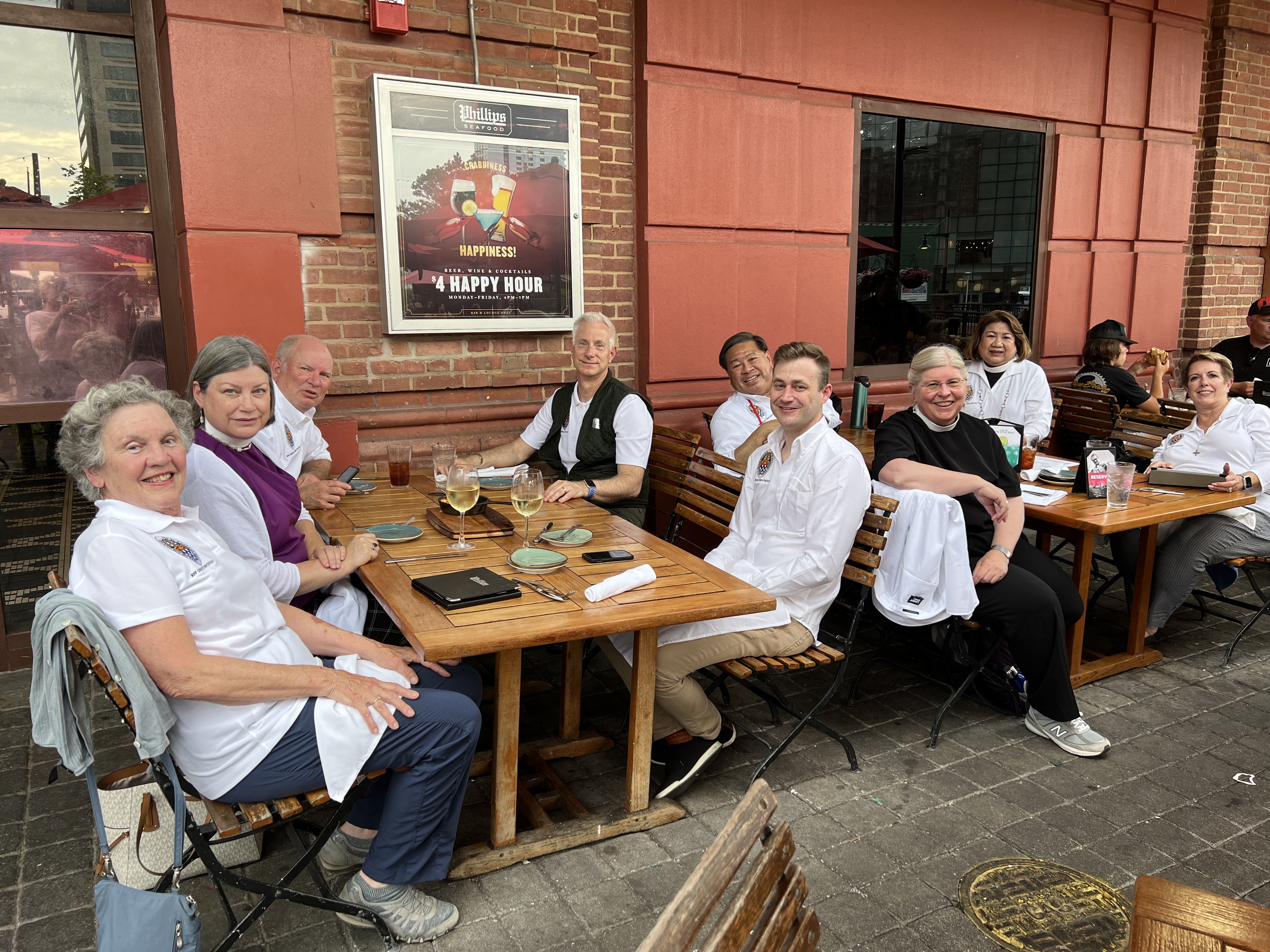
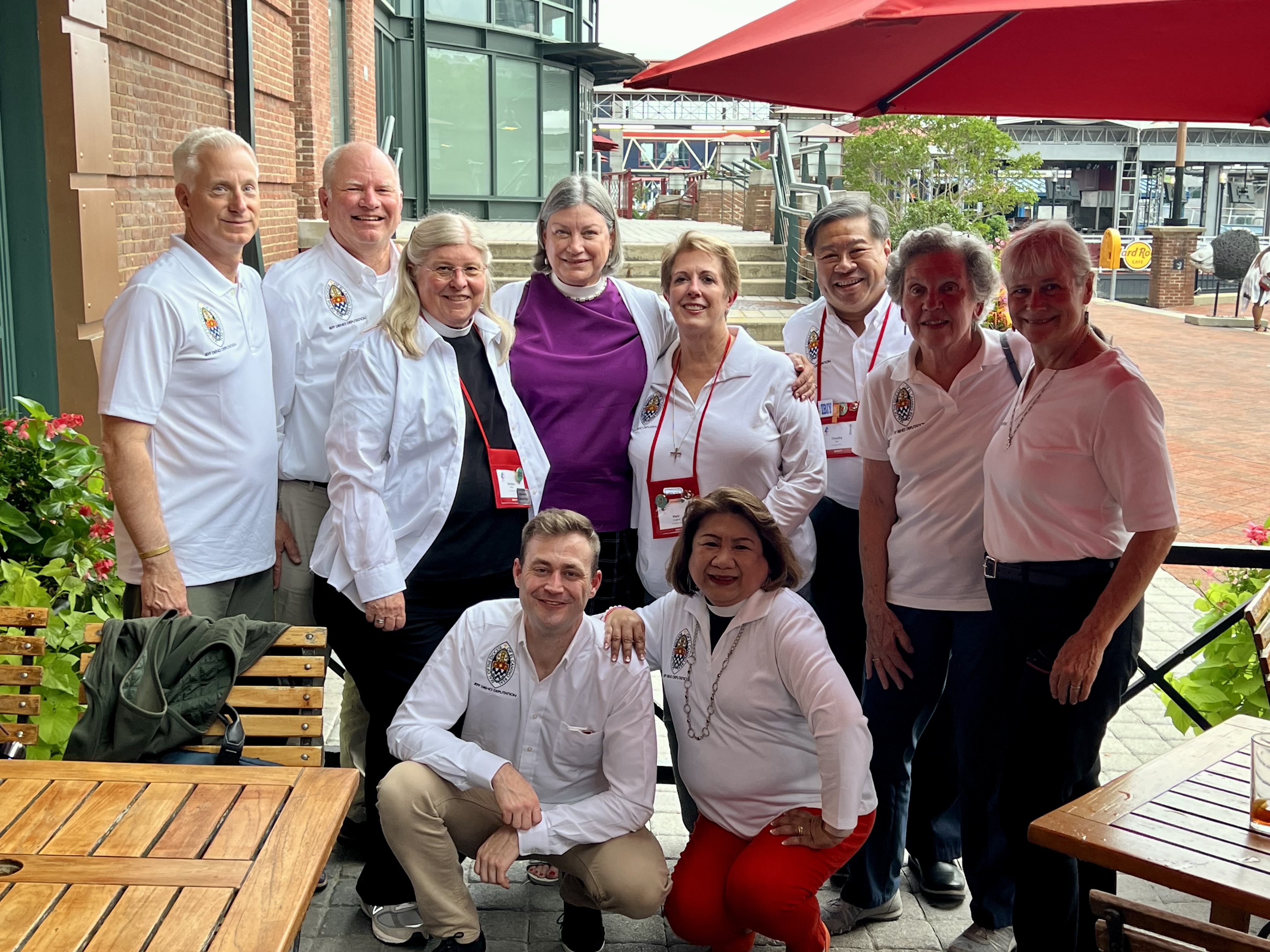
Presiding Bishop Curry speaking with Bishops Against Gun Violence, Baltimore, 8 July 2022El Camino Real, Episcopal General Convention 80, 8 July 2022El Camino Real, Episcopal General Convention 80, 8 July 2022
9 July 2022 update: check out the Diocese of El Camino Real daily GC-80 “Updates from the Floor“
If you want to receive Katysblog posts by email, please sign up using the Sign Me Up! button (upper right on Katysblog home). Images Copyright 2022 by Katy Dickinson, Ruth Casipit Paguio, and Jeff Diehl.
Susan Broaddus and I worked together for many years on the Congo Network, a project of the worldwide Anglican and Episcopal churches to support the people of the Democratic Republic of the Congo. She passed away on 3 December 2021 after a lifetime of faithful activism, including twelve years as an Episcopalian missionary in the Congo. This is to honor and remember her. May Susan rest in peace and rise in glory.
Update: On 26 July 2022, the Congo Network’s Chair, and Africa Partnership Officer for the Episcopal Office of Global Partnerships, Rev. Daniel N. Karanja, Ph.D., presented the linked Brief to the Congo Network honoring Susan Broaddus and her inspiring life of advocacy and lay leadership. The Rev. Daniel reviewed over 400 pages of Susan’s letters and documents to create the Brief. He spoke of Susan’s outstanding and inspiring contributions developing the role of women leaders and educational programs, especially at theUniversité Anglicane du Congo.
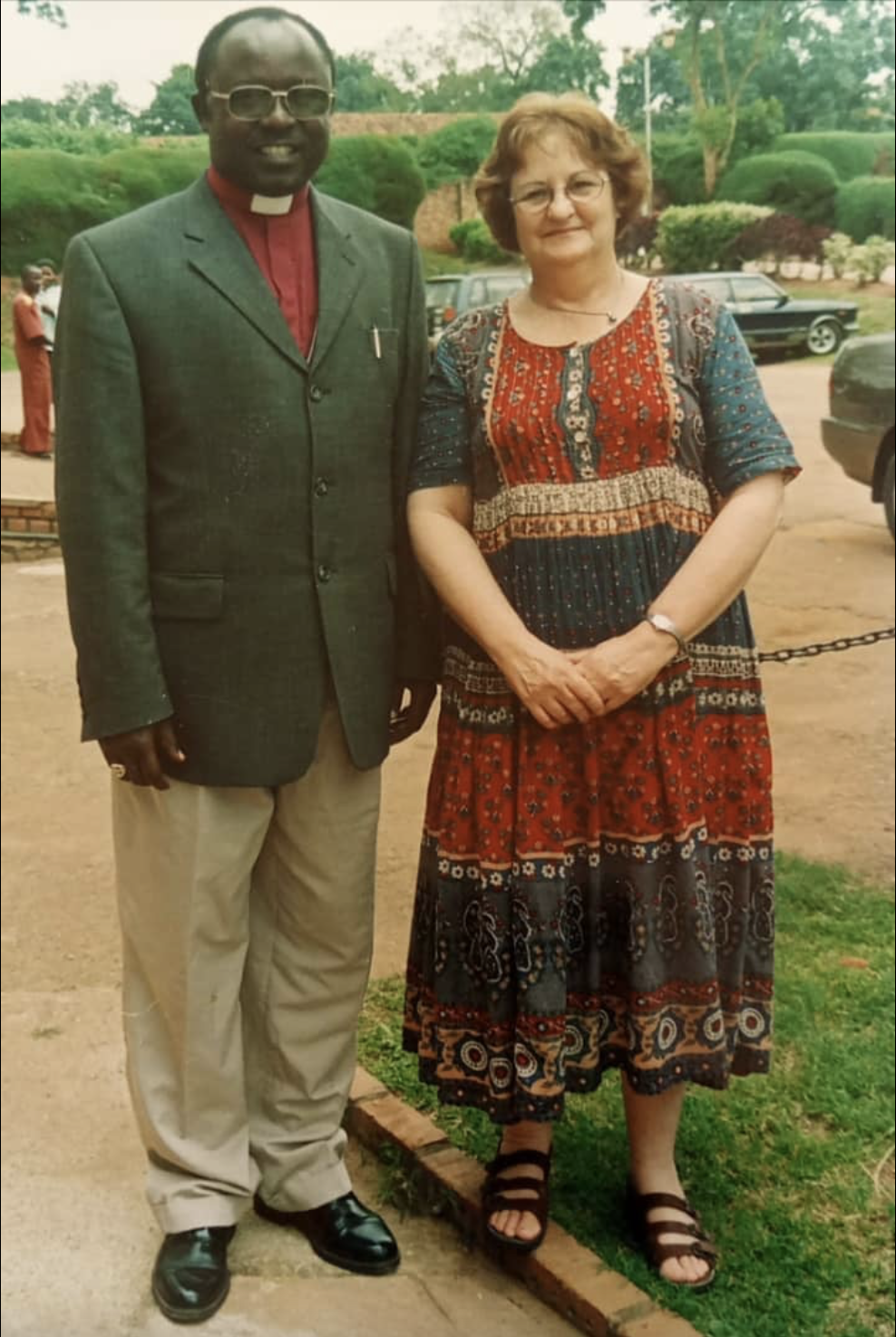
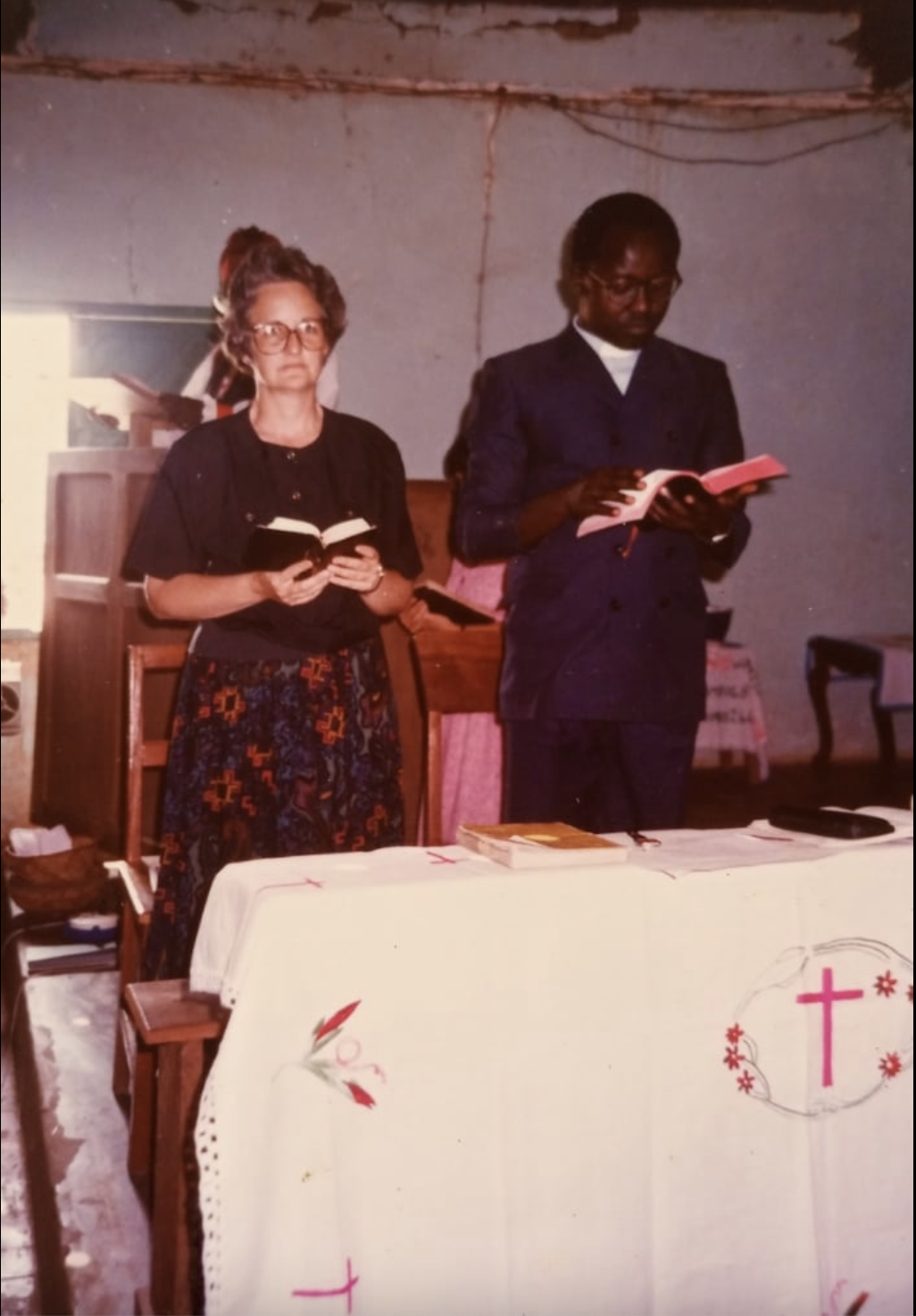
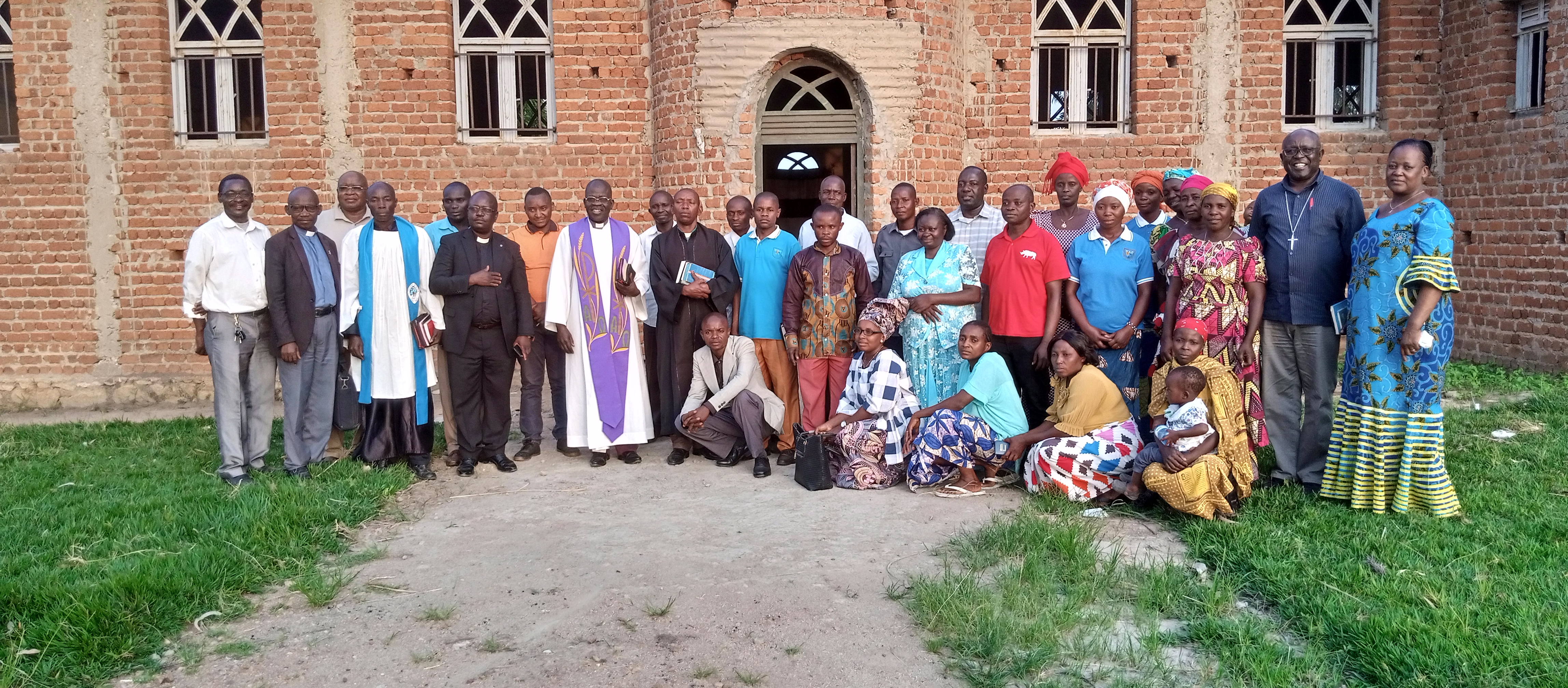
Susan Broaddus and Archbishop Henri IsingomaSusan Broaddus and Archbishop Henri IsingomaSusan Broaddus memorial gathering at the Université Anglicane du Congo parish church in Bunia, December 2021
Susan’s obituary was published by The Virginian-Pilot from 8 December – 10 December 2021. A longer version was published on Facebook by Women to Women for Congo on 8 December 2021:
It is with great sadness that we are sharing the news of the death of Susan Broaddus, founder of the Women to Women for Congo and primary moderator of this page.
Susan Broaddus
Susan Broaddus succumbed to cancer on December 3, 2021, in Norfolk, Va., where she was born in 1946.
Her life’s greatest passion centered on The Democratic Republic of Congo, where she served as an Episcopalian missionary for over 12 years, dedicated to improving the lives of the people in that lawless and war-torn region.
She was especially concerned for the women and children there, because many militias continually attacked the towns and villages. The militias often kidnapped or killed the men, sexually attacked the women, and left the children orphaned.
About a decade ago, Susan revisited the Congo and was inspired to do more by raising awareness and money in the United States to help her beloved Congolese people. She founded a group called Women-to-Women for Congo, which joined her mission to pray for and financially assist the people there. She also supported the Anglican seminary in the Congo, both through individual scholarships and by supporting the seminary’s capital projects.
She was at the forefront locally of assisting with the immigration of the Sudanese “Lost Boys,” personally assisting many of them with tutoring, housing, bureaucracy, and more.
Susan was a lifelong Francophile. Before retiring, she taught high school French in several school systems throughout the greater Hampton Roads area.
Her fluency in French enabled her to stay in touch with her friends and contacts in the Congo. When Susan’s health was declining rapidly from her second battle with cancer, the Most Rev. Henri Isingoma, who was the Archbishop of the Congo while she served there and is now retired, e-mailed a letter to Susan, which captured Susan’s spirit. It reads, in part (roughly translated): “I have no other words but to congratulate you for having led a life consecrated to the holy ministry of our Lord Jesus Christ. I am convinced that you do not fear anything because, together, we have worked in the direction of ensuring the continuity of his mission to proclaim the Eternal Kingdom of God. Knowing that our human capacities have time limits, we had trained others among us and for subsequent generations. The mission continues.”
In addition to her work with the Congo, Susan was an avid reader and member of a book club. Shelves and stacks of books on many subjects filled her home. She also was active in her church, Christ & St. Luke’s Episcopal Church.
Susan was preceded in death by her parents, John and Margaret Broaddus, and her sisters, Margaret (Midge) Hutchison, and Ann Broaddus. She is survived by her nephew, Jason Nowell, and extended family and hometown friends….
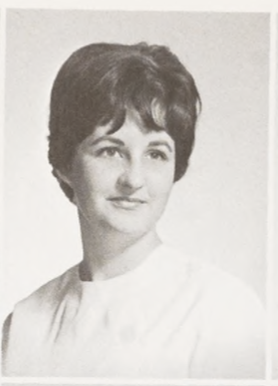
1968: Susan Broaddus graduated from Old Dominion University with a Bachelor of Arts in French
If you want to receive Katysblog posts by email, please sign up using the Sign Me Up! button (upper right on Katysblog home). Images Copyright by the Rev. Bisoke Balikenga, Bunia, Congo.
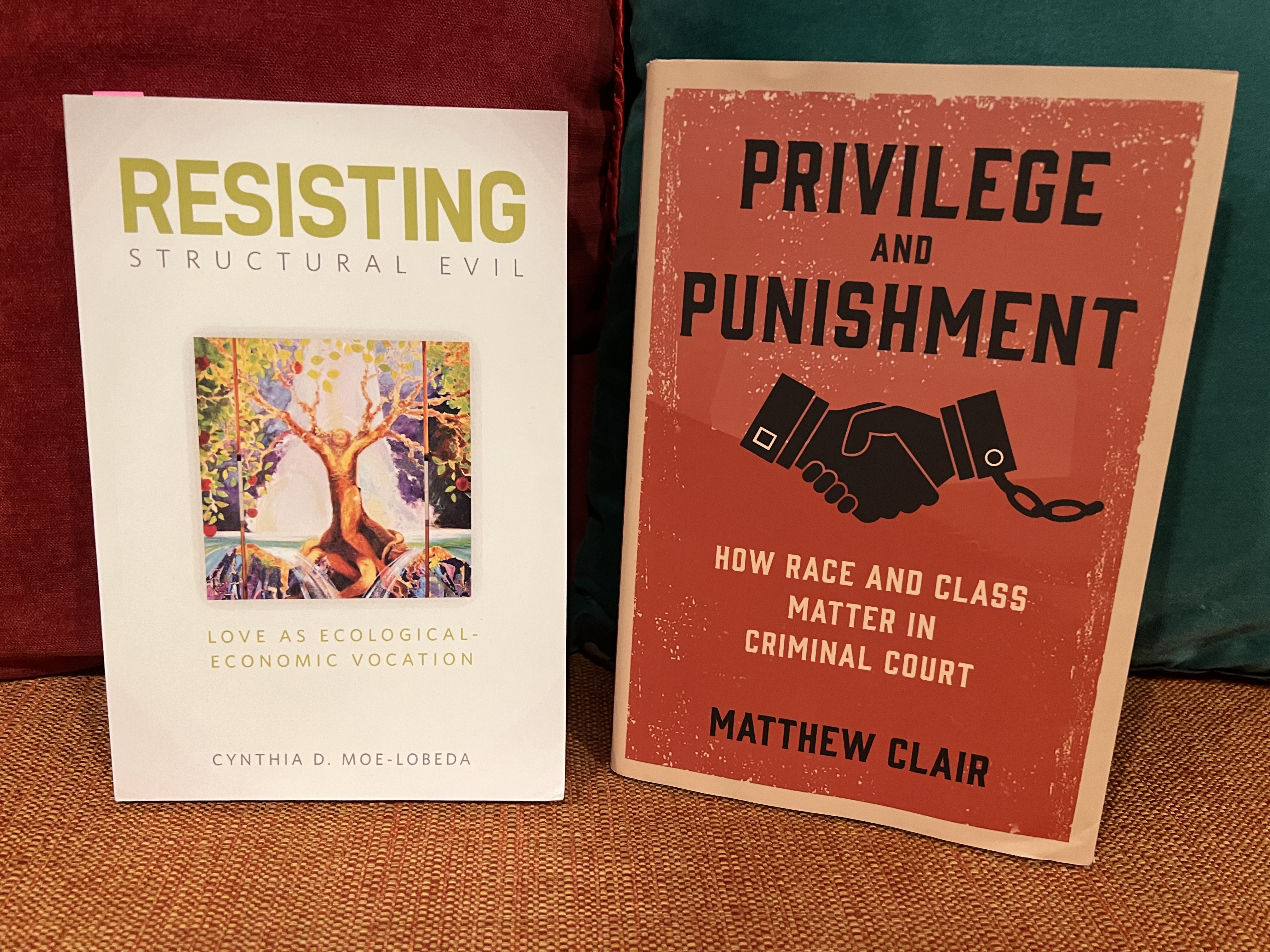
This semester, I am taking a class at the Graduate Theological Union called “Christian Ethics: Radical Love Embodied” from Dr. Cynthia Moe-Lobeda, Professor of Theological and Social Ethics. One of the texts for this class is Dr. Moe-Lobeda’s own 2013 book, Resisting Structural Evil: Love as Ecological-Economic Vocation. Chapter 4, “Unmasking Evil that Parades as Good,” has caused me to think deeply on how background social and cultural understandings perpetuate and affirm the way things are, even if those understandings are destructive or evil. The author characterizes this as “‘hegemonic vision’… the constellation of socially constructed perceptions and assumptions about ‘what is,’ ‘what could be,’ and ‘what ought to be’ that maintain the power or privilege of some people over others, and ‘blind’ the former to that privilege” (Moe-Lobeda, 88).
Dr. Matthew Clair, Assistant Professor of Sociology at Stanford University, uses the word hegemony with regard to U.S. law, but does not use the phrase hegemonic vision in his 2020 book Privilege and Punishment: How Race and Class Matter in Criminal Court. He presents similar concepts, writing of how racism and classism intersect, “I found that the working class and poor, especially racial minorities, often sought to learn their legal rights, contest their defense lawyer’s expertise, and advocate for themselves in court. Meanwhile, the middle-class people I got to know found themselves in trusting relationships with lawyers and thus were more likely to defer to their lawyers and the court. Privileged people were rewarded for their deference, whereas the disadvantaged were punished for their resistance and demands for justice” (Clair, xv). That is, Dr. Clair reports that the U.S. justice system has a vision of how people should behave that is based in middle-class assumptions and communication patterns. He finds that those who are poor or working class who do not communicate as expected are disproportionately penalized.
The Prison Policy Initiative affirmed what Dr. Clair has written in their “Mass Incarceration: the Whole Pie 2020” in which Wendy Sawyer and Peter Wagner write, “People in prison and jail are disproportionately poor compared to the overall U.S. population. The criminal justice system punishes poverty… Poverty is not only a predictor of incarceration; it is also frequently the outcome.”
If you want to receive Katysblog posts by email, please sign up using the Sign Me Up! button (upper right on Katysblog home). Image and Paper Copyright 2022 by Katy Dickinson.
“In this paper, I begin the discussion of my Doctor of Ministry project and dissertation for the Berkeley School of Theology. In the first section, I present the problem of creating a theological study program for use in jail and my vision for its solution. The second section considers my theological basis, including three inspiring scriptures that have influenced my thinking. These are followed by a summary and conclusion. My theological basis and the proposed project and dissertation are informed by my experience as a Santa Clara County, California, jail chaplain since 2015.” The three Bible scriptures are Matthew 25:31-46, Genesis 39-41, and Acts 16:22-40. Read the whole paper here.
If you want to receive Katysblog posts by email, please sign up using the Sign Me Up! button (upper right on Katysblog home). Images Copyright 2019 by Katy Dickinson.
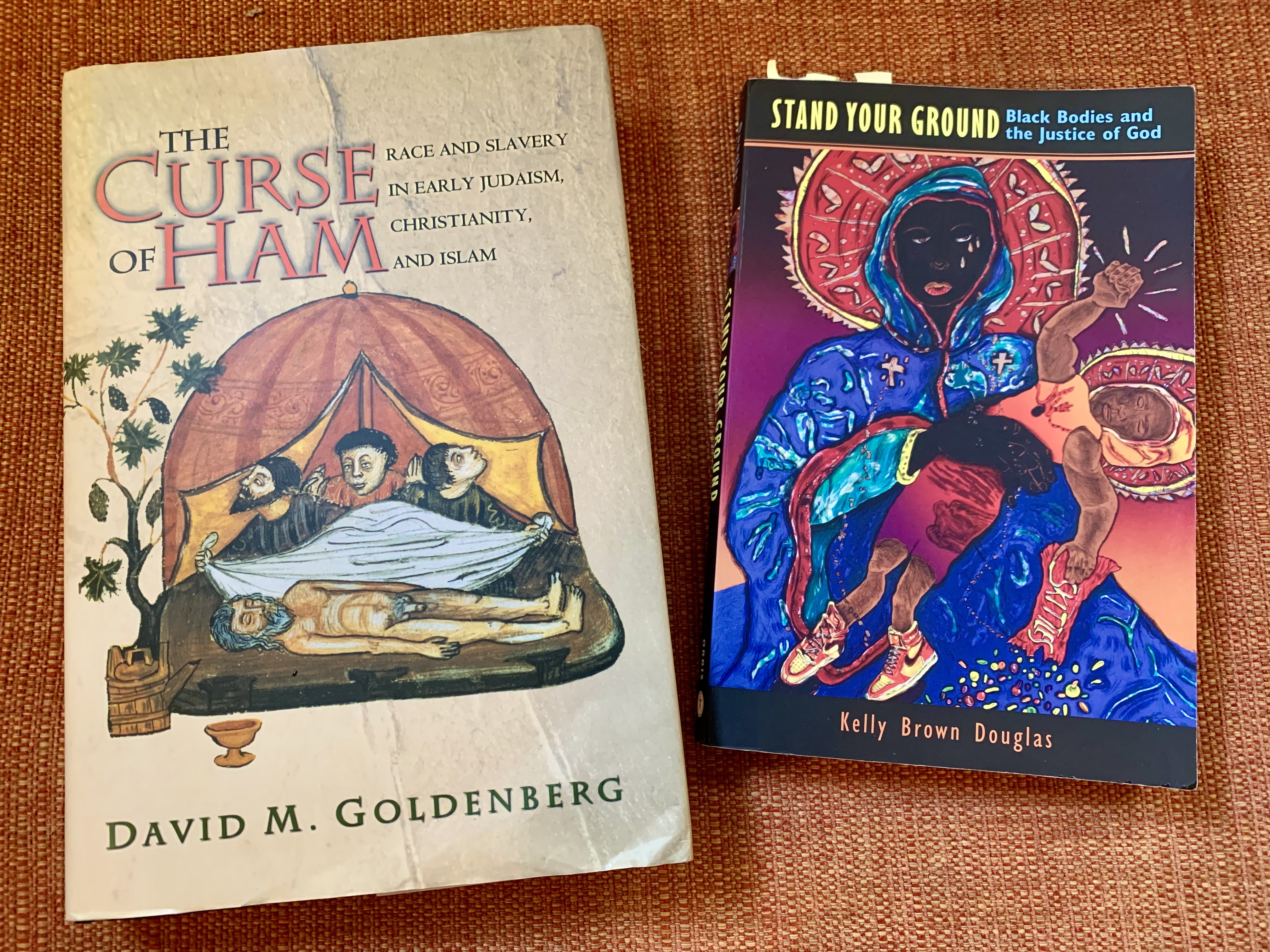
The Curse of Ham by Goldenberg, Stand Your Ground by Douglas
The Reverend Doctor LeAnn Snow Flesher was our professor for a Berkeley School of Theology class this summer called “White Supremacy and the Bible.” My final paper was “Ethnocentrism and Racism.” The paper starts:
“Are ethnocentrism and racism different or the same, and what difference does this make? I engage these terms regarding American social structures, biology, and power / domination, as well as considering to what extent ethnocentrism and racism are mutually exclusive or overlapping. I will focus on two of our class books that examine these and related concepts, the Rev. Canon Dr. Kelly Brown Douglas’s Stand Your Ground: Black Bodies and the Justice of God, and Dr. David M. Goldenberg’s The Curse of Ham: Race and Slavery in Early Judaism, Christianity, and Islam. This paper starts by reviewing definitions of ethnocentrism and racism from a variety of sources, followed by a section on what Douglas and Goldenberg write and seem to mean by those concepts, concluding with a section that considers how these meanings make a difference.”
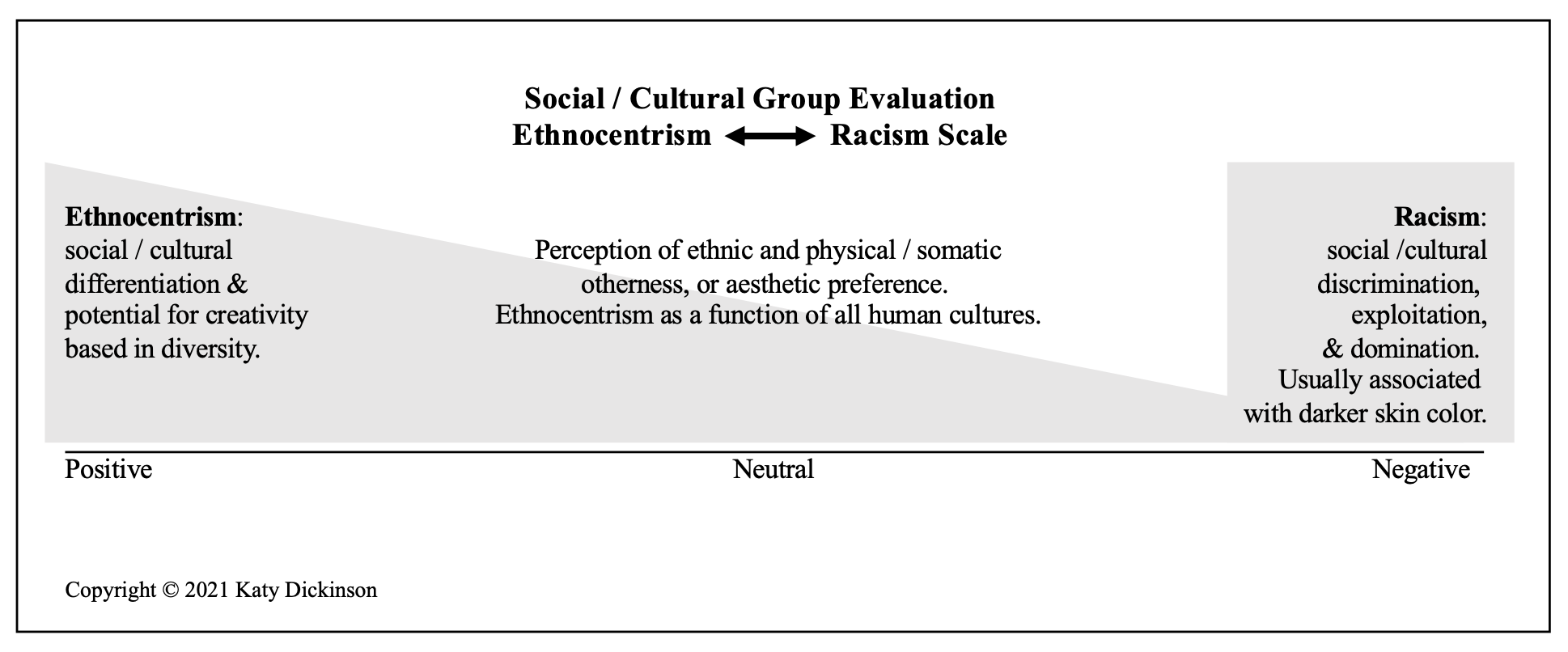
You can read the whole paper here. Below is the “Social /Cultural Group Evaluation – Ethnocentrism <-> Racism Scale” graphic, discussed on pages 19-20 of the paper.
If you want to receive Katysblog posts by email, please sign up using the Sign Me Up! button (upper right on Katysblog home). Images Copyright 2021 by Katy Dickinson.
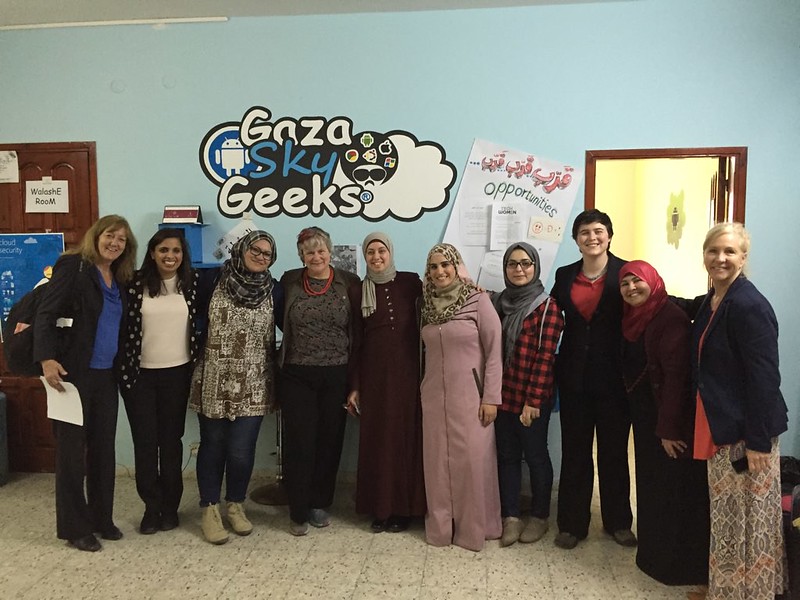
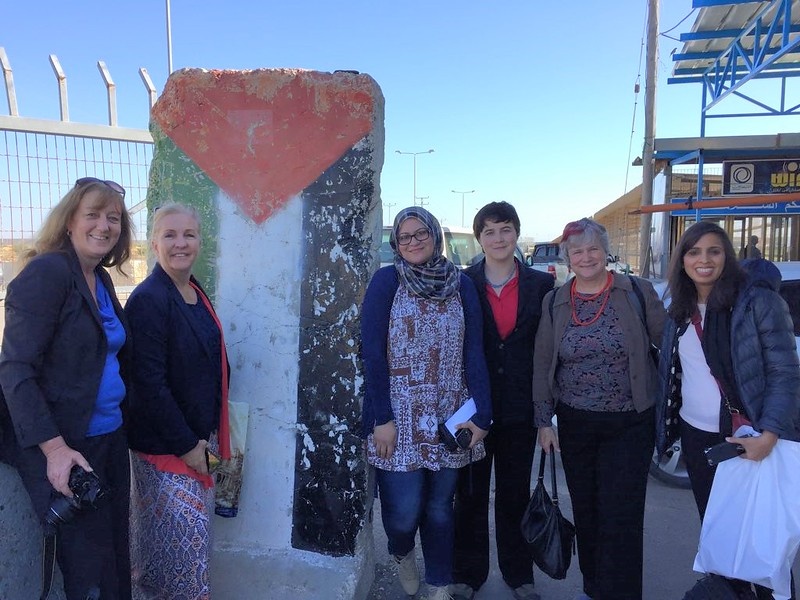
I put this information on my own Facebook account but when I tried to re-post a version of it, Facebook blocked me. Apparently Facebook objects to posts about praying for Gaza and making charitable donations to the Al-Ahli Hospital in Gaza. Please continue to pray and donate anyway.
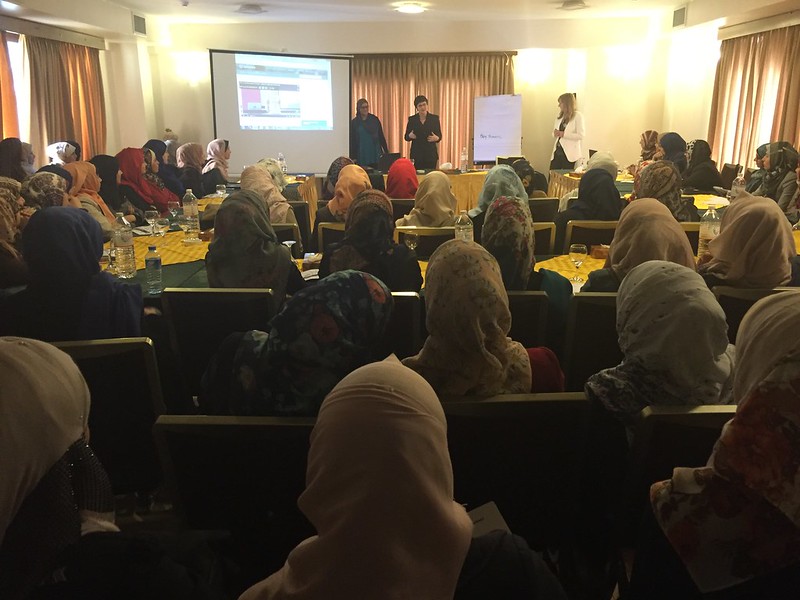
Katy Dickinson and TechWomen presenting in Gaza City, Feb 2016
Jessica Dickinson Goodman and TechWomen presenting in Gaza City, Feb 2016
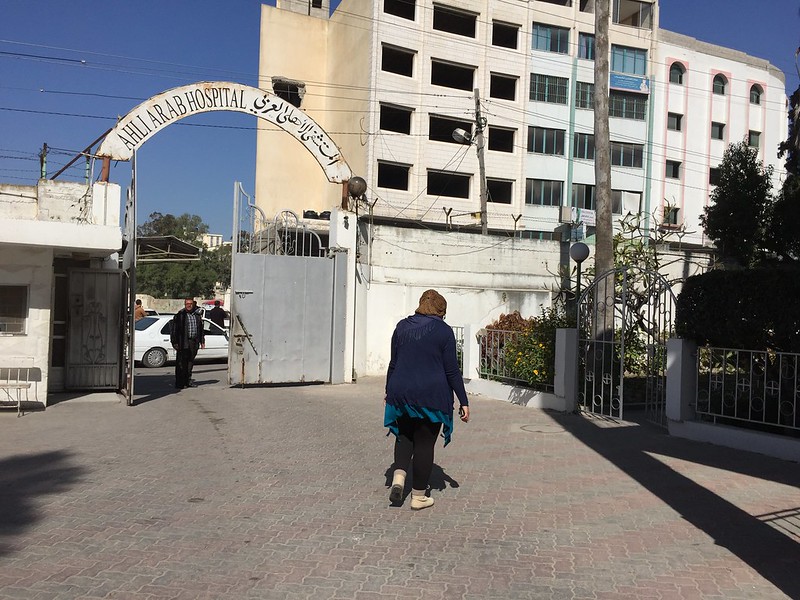
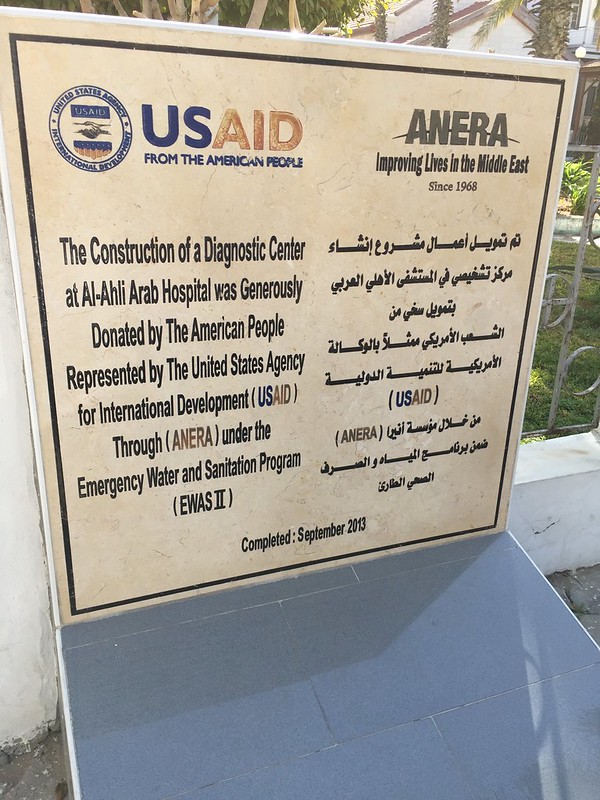
TechWomen at Al-Ahli Arab Hospital, Gaza City, Feb 2016
Al-Ahli Arab Hospital, Gaza City, Feb 2016
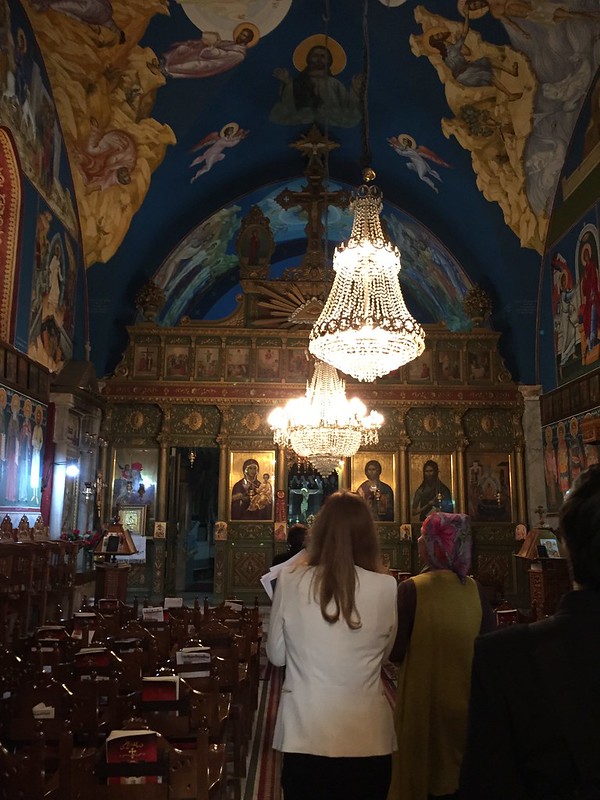
Church of Saint Porphyrius, Orthodox Christian church of Gaza, Feb 2016
TechWomen at Church of Saint Porphyrius, Orthodox Christian church of Gaza, Feb 2016
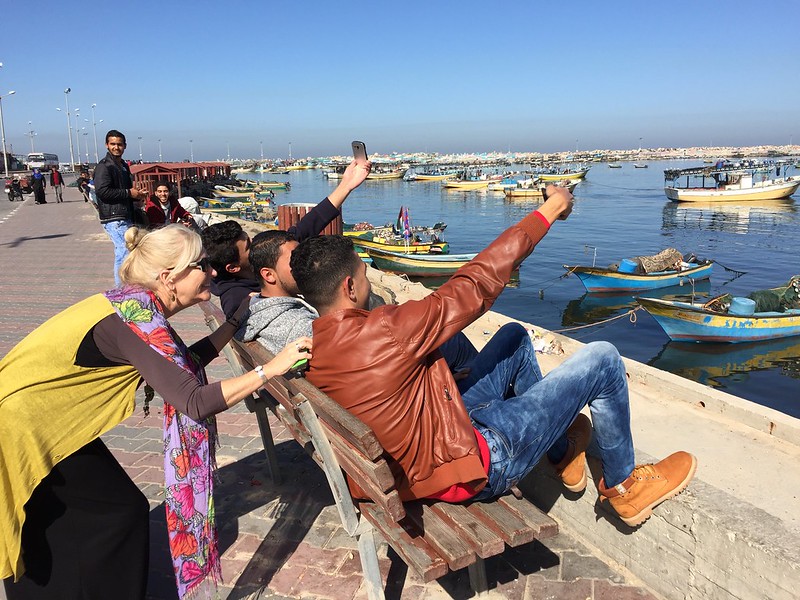
Eileen Brewer at Gaza City harbor, Feb 2016
Gaza City beach, Feb 2016
Gaza City, Feb 2016
Gaza City, Feb 2016
Gaza City, Feb 2016
25 May 2021 Update: In addition to donating to Episcopal Relief & Development which supports Jerusalem, the West Bank, and Gaza (including the Al-Ahli Arab Hospital in Gaza City), here is the list of reputable first responder organizations recommended by Ryan Sturgill, Director of Gaza Sky Geeks:
Thank you for your prayers and generous donations.
If you want to receive Katysblog posts by email, please sign up using the Sign Me Up! button (upper right on Katysblog home). Images Copyright 2016 by Katy Dickinson and Jessica Dickinson Goodman.
In this paper, as an extension of our weekly class discussions this semester on similarities and differences in theology between Islam and other faiths, I engage with selected historical and contemporary Muslim scholars with regard to how they communicate, by means of theological polemics at one end of the range, through pluralism and interfaith dialogue at the other. I focus on communication by Islamic scholars in their interactions with two other Abrahamic faiths, Christianity and Judaism. I find that some contemporary Muslim scholars value and promote concepts of religious pluralism in the Quran, which may be a sign that Islam is moving away from the polemical rhetoric of its most famous historical scholars.
If you want to receive Katysblog posts by email, please sign up using the Sign Me Up! button (upper right on Katysblog home). Image Copyright 2020 by Katy Dickinson.