Category Archives: Politics

Privilege, Punishment, and Vision

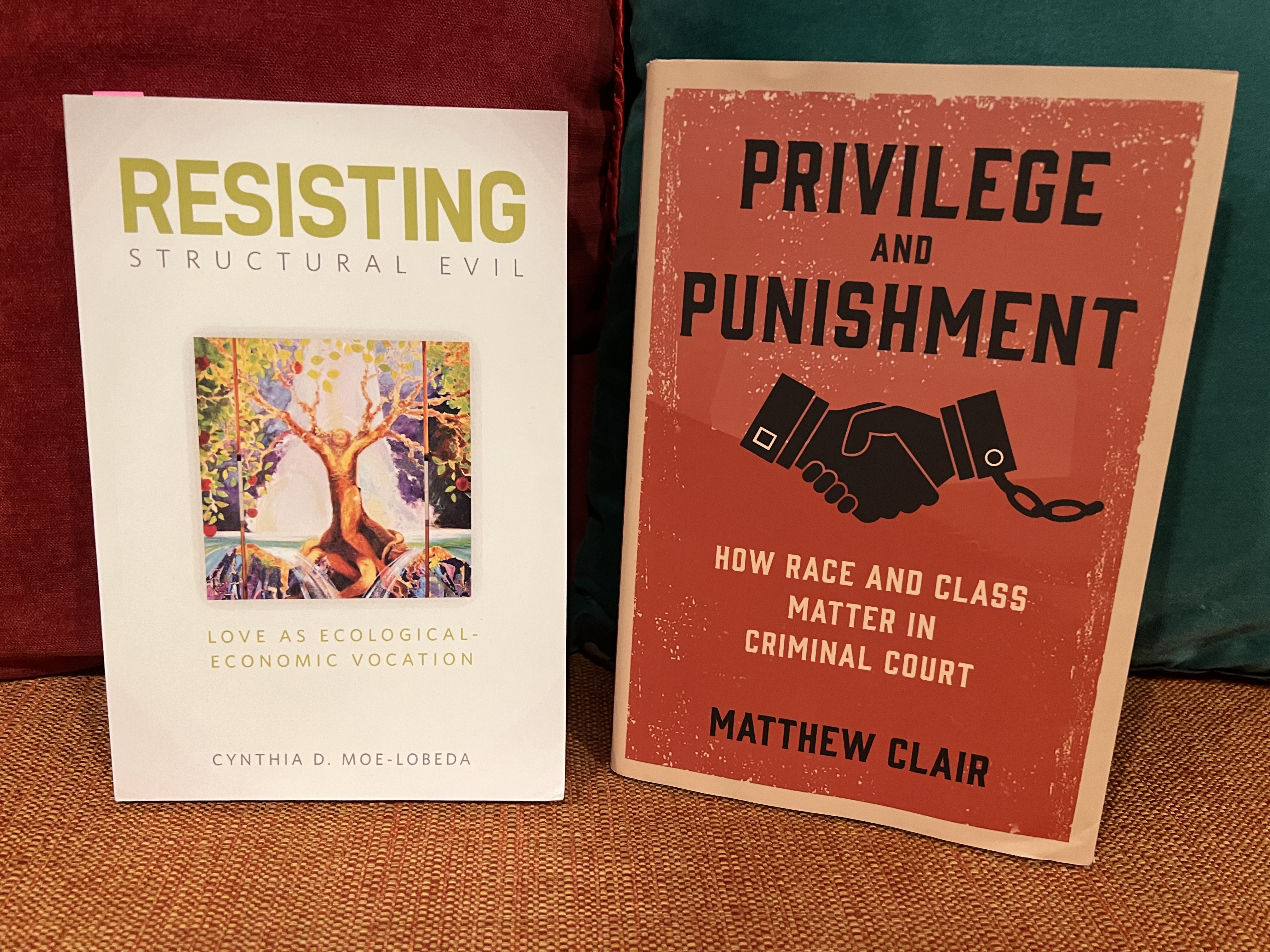
This semester, I am taking a class at the Graduate Theological Union called “Christian Ethics: Radical Love Embodied” from Dr. Cynthia Moe-Lobeda, Professor of Theological and Social Ethics. One of the texts for this class is Dr. Moe-Lobeda’s own 2013 book, Resisting Structural Evil: Love as Ecological-Economic Vocation. Chapter 4, “Unmasking Evil that Parades as Good,” has caused me to think deeply on how background social and cultural understandings perpetuate and affirm the way things are, even if those understandings are destructive or evil. The author characterizes this as “‘hegemonic vision’… the constellation of socially constructed perceptions and assumptions about ‘what is,’ ‘what could be,’ and ‘what ought to be’ that maintain the power or privilege of some people over others, and ‘blind’ the former to that privilege” (Moe-Lobeda, 88).

Dr. Matthew Clair, Assistant Professor of Sociology at Stanford University, uses the word hegemony with regard to U.S. law, but does not use the phrase hegemonic vision in his 2020 book Privilege and Punishment: How Race and Class Matter in Criminal Court. He presents similar concepts, writing of how racism and classism intersect, “I found that the working class and poor, especially racial minorities, often sought to learn their legal rights, contest their defense lawyer’s expertise, and advocate for themselves in court. Meanwhile, the middle-class people I got to know found themselves in trusting relationships with lawyers and thus were more likely to defer to their lawyers and the court. Privileged people were rewarded for their deference, whereas the disadvantaged were punished for their resistance and demands for justice” (Clair, xv). That is, Dr. Clair reports that the U.S. justice system has a vision of how people should behave that is based in middle-class assumptions and communication patterns. He finds that those who are poor or working class who do not communicate as expected are disproportionately penalized.

The Prison Policy Initiative affirmed what Dr. Clair has written in their “Mass Incarceration: the Whole Pie 2020” in which Wendy Sawyer and Peter Wagner write, “People in prison and jail are disproportionately poor compared to the overall U.S. population. The criminal justice system punishes poverty… Poverty is not only a predictor of incarceration; it is also frequently the outcome.”

If you want to receive Katysblog posts by email, please sign up using the Sign Me Up! button (upper right on Katysblog home). Image and Paper Copyright 2022 by Katy Dickinson.

Leave a comment

Filed under Chaplain, Church, News & Reviews, Politics

Doctor of Ministry Project

Visit the Prisoner banner Grace Baptist Church San Jose CA April 2015

My Doctor of Ministry program started in August 2021 with a week-long online class in which our new DMin cohort got to know each other and our two leaders, Dr. Aidsand F. Wright-Riggins, III and Dr. Ronald D. Burris at the Berkeley School of Theology. BST is in the Graduate Theological Union in Berkeley, California. My final paper starts:

“In this paper, I begin the discussion of my Doctor of Ministry project and dissertation for the Berkeley School of Theology. In the first section, I present the problem of creating a theological study program for use in jail and my vision for its solution. The second section considers my theological basis, including three inspiring scriptures that have influenced my thinking. These are followed by a summary and conclusion. My theological basis and the proposed project and dissertation are informed by my experience as a Santa Clara County, California, jail chaplain since 2015.” The three Bible scriptures are Matthew 25:31-46, Genesis 39-41, and Acts 16:22-40. Read the whole paper here.

If you want to receive Katysblog posts by email, please sign up using the Sign Me Up! button (upper right on Katysblog home). Images Copyright 2019 by Katy Dickinson.
Leave a comment

Filed under Chaplain, Church, News & Reviews, Politics

Ethnocentrism and Racism

The Curse of Ham by Goldenberg, Stand Your Ground by Douglas

The Reverend Doctor LeAnn Snow Flesher was our professor for a Berkeley School of Theology class this summer called “White Supremacy and the Bible.” My final paper was “Ethnocentrism and Racism.” The paper starts:

“Are ethnocentrism and racism different or the same, and what difference does this make? I engage these terms regarding American social structures, biology, and power / domination, as well as considering to what extent ethnocentrism and racism are mutually exclusive or overlapping. I will focus on two of our class books that examine these and related concepts, the Rev. Canon Dr. Kelly Brown Douglas’s Stand Your Ground: Black Bodies and the Justice of God, and Dr. David M. Goldenberg’s The Curse of Ham: Race and Slavery in Early Judaism, Christianity, and Islam. This paper starts by reviewing definitions of ethnocentrism and racism from a variety of sources, followed by a section on what Douglas and Goldenberg write and seem to mean by those concepts, concluding with a section that considers how these meanings make a difference.”

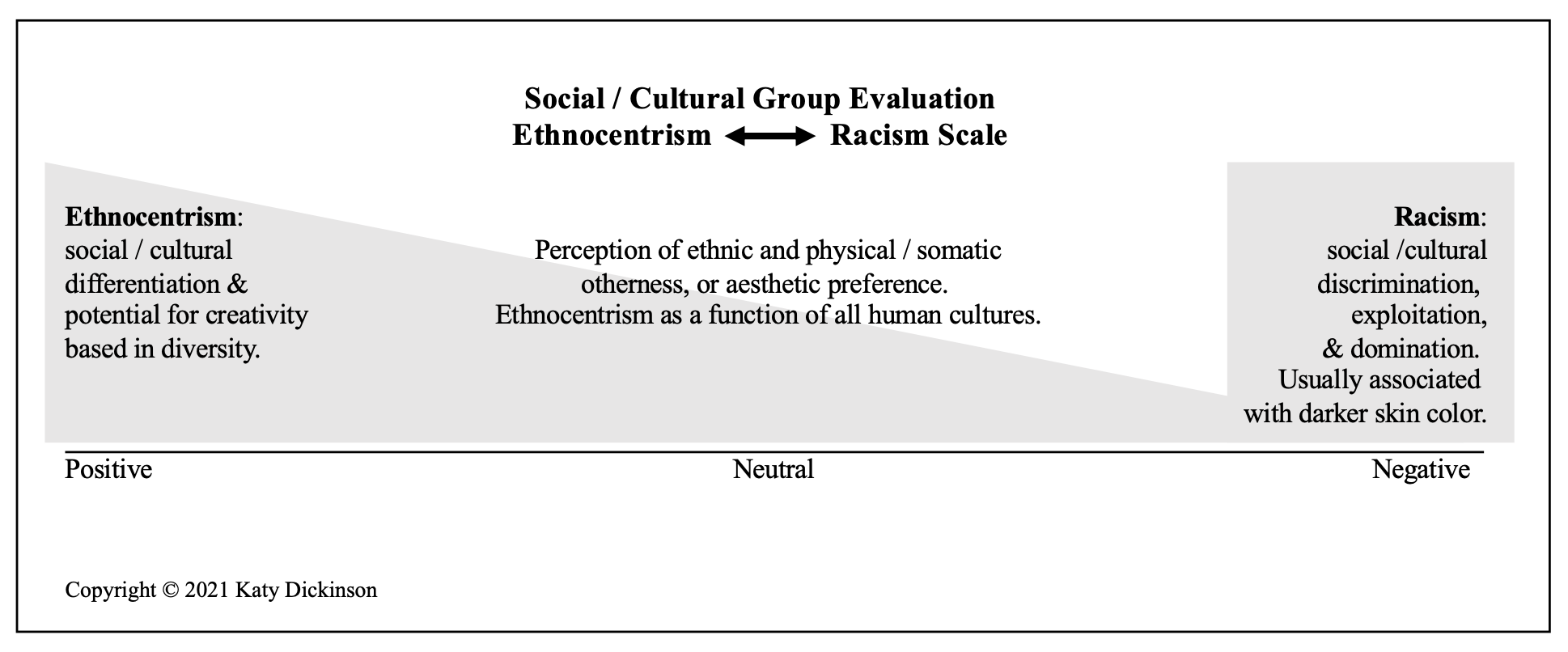
You can read the whole paper here. Below is the “Social /Cultural Group Evaluation – Ethnocentrism <-> Racism Scale” graphic, discussed on pages 19-20 of the paper.

If you want to receive Katysblog posts by email, please sign up using the Sign Me Up! button (upper right on Katysblog home). Images Copyright 2021 by Katy Dickinson.
3 Comments

Filed under Church, Politics

Helping the Holy Land

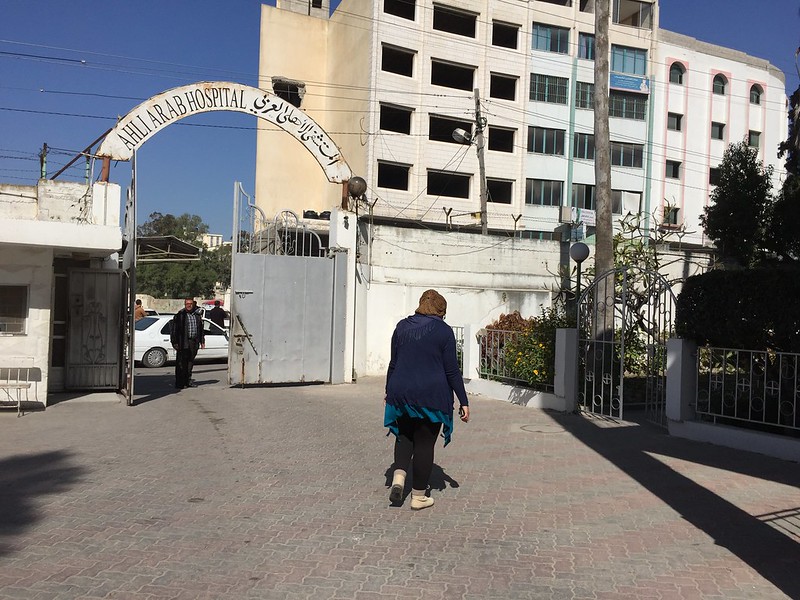
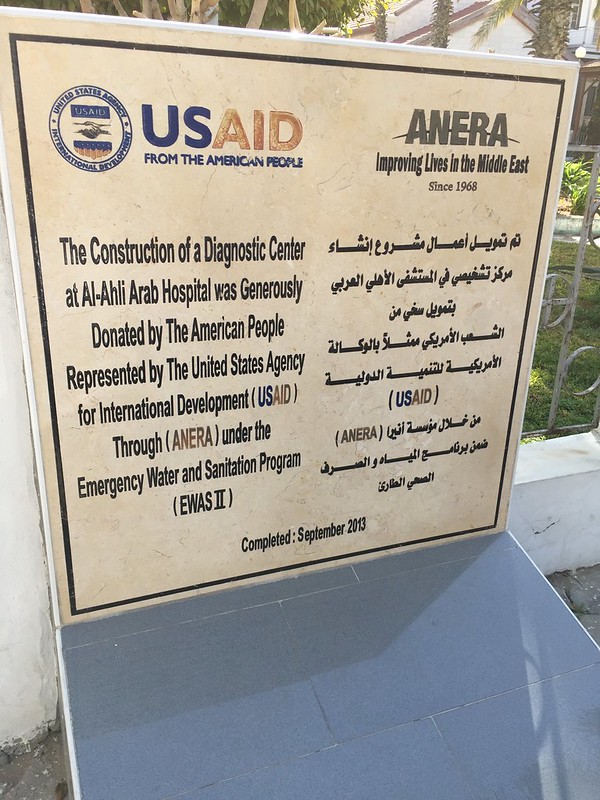
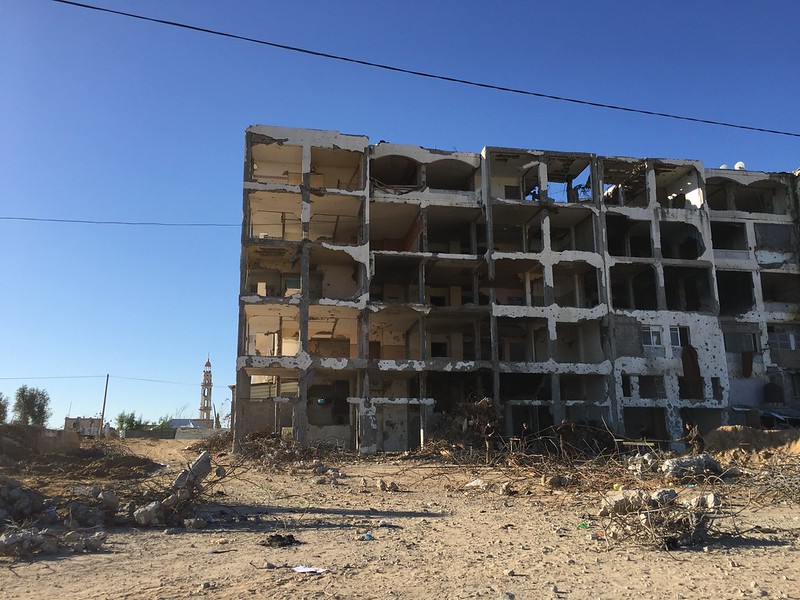
TechWomen at Al-Ahli Arab Hospital, Gaza City, Feb 2016

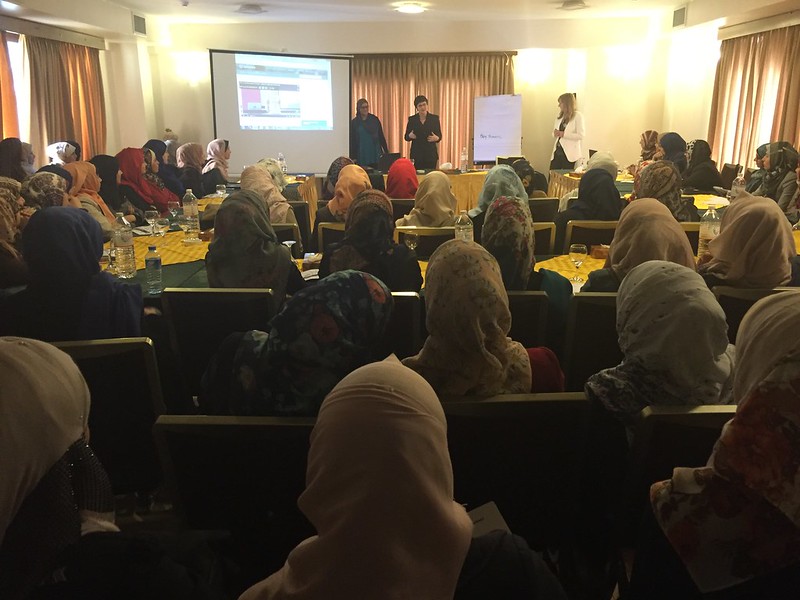
During this violent time in the Holy Land, our family just made a large donation to Episcopal Relief & Development which supports the Episcopal Diocese of Jerusalem, the Al-Ahli Hospital in Gaza City (which I visited with TechWomen mentors and mentees in 2016), and the Middle East. We have asked for a corporate match for our family donation. Please consider donating – and keep the Holy Land in your prayers. We also donated to Doctors Without Borders/Médecins Sans Frontières (MSF) (as requested by Ryan Sturgill, Director of Gaza Sky Geeks).

I put this information on my own Facebook account but when I tried to re-post a version of it, Facebook blocked me. Apparently Facebook objects to posts about praying for Gaza and making charitable donations to the Al-Ahli Hospital in Gaza. Please continue to pray and donate anyway.

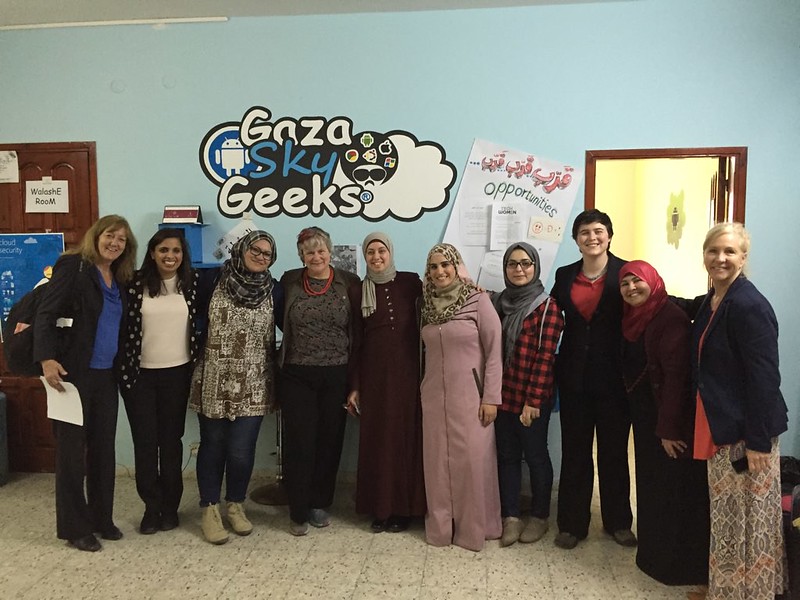
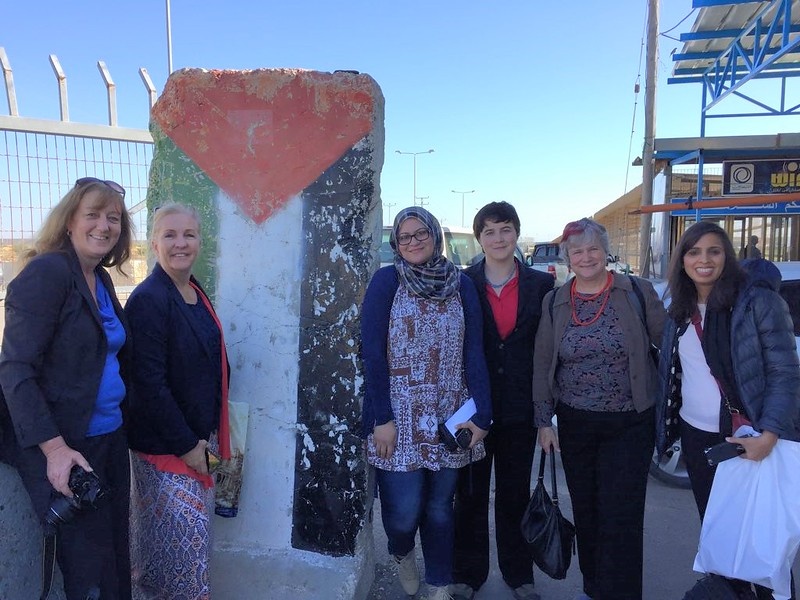
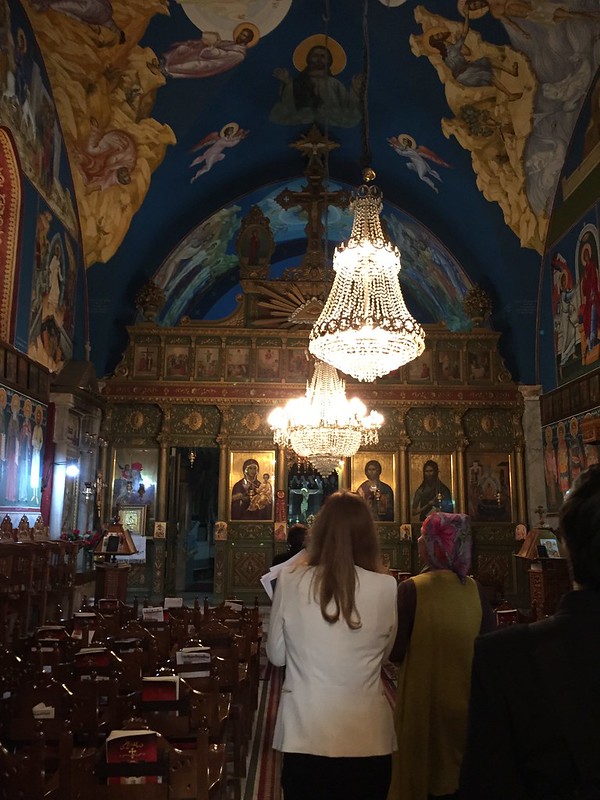
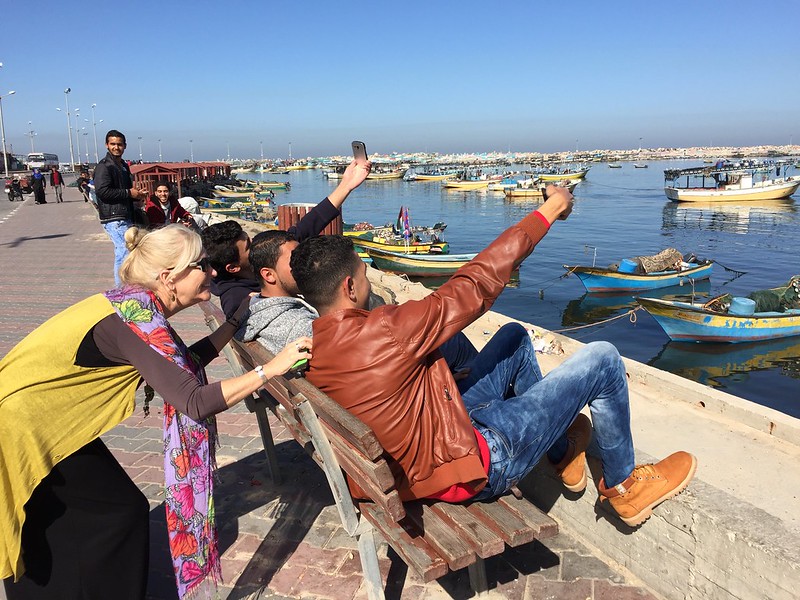
Our 2016 visit was an unofficial TechWomen delegation by five senior mentors who wanted to visit their much-loved Gazan mentees. TechWomen is a program of the U.S. State Department Bureau of Educational and Cultural Affairs – Exchange Programs, managed by the Institute of International Education (IIE). I am re-posting some of my pictures here from our trip to Gaza City so that you can see what it looked like before the current violence. You can read some of my 2016 posts with more photos, Traveling in Palestine, Three Border Walls, Where We Stayed in Palestine, and Understanding Gaza.

Facebook post rejection 20 May 2021

25 May 2021 Update:
In addition to donating to Episcopal Relief & Development which supports Jerusalem, the West Bank, and Gaza (including the Al-Ahli Arab Hospital in Gaza City), here is the list of reputable first responder organizations recommended by Ryan Sturgill, Director of Gaza Sky Geeks:

Palestine Red Crescent Society, https://www.palestinercs.org/

Palestine Children’s Relief Fund, https://www.pcrf.net/

Medical Aid for Palestinians, https://www.map.org.uk/

Doctors Without Borders, https://www.doctorswithoutborders.org/

UN Population Fund in Palestine, https://palestine.unfpa.org/

Thank you for your prayers and generous donations.

If you want to receive Katysblog posts by email, please sign up using the Sign Me Up! button (upper right on Katysblog home). Images Copyright 2016 by Katy Dickinson and Jessica Dickinson Goodman.

Leave a comment

Filed under Mentoring & Other Business, News & Reviews, Politics

Polemics to Pluralism

Last semester at the Graduate Theological Union (GTU), I took a class called “Introduction to Islamic Theology” with Dr. Ahmed Khater. My final paper for the class was “Polemics to Pluralism.” Our main reading text was Commentary on the Creed of At-Tahawi by Ibn Abi al-Izz. We also read selections from Sharh Al-Aqeedat-il-Wasitiyah: Text on the Fundamental Beliefs of Islam and Rejection of False Concepts of its Opponents by Ibn Taimiyah, Kitaab at-Tawhid by Muhammad ibn Abd al-Wahhab, The Fundamentals of Tawheed by Abu Ameenah Bilal Philips, publications in the “Proofs of Prophethood Series” by the Yaqueen Institute for Islamic Research, parts of The Final Day by Umar Sulaiman Al-Ashqar, as well as videos and other published works. For my book review, I sought a different point of view, choosing Never Wholly Other: A Muslima Theology of Religious Pluralism by Union Theological Seminary‘s Associate Professor of Islam and Interreligious Engagement, Jerusha Tanner Rhodes. Many of these works were referenced in my final paper, which begins…

Polemics to Pluralism

In this paper, as an extension of our weekly class discussions this semester on similarities and differences in theology between Islam and other faiths, I engage with selected historical and contemporary Muslim scholars with regard to how they communicate, by means of theological polemics at one end of the range, through pluralism and interfaith dialogue at the other. I focus on communication by Islamic scholars in their interactions with two other Abrahamic faiths, Christianity and Judaism. I find that some contemporary Muslim scholars value and promote concepts of religious pluralism in the Quran, which may be a sign that Islam is moving away from the polemical rhetoric of its most famous historical scholars.

Please read the remainder of the paper at “Polemics to Pluralism.”

If you want to receive Katysblog posts by email, please sign up using the Sign Me Up! button (upper right on Katysblog home). Image Copyright 2020 by Katy Dickinson.

2 Comments

Filed under News & Reviews, Politics

TechWomen Sierra Leone Project

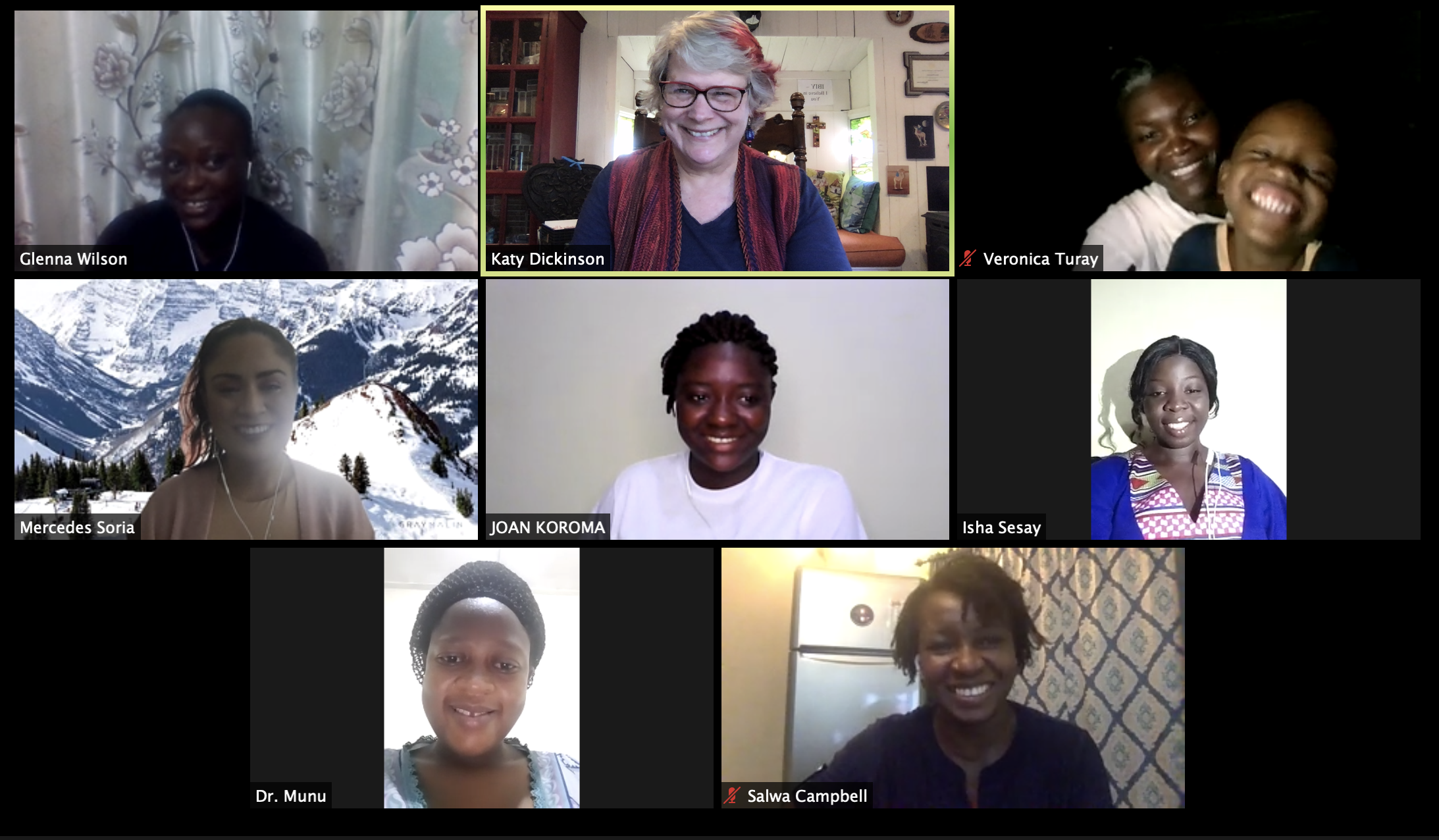
TechWomen Sierra Leone team, 2 Nov 2020

Following up on my 8 October 2020 post: Despite the challenges of working at home during a pandemic, the inspiring TechWomen team from Sierra Leone is making good progress developing a project to benefit their country. We have worked for months to identify and refine our focus on the challenge of malnutrition in children, and on a statement on the social impact of this difficult problem. The current version of our action plan statement is below. Next week, we begin to make our pitch video.

TechWomen is a competitive and prestigious exchange program of the U.S. State Department – Bureau of Educational and Cultural Affairs. Executive Vice President of Knightscope Software Engineering Mercedes Soria, Country Coach Salwa Campbell, and I are mentoring the five Emerging Leaders from Sierra Leone, Dr. Fatmata Munu, Glenna Wilson, Isha Kamara, Joan Koroma, and Josephine Turay (all from Freetown).

Team Sierra Leone Impact Statement

We don’t want to watch our children die. Team Sierra Leone will start with 50 mothers as our pilot. Our campaign will reach the target audience in Freetown and western area by radio, and advertising vans distributing brochures with pictures. We will provide educational materials on best food and good nutritional practices. In addition to mothers, we will contact community leaders, chiefs and community health workers.

Our mission is to reduce the level of malnutrition in Sierra Leone. We will achieve this by educating mothers on how to use local foods to make balanced diets. According to the government of Sierra Leone, 31.3% of children have the chronic form of malnutrition. This is because according to UNICEF, 70% of infants and young children are underfed, surviving on diets consisting mainly of starchy staples. We believe we are the best people to work on the malnutrition project because our skills and background are a perfect match, comprising but not limited to a medical doctor, pharmacist, public health graduate and a data scientist.

This text and photo was published with permission of Team Sierra Leone.

If you want to receive Katysblog posts by email, please sign up using the Sign Me Up! button (upper right on Katysblog home). Image Copyright 2020 by Katy Dickinson.

1 Comment

Filed under Mentoring & Other Business, News & Reviews, Politics

Inspiring Muslims in America

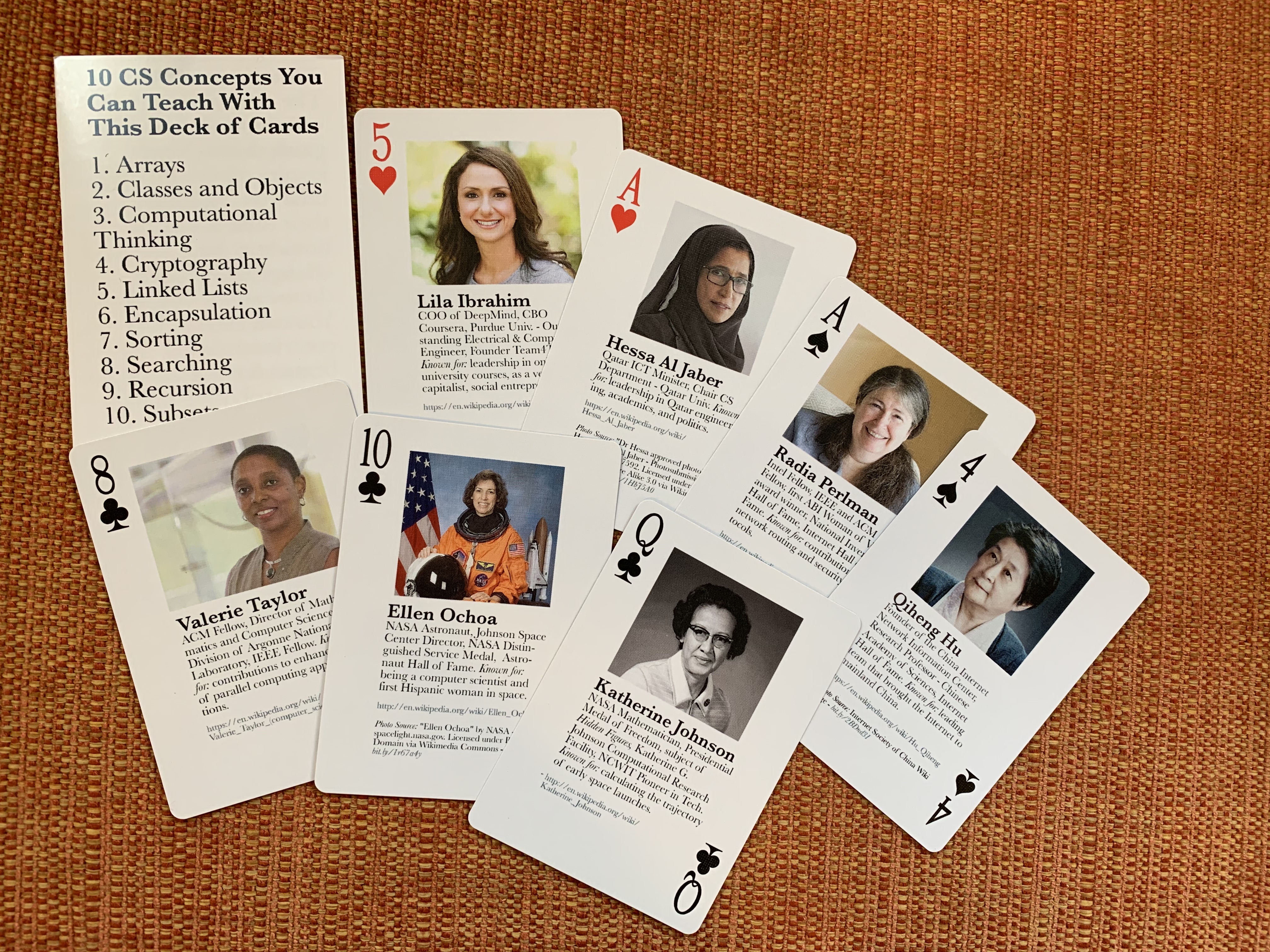
Notable Technical Women cards 2019
Notable Tech Women Card Deck 2019

This semester at the Graduate Theological Union (GTU), I took the class “Islam and its Interreligious Context” taught by Dr. Mahjabeen Dhala. One of our final reflection papers was to answer this question, “Present a key historical or contemporary Muslim personality in America. Explain the reasons for your selection. How does this personality inspire you?”

The American Muslim personality I chose is Lila Ibrahim. She came to my attention after she was made President of Coursera in 2013, after she was Chief of Staff at Kleiner Perkins in 2010. Coursera is an American MOOC (massive open online course) provider, founded by Stanford University in 2012. She is currently the Chief Operating Officer for DeepMind. In 2019, Ibrahim was featured on several UK Business Insider’s lists of influential and impactful leaders. Purdue University is her alma mater and she is on their Board of Advisors. Ibrahim is the Co-founder and Chair of Team4Tech, a technical mentoring non-profit for developing countries. She has created computer labs in the orphanage in Lebanon where her father was raised. Ibrahim has a remarkable depth of experience in education, especially online, and as a mentor. I admit that I do not know about Lila Ibrahim’s personal faith but I am writing about her as an inspiring American of Lebanese descent.

In 2014, my daughter Jessica and I started working on a project with Dr. Susan Roger, Duke University Professor of Computer Science. Susan and I had known each other for many years and each of us had developed lists of remarkable technical women. Jessica had the idea to make playing cards and posters from our research to inspire girls and young women. We wanted to include a very broad range of women, socially, demographically, geographically, and by professional area. Susan and I each sorted through decades of our professional contacts to find the 54 honorees, and then we contacted each woman for a picture and to fill in biographical details, or used what we found on Wikipedia. Because she had won an Anita Borg Institute Women of Vision Award, Lila Ibrahim was one of the women we selected. Since 2014, Notable Women in Tech has distributed thousands of our card decks and posters around the world. Lila Ibrahim is the five of hearts. You can see the 4th Edition list of honorees on my blog.

Lila Ibrahim inspires me not just because she is a remarkably successful professional woman in the highly-patriarchal technical industry but because she has routinely sought out and succeeded in creating educational projects while acting as a mentor for young entrepreneurs. For many senior executives, it is enough to succeed, but Lila Ibrahim has intentionally and consistently carried others along in the wake of her accomplishments. She always pays it forward.

Inspiring American Muslims about whom other students wrote were:
Mahershala Ali (Academy Award winning actor)
Muhammad Ali (Boxer, activist and philanthropist)
Reza Aslan (Author and scholar of Religious Studies)
Soumaya Khalifa (Executive Director, Islamic Speakers Bureau of Atlanta)
Hind Makki (founder and curator of Side Entrance, an award-winning website)
Ilhan Omar (U.S. Representative for Minnesota)
Malcolm X (Muslim minister and human rights activist)

If you want to receive Katysblog posts by email, please sign up using the Sign Me Up! button (upper right on Katysblog home). Image Copyright 2020 by Katy Dickinson.

Leave a comment

Filed under News & Reviews, Politics