Category Archives: Mentoring & Other Business

“On Leadership” – Ivan Sutherland’s SEED talk, now on YouTube

I am very proud to announce that the SEED worldwide Engineering mentoring program just published “On Leadership” – its first public video. Thanks to SEED Matthias Mueller-Prove (in Germany) who first suggested making Ivan Sutherland’s important 2006 SEED talk public.

A Sun Labs team including Mary Holzer, Sheri Kaneshiro, and Alan Lancendorfer took SEED’s rough internal video and created a polished product which is now available for free viewing as the featured video on the Sun Labs home page. Tanya Jankot and Sheri Kaneshiro created the original 2006 video for SEED. John Plocher and I followed my daughter Jessica’s instructions on How to Post Videos Longer Than 10 Minutes to YouTube.

If you want to see the video of Ivan Sutherland’s 2006 SEED talk “On Leadership” on YouTube, link to the play list to see all 8 segments in sequence. This video is Copyright 2006-2010, Sun Microsystems (uploaded with permission).

In his inspirational talk to SEED’s annual meeting, Ivan Sutherland (Sun Vice President and Fellow, Internet pioneer, and Turing award winner) speaks from a lifetime of experience working with many of the leaders and key innovators in the field of computing. Ivan answered the following questions from the SEED audience:

  • “Where does change belong: managing change or leading change?”
  • “What is the future of Computer Science (in the next five years)?”
  • “Is leadership a property of nature or nurture?”
  • “What makes people want to become leaders?”
  • “How does ambition fit into leadership?”
  • “Can one person encompass both leadership and management?”
  • “Is leadership the same in different situations?”
  • “What is the difference between taking the lead and being a leader?”
  • “Does being a leader once qualify you for all time in the future?”

Since I set up and hosted the meeting at which Ivan spoke, you can hear a tiny bit of my voice just at the end of “On Leadership”.

I hope you enjoy watching it!

Links updated 25 March 2014

1 Comment

Filed under Mentoring & Other Business, News & Reviews

Process Success Measures

In 2002, I gave a lunchtime presentation on process design to Sun’s Six Sigma Black Belt community. In that talk I proposed two measures for process success. While any individual process will have its own particular success measures, two simple metrics for overall success for any process are:

  1. The process is used long-term by a variety of people.
  2. It is updated and improved by people other than the ones who created it.

I was reminded of those key measures this week when I used two very different but successful systems for which I have had the honor to be one of the architects:

  1. Sun Labs’ Archivist, an archival and clearance system for intellectual property
  2. El Camino Real Department of Missions (DOM), a management system for small congregations, many of them working and worshiping across cultural lines

Both the Archivist and DOM systems have now been in use for many years and are successfully managed by people who were not involved in their original development. I am proud of these projects and their phase transition from development to long-term sustained use. I am also pleased to see how well their pattern matches the two success metrics I proposed in 2002. Below is more about Archivist and DOM.


Sun Labs’ Archivist

In 2000, James Gosling, Jos Marlowe, and I started a two-year project to create a new archiving and clearance system for Sun Laboratories. You can read some of the history of this system in “Sun Labs: The Second Fifty Technical Reports A Commemorative Issue” by Jeanie Treichel, Katie Chiu, Christopher Wu and Jeanne Wang (Sun Labs Report TR-2009-101, published in March 2009).

We based the process for Archivist on a system created while I was the Process Architect for the Sun Standards group. That group needed a fast way to submit contributions to an SSO (Standards Setting Organization) such as the IETF (Internet Engineering Task Force), while protecting Sun’s intellectual property. Part of the SSO submission system was the Technical Information Clearance Process (TICP) which was a core piece of what became Archivist. The SSO submission process project team included Carl Cargill, Catherine Mccarthy, Lisa Goldman and Philip Rosenzweig. Sadly, Phil Rosenzweig died on one of the planes in New York City on 11 September 2001, before the SSO submission project was complete.

Here is the original Executive Overview for Archivist from 2000:

    Sun Labs is faced with a dilemma: we wish to derive the benefits of quality control and process while at the same time shortening our time-to-release. In particular, we wish to protect our intellectual property and increase our patent portfolio while simultaneously speeding up the time it takes to review technical information prior to publication. This process architecture is our attempt to resolve the dilemma. The Archivist is both an archival mechanism and a clearance process.

Think of The Archivist clearance process as a state dinner: the menu is fixed and protocol is closely observed. Think of The Archivist Fasttrack as a scramble-bar cafeteria where one can select individual dishes. The advantage of a state dinner is that it is safe, repeatable, and the participants know exactly what to expect (with regard to structure). The advantage of a cafeteria is that it is flexible and very fast. We expect that as the Fasttrack cafeteria grows in its selection and quality of service, the volume of users will shift from The Archivist clearance to Fasttrack clearance: thus, cycle time will be greatly reduced.

Here is the 2000 description for use of Archivist for clearance and archiving:

Clearance is distinct from archival. Archived material may or may not go through clearance.

Examples of archived material are:

  • An email or a note describing an idea
  • Audio and video tapes
  • Objects (such as boards)
  • Letters
  • Notebooks

Examples of documents that have been cleared are:

  • White papers (either on paper or the web)
  • SML Tech reports (paper or web)
  • Third-party publications (e.g. conferences, encyclopedias)
  • External presentations

Rule of thumb: if you think your document will be leaked or by any means published outside, use the process.

Sun Labs started in 1991, so Archivist was not the first archiving system for Sun Labs but it has been by many times the longest lived. In creating Archivist, we identified two key customers: Ivan Sutherland (Sun Fellow and Vice President), and Jeanie Treichel (Sun Labs founding Program Manager and Technical Reports Editor). Ivan Sutherland is famous in Sun Labs for his saying “It’s not an idea until you write it down.” There were many other reviewers and contributors but we knew that if Ivan and Jeanie were happy with Archivist, it would be good enough for everyone else.

Archivist has gone through several major revisions since it was created in 2000. It has been used by hundreds of Sun Labs staff in the US, UK, and France to enter over ten thousand items. Archivist continues in active use today under the management of Sun Labs’ technical staff.

As of now, I have 113 of my own documents entered into Archivist. Recently, Helen Gracon and I entered into Archivist most of the key documents from the Mentoring@Sun program. More about Mentoring@Sun is available in the recent Sun Labs Technical Report “Sun Mentoring: 1996-2009” (by Katy Dickinson, Tanya Jankot, and Helen Gracon).


El Camino Real Department of Missions

From 2003-2007, I was the volunteer Convener for DIEM (the Department of Intercultural Evangelism and Mission), providing oversight, finance, and management support to thirteen mission congregations (Latino, Anglo, and Asian) of the El Camino Real Episcopal Diocese. I served as Convener under two Bishops: the (late) Right Reverend Richard Shimpfky, and the Rt. Rev. Sylvestre D. Romero.

2003-2007 was a difficult time of transition for our diocese but nonetheless the elected and appointed DIEM members developed a solid process for Mission Liaisons, as well as the “Mission and Vision” structure for the missions as a group. The “Mission Congregation Liaison Job Description” was only one page long but it represents an amiable solution to years of discussion on how best to provide mission oversight.

In 2008, I was elected to DOM (the successor to DIEM) for a three year term. At last night’s monthly DOM meeting, I was pleased to get slightly updated versions of the process documents DIEM created in 2005 while I was Convener. DOM and its nine remaining missions is now managed by our new Bishop, the Rt. Rev. Mary Gray-Reeves, with the Rev. Canon Jesus Reyes acting as Convener.

28 March 2014 and 6 January 2018- links and formatting of this blog post were updated

1 Comment

Filed under Church, Mentoring & Other Business, News & Reviews

How Speed Mentoring Works

SEED (Sun Engineering Enrichment & Development) is Sun Microsystems Engineering’s world-wide employee mentoring program, started in 2001. Speed mentoring is SEED’s newest offering: a series of short focused conversations about specific questions. This business method can serve as an introduction for mentees and mentors both to mentoring and to each other.

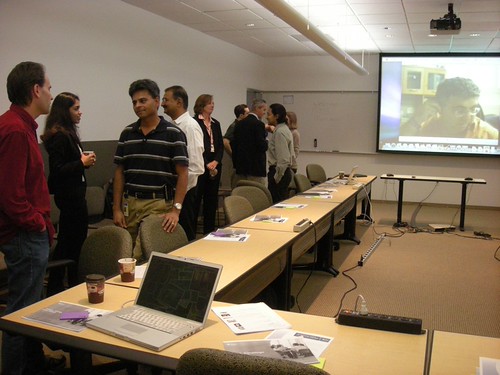
The first SEED Speed Mentoring session was held at Sun Microsystems during lunchtime on 9 December 2009 in Menlo Park, California. Thirteen mentors and twenty mentees signed up. 88% of the mentors and mentees reported being satisfied to very satisfied with their experience. No one reported being dissatisfied. Thanks to Helen Gracon, Rob Snevely, and Rick Aaron for supporting me in running this event!

Topics most discussed were:

  • Career development (77%)
  • Improving professional visibility (65%)
  • Technical skills development (54%)
  • Improving leadership or management skills (50%)
  • Discussing best path to success (46%)

Some replies to the follow-up survey question “What would you say to someone who was interested in participating in a future SEED Speed Mentoring session?”:

  • Excellent service from Sun. Anyone who is interested in career development, should avail this one.
  • Go for it but don’t expect it to answer all your questions.
  • Know what you want to get out of the sessions ahead of time. Try to conduct some research on who the mentors are ahead of time.
  • Sure. Do it. It’s a few hours that has a decent chance of broadening your perspectives.
  • Go in with a plan of what you want to discuss. Be aware of the limitations of such an exercise.
  • I would highly recommend it. It doesn’t take much time at all but can quickly provide some feedback and give one’s thinking process a nudge.
  • Please participate, since it inspires you to do routine things differently. It provides useful pointers to making career changes. It helps to make better choices Towards technical skills gained at work.

There are probably many successful ways to run a speed mentoring event. Here is SEED’s instruction document (approved for public distribution), complete with a flow chart:

How Speed Mentoring Works (4 pages, PDF format)

Pictures from the first SEED Speed Mentoring Session:

DSCN7913 . DSCN7916
DSCN7920 . DSCN7928

Images Copyright 2009 Katy Dickinson
Edited and updated 15 May 2018

2 Comments

Filed under Mentoring & Other Business

SEED Mentoring Autumn Event

The SEED worldwide mentoring program held its regular autumn event yesterday. I think the talks and tours went very well and comments so far have been enthusiastic. We welcomed about 50 participants, with the majority joining remotely.

Speakers and activities for the event included:

Event photos:

DSCN6001 DSCN6023 DSCN6066

Images Copyright 2009 by Katy Dickinson

Leave a comment

Filed under Mentoring & Other Business

Best Selling Mentoring Report (sortof…)

Sun Mentoring: 1996-2009 Sun Labs Technical Report

At the end of August 2009, Sun Labs published a technical report about Sun Microsystems’ mentoring programs:  “Sun Mentoring: 1996-2009”, by Katy Dickinson, Tanya Jankot, and Helen Gracon, that is available free.

314 Downloads

This week, I was very pleased to learn that there have already been 314 downloads, a best seller by technical report standards. OK, the report is free and 314 is hardly the tens of millions of books Dan Brown can sell writing about cryptography, symbols, and conspiracy theories; however, it is a solid and satisfying start. 314 downloads is in addition to the 90 paper reports we handed out from Sun’s table at the Grace Hopper Celebration of Women in Computing (GHC09) earlier this month. After so much effort, I am glad to know that someone is actually reading it (or downloading it, anyway). Hooray!

Report Overview

Sun Microsystems has benefited from a long-term successful culture of mentoring, especially in its worldwide engineering divisions. About 7,300 mentoring pairs have participated in one of Sun’s formal mentoring programs since 1996. Sun has developed several internal formal world-wide mentoring programs in which mentoring pairs focus on a business problem or goal of the mentee. To create this report, the authors analyzed Sun’s 1996-2009 mentoring program data, Sun-wide data, plus information from a Gartner report on Sun mentoring which focused on the ROI of Sun’s mentoring programs.

Mentoring is near the top of most lists of tools that are effective at promoting professional development and advancement in industry. As a business method, mentoring works well generally and also is particularly valuable to women and minorities.

Mentoring has paid off for Sun in increased productivity, efficiency, and greater satisfaction among participants. This report presents what Sun did and how Sun did it to allow others to take advantage of the company’s extensive and successful experience with this remarkably effective and versatile business method. So far as is known, this report is unique: no other company has published a long-term detailed analysis about its corporate mentoring program.

3 Authors

Helen generously took Tanya and me out to the new and impressive Rosewood Sand Hill Hotel for lunch to celebrate our publication and so that we could all sign report copies to give with thanks to our program sponsors. The pink drink in the picture is the Madera restaurant’s “House Made Prickly Pear Lemonade” – very pretty and refreshing!

DSCN5674

Images Copyright 2009 by Katy Dickinson
Originally published: 16 October 2009
Key Links Updated: 8 April 2016

1 Comment

Filed under Mentoring & Other Business, News & Reviews

SEED Mentoring’s Autumn Event

The SEED worldwide mentoring program will hold its regular autumn event on 21 October 2009. Since the Sun-Oracle transition is taking longer than expected to complete, we are keeping up with business as usual as best we can.

Speakers and activities for the event will include:

26 are registered to participate so far, less than usual for this event, about half of whom will join by video or conference call. We have reserved large video conference rooms in both Menlo Park, California, and Burlington, Massachusetts. I hope to see more registrations this week!

Leave a comment

Filed under Mentoring & Other Business

2-Page “Sun Mentoring: 1996-2009” Report Overview

Sun Mentoring: 1996-2009 Sun Labs Technical Report

We have just created a two-page overview handout about the new “Sun Mentoring: 1996-2009” technical report from Sun Labs. This handout and copies of the report will be available at the Grace Hopper Celebration of Women in Computing (GHC09) which starts next week in Tucson, Arizona. Sun is a Platinum Sponsor of the Hopper Conference. It starts out:

“Overview Sun Microsystems has benefited from a long-term successful culture of mentoring, especially in its worldwide engineering divisions. About 7,300 mentoring pairs have participated in one of Sun’s formal mentoring programs since 1996. Sun has developed several internal formal world-wide mentoring programs in which mentoring pairs focus on a business problem or goal of the mentee. To create this report, the authors analyzed Sun’s 1996-2009 mentoring program data, Sun-wide data, plus information from a Gartner report on Sun mentoring which focused on the ROI of Sun’s mentoring programs.

Mentoring has paid off for Sun in increased productivity, efficiency, and greater satisfaction among participants. This report presents what Sun did and how Sun did it to allow others to take advantage of the company’s extensive and successful experience with this remarkably effective and versatile business method. So far as is known, this report is unique: no other company has published a long-term detailed analysis about its corporate mentoring program.”

Also included in the two-page handout are the first five conclusions, plus expert mentoring advice from the report (Best and Worst Practices). The three report authors are:

Image Copyright 2009 by Katy Dickinson
Originally published: 23 August 2009
Updated: 8 April 2016

Leave a comment

Filed under Mentoring & Other Business, News & Reviews