The Graduate Theological Union where I am a Master’s student requires us to take a “Research Methods” class before writing our 90-page thesis, or capstone paper. The final paper of Research Methods is intended to be a chapter in that thesis. What follows is the paper I submitted earlier this month in which I argue that some practices associated with relational theology promote better outcomes for prisoners and may lower recidivism. I start work on my thesis in the Spring term in February 2020.
Range of Chaplain Engagement with Prisoners
By Katy Dickinson
MA-1000: Research Methods (Fall 2019)
16 December 2019
Introduction
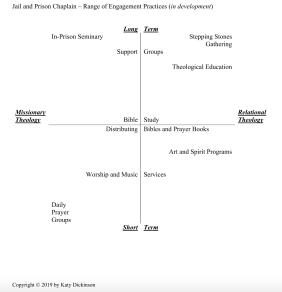
There is a range of chaplain engagement and practices with prisoners that reflects both sociology and theology. Chaplain practices range from missionary to relational and chaplain engagement durations range short-term to long-term. In this paper, I argue that some practices associated with relational theology promote better outcomes and may lower recidivism. I have used two primary sources for inmate engagement examples, Tanya Erzen’s God in Captivity: The Rise of Faith-Based Prison Ministries in the Age of Mass Incarceration,[1] and Laura Bates’s Shakespeare Saved My Life: Ten Years in Solitary with the Bard, a Memoir.[2] I also consider the theology presented by Arthur Peacocke, in Theology for a Scientific Age: Being and Becoming – Natural, Divine, and Human,[3] as well as drawing examples from my own experience since 2015 as a volunteer chaplain on the men’s side at Elmwood jail in Santa Clara County.
After presenting information about incarceration, I will explore examples of inmate engagement by Erzen and Bates and show how these define the range. See the Appendix for a graphic that visualizes the range of engagement. My focus is on male Christian prisoners because this is the group with which I have the most experience as a jail chaplain. In America, 93% of prisoners are male[4] and 68% are reported to be Christian.[5] Women were 7% of the total prison population in 2017.[6] It may be that my research includes or pertains to other prisoner groups, or to other elements of the penal system such as the justice courts and the parole system; however, those are not the center of my study. In particular, while there are sociological differences between male and female prisoners, I have not observed theological differences. My work represents more practical theology than academic research. I have found comparatively few academic resources about ministry to the incarcerated and ex-inmates. This paper is a subset of my developing Master’s thesis on the range of chaplain engagement and how understanding it can benefit prisoners. It is a small addition to a much-needed field of study.
Incarceration and the Marginalized
Jail and prison numbers reflect the lives of the most marginalized in American society. The Prison Policy Initiative reports not only the overall volume but the much-higher churn of prisoners cycling through county jails, “The American criminal justice system holds almost 2.3 million people… Every year, over 600,000 people enter prison gates, but people go to jail 10.6 million times each year.”[7] These numbers are substantiated by The Sentencing Project, “The United States is the world’s leader in incarceration with 2.2 million people currently in the nation’s prisons and jails — a 500% increase over the last forty years.”[8] The good news is that state and federal incarceration rates went down 13% from 2007 to 2017.[9]
Jail and prison are different in some ways. Whether or not they are guilty, 76% of people held in American jails are not convicted of any crime. Many un-convicted people remain in jail because they are too poor to make bail. Prison inmates have been convicted. Inmates are usually in a jail near their home community. Prison inmates may be sent anywhere in their state. People can be jail from a few days to fifteen years. Most do not know their schedule for judgement. Prison inmates know their incarceration schedule. Jail sees a large-scale, constant churn in and out. Prison populations are comparatively stable.[10]
In addition to criminal behavior, incarceration is associated with a variety of personal and socio-economic challenges, acting alone or together. For example, about 50% of inmates in Santa Clara County have mental illness.[11] About two thirds of jail inmates report drug dependence or abuse.[12] In U.S. prisons, “people of color — who face much greater rates of poverty — are dramatically overrepresented in the nation’s prisons and jails.”[13] America is not the only country which disproportionately incarcerates the poor and marginalized. María Belén Roca Pamich of the Universidad Nacional de La Plata writes of how incarceration degrades and fragments lives in Argentina,
Entrar en los circuitos de la justicia penal implica en Argentina verse degradado en la condición de ciudadano, ya que las desigualdades sociales se refuerzan, se fragmentan los lazos familiares, se empeora la calidad de vida, y por supuesto se interrumpen trayectorias educativas y laborales.[14]
Conversion and Salvation: One End of the Engagement Range
Tanya Erzen is an Associate Research Professor, Religion and Gender & Queer Studies at the University of Puget Sound. She is also the Faculty Director of the Freedom Education Project Puget Sound which provides college classes to women in prison.[15] Erzen started teaching in prison in 2003. In God in Captivity, she describes how during the last few decades, educational and mental health services in hundreds of American prisons have come to be provided by tens of thousands of conservative evangelical nondenominational Christian volunteers.[16]
Erzen seems both to approve of the churches and faith-based groups for providing volunteer chaplains to the incarcerated, while at the same time being critical of their motives and methods. Erzen asserts, “They’ve created a theology that includes the prisoner, spurred by the Bible verse in Matthew 25:36, ‘I was in prison and you visited me.’ Yet, for the volunteers, ministries and churches that go inside, the prison contains a captive population, ripe for proselytization.”[17] The theological and sociological impulse for prison ministry as described by Erzen seems at least partly to be based in what Howard Thurman calls missionary appeal,
It is not a singular thing to hear a sermon that defines what should be the attitude of the Christian toward people who are less fortunate than himself. Again and again our missionary appeal is on the basis of the Christian responsibility to the needy, the ignorant, and the so-called backward peoples of the earth. There is a certain grandeur and nobility in administering to another’s need out of one’s fullness and plenty… It is the sin of pride and arrogance that has tended to vitiate the missionary impulse and to make of it an instrument of self-righteousness on the one hand and racial superiority on the other.[18]
Erzen’s description of the growing predominance of evangelical Christian chaplains in prison is supported by Hallett and Johnson who write, “what is new is the way in which the reach and nature of religious programs have changed in prisons over the last several decades. For many, quite understandably, the term ‘prison ministry’ is synonymous with prison evangelism.”[19] Evangelical Protestantism or Evangelicalism as defined by D.W. Bebbington includes four qualities, “conversionism, the belief that lives need to be changed; activism, the expression of the gospel effort; biblicism, a particular regard for the Bible; and what may be called crucicentrism, a stress on the sacrifice of Christ on the cross.”[20] The Pew Research Center’s Religion in Prisons parallels Erzen in reporting the strong participation of evangelical Christians as chaplains, “The overwhelming majority of state prison chaplains (85%) identify themselves as Christians, and about seven-in-ten are Protestants (71%). Fully 44% of all the chaplains surveyed say their denomination is part of the evangelical Protestant tradition.”[21] Pew also reports that there are many more Protestant Christian chaplains (71%) compared to the number of Protestant Christians among prisoners (51%).[22]
Prisons and jails present complex sociological circumstances with many stakeholders who have goals that both conflict and align. Prisons welcome volunteer chaplains not only because their services are free but also, as Erzen writes, “the ministries serve as agents of surveillance and authority and make it easier to maintain order and control.”[23] Nonetheless, inmates welcome the volunteer chaplains. Erzen writes, “For a woman or man separated from children and families for years, the fellowship in religion recreates familial and kinship bonds.”[24] The bleak life circumstances of most prisoners makes them vulnerable to emotional and spiritual manipulation by other prisoners and especially by chaplains. For example, in a recent Los Angeles Times article on jail chaplaincy, Leila Miller reported, “The inmate, who is Jewish, said he attends Christian classes as an escape. ’You do anything to get out,’ he said. ‘It feels very secluded and isolated in there. Anything that inspires learning, wisdom.’”[25]
Erzen explores questions of punishment and redemption while remaining critical of faith-based ministries which, she characterizes, are largely focused on salvaging souls.[26] One ex-prisoner quoted by Erzen speaking on the evangelical Christians churches said, “Sometimes churches come in and want to save the souls. Really what they want to do is make them believe like they do, to be their kind of Christians… They’re concerned about the soul. But they’re not concerned about the person.”[27] Erzen compares the theology of the evangelical chaplains to that of American slave owners in the 19th century. She writes, “One prisoner tells me that the prison no longer has an overseer with a whip as slave plantations did, but the same kind of psychological and theological control is still present. The faith-based volunteers, teachers, and others who oversee the seminary program are now the watchers.”[28] This comparison is especially disturbing because of the strong racial and ethnic disparities among the incarcerated.
Thurman writes that missionaries feel responsible for the “backwards peoples” of the world. At one time, that phrase most often referred to outside of the West, particularly to people in Africa, Asia, and South America. Now, it seems that prisoners fill that sociological niche. Erzen writes, “Release from prison is supposed to signal a form of absolution, a pardon for the crime for which someone was convicted. However, former prisoners continue to be punished and stigmatized in myriad ways.”[29] She describes how released prisoners may be absolved in some ways but continue to be subject to long-term personal, social, and economic consequences, including limits on voting, housing, custody of children, jobs, education, travel, as well as lasting psychological impact. The evangelical chaplains described by Erzen define one end of the sociological and theological range of engagement and practices with prisoners.
Respect and Compassion: The Other End of the Range
In contrast, the more relational end of the range is represented by the work of Indiana State University English Professor Laura Bates. Her very different kind of engagement can be seen in her remarkable account of teaching in prison, Shakespeare Saved My Life. Bates is a teacher rather than a chaplain. Her stories come from teaching Shakespeare to male prison inmates as a volunteer in the Wabash Valley Correctional Facility, in Carlisle, Indiana. Bates has worked with thousands of prisoners since 1983. She connects deeply with her students in a secular class focused on their intellectual enlightenment through studying Shakespeare.
By presenting stories about teaching inmates, Bates argues that empowering prisoners to study Shakespeare can be life changing, both for the students and the teacher. Bates writes, “I had come to prison to teach prisoners about Shakespeare, but I would learn from them at least as much as I would teach to them.”[30] In one of her most powerful passages, Bates writes of how her life and those of her inmate students became connected,
I had the answer to my Shakespearean research question regarding verisimilitude. I could leave prison and write the articles I needed to publish in order to apply for tenure… But then I thought about all of these people we had locked away from the world, whom I had started to know…They had no one. They seemed to need me – or, at least seemed to need Shakespeare. I realized I couldn’t leave – not now, and maybe not ever. In a way, I started to feel like I was serving a life sentence myself.[31]
Although she states her “conviction to never become emotional in prison,”[32] Laura Bates’s style of engagement might best be described as being based in respect and compassion.
As part of teaching The Taming of the Shrew, Bates facilitated a written dialogue between men and women prisoners. As part of this at-a-distance communication, incarcerated women who had been victims of domestic violence answered a series of questions from the men including, What is love? The women wrote, “Caring, respect, honesty. Listening, being there.”[33] This succinctly matches Laura Bates’s description of how she treats her inmate students and also aligns with my own experience of engagement practices that work with jail inmates. University of Chicago Professor David Bevington, after observing Bates teaching in prison, wrote in the Foreword of Shakespeare Saved My Life, “Laura was cool. She was in charge. She didn’t stand for any nonsense, but she listened, she helped, she respected.”[34]
I first learned about Shakespeare Saved My Life in a radio interview with Laura Bates in 2013.[35] My undergraduate honors thesis was on Shakespeare, so I was fascinated. The book was one of the inspirations that encouraged me in 2015 to start a college-level faith-based weekly study program inside my local county jail. Like Bates, the best practices I use in my jail ministry are based in showing prisoners respect and compassion and giving dignity in an incarceration system that rejects respect, compassion, and dignity for inmates.
My practices are intended to help the inmates grow spiritually, socially, and intellectually. They include calling inmates by their first name, giving choices whenever possible, giving opportunities for leadership, answering questions on any subject related to our study area, and regularly telling the men that they are valuable, forgivable, and loved human beings. In quarterly end-of-class feedback from my students, inmates consistently say that the single most important aspect of our program is that we mentors show up every week. If we are not locked out, we are there.
The Rev. Louann Roberts wrote when she retired after 25 years of service as the Chaplain at Elmwood Women’s Facility, that jail ministry can be addictive and life-affirming,
The best of poignant memories of all are the bright, strong and contagious faiths that encouraged and blessed me in unexpected ways. The faith, love and gratefulness found among prisoners that is freely shared with anyone who will take the time to listen, is the most addicting thing I’ve experienced in my life. I’m forever changed by the evil and the good, the contrasts where love can still win over hate, and that God is found in jail.[36]
Chaplains like Roberts who engage prisoners with respect and compassion demonstrate to them their value, both as individuals and to God. In her dissertation, Moira De Nike concludes that this recognition of worth may lead the inmate to better life outcomes, “more than faith and moral resolve are required for successful re-entry into society, but that offenders’ sense of God in their lives can be pivotal, especially as it gives them belief in their own value.”[37] When inmates understand that they have value, they may be motivated to fight harder to get a shorter prison sentence. Sawyer and Wagner report, “almost all convictions are the result of plea bargains, where defendants plead guilty to a lesser offense, possibly in a different category, or one that they did not actually commit.”[38] In my own jail ministry, I have observed that some inmates accept excessively long sentences because they do not feel they deserve better. On the other hand, I have also seen inmates get much shorter sentences when chaplains write letters for them and show up at court hearings. This is so unusual that judges pay attention.
Theology of Incarnation and Atonement
Theology is the framework in which a chaplain interacts with prisoners. It provides a context and motivation for how the chaplain values prisoners and whether prisoners are encouraged to see themselves as having a positive future. Tanya Erzen presents one end of the theological range when she writes of the beliefs of evangelical chaplains who support the role of the criminal justice system in punishing prisoners, “The idea that forgiveness or resolution only occurs as a result of punishment… has roots in Christian theology… from the Christian idea of atonement. Jesus’s death on the cross is necessary as a sacrifice to provide the only basis for sinful humans to escape deserved punishment.”[39] Erzen calls this theology a contradictory hybrid of New Testament forgiveness and Old Testament vengeance. She writes, “many nondenominational and evangelical Christians seem wedded to the idea that punishment awakens good and the biblical idea of God’s law as retribution.”[40] This theory of atonement is called penal substitution. In penal substitution, God punishes Jesus on the cross in place of sinners to satisfy the demands of justice. Penal substitution with its familiar context of judicial punishment is a popular belief among prisoners as well as evangelical chaplains.
At the other end of atonement theology is theologian-scientist Arthur Peacocke. Peacocke was an Anglican priest, Dean of Clair College, Cambridge, and a Fellow of Exeter College, Oxford. In Theology for a Scientific Age, Peacocke presents his interpretation of the incarnated Jesus growing the upper limit of human potential when he writes, “we have come to see Jesus the Christ… as the distinctive manifestation of a possibility always inherently there for human beings in their potential nature, that is, by virtue of what God had created them to be and to become.”[41] Peacocke criticizes the penal substitution theory of atonement because it suffers from both the moral defect of God inflicting punishment on the innocent as well as the blasphemy of putting God in the role of a hanging judge seeking retribution.[42] Peacocke offers an alternate atonement interpretation in which Jesus represents a new upward possibility for human realization, “the life, suffering and death of Jesus the Christ as an act of love… an act of love of God.”[43] Peacocke’s love-based theology affirms continuing spiritual growth and human value growing in parallel with the physical evolution of humans. In his view, theories like penal substitution fail to support the ongoing transformation of humanity into what God intends.[44] Chaplains like Roberts who act out of a theology of love and belief in growth potential show respect and compassion for the inmate as a person, not just as a soul to be saved.
Better Outcomes and Lower Recidivism
There is a great deal of information about recidivism (that is, ex-inmates repeating criminal behavior, or being re-arrested), all of it complex and potentially conflicting. For example, the Bureau of Justice reports a 68% recidivism rate within three years, and 83% within nine years.[45] However, Gelb and Velazquez, citing data from the aforesaid Bureau of Justice, report that the numbers returning to state prison within three years have dropped.[46] What seems true in any case is the summary by Michael Hallett, Professor of Criminology & Criminal Justice, University of North Florida, “Rebuilding the lives of ex-offenders has proven exceedingly difficult.”[47]
A review of published reports indicates that certain kinds of programs do help those in re-entry to stay out of incarceration. Many of these are faith-based programs that offer study groups, mentors, support for housing, jobs, transportation, training, life skills, reconnection with family, and healthcare, including substance abuse treatment. Faith-based programs can reduce recidivism but Hallett cautions, “most faith-based programs do not last very long… prisoners need a more substantial or sustained faith-based intervention to be effective.”[48] The Pew Research Center interviewed prison chaplains who advocated for ongoing support during re-entry, “78% say they consider support from religious groups after inmates are released from prison to be absolutely critical to inmates’ successful rehabilitation and re-entry into society.”[49]
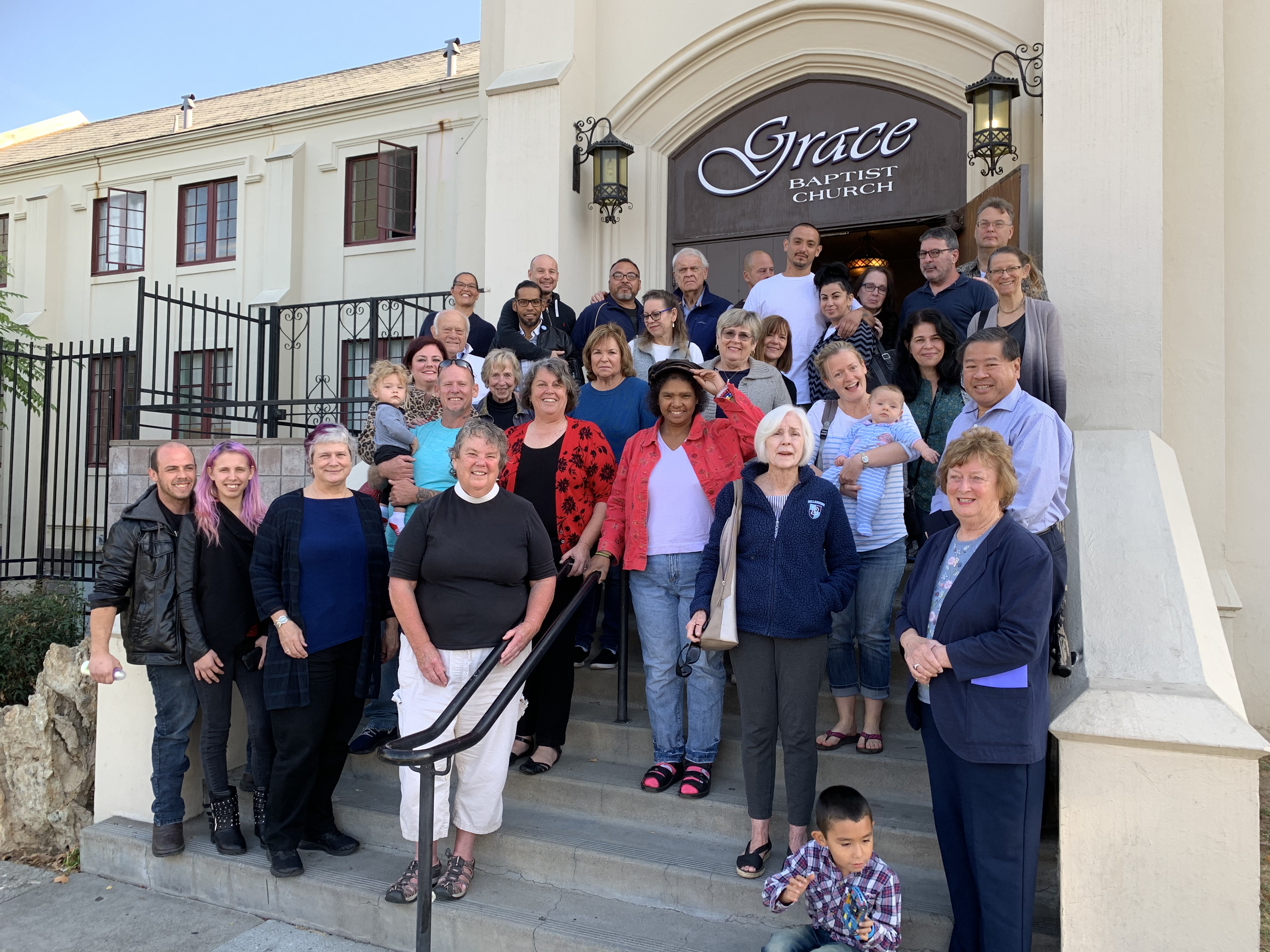
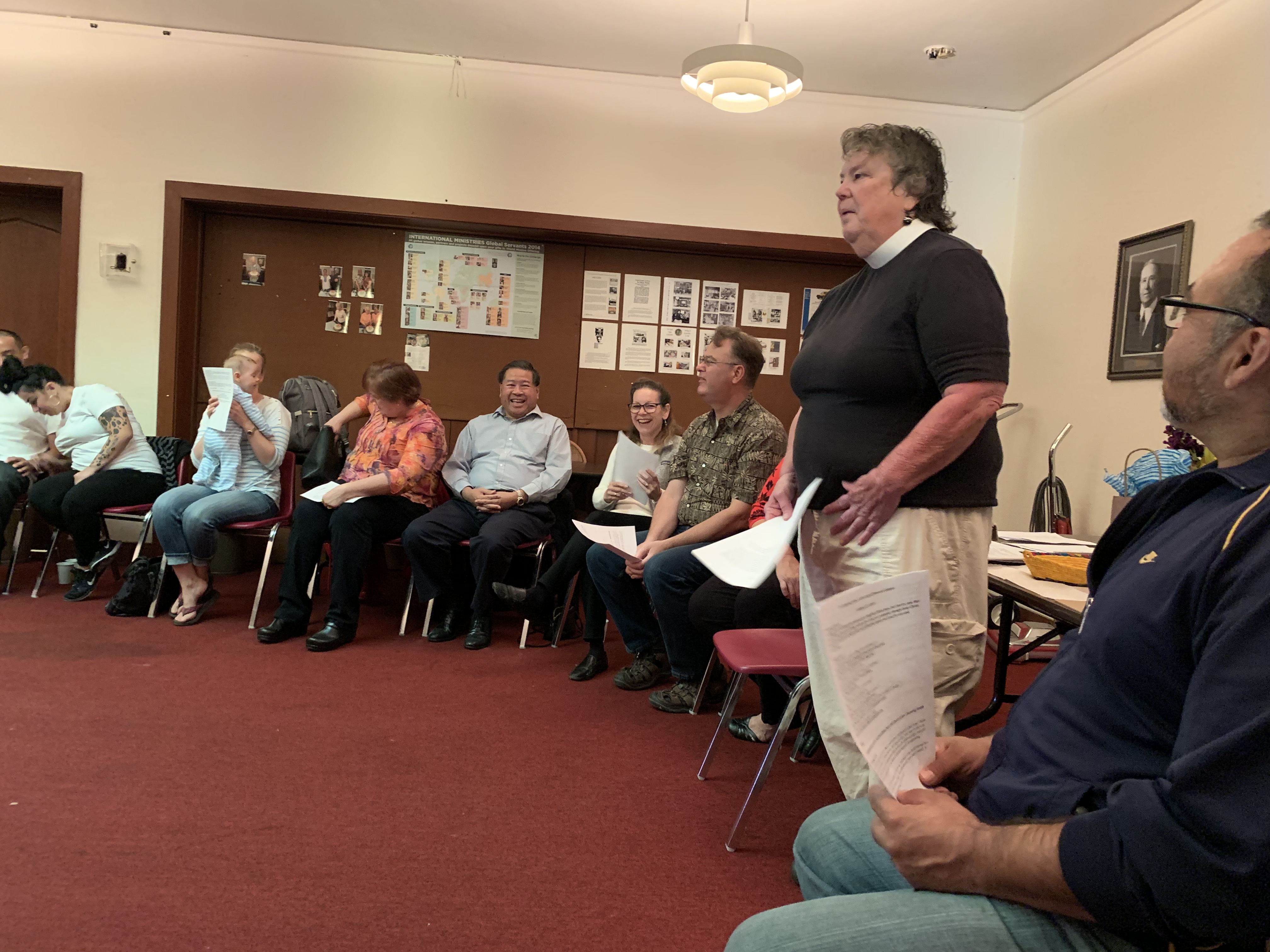
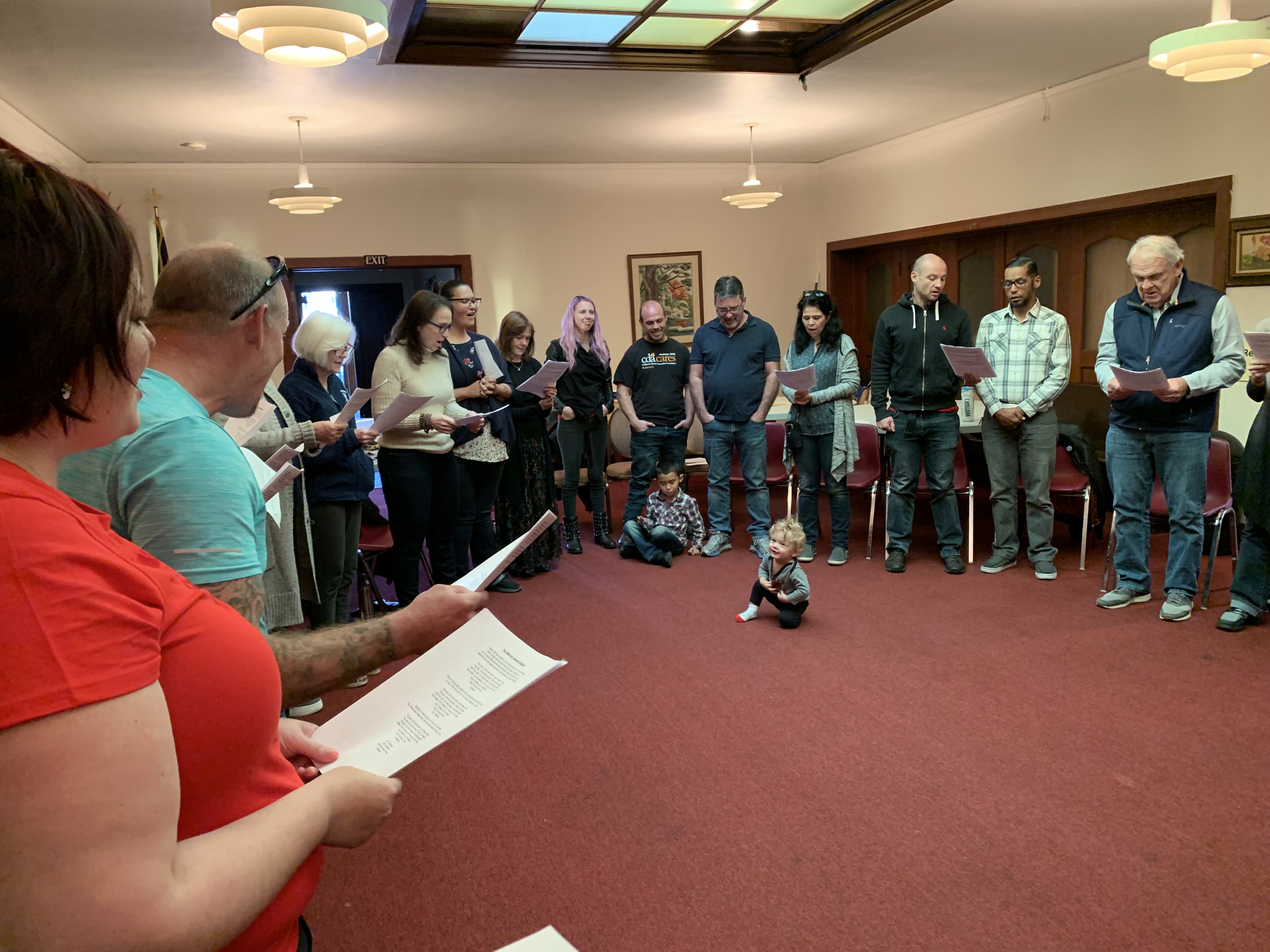
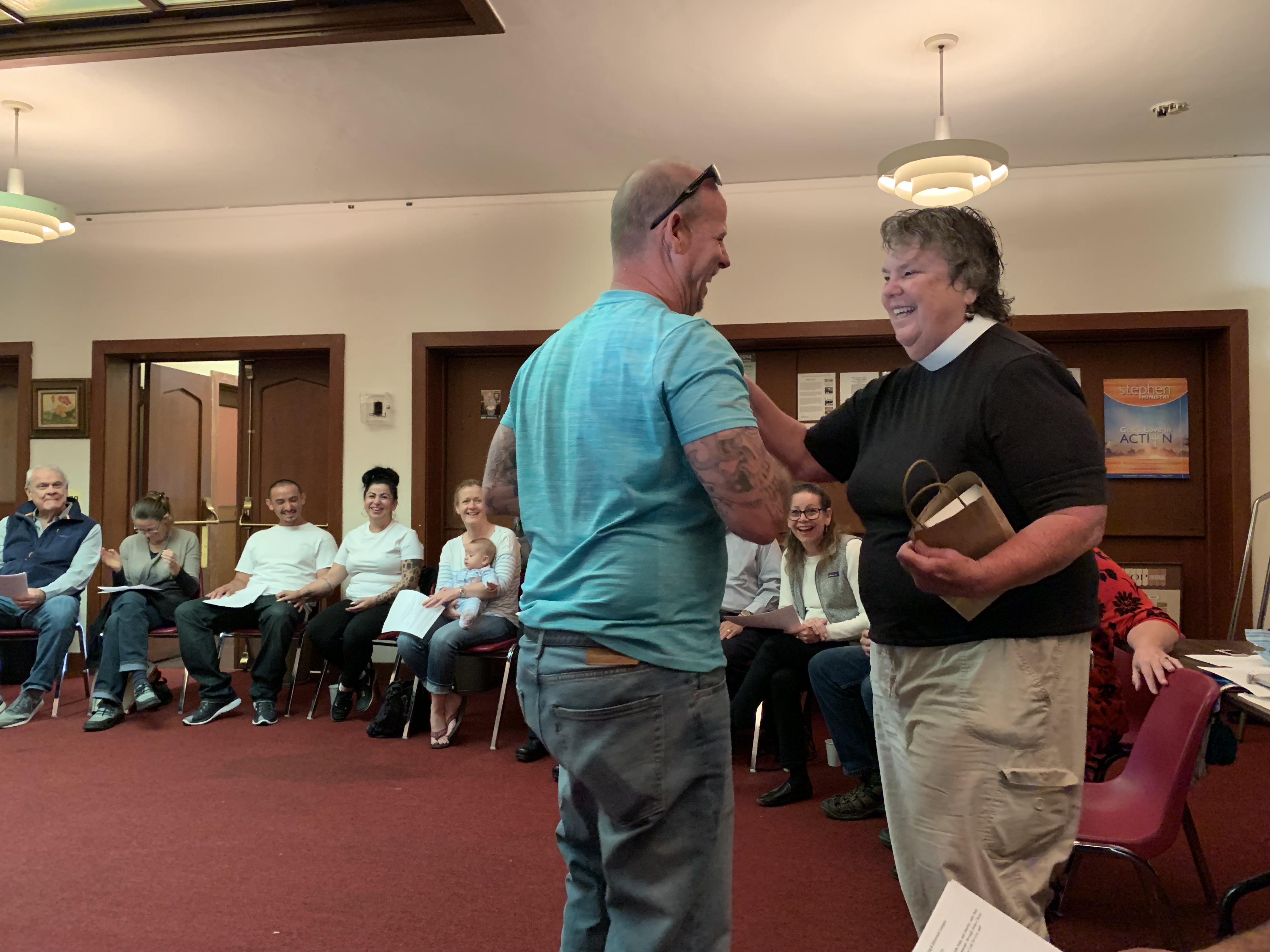
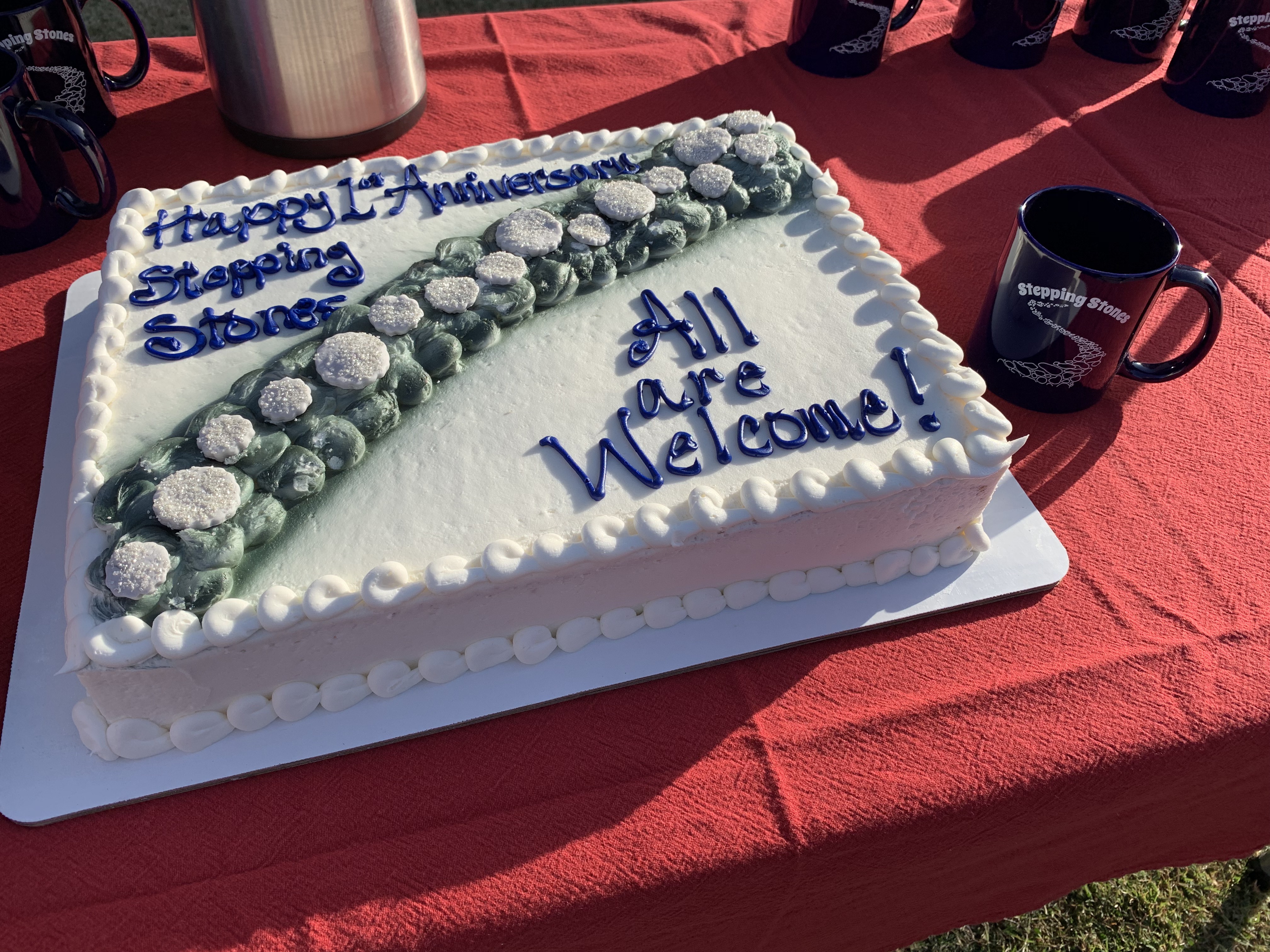
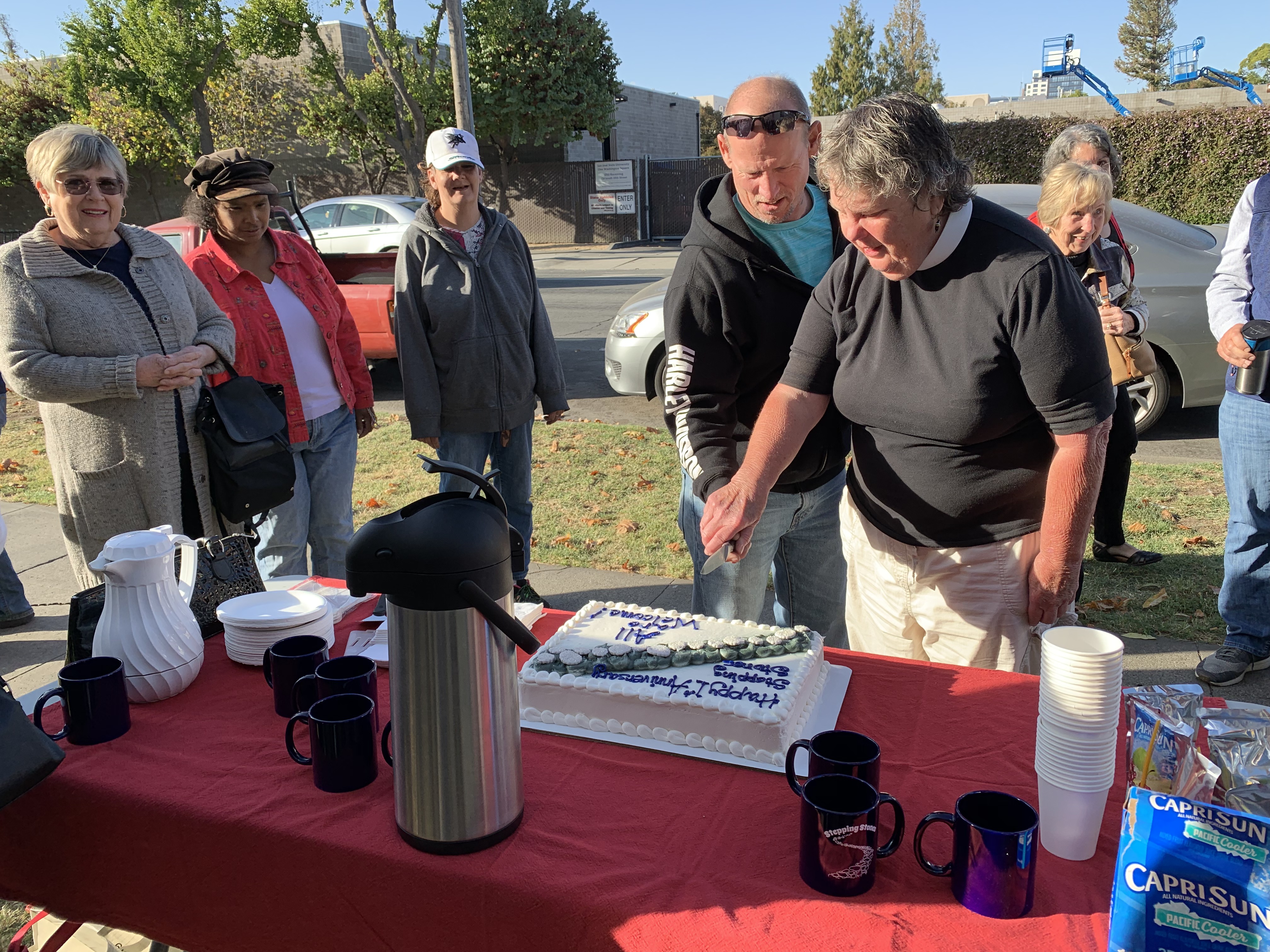
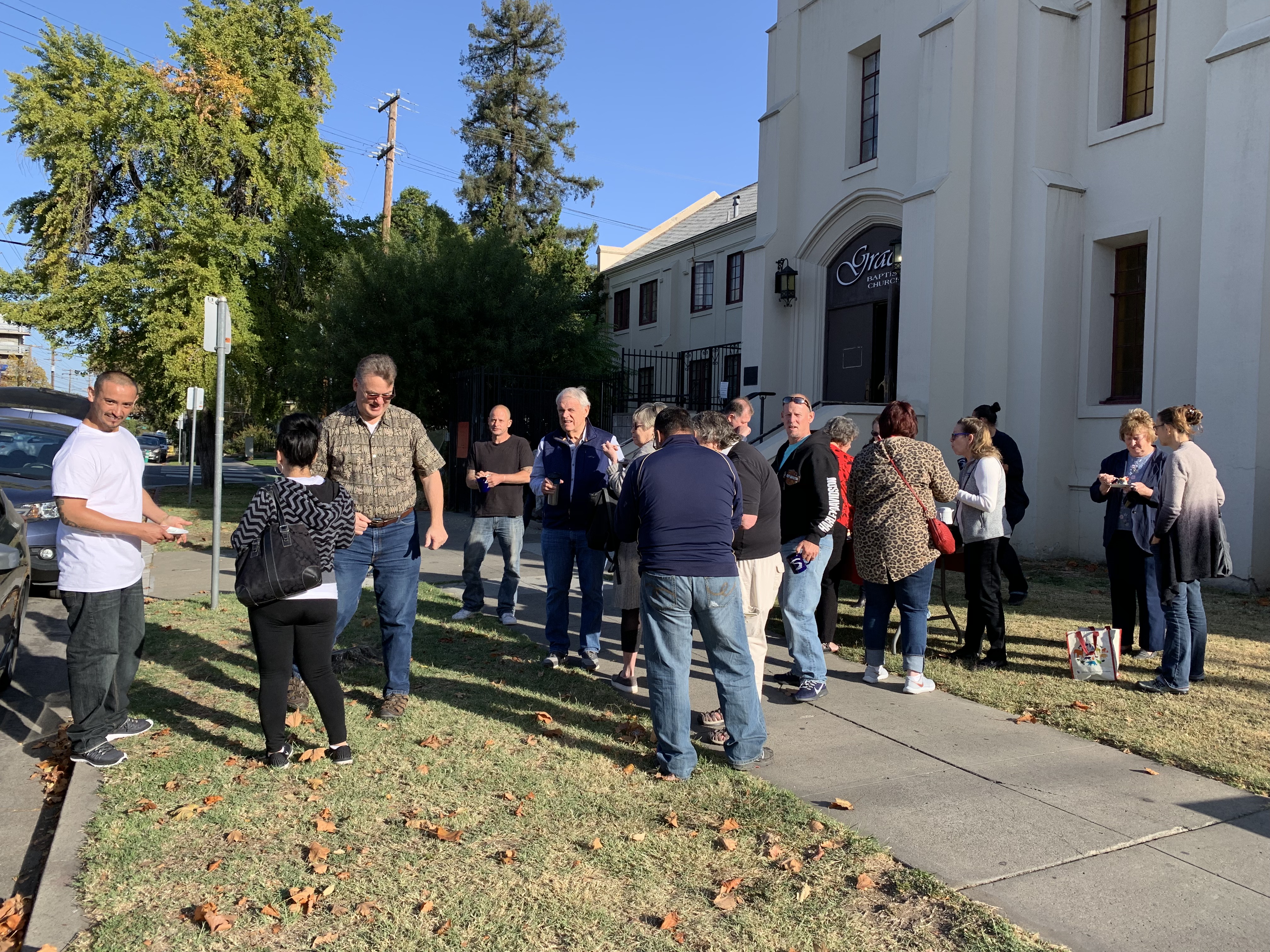
One such program with a long-term focus is called Stepping Stones Gathering, started a year ago by my home parish, St. Andrew’s Episcopal Church, in partnership with Grace Baptist Church. Each Sunday morning, about thirty jail volunteers, men in re-entry, family, and friends meet to worship, celebrate our accomplishments, and seek help with our challenges. Some of the men have been in our community (inside and out) since 2015. Stepping Stones is developing into a successful long-term re-entry program and I am proud to be a part of it.[50]
According to Hallett, systemic objective research into the effectiveness of faith-based programs has been limited.[51] This will be an area I study more completely in my fully-developed Master’s thesis. I suspect that because faith-based programs are offered at no cost they are less studied than are programs paid for by taxes. In addition, it is hard to study formally the many faith-based programs for prisoners because there are fewer non-faith-based programs with which to compare them. As Erzen writes, “The reality is that the alternative to a religious group is often nothing at all.”[52] Nonetheless, Hallett concludes, “Successful desisters [ex-prisoners who stay out of incarceration] frequently report that religiosity provides a spiritual fortitude useful for a path for longer-term desistance.”[53] That is, faith-based programs give those in re-entry much-needed strength to go on.
Conclusion
I have proposed a range of chaplain engagement with prisoners. One endpoint of the range is based in a missionary or evangelical theology centered around conversion, salvation, and a belief that prisoners deserve punishment and a low place in society. The other end of the range reflects a more relational outlook with emphasis on respect, compassion, and a longer-term focus improving the circumstances of inmates and those in re-entry to society. Both provide benefit to a marginalized group, but the sustained, relational engagement seems to be tied to better outcomes and lower recidivism. Understanding the range of prisoner engagement can be beneficial in any case.
Footnotes
[1] Tanya Erzen, God in Captivity: The Rise of Faith-Based Prison Ministries in the Age of Mass Incarceration (Boston: Beacon Press, 2017).
[2] Laura Bates, Shakespeare Saved My Life: Ten Years in Solitary with the Bard, a Memoir (Naperville, IL: Sourcebooks, 2013).
[3] Arthur Peacocke, Theology for a Scientific Age: Being and Becoming – Natural, Divine, and Human (Minneapolis: Fortress Press, 1993).
[4] US Department of Justice, Office of Justice Programs, Bureau of Justice Statistics, Prisoners in 2017, by Jennifer Bronson and Ann Carson, NCJ 252156 (April 2019): 368% report, https://www.bjs.gov/content/pub/pdf/p17.pdf.
[5] Stephanie C. Boddie and Cary Funk, Religion in Prisons: A 50-State Survey of Prison Chaplains (Washington, DC: Pew Research Center, 22 March 2012): 23, https://www.pewresearch.org/wp-content/uploads/sites/7/2012/03/Religion-in-Prisons.pdf.
[6] US Department of Justice, Prisoners in 2017, 3.
[7] Wendy Sawyer and Peter Wagner, Mass Incarceration: the Whole Pie 2019 (Easthampton, MA: Prison Policy Initiative, 9 March 2019): 1-3, https://www.prisonpolicy.org/reports/pie2019.html.
[8] Trends in US Corrections (Washington, DC: The Sentencing Project, 2019), https://www.sentencingproject.org/publications/trends-in-u-s-corrections/.
[9] US Department of Justice, Prisoners in 2017, 3.
[10] Sawyer and Wagner, Mass Incarceration, 4-7.
[11] Maryann Barry, “Augmentation of Behavioral Health Services to Inmates in County Jail,” County of Santa Clara: Santa Clara Valley Health & Hospital System, 15 December 2015, https://www.sccgov.org/sites/scc/Documents/Item19-79301A-Board-of-Supervisors-Meeting-2015-12-15.pdf.
[12] Wendy Sawyer, BJS Report: Drug Abuse and Addiction at the Root of 21% of Crimes (Easthampton, MA: Prison Policy Initiative, 28 June 2017), https://www.prisonpolicy.org/blog/2017/06/28/drugs/.
[13] Sawyer and Wagner, Mass Incarceration, 19.
[14] Maria Belen Roca Pamich, “Sociología general en cárceles: sistematización de la experiencia educativa en contexto de encierro,” [General sociology in prisons: systematization of educational experience in confinement context] Cuestiones de Sociología 19, no. 068 (December 2018), https://www.cuestionessociologia.fahce.unlp.edu.ar/article/view/CSe068/10356.
[15] “Tanya Erzen,” University of Puget Sound, accessed 6 Dec 2019, https://www.pugetsound.edu/faculty-pages/terzen/.
[16] Erzen, 5.
[17] Erzen, 14.
[18] Howard Thurman, Jesus and the Disinherited (Boston: Beacon Press, 1949), 12-13.
[19] Michael Hallett and Byron Johnson, “The Resurgence of Religion in America’s Prisons,” Religions 5 (2014): 670, https://www.mdpi.com/2077-1444/5/3/663/htm.
[20] D.W. Bebbington, Evangelicalism in Modern Britain: A History from the 1730s to the 1980s (London: Routledge, 1989), 2.
[21] Boddie and Funk, 27.
[22] Boddie and Funk, 23.
[23] Erzen, 11.
[24] Erzen, 14.
[25] Leila Miller, “When Jail Chaplains are Volunteers, Some Faiths are More Present than Others.” Los Angeles Times, 2 Nov 2019. https://www.latimes.com/california/story/2019-11-02/la-me-inmate-chaplain-requests.
[26] Erzen, 15.
[27] Erzen, 80.
[28] Erzen, 63.
[29] Erzen, 115.
[30] Bates, 37.
[31] Bates, 78.
[32] Bates, 209.
[33] Bates, 247.
[34] Bates, viii.
[35] “Teaching Shakespeare in a Maximum Security Prison,” hosted by Michel Martin, Tell Me More, on NPR, 22 April 2013, https://www.npr.org/2013/04/22/178411754/teaching-shakespeare-in-a-maximum-security-prison.
[36] Louann Roberts, “Praying with My Eyes Open,” CICMinistries.org, Correctional Institutions Chaplaincy, 2016, https://sites.google.com/cicministries.org/welcome/our-stories/praying-with-my-eyes-open.
[37] Moira De Nike, “The Penitent: The Myths and Realities of Religious Rehabilitation Among California Prisoners” (PhD diss., University of Hawaii, 2005), iv, ProQuest Dissertations Publishing (10838887).
[38] Sawyer and Wagner, 14.
[39] Erzen, 116.
[40] Erzen, 115-117.
[41] Peacocke, 302.
[42] Peacocke, 324.
[43] Peacocke, 328.
[44] Peacocke, 327.
[45] U.S. Department of Justice, Office of Justice Programs, Bureau of Justice Statistics, 2018 Update on Prisoner Recidivism: A 9-Year Follow-up Period (2005-2014), by Mariel Alper, Matthew R. Durose and Joshua Markman, NCJ 250975 (May 2018), https://www.bjs.gov/content/pub/pdf/18upr9yfup0514.pdf.
[46] Adam Gelb and Tracy Velazquez. The Changing State of Recidivism: Fewer People Going Back to Prison (Washington, DC: Pew Charitable Trusts, 1 Aug 2018), https://www.pewtrusts.org/en/research-and-analysis/articles/2018/08/01/the-changing-state-of-recidivism-fewer-people-going-back-to-prison.
[47] Hallett and Johnson, 677.
[48] Hallett, 674.
[49] Boddie and Funk, 11.
[50] “Stepping Stone Gathering: Supporting & Celebrating Reentry & Recovery,” HelpingOut (blog), 3 November 2018, https://helpingout.net/2018/11/03/stepping-stone-gathering-supporting-celebrating-reentry-recovery/.
[51] Hallett, 675-676.
[52] Erzen, 163.
[53] Hallett, 677-678.
Bibliography
- Barry, Maryann. “Augmentation of Behavioral Health Services to Inmates in County Jail.” County of Santa Clara: Santa Clara Valley Health & Hospital System, 15 December 2015, https://www.sccgov.org/sites/scc/Documents/Item19-79301A-Board-of-Supervisors-Meeting-2015-12-15.pdf.
- Bates, Laura. Shakespeare Saved My Life: Ten Years in Solitary with the Bard, A Memoir. Napierville, IL: Sourcebooks, 2013.
- Bebbington, D. W. Evangelicalism in Modern Britain: A History from the 1730s to the 1980s. London: Routledge, 1989.
- Boddie, Stephanie C. and Cary Funk. Religion in Prisons: A 50-State Survey of Prison Chaplains. Washington, DC: Pew Research Center, 22 March 2012. https://www.pewresearch.org/wp-content/uploads/sites/7/2012/03/Religion-in-Prisons.pdf.
- De Nike, Moira. “The Penitent: The Myths and Realities of Religious Rehabilitation Among California Prisoners.” PhD diss., University of Hawaii, 2005. ProQuest Dissertations Publishing (10838887).
- Erzen, Tanya. God in Captivity: The Rise of Faith-Based Prison Ministries in the Age of Mass Incarceration. Boston: Beacon Press, 2017.
- Gelb, Adam and Tracy Velazquez. The Changing State of Recidivism: Fewer People Going Back to Prison. Washington, DC: Pew Charitable Trusts, 1 Aug 2018. https://www.pewtrusts.org/en/research-and-analysis/articles/2018/08/01/the-changing-state-of-recidivism-fewer-people-going-back-to-prison.
- Hallett, Michael, and Byron Johnson. “The Resurgence of Religion in America’s Prisons.” Religions 5 (2014): 663-683, https://www.mdpi.com/2077-1444/5/3/663/htm.
- HelpingOut.net. 2018. “Stepping Stones Gathering: Supporting & Celebrating Reentry & Recovery.” HelpingOut (blog), 3 November 2018, https://helpingout.net/2018/11/03/stepping-stone-gathering-supporting-celebrating-reentry-recovery/.
- Miller, Leila. “When Jail Chaplains are Volunteers, Some Faiths are More Present than Others.” Los Angeles Times, 2 November 2019. https://www.latimes.com/california/story/2019-11-02/la-me-inmate-chaplain-requests.
- Pamich, Maria Belen Roca. “Sociología general en cárceles: sistematización de la experiencia educativa en contexto de encierro.” [General sociology in prisons: systematization of educational experience in confinement context] Cuestiones de Sociología 19, no. 068 (December 2018). https://www.cuestionessociologia.fahce.unlp.edu.ar/article/view/CSe068/10356.
- Peacocke, Arthur. Theology for a Scientific Age: Being and Becoming – Natural, Divine, and Human. Minneapolis: Fortress Press, 1993.
- Roberts, Louann. 2016. “Praying with My Eyes Open.” CICMinistries.org (blog). Correctional Institutions Chaplaincy, https://sites.google.com/cicministries.org/welcome/our-stories/praying-with-my-eyes-open.
- Sawyer, Wendy. BJS Report: Drug Abuse and Addiction at the Root of 21% of Crimes. Easthampton, MA: Prison Policy Initiative, 28 June 2017. https://www.prisonpolicy.org/blog/2017/06/28/drugs/.
- Sawyer, Wendy and Peter Wagner. Mass Incarceration: the Whole Pie 2019. Easthampton, MA: Prison Policy Initiative, 19 March 2019. https://www.prisonpolicy.org/reports/pie2019.html.
- “Tanya Erzen.” University of Puget Sound. Accessed 6 Dec 2019. https://www.pugetsound.edu/faculty-pages/terzen/.
- Tell Me More. “Teaching Shakespeare in a Maximum Security Prison.” Hosted by Michel Martin. Aired 22 April 2013, on NPR, https://www.npr.org/2013/04/22/178411754/teaching-shakespeare-in-a-maximum-security-prison.
- Thurman, Howard. Jesus and the Disinherited. Boston: Beacon Press, 1949.
- Trends in US Corrections, Washington, DC: The Sentencing Project, 2019. https://www.sentencingproject.org/publications/trends-in-u-s-corrections/.
- US Department of Justice, Office of Justice Programs, Bureau of Justice Statistics. 2018 Update on Prisoner Recidivism: A 9-Year Follow-up Period (2005-2014), by Mariel Alper, Matthew R. Durose and Joshua Markman. NCJ 250975, May 2018, https://www.bjs.gov/content/pub/pdf/18upr9yfup0514.pdf.
- US Department of Justice, Office of Justice Programs, Bureau of Justice Statistics. Prisoners in 2017, by Jennifer Bronson and Ann Carson. NCJ 252156, April 2019, https://www.bjs.gov/content/pub/pdf/p17.pdf.
Appendix
Copyright Ⓒ 2019 by Katy Dickinson
Citadel of Qaitbay window, Alexandria, Egypt – Image Copyright Ⓒ 2018 by Katy Dickinson.
If you want to receive Katysblog posts by email, please sign up using the Sign Me Up! button (upper right).

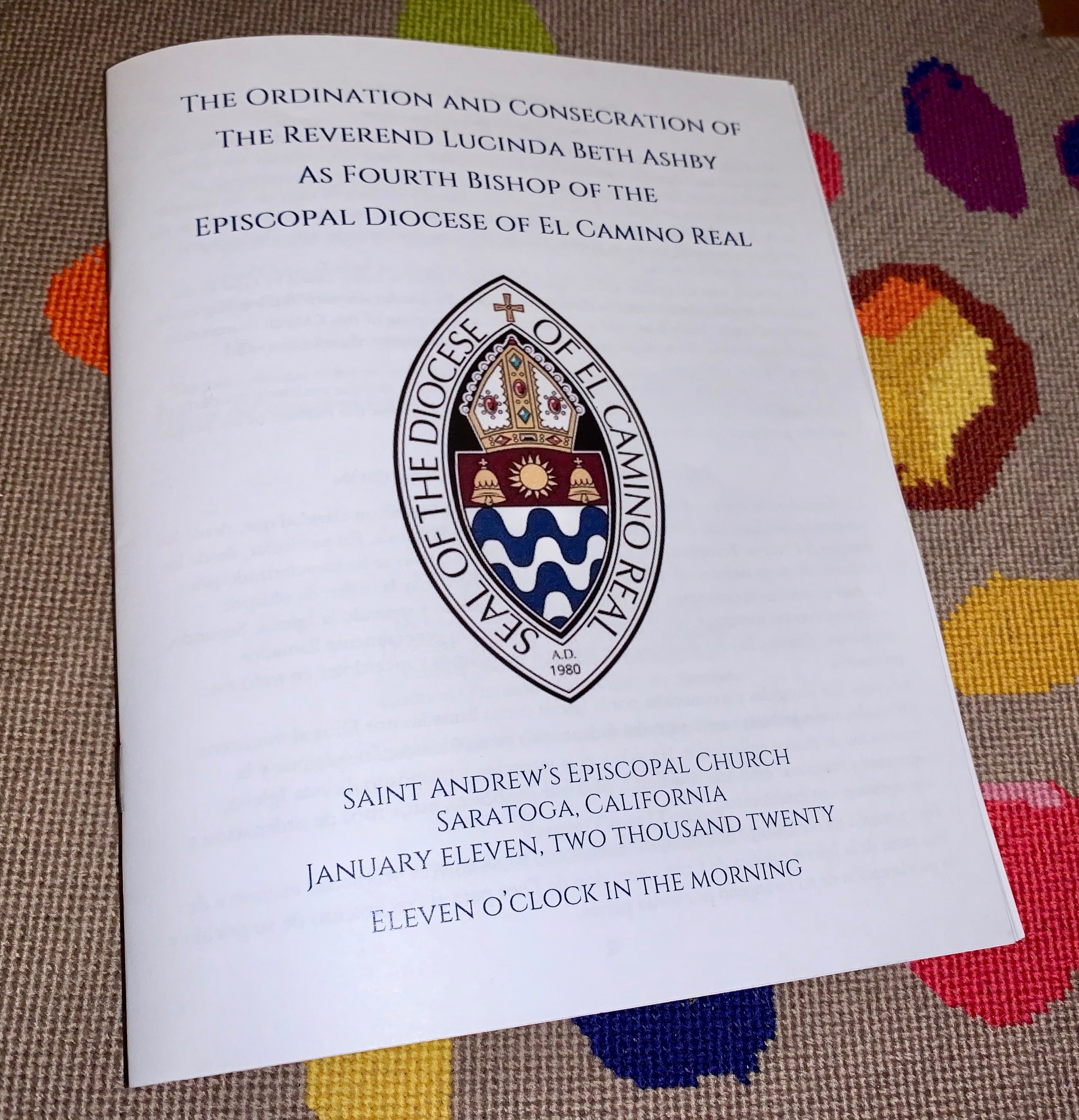
 Signed consecration certificate.
 John Plocher and crew, 9:10 am.
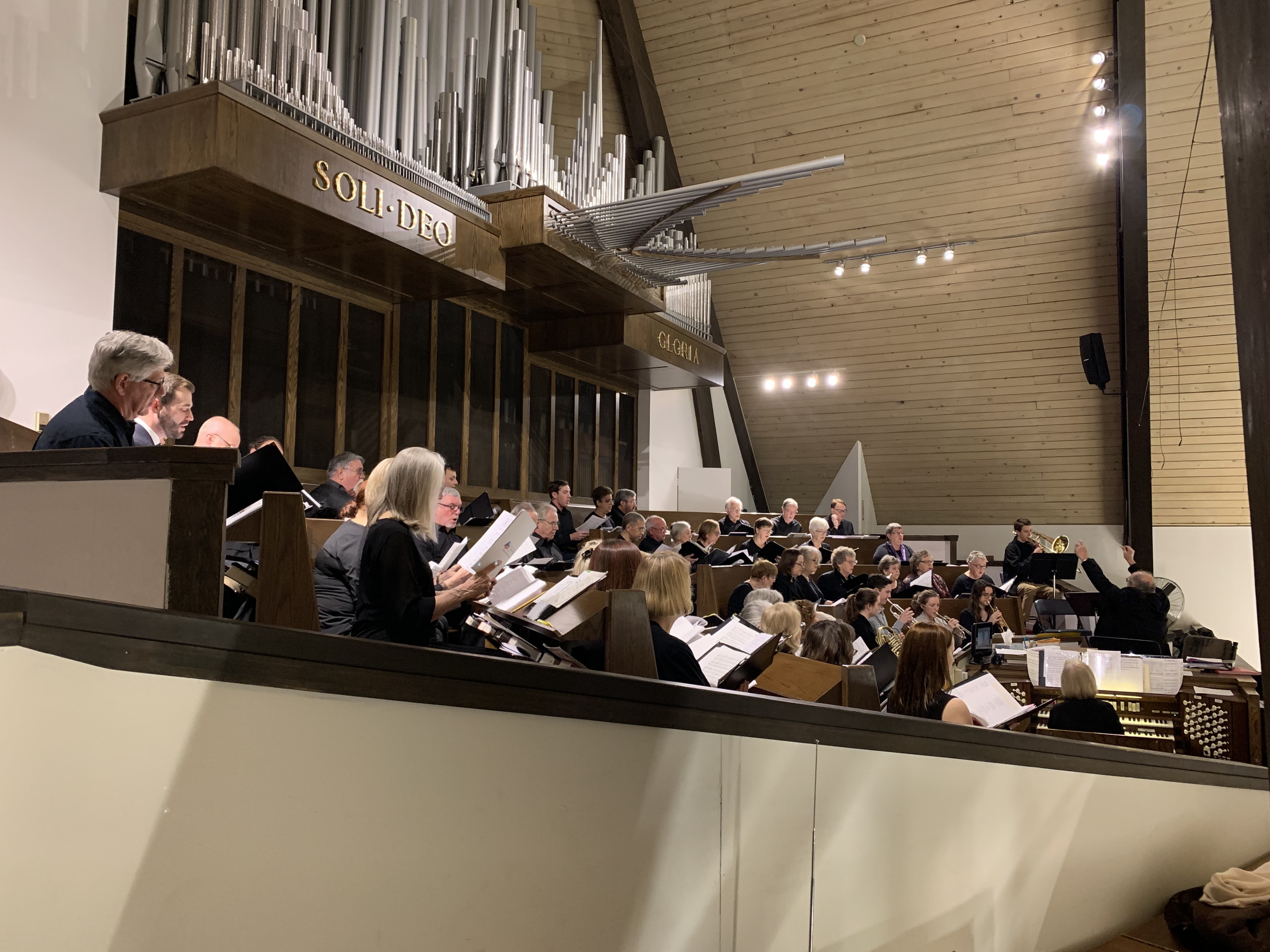 Diocesan choir.
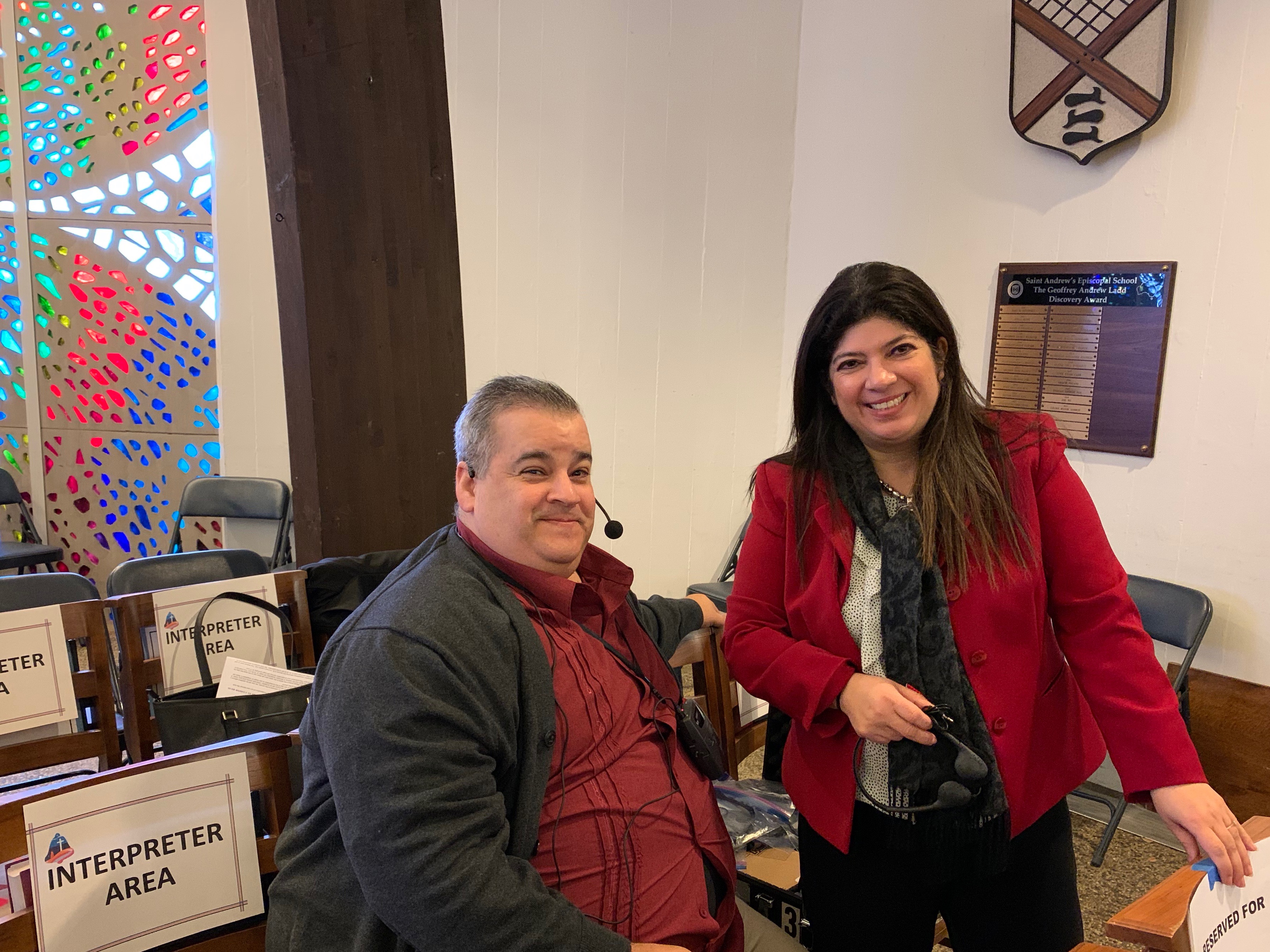 Interpretation team.
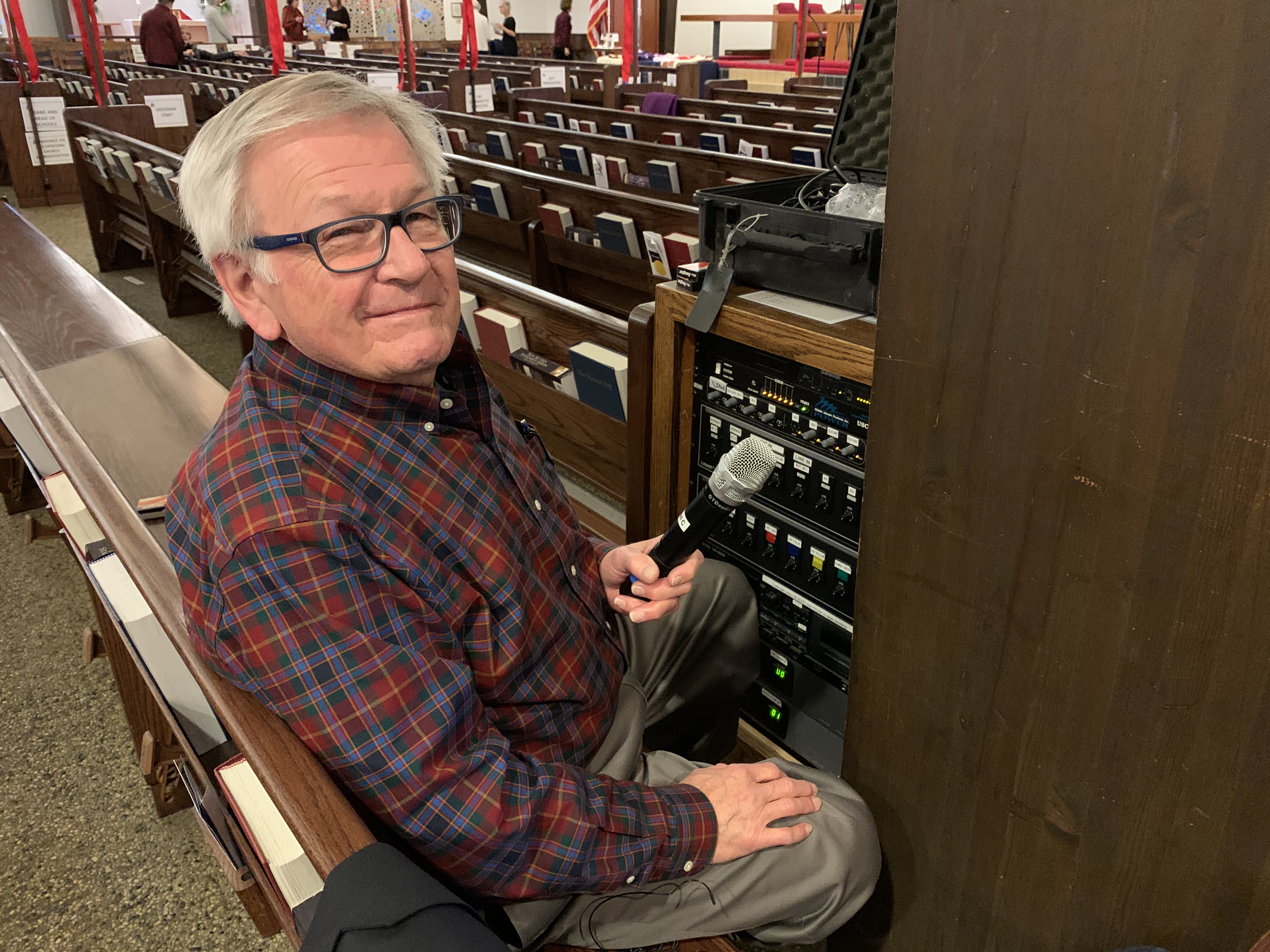 Ed Jacklitch, sound.
 St. Andrew’s altar.
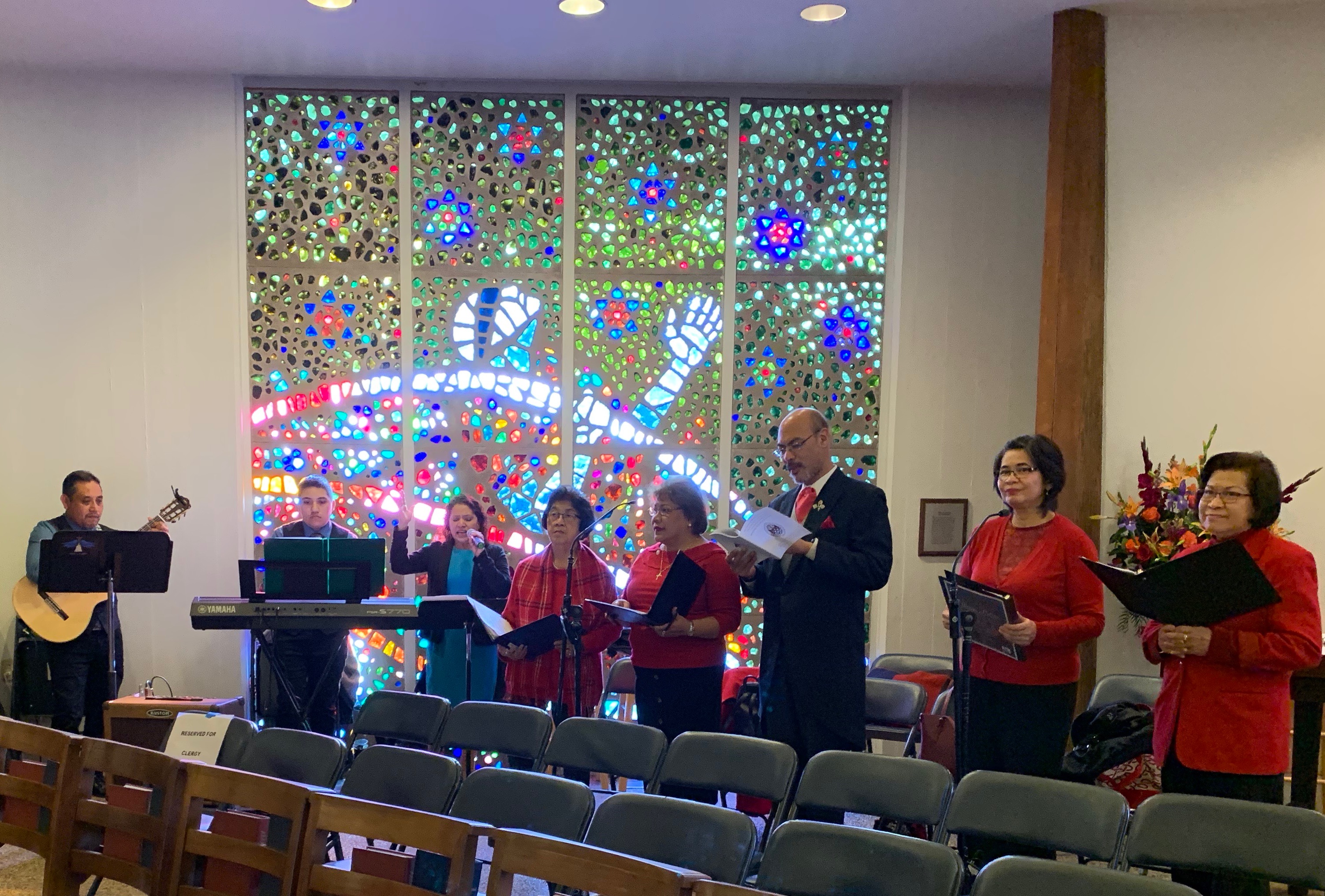 Cantemus Filipinas Chorale.
 Bishop-elect Lucinda greets her family.
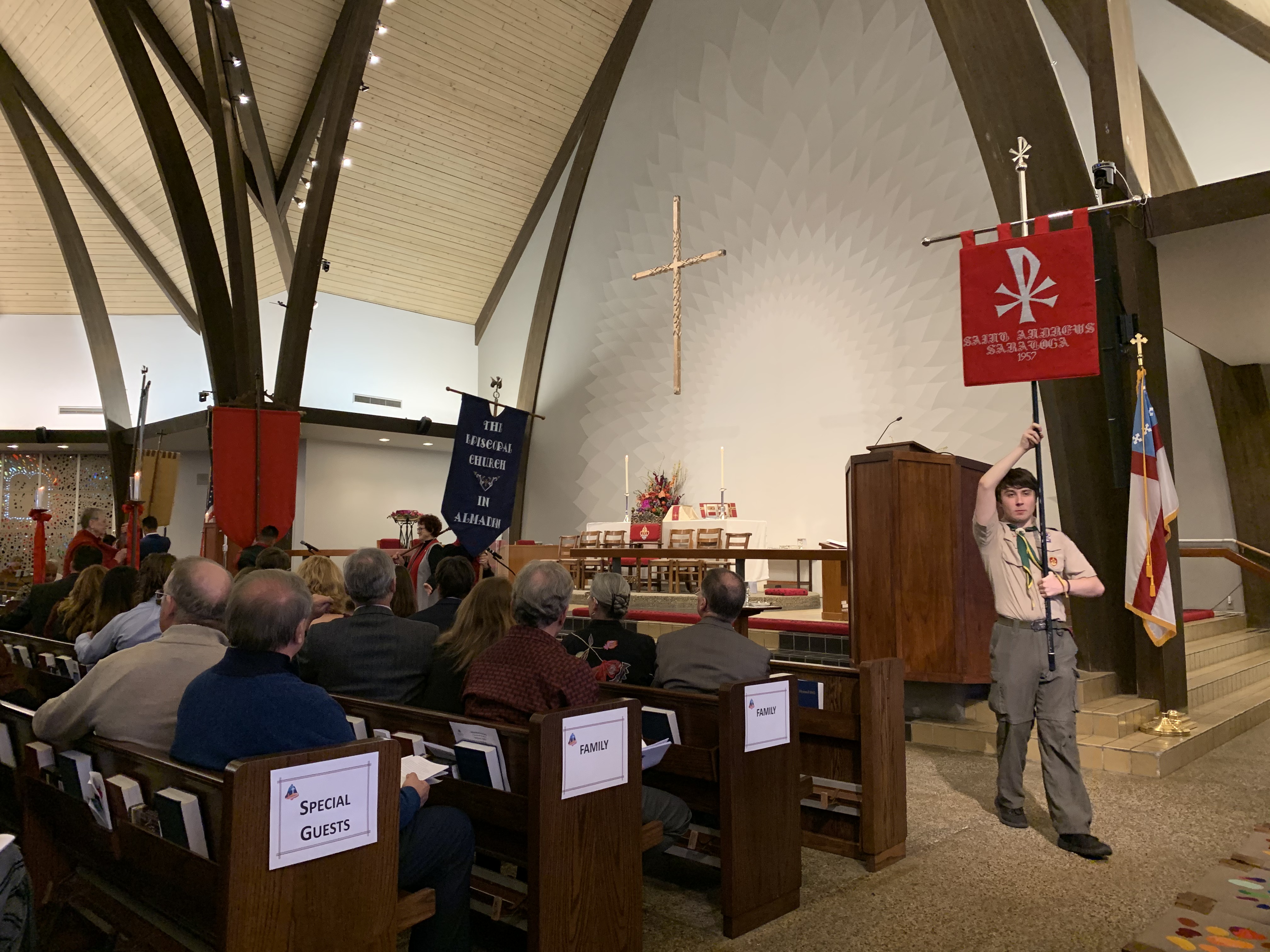 Procession of diocesan banners.
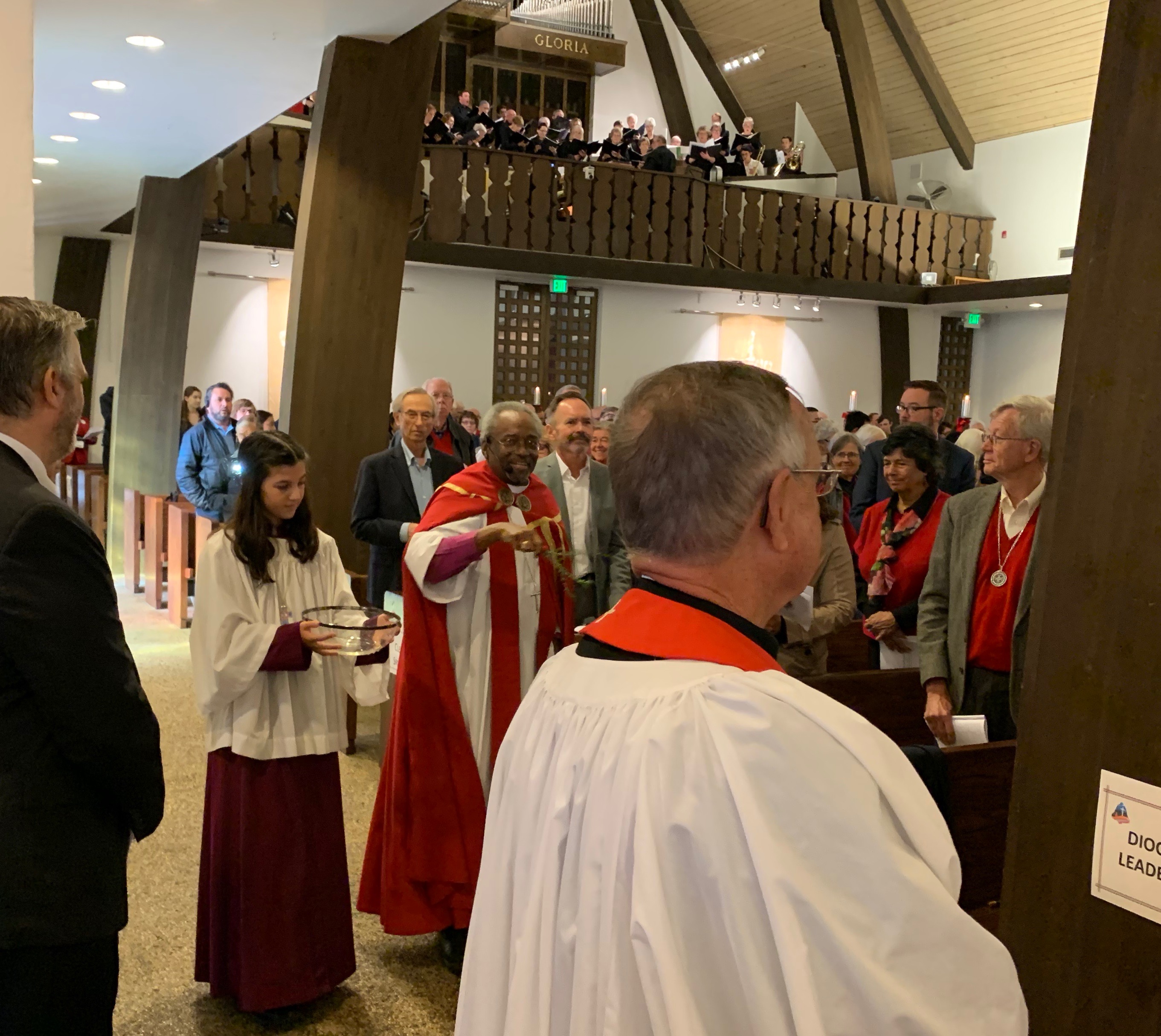 Bishop Michael blessing congregation.
 Ordination and consecration of Bishop Lucinda.
 Mary Ann Gee and diocesan choir.
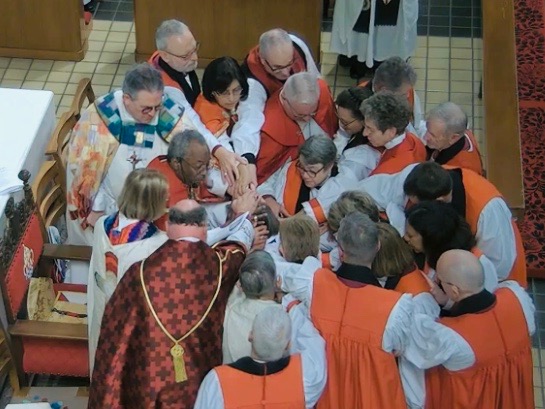 22 bishops consecrate Bishop Lucinda, 12:25 pm.
 Presentation of the bishop’s crozier.
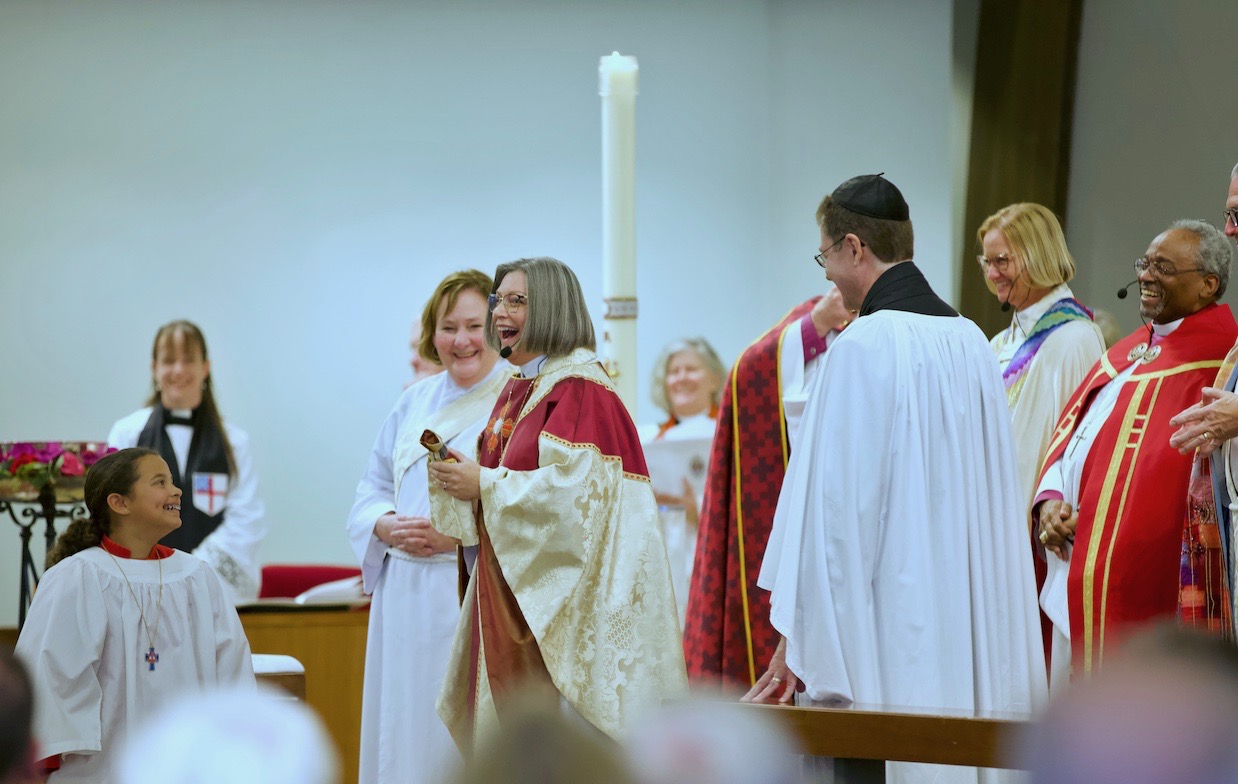 Presentation of Bishop Barbie to Bishop Lucinda.
 Bishop Lucinda’s husband Bob Ashby with Bishop Barbie, 2020.
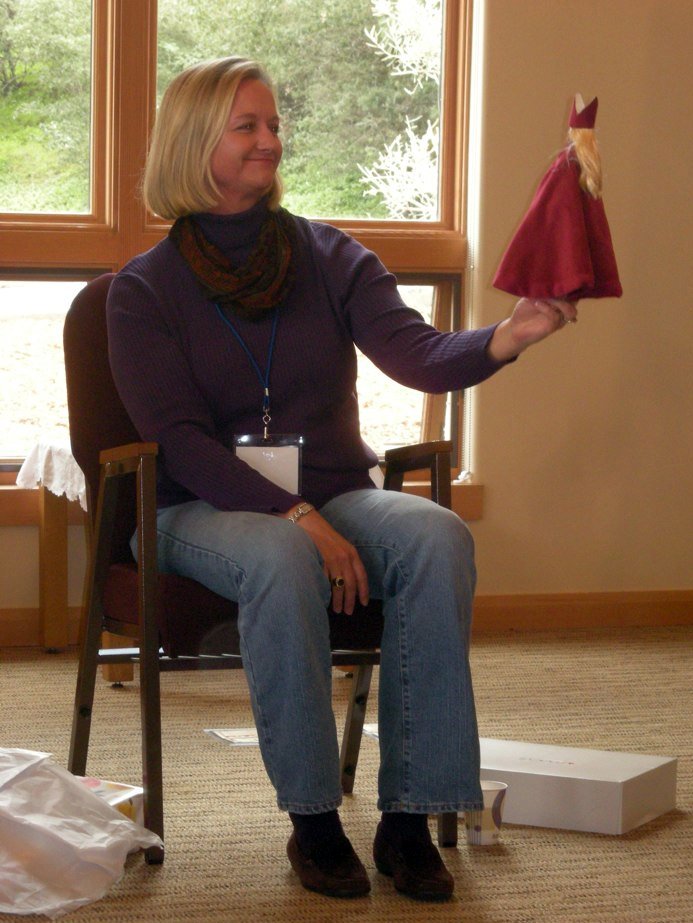 Bishop Mary with the 1st Bishop Barbie, 2010.
 1st and 2nd Bishop Barbie, 2012.
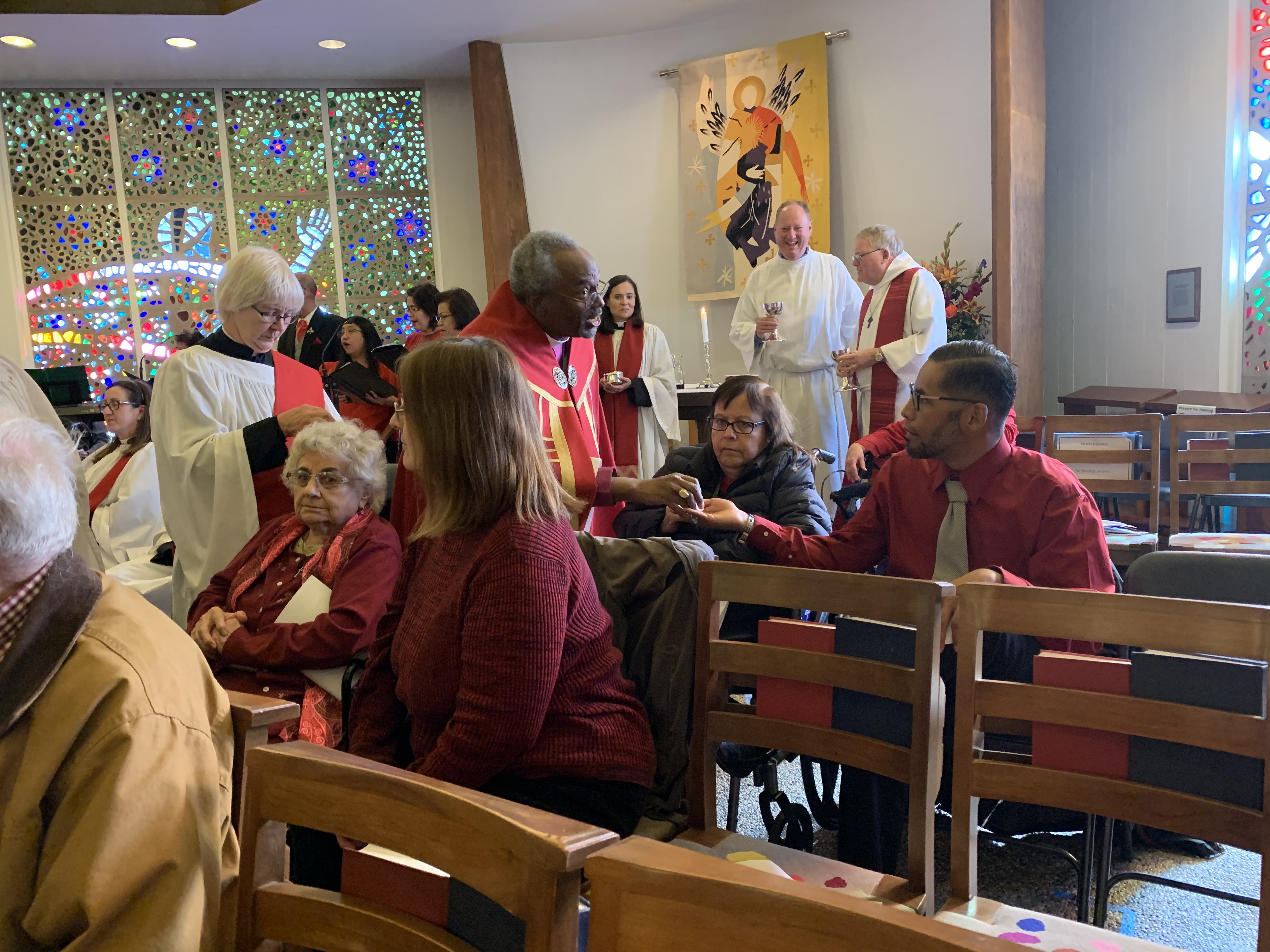 Bishop Michael gives communion.
 Reviewing the video, 1:45 pm.
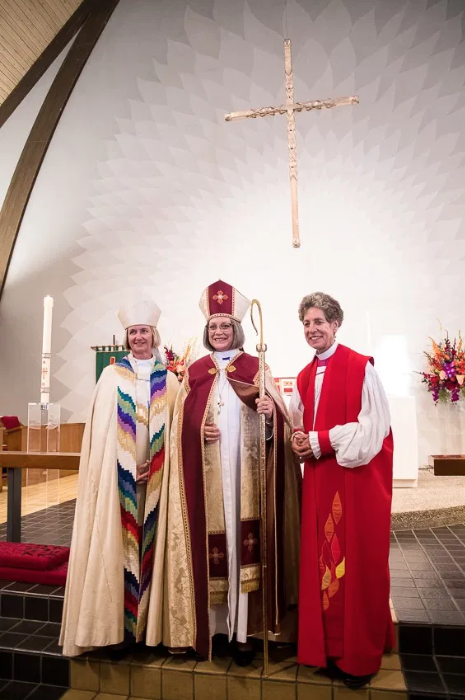 Bishops Katharine, Mary, and Lucinda.
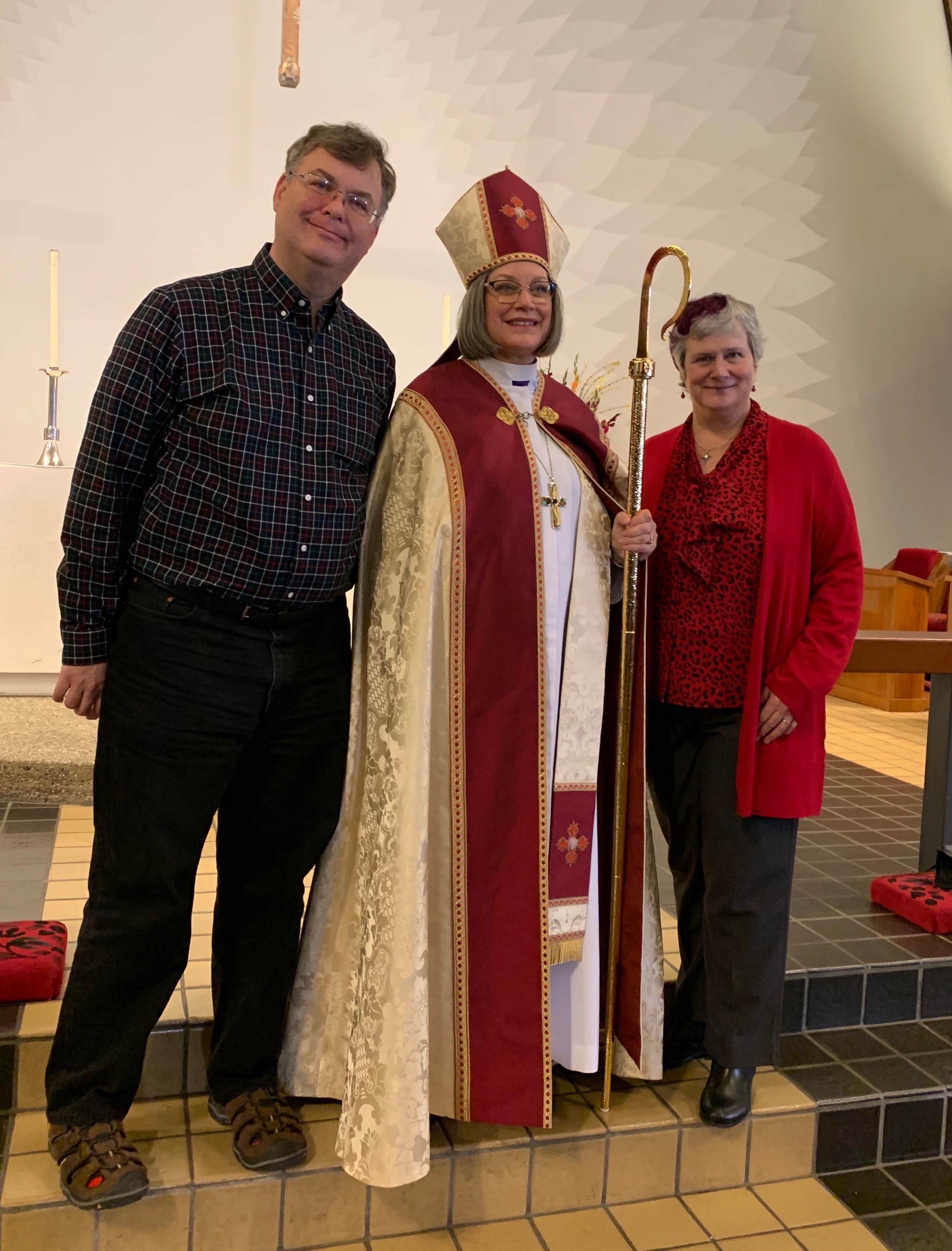 Bishop Lucinda Ashby, John Plocher, and Katy Dickinson.